The Spectator

Why is the mild West afraid to promote its democratic values?

From our UK edition

An athlete seeking sanctuary in a foreign embassy after a state--sponsored attempt to spirit her home from the Olympics; a dissident found hanging from a tree in a foreign country that he’d been helping his compatriots escape to; a passenger jet diverted so one of its passengers could be arrested. The fate of critics of Alexander Lukashenko’s regime in Belarus might have been drawn from the depths of the Cold War. Like North Korea, Belarus has become a land that time forgot, still fighting battles we assumed had been lost decades ago. There is, however, a big difference between now and the Cold War. The voice of the West is much fainter when condemning authoritarian regimes.

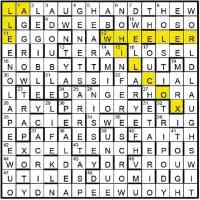
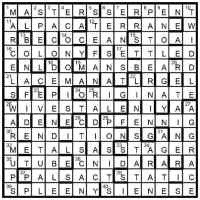
2515: Paragon – solution

From our UK edition

The name was Margaret, whose various versions are suggested by THE SPECTATOR (1: Mag), BARN OWL (10/36: Madge), LEAD HAMMER (14/34: Madge), MAGPIE (19A: Madge or Maggie), CRICKET STUMP (48: Peg), HALFPENNY (2: Mag or Meg), TURTLE HARPOON (9: Peg), PIN (16: Peg) and TEASE (Mag). MARGARET (22/23) was to be shaded. Title: cf. pearl, the meaning of Margaret.

Letters: In defence of organic food

From our UK edition

A note about manure Sir: I am afraid Matt Ridley shows a lack of understanding about agriculture in general and organic production in particular in his argument against organic food (‘Dishing the dirt’, 24 July). Livestock production has involved the use of animal faeces — or farmyard manure as it is called when mixed with straw — ever since livestock was first housed in the 1800s. Bacterial infections are due to poor hygiene in the slaughter and processing chain, not how animals are fed, grass is produced, or the use of manure, which is an important by-product. Bean sprouts being infected with E.coli is probably down to poor hygiene of personnel, not organic vs non-organic systems. Yes, organic food is more expensive.

The dangers of post-Covid isolationism

From our UK edition

There is something bizarre about a sporting event designed to bring people and nations together but from which spectators have been excluded. Most foreigners are currently forbidden from setting foot inside Japan, let alone inside the Olympic stadium. In many senses, Tokyo 2020 — which like the Uefa Euros retains its original name, despite a year’s delay — encompasses the worst of our pandemic-ridden world: the global elite can attend while the rest of us have to settle for watching it on TV. Yet a successful Olympics — even a week in, it looks as if the Tokyo Games will be judged a kind of success — could provide the impetus the world needs to re-establish normal working relations.

Is rain getting heavier?

From our UK edition

Reinventing the wheels Skateboarding made its debut at the Olympics. Who invented the skateboard? — There are many reports of homemade skateboards being created in the 1940s and 1950s by Californian surfers who wanted to continue a form of their sport out of season, but the first commercial skateboard was marketed by roller-skate company Roller Derby in 1959. The sport, however, failed to catch on until 1973, with the introduction of urethane wheels and a curve at the end of a board known as the ‘kick-tail’, which allowed acrobatics to be performed. Water logs There was more surface flooding in London. Is heavy rain becoming more common in London? The Met Office uses different ways to measure long-term rainfall trends. 1.

Portrait of the week: Channel crossings, chain-gangs for criminals and Tesco Bank shuts up shop

From our UK edition

Home The daily number of coronavirus cases detected by tests fell from 54,674 on 17 July to 23,511 by 27 July. About 92 per cent of adults in England and Wales had coronavirus antibodies at the beginning of July, according to an estimate by the Office for National Statistics. In the seven days up to the beginning of the week, 447 people had died with coronavirus, bringing the total of deaths (within 28 days of testing positive) to 129,130. (In the previous week deaths had numbered 284.) In a week, numbers remaining in hospital rose from 4,121 to 5,238. By the beginning of the week, 88 per cent of adults had accepted a first vaccination; 70.3 per cent had received two doses.

Out now: the August edition of The Spectator World

Hell hath no fury like the average American. As temperatures, tempers and crime stats rise, our August 2021 edition asks if Americans are angrier than they’ve ever been. Peter Wood examines the evolution of the right’s anger through the astute lyrics of country singer Toby Keith, from post-9/11 fury to the present despondency. Sohrab Ahmari considers the crime surge in American cities, which he claims is a consequence of anti-anti-crime policies pushed by progressives. Mary Eberstadt credits climbing crime rates to the floundering influence of fathers in American households.

august 2021 world cover

Letters: The clock is ticking in Afghanistan

From our UK edition

Out of Afghanistan Sir: Boyd Tonkin’s review of Anna Aslanyan’s Dancing on Ropes highlights the post-war abandonment of local Afghan and Iraqi interpreters by the US and UK (Books, 17 July). The UK’s response, up until last summer, deserved every bit of Tonkin’s strictures but the past year has seen a ‘strategic shift’. Ben Wallace and Priti Patel were clearly determined to change our approach and to give sanctuary to our former staff. More generous regulations were introduced in December and April but the imminent withdrawal of Nato forces now raises the fearful prospect of a Taleban takeover, or Taleban-induced paralysis of the Afghan government, before the necessary evacuation can take place.

Portrait of the week: Covid in cabinet, pingdemic pandemonium and Ben & Jerry’s boycott

From our UK edition

Home On the eve of the day that most coronavirus restrictions were to be lifted, the Prime Minister and Chancellor of the Exchequer had to react to having been in close contact with Sajid Javid, the Health Secretary, who, despite being doubly vaccinated, had contracted Covid. At first Boris Johnson said that under a pilot scheme he would continue to work at Downing Street. Within hours, during which Labour exploited the idea of privilege, he backtracked, declaring it was ‘far more important that everybody sticks to the same rules’. So he would isolate himself (at Chequers) until 26 July.

What’s changed since the last Tokyo Olympics?

From our UK edition

Waiting Games What did Japan, and the world, look like the last time Tokyo held the Olympics in 1964? — As this year, Tokyo had to wait to hold the Games. It was awarded the 1940 Olympics, but the offer was withdrawn after the Japanese invasion of China (before the 1940 Games were abandoned altogether). — South Africa was banned for the first time for refusing to send a single, multiracial team to the Games. — In spite of it being three years since the building of the Berlin Wall, East and West Germany entered a single ‘united’ team. — They were the first Games broadcast around the world by satellite. — They were the last Games to use a cinder athletics track.

Boris is in danger of becoming the Prime Minister he once warned against

From our UK edition

Back when Boris Johnson was on a mission to stop identity cards being used in Britain, he made a very persuasive argument: if parliament allows such expensive technology to come into existence, then the government will cook up excuses to use it. They will start to ‘scarify the population’ by saying there is a threat or an emergency. If they sink millions into an ID card scheme then be in no doubt: our liberty will be threatened. The slippery slope, he said, is one that the government is sure to go down. Boris Johnson is in danger of becoming the Prime Minister he once warned against. At first, we were told that any vaccine identity system would be used only for foreign travel.

Letters: How to save Cambridge’s reputation

From our UK edition

Save the parish Sir: The Revd Marcus Walker eloquently describes the crisis that has taken hold in the Church of England (‘Breaking faith’, 10 July). He correctly states that the church belongs to the people of England and not to the archbishops, bishops or clergy. As he wrote, the costs of parish clergy are not a ‘key limiting factor’. They should be the church’s first priority in terms of costs. Stipendiary parish clergy play a vital role in bringing the Christian gospel and pastoral care to their communities. Without properly trained and ordained clergy, there would be no holy communion, no absolution and remission of our sins and no church weddings.

2512: Impertinence – solution

From our UK edition

CHERRY, NETTLE, SMOKE, PLUM-PUDDING, BEES, EGG, SUNBEAM and WIND are the perimetric answers to riddles posed by NUTKIN in The Tale of Squirrel Nutkin by Beatrix Potter. Nutkin’s brother is called TWINKLEBERRY (19/11) and Nutkin is a SCIURUS VULGARIS (33/35A) (red squirrel). Shaded squares give the letters of POTTER.

Yes, they’re deplorable – but those football tweets don’t prove Britain is racist

From our UK edition

There are two certainties whenever England’s football team plays; one that is long-established and the other a recent phenomenon. Players who never miss a penalty during training sessions will end up fluffing their attempts under the pressure of a shoot-out. And the post-match discussion of football will quickly move on to the issue of racism. England’s first appearance in the final of a major tournament since the 1966 World Cup ought to have been a moment of national celebration. Indeed, that is how it seemed until the three missed penalties. Within hours, though, few seemed to be talking about anything other than the racist abuse directed at the three players who missed the target.

How much does a holiday in space cost you?

From our UK edition

Space cadets Richard Branson joined a test flight on his Virgin Galactic craft to the edge of space, to promote the tourist space trips he has been promising for over a decade. How much does it cost to be a space tourist (assuming any succeed in taking passengers)? £180,000: Price for a Virgin Galactic trip to the edge of space. Passengers will experience a few minutes of weightlessness but will not orbit the Earth or cross the Karman Line deemed to mark the boundary between the Earth’s atmosphere and space. Price includes spacesuit. £20m: Price of a seat in Blue Origin’s New Shepard spacecraft, auctioned in June. Includes an 11-minute flight into space, sitting next to Amazon founder Jeff Bezos. £39.

Letters: Let the housing market collapse

From our UK edition

Treading the boards Sir: As a teacher, I was sorry Lloyd Evans did not include school productions in his excellent assessment of the cultural devastation inflicted by Covid-19 (‘Staged’, 3 July). While cancellation of West End shows is a tragedy, far more damage will be done to the thousands of children whose one chance to watch or perform in a play or musical has been taken away. These humble, often cheerfully disastrous, amateur productions bring pupils together in a way nothing else can. W. Sydney Robinson Oundle, Northamptonshire Big bad builders Sir: I enjoyed Liam Halligan’s comprehensive assessment of the appalling state of the UK building industry and the dire quality of much of what they produce (‘The house mafia’, 26 June).

Portrait of the week: Masks to be dropped, John Lewis builds houses and Russia lays claim to champagne

From our UK edition

Home Boris Johnson, the Prime Minister, said that if a review of coronavirus restrictions on 12 July allowed, then on 19 July he expected an end in England to compulsory masks (except in hospitals), working from home, the ban on ordering drinks at the bar, on nightclubs and on singing in church. ‘If we don’t go ahead now,’ he said, ‘then the question is, when would we go ahead?’ Sajid Javid, the Health Secretary, told the Commons: ‘If you’re on public transport, let’s say a very crowded Tube, I think it would be sensible to wear a mask — not least for respect for others.’ In separate provisions, the system of sending home all members of a school bubble if one tested positive would be discontinued.

Boris Johnson must hold his nerve over lifting restrictions

From our UK edition

A charge repeatedly made against Boris Johnson over the past 16 months is that he has ‘ignored scientific advice’. But unless he has been in the habit of drumming his fingers on the table and looking out of the window while Professor Chris Whitty and Sir Patrick Vallance have made their presentations, it is a silly accusation. We do not live in a technocracy where scientific advisers have absolute power. In handling the pandemic, it has been the Prime Minister’s job to weigh up advice from many quarters — medical, scientific, economic, legal and political — and then make decisions.