The Spectator

The row that will not die

The Evening Standard has the latest twist in the grammar school row. Dominic Grieve, the shadow A-G, has backed building more grammars in Kent seemingly in contradiction of the party’s no new grammars policy. But CCHQ is spinning that Grieve isn’t going against the party line as more grammars can be built to “maintain the status quo.” The story runs on the front of the Standard under the headline “TORY RETREAT ON GRAMMARS”. So, the one thing that some Cameroons claimed had been gained—the impression that Cameron is a strong leader facing down his party—from the debacle has been lost. This really is a case of bad policy, badly presented.

A grim reality

  Nothing better sums up everything that is wrong with this country and our culture than Big Brother. Yet, the public is still fascinated by it and the idea of having an all-female house has won the show acres of space in the red tops. This morning on the tube the majority of people in my carriage were all studying Metro’s form guide intently. After the whole Big Brother racism row, there was much hopeful talk about how we’d finally turn our backs on this vile concept. But 6 million people tuned in last night, only a million down on last year’s launch. Indeed, I suspect that if we had our own win a kidney reality show it would get record viewing figure. Anyway, expect the twins Sam and Amanda to be F-list celebs by the end of the series.

Quitting on the NHS

It seems strange that Nice has agreed that the NHS should pay for Champix, the new anti-smoking drug, while at the same time refusing to endorse, for example, Aricept, Exelon and Reminyl for those in the early stages of Alzheimer’s, and Avastin and Alimta for cancer. Cost-effective arguments don’t really wash — how does one cost the saving to the state of, for instance, a person with dementia being able to lead a relatively independent life and not having to rely on the state? If a 12-week course of Champix doesn’t work, will an addict be given a second chance, or a third or a fourth?

The truth about dirty dancing

Stephen has a good post on really bad films. I have never understood the appeal of the dreadful Dirty Dancing, nor its passage into Rocky Horror-style cult status. So this Guardian piece about staying in Baby's cabin is my idea of the naughty step times a thousand: a sort of cultural Guantanamo Bay. Will someone explain why this film is still allowed to be shown in public places, let alone to inspire holidays?

Is this man the next Ronald Reagan?

The Republican presidential field just got even more crowded with the news that former Tennessee Senator Fred Thompson is jumping in. You probably know Thomspon’s face, if not his name, as he’s been in a whole slew of movies including The Hunt for Red October, Die Hard 2 and In the Line of Fire. His backers think that his star role in the hit US legal drama Law and Order will propel him into the top tier of candidates—and they’re probably right. Thompson’s entry into the race is a function of dissatisfaction with the rest of the GOP field. Only three of the current crop are even plausibly electable: Rudy Giuliani, John McCain and Mitt Romney. Yet all of them have major flaws as far as the Republican base is concerned.

A good old tell-all

Those disappointed that the initial instalments of the Campbell memoirs won’t be dishing up the good stuff might like to turn their attention to those of Bob Shrum, the veteran US political consultant who effectively ran the Gore and Kerry campaigns and is now close to Gordon Brown. His autobiography No Excuses is designed to wound two of the Democratic front-runners, Clinton and Edwards. Shrum launches a no-holes-barred assault on Edwards accusing him of being unready for prime time, devious and prepared to crassly exploit his son’s death for political purposes. On Clinton, he charges that Bill wanted Kerry to endorse Bush’s Constitutional amendment to ban gay marriage.

Ranking the deputies

The race to be the next John Prescott is getting serious with the six contenders debtaing on Newsnight last night, watch it here. So, who won? Here is Martin Vander Weyer's ranking of the form, let us know what you think in the comments.

The world’s new banker

Bob Zoellick, George W. Bush’s pick to replace Paul Wolfowitz at the World Bank, is a safe choice. Zoellick was long regarded as one of the few safe pairs of hands in the Bush administration and having served at both Treasury, State and as US Trade Representative he’s got an ideal resume for the Bank. Many thought Zoellick would be the US nominee last time round. Word has it that Zoellick was so convinced he was getting the jobnot Wolfowitz that he had already started reading  himself inbefore Bush sent him to be Condi’s deputy at State. The one person in DC who'll be sad to see Zoellick going to the Bank is John McCain, who was using Zoellick's not inconsiderable brain to pull together his policy platform.

Watching with auntie

Though I cannot in all honesty pretend that I shall be staying in to watch this televisual feast, the BBC is surely on to something in its celebration of  the children’s television it has offered over the decades. There is something quintessentially British about what we offer our kids on telly – as any parent will tell you, CBeebies is very different to all the US channels you get on satellite. It is something to do with the indomitability of the educational, Reithian impulse. BBC children’s presenters all seem to suffer from Attention Deficit Disorder and St Vitas Dance these days, and to wear day-glo everything. But their traditional role – as Enid Blyton era teachers – hasn’t changed at all. And who needs Al Gore when you can have the Wombles?

Dressing the part

What a difference deportation makes. On the right is a picture of Sheik el-Faisal, the Islamofascist who was finally sent back to his native Jamaica last weekend after serving time in Britain. Here, he dressed in a Muslim skullcap and robe – but as soon as he stepped off the plane in his native Jamaica, he was down to tracksuit bottoms and a shirt. Why? Because his real name is Trevor Forrest, and people like him seldom get away with their mad mullah act in their native countries. As Olivier Roy explains in his superb Globalised Islam, the jihadi menace is spread when crackpots like Forrest go abroad, don a skullcap and are treated with reverence they’d never achieve back home.

Spinning a yarn

Entertaining to read in today’s Standard more details of the row between Alastair Campbell and Cherie Blair over the forthcoming Campbell Diaries. This relationship has had its ups and downs in the past – most spectacularly over Cherie’s connection with Carole Caplin and Peter Foster. But Alastair, I imagine, will be delighted. It was becoming dangerously orthodox that he had cut a deal with Gordon to keep the really good stuff out of his memoirs, due out in July, days after Brown takes over. Boring political books sell no copies. The spat with Cherie at least encourages the impression that Volume One will be juicy after all. Or is that just more spin?

G

When Günter Grass confessed last year that he had been in the Waffen SS it took everyone by surprise. It seemed like a cynically timed admission coming after he had won the Nobel prize for literature and before his autobiography came out. That slightly odd feeling isn’t shaken by this long essay in the New Yorker in which Grass explains how he ended up in the SS and stresses that he never actually fired a shot.

Cameron creates a meritocratic martyr

No question about it: when a frontbencher breaks ranks flagrantly, a party leader who hopes to be seen as strong must sack him. Many people agreed with Howard Flight's remarks about tax cuts in 2005, but Michael Howard had no option but to fire him. So it was only a matter of time before the bell tolled for Graham Brady, the Tory Europe spokesman, who has rebelled passionately against David Cameron's line on grammar schools. Mr Brady was breaking every rule of party discipline. He was also, as it happens, completely in the right. So Mr Cameron has shown he means business. But he has upped the ante spectacularly and made Mr Brady the martyr of meritocracy. Who would say with any confidence now that the war of the grammar schools is over?

An American Tragedy

It's Memorial Day in the United States today, the official beginning of summer. Fierce Americans mark the day by beating their war drums; gentle Americans by beating their breasts. The newspapers, as usual, are full of improving homilies and exhortations. But this year there is something different, something inspiring and humbling. In the Washington Post the anti-war conservative Andrew J. Bacevich has marked Memorial Day with a tribute to his son, who died earlier this month in Iraq. Bacevich teaches history and international relations at Boston University and is the author, most recently, of The New American Militarism: How Americans are Seduced by War.

Where does Brown stand on FOI?

The media section of today’s Guardian has a very telling piece on how the PM in waiting’s closest allies are at the heart of various efforts to dampen down the effects of freedom of information act. Yet, at the Hay on Wye festival Brown promised that the bill to exempt MPs from Freedom of Information legislation “will be corrected.” It’ll be interesting to see if this shift in attitude extends to the spirit of the legislation as well as the letter of it or whether it is a purely cosmetic response to popular outrage.

Not going quietly

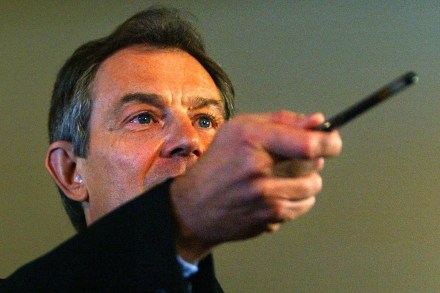
Tony Blair’s piece in the Sunday Times echoes some familiar themes of his. But the language seems blunter than usual, perhaps because it is not broken up by the Prime Minister’s verbal mannerisms. He pronounces that, “We have chosen as a society to put the civil liberties of the suspect, even if a foreign national, first.I happen to believe this is misguided and wrong.” Yet it is when he gets on to the question of Muslim grievances and terrorism that he really lets rip:“tell me exactly what they feel angry about. We remove two utterly brutal and dictatorial regimes; we replace them with a United Nations-supervised democratic process and the Muslims in both countries get the chance to vote, which incidentally they take in very large numbers.

Letters to the Editor | 26 May 2007

From our US edition

Is it right to aspire? Sir: According to your leading article, ‘The Tory party is a party of aspiration or it is nothing’ (19 May). If this means that the Tory party is a party in the interest primarily of that ambitious minority which wants to rise in the world, then I should like to disagree, if only because the great majority of the nation, thank God, are not social climbers. By which I do not mean that the great majority of the nation do not have aspirations — to lead good and decent lives, for example — only that they do not necessarily have aspirations to join the rat race, believing that they can lead good and decent lives quite satisfactorily on the level of society into which they were born.