The Spectator

Cameron’s answer to Sir Alan West

Dame Pauline Neville Jones is apparently joining the shadow cabinet in a security role. She’s a very establishment figure with very establishment views. Her record over Bosnia suggests that she has fairly realist views.

Salmond takes centre stage

Not much detail about those arrested over the last few days in connection with the failed Glasgow Airport and London attacks – but Alex Salmond’s administration has been keen to say they’re not “born or raised here in Scotland”. More detail than he should have given, it turns out, but he’s keen to kill off the backlash which Mohammed Sarwar, the Muslim MP for Glasgow South, says has already started in a small way (abuse, graffiti, threats etc). Salmond has always been very strong on race relations and what he calls “New Scots”, saying there are “many threads in the tartan of our society”. He’s evidently anxious to stop these threads unravelling. Keep your eye on Salmond.

What motivates them?

So, how much—if at all—does the Israel/Palestine conflict ‘cause’ terrorism? Matt argued yesterday that it is a “great error” to think that there’s a “causal link between the growth of Islamism and the Middle East conflict.” To which, Anthony Barnett over at Our Kingdom responds: “Of course there is a causal link between the growth of Islamism and the Middle East conflict. Even if Israeli policy had nothing to do with the origins of bin Ladinism, the latter’s appeal feeds off the continued violence and injustice of the Middle East.”I doubt very much if any of the people involved in the various Islamist terror attacks we’ve seen these past few years would have been dissuaded by a Middle East peace deal.

Team Brown’s psychological warfare

Gordon Brown has spent a large part of his honeymoon trying to destabilise the other two parties. As Jackie Ashley, whose columns will be essential reading in this new Brown era, writes today: “The offers to Paddy Ashdown and Shirley Williams, and the roles for Julia Neuberger and Anthony Lester, may not have been the final deadly daggers in Menzies Campbell's back (there were too many worried Lib Dems already), but it looks as if a plot to oust him is gathering force. If it produces a new leader, such as Nick Clegg, who will give the Conservatives a tougher time in their marginals, Brown will be delighted.

Rocking with the Royals

Last night's Diana concert was ostensibly a tribute to the late princess on what would have been her 46th birthday. But its deeper function was - yet again - to demonstrate the awesome resilience and adaptability of the monarchy. Those who have doubts about Prince Charles need only look at the next generation, the sons Diana left behind, to see that the institution is healthy, porous to new influence and robust in its attitude to the future. In their lack of polish, their honesty and their charm, William and Harry had the crowd at Wembley, and hundreds of millions at home eating out of their hands. Interesting, too, to note that Harry and Chelsy are much the better dancers: Kate Middleton cannot dance at all, while William does his swaying best, grinning arhythmically.

Report: Intelligence warned of Glasgow attack

Interesting report from ABC News on the Glasgow attacks: “U.S. law enforcement officials received intelligence reports two weeks ago warning of a possible terror attack in Glasgow against "airport infrastructure or aircraft," a senior US law enforcement official tells the Blotter on ABCNews.com.The intelligence reports also warned that airports and aircraft in the Czech Republic could be the targets of  al Qaeda-connected terrorists.

Letters to the Editor | 30 June 2007

A partisan presentation Sir: Last week Melanie Phillips attacked the West’s approach to the Palestinians as deluded (‘Gaza: another front in Iran’s war’, 23 June). But if her analysis carried sway it would only reinforce the hand of those who see no point in negotiations. Phillips’s view is based on a partisan presentation of history. The ‘international agreement’ she refers to is the formal assumption of Mandate Palestine by Britain under the auspices of the League of Nations. Article six of the Mandate set terms of Jewish immigration ‘while ensuring that the rights and position of the other sections of the population are not prejudiced’.

The Glasgow airport attack (updated)

Were they Scottish? The response to the failed Glasgow airport attack will be dictated by the identity of the perpetrators. Early reports say Asian men were seen leaving the car, and Glasgow certainly has a large Asian community - more akin to that that of Bradford than London, ie, poorer and perhaps more susceptible to Al Qaeda's message. This attack makes it harder for those who blame Blair and the Iraq war for making England the target of attacks. Scotland is run by a nationalist government and its first minister Alex Salmond was vehemently against the Iraq war. And still the jihadis target Glasgow airport.  Further macabre proof that the terrorists’ only guiding principle is that of psychotic bloodlust.

Playing modern Britain

I have been trying to work out why the idea of John Simm as the Master in Doctor Who is so compelling. By my calculation, Simm is the eighth actor to play the Doctor's nemesis, who originally returned to the revived series in the form of Derek Jacobi. Of course, there is innate (not to say topical) appeal in the storyline that concludes in tonight's season finale: the diabolical Timelord, masquerading as populist Prime Minister Harold Saxon, taking control of the public by manipulating the mobile phone network. But there's something special about Simm, that was sealed by his performance in the magnificent retro cop drama, Life on Mars.

Clunk!

Rarely has there been such a triumph of expectation management as the arrival in No. 10 of the new Prime Minister. Only eight weeks ago, Labour was agonising over the loss of 900 council seats in England, the victory of the SNP in Scotland and the gloomy prospect of Gordon Brown’s succession. The then Chancellor’s depressed share price was always hugely to his advantage and, displaying the awesome patience which is one of his most formidable qualities, he bided his time before pouncing. Since the launch of his campaign — really a victory lap — he has been confounding expectations, visibly more relaxed, but also more nimble, unleashing a series of surprises upon his party and his opponents which have changed perceptions of what he might be like as PM.

Why do politicians want to hire this man so badly?

The former Met Chief Lord Stevens must be the most in-demand man in British politics. The Tories try and get him to run for London Mayor and then after they’ve failed to do that put him in charge of their border security taskforce. Now, Gordon Brown has drafted him as an adviser on international security issues. It can only be a matter of time until Ming gets in on the act and asks him to do something. Why then is Stevens so popular? Partly, it is because he was a successful Met chief who has proved himself to be media savvy with his TV appearances and columns in the News of the World. Yet, more important is that he serves as a form for validation for politicians with a sceptical public.

Tories and terror

Tim Montgomerie, editor of Conservative Home, and Matthew d’Ancona are debating how the Tories should respond to Brown. You can read the first part of the debate here and the second part below. Dear Matt Thanks for your reply to my opening post of yesterday.  Because I agreed with just about everything you wrote and in the light of today's aborted bomb attack I thought we should shift our exchange to how the Tories should respond to Brown on homeland security and - furthermore - how the Tories can show some leadership on this issue. Read more. Matt responds: Dear Tim I think that the whole spectrum of security – from the “hoodie” issue to the defence of the realm from terror – is Cameron’s weakest point.

Background reading

With the news that Shriti Vadera, one of Gordon Brown’s closest aides, is to become a minister at DFID you might want to read this profile of her by Martin Vander Weyer, who was once her speechwriter.

Smith passes her first test

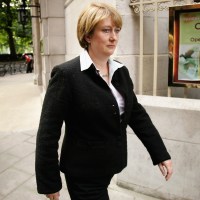
It’s often forgotten that a terrorist attack – successful or thwarted - is simply a mammoth political opportunity. Good performances can last for years. Rudi Giuliani is running for president based on his post-9/11 acts. John Reid was smart enough to milk the Heathrow terrorist drama last summer for all it was worth. Today Gordon Brown was okay, but used strange language (“this recalls the need to be vigilant”– as they don’t say at the Dog & Duck) and Cameron (“we should thank the public” – aw shucks!) wasn’t much better.  How Blair would have dazzled! Anyway, I found the new Home Secretary Jacqui Smith quite plausible in her role.

Spare a thought for Mrs Brown

Which young Treasury wonk has which top job? It’s all too exciting, or too depressing or something. But spare a thought, if you have one lying fallow, for poor old Sarah Brown who I suspect has been dreading this moment for years. I saw her a few weeks ago in St James’s park, just wandering around among the flower-beds. She gazed at the famous pigeon-eating pelicans for a while then turned and walked slowly back to the Downing street, dragging her feet as if returning to prison. Ok, I know Sarah Brown should be media-savvy -- she ran a high-profile PR agency until 2001 -- but I get the feeling that far from inoculating her, the years of Hobsbawm/Macaulay schmoozing have instead left her allergic to the press.

The foiled London bomb

One of the great delusions of our time is that once Blair, in the UK case, and Bush, in the American one, stepped down from office the terrorist threat would disappear. The news that a car bomb attack was foiled in London last night illustrates just how wrong this belief was. Although, the fact that the vast bulk of planning for the 9/11 attacks was done during the Clinton presidency should have shown people how wrong-headed this idea was in the first place.  One of challenges facing the new Home Secretary Jacqui Smith is developing the authority to reassure the nation in these kinds of situations. At the moment, she has no public profile to speak of and lacks the commanding presence that John Reid had during the airline plot.