The Spectator

Where Cherie goes wrong

Fiona Millar has a piece in The Guardian today defending herself from some of the implicit criticisms made of her in the Cherie Blair documentary. Much of the criticism Cherie received might have been excessively harsh, but Millar is surely right in this criticism of Blair: “her famed intelligence clearly deserts her if she still can't see that the primary job of anyone employed at No 10 is to protect the interests of the prime minister and his office. If his spouse wants to do things that might bring that office into disrepute, the job of those who work for him is to intervene. Sometimes that means giving uncomfortable advice.

Cameron takes on the broken society agenda

The Spectator last week ran a piece by Andrew Neil saying "Memo to Gordon: it's the Broken Society, stupid." Was his memo intercepted? Because David Cameron has today given a speech entitled "Empowering local communities can heal our broken society." It's setting the stage for next week's IDS report. Here’s my take on his speech. 1. "You cannot mend a broken society with the clunking fist of state control". A powerful line - keep at it. 2. Cameron stresses that "power" as well as money need to go to the poor. The word "empowerment" should be right at the top of is vocabulary. It will put clear blue water between him and Brown, who believes a benign state should have the power. 3.

Back on the trail

Mark Halperin has a great piece in Time magazine about the Clintons going on the trail together in Iowa and how Bill is adjusting to playing second fiddle.

Paying to keep people poor

Buying the Big Issue magazine is never an act of charity. Its content is well worth the cover price, especially when John Bird, its founder, writes on social issues. His cover story this week is an open letter to Gordon Brown (not online, buy the mag!). It exposes how Labour sees homelessness as a financial problem which needs a redistributionist solution. The result? Bird gives a case study… "Mick was an alcoholic from his mid-20s to his mid-40s. He used drugs, smashed up his council flat, robbed supermarkets, attacked people and was a general pain. His rent was paid. He was given a weekly payment. He was maintained. Apart from the odd run-in with the police, he was maintained in dependency and illness for 20 years. He probably cost about £1 million to run. Then he died.

RIP George Melly

  So farewell, George Melly. There isn't much fun left in jazz any more; it takes itself so seriously. George didn't — always having fun, listening to his favourite Bessie Smith records. He was one of the last generation of jazz musicians to enjoy his work and to convey that feeling to his audience; he was also of all things a collector of Surrealism. I hope he leaves me one of his suits. Ashes to ashes, dust to dust, if the women don't get you, the liquor must.

From Rousseau to Blears

"The English people believes itself to be free; it is gravely mistaken; it is free only during election of members of parliament; as soon as the members are elected, the people is enslaved; it is nothing." So wrote Rousseau of our system of parliamentary representation. It is to address this sense of absolute disenfranchisement in the years between elections that Hazel Blears will today announce plans to give local people a say over local budgets. Democracy, the new Communities Secretary will tell the Local Government Association, "should be a daily activity, not an abstract theory". Three cheers to that sentiment. The plan is apparently for a series of pilot pojects which will give local voters the chance to express their views directly on specific spending proposals.

Official: Spectator backs Boris

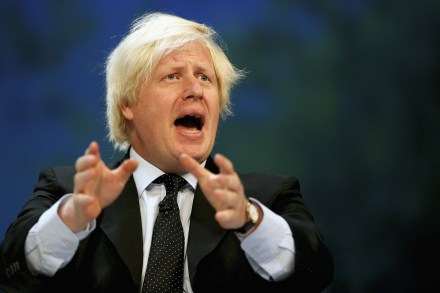
   No more than a formality, of course, and the least I can do as the great man’s successor in the Editor’s chair. As a Londoner, I know he would do a brilliant job, and the awesome city state that is 21st Century London needs a man of his stature at the helm, not a newt-loving, Mullah-appeasing, nasally-challenged whiner like Red Ken. I hereby declare Boris to be the official candidate of The Spectator for the position of London Mayor. To adapt the greatest of all city statesmen, Pericles: Boris does not imitate, but he is a model to others.

Will Boris run?

Nick Robinson doesn't take fliers. The more calls I make on this Boris for London story, the more true it seems: wheels are indeed in motion. Perhaps what he needs is encouragement. He'd certainly have my full support - no prizes who'd win a Red Ken v Steve bleeding Norris contest. So what do Coffee House readers think? Should we start a petition?

Two views on the Fourth

The late David Halberstam—author of The Best and the Brightest—has a posthumously published essay in Vanity Fair on Bush’s misuse of history. He charges that the Bush administration lives in “a world where other nations admire America or damned well ought to, and America is always right, always on the side of good, in a world of evil, and it's just a matter of getting the rest of the world to understand this.” Ironically, I don’t think the Bush administration would actually dissent this much from that analysis. Just consider this op-ed in today’s Washington Post by Michael Gerson, the man responsible for Bush’s most memorable speeches but who has now left the White House, on the meaning of the 4th of July.

Boris for Mayor?

Nick Robinson is suggesting that Boris Johnson may run for London mayor. I can tell you that Boris was unofficially sounded out at the Tory summer party last year, and resolved he didn't want to give up his superb, safe and beautiful Henley seat (which they told him he'd have to do). As of last month, he was asked again and hadn't changed his mind. But in light of the tragic news of Nick Boles’ illness, might things have moved on? I doubt it. But I'll keep you posted.

A Doctor of Culture

Further to my post on John Simm, it seems to me that Doctor Who, once the home of Daleks and wobbly cardboard scenery, is now becoming the nation’s cultural showcase of all the talents. The news that Kylie is to feature in the Christmas special could be dismissed as a one-off gimmick to drive up ratings at the most competitive time of year. But the recruitment of the preternaturally wonderful Catherine Tate to the show as a full-time assistant to the last surviving Time Lord – well, that is something else entirely. I was amongst those who thought that Tony Blair’s sketch for Comic Relief with the comedienne in her guise as schoolgirl Lauren (“Am I bovvered, though?”) reflected well on both of them.

Brown, constitutional conservative or radical?

Gordon Brown’s constitutional proposals receive a generally good press this morning. Interestingly, everyone has decided to concentrate on the bits they like rather than the bits they don’t: The Sun fronts Brown’s call for the flag to be flown from public buildings, Jonathan Freedland praises the radicalism of the proposals while Simon Heffer is impressed by their conservative emphasis on the primacy of Parliament. Freedland explains the thinking behind the changes thus “Brown reckons that the surest way for a politician to win back the public trust is to give away power...If people can be persuaded to believe once more in the legitimacy of government, then Brown can get on with deploying it as a tool for political change.

The portfolio of all the talents

Much has been said, and rightly, about the battle of the titans over schools and children’s policy which will now ensue between Ed Balls and Michael Gove, elevated to the Cabinet and Shadow Cabinet respectively in the past week. Ed, as well as being Gordon’s right-hand man, is an impressive act himself with a serious intellect and a greater sense of humour than has yet been realised. He will need it against Michael, who was a star of my years at Oxford, and has remained at the top of whatever game he has chosen since then: he is also right about the war on terror, which comforts those of us who detect a pragmatist, dullard drift in Tory foreign policy. He has what it takes to lead the party in due course.

The odds MI5 is working against

“As many as four of the NHS terror cell suspects were already known to security services, it emerged last night,” reports The Daily Mail this morning. This revelation is bound to set off a debate about whether MI5 has bungled or not. But before you jump to conclusions, consider what Fraser Nelson wrote after it became public that Sidique Khan had crossed MI5’s radar before 7/7:  “When the next terrorist attack hits Britain (and everyone who assesses the risk speaks of ‘when’) the names of the attackers will probably be found on an MI5 database. If the service is doing its job properly, it will have logged every young person who visits a suspicious Pakistani camp. But tracking all these people is beyond the remit of a free country.

Don’t blame foreign policy, blame the world view

Asim Siddiqui has a powerful op-ed in the Guardian today on the futility of blaming foreign policy for terror attacks. As he writes: “And once we've left Iraq, will they be satisfied? Of course not. Their list of grievances is endless: Afghanistan, Chechnya, Kashmir, Palestine, Burma ... so long as the world is presented as one where the west is forever at war with Islam and Muslims there is nothing we can do to appease the terrorists and those who share their world view. Instead it is this extremist world view that must change.“ Do read the whole thing.

Measuring up the campaign teams

My apologies to George Osborne. Daniel Finkelstein's blog points out that young Gideon does have election experience from his days in the 2001 campaign, not none as I unkindly said. I still think Douglas Alexander is a formidable counterpart as election maestro: I've never had a conversation with wee Dougie that hasn't involved election mechanics. But perhaps the Tories can buy in expertise from outside? I hear Lynton Crosby is in town tonight. Maybe he's for hire again....

It’s not good out there

It's a bit rough out there. Every day brings a flood and dry cleaning bills. Anglican bishops taking time off from gay-obsessions tell us the rain is all our fault and God's judgement on our careless ways. For which relief much thanks go to Bishop Jones of Liverpool (and the Mersey Delta). But it was an ostentatiously Anglican poet, T S Eliot, who told us in the Four Quartets that the river was a 'strong brown god'-one of those implacable and unappeasable forces which just recur in cyclical fashion. Shit happens-and moves in mysterious ways its wonders to perform. Usually it arrives in Bangladesh rather than Britain- but it's all a good reminder of a common vulnerability to nature. 17th century diarists are full of laments about wet summers and ruined harvests.

Cheap radicalism

Gordon Brown’s justification for his constitutional meddling is that “the best answer to disengagement from our democracy is to strengthen our democracy.” Which begs the question of why are people disengaged from politics? If I had to take a stab at explaining why, I’d say it is some combination of the following: the lack of ideological distance between the parties, campaign techniques that ignore all but the swingiest of swing voters and politicians denying what they just said and MPs being used as lobby fodder. Now, there is nothing in these proposals to deal with any of these problems. Admittedly, you can’t mandate clear blue water between the parties. While, no party is going to unilaterally disarm in the race for marginal seats.