Answer the snowman
The most surreal question from last night's YouTube debate in South Carolina between the Democratic primary candidates.
The most surreal question from last night's YouTube debate in South Carolina between the Democratic primary candidates.

Amidst all the hullabaloo about David Cameron heading to Rwanda while parts of his constituency remain flooded, it is worth noting that the report he is unveiling over there has some pretty sound ideas in it. Writing in the Telegraph this morning, Peter Lilley, the group’s chair, argues that trade is essential and that rich countries must do five things: “open their markets unilaterally to the products of all low-income countries; liberalise the "rules of origin" that result in 40 per cent of imports that should enter Europe tariff-free paying duties; give incentives to reduce the high tariff barriers between developing countries; abolish export subsidies that damage Third World agriculture; and give more Aid for Trade to help poor countries develop their exports.
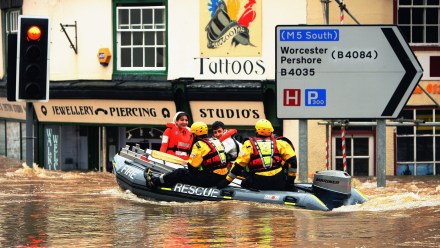
Behold an extraordinary role reversal: the Tories used to define themselves by crunchy competence, and Labour by compassion and an emotional appeal to collective and international solidarity. Tonight, Gordon Brown is styling himself as the right man to steer the nation through its watery crisis: après la deluge, moi. David Cameron, meanwhile, has taken a colossal gamble, and gone ahead with his trip to Rwanda to mark the launch of the Conservatives' international poverty report. Tomorrow's papers will make for rough reading, I predict. As British voters worry about the cost of flood damage and the promise of further inundation, the Tories fly out of the country.
Both sides in the Iraq debate tend to ignore, or downplay, the downside to their preferred course of action. On Meet the Press, New York Times columnist David Brooks put the dilemma that both sides need to address: So are we willing to prevent 10,000 Iraqi deaths a month at the cost of 125 Americans? That's a tough moral issue, but it's also a tough national interest issue because we don't know what the consequences of getting out are. And the frustration of watching the debate in Washington, very few people are willing to, to grapple with those two facts, that there's--that the surge will not work in the short-term, but getting out will be cataclysmic. And you see politicians on both sides evading one of those two facts. But you've got to grapple with them both.

In The Sun this morning Trevor Kavanagh dismisses the Tories chances of winning the next election, writing: “Gordon Brown is going to win—and win big. In the process he will likely set Labour up for a fifth term and 20 unbroken years of socialism.Why? Not because he has necessarily delivered a better Britain over the past ten years – though he has been fiendishly clever. But because the Tories are still soft, arrogant and – some say – idle.” Kavanagh goes on to contrast Brown’s workaholic determination with the Tories more relaxed approach.
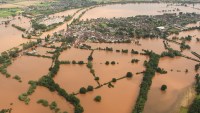
As Middle England sinks further underwater today, David Cameron is off to Rwanda to inspect the gap year-style project overseen by Andrew Mitchell. The timing couldn’t be worse: today, for the first time in decades, there are towns in Britain without clean water. Temporary residents’ centres are opening for the displaced in Oxford. If I were Gordon Brown, I’d visit as many of these places as I could while Cameron is abroad, and be pictured comforting Middle England as Cameron poses with Rwandans And if I were Mr Cameron, I’d avoid the cameras today for precisely these reasons. Fate has made this the worst possible time for him to go.
In Competition No. 2503 you were invited to supply new words for the British national anthem, to be sung to the original tune. Spain’s opposition leader Mariano Rajoy recently called for its anthem to be given words following complaints from athletes who were fed up with humming self-consciously or staring solemnly into the middle-distance while it was playing at major sporting events. The story prompted the Today programme to invite the poet Murray Lachlan Young to come up with new words for ‘God Save the Queen’ which would reflect our changing political society. His opening was pretty feeble: ‘On this Atlantic rock/ We do complain a lot/ And like a drink...’ And it didn’t get much better, which goes to show that this assignment was a challenging one.
Matt is right that the Tories would be daft to dump Dave. First, Labour would have an absolute field day accusing the Tories of panicking and ‘lurching to the right’. Second, it would turn the Tory party into a laughing stock and, last but not least, it is hard to see who could do a better job than Cameron. I was making this case to someone earlier when they asked me: has an opposition party ever won an election after being this far behind in the polls at this point in a parliament? I was stumped and couldn’t think of an example: anyone know of one? Personally, I don’t think the polls at the moment should panic the Tories that much.

One of the most striking things about the end of the ‘cash for honours’ inquiry on Friday was the absence of a victory lap from those who had spent so long under pressure from the police probe. Both Lord Levy and Tony Blair were magnanimous in victory and careful not to criticise the police directly in their statements. This seemed like by far the best tactics for them, it wasn’t in their interests for the police to feel that they had to defend themselves. The new Prime Minister must also have welcomed their restraint; this is a story he wants to go away as soon as possible and anything that adds fuel to the fire is unwelcome from his perspective.
Melissa Kite has a terrific scoop in the The Sunday Telegraph, revealing that Tory MPs have started to send letters to Sir Michael Spicer, the chairman of the 1922 Committee, demanding a vote of no confidence in David Cameron. Here's my column on why they are mad and what Dave should do.
Why Russia’s defensive Sir: The only pertinent fact from Fraser Nelson’s anti-Russia diatribe last week is that the country’s defence budget is 5 per cent that of America’s. (The New Cold War, 14 July). The rest of the article is scaremongering. An evening spent in Moscow should convince anyone that Russia has not left ‘the orbit of the West’, rather that it has embraced our way of life with gusto. Five minutes spent in a supermarket in Saint Petersburg, Saratov or Volgograd nails the lie that ‘the free market has perished in Russia’. And why should not Russian gas companies start to charge market prices for their output, after years of subsidising countries like the Ukraine?
Gordon's response to the floods shows that his political antennae are twitching ferociously in spite of the overall strength of his political position this weekend. If the car-bomb plot was his mini-9/11, this crisis threatens to be the new Prime Minister's mini-Katrina. And he's not going to repeat the errors made by Bush - who famously told the soon-to-be-ex-head of FEMA, Gordon's near-namesake, Michael Brown, that he was doing "a heck of a job". Already, the PM is making dark noises about the failure of the Highways Agency and Environment Agency to liaise properly. Meanwhile, Dave has tried to dust off the disappointment of last week's Ealing by-election, by attacking the Government for its failures of preparation. A big political punch-up could follow - weather permitting.
The queue party in Hampstead was more queue than party - a few Waterstones employees in witches’ hats and T-shirts saying 'Muggle' wandered up and down taking notes of children who had come in fancy dress, but the atmosphere was one of cheerful patience rather than festivity, with everyone waiting patiently until a New Year's Eve-style countdown at midnight. The only remarkable thing about it was the number of people who had decided to come and get their hands on a copy of the book at midnight. At 11, it had stretched as far as the crepe van - by midnight, halfway down the high street.
Coffee House has a review of the latest, and final, Harry Potter book here. The review doesn’t give too much away, but if you’re a dedicated Potter fan I’d recommend finishing the book first.
As Spectator readers would have expected, this magazine was an early and enthusiastic backer of Boris Johnson as the next Mayor of London. On 4 July we gave him our official endorsement and urged him to run on our Coffee House blog (new.spectator.co.uk/coffeehouse). Now that he has thrown his bandana in the ring, we shall be providing regular updates on Boris’s progress: Toby Young, who will cover the campaign in these pages and online, delivers his opening despatch on p14 and his first video diary can be seen on our website.Yet our support for a former editor reflects much more than tribal loyalty. His entry to the race has been an energising moment in British politics.
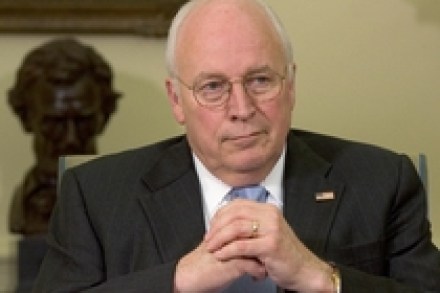
What makes Dick Cheney so unusual a Vice President is that he knows this is his last gig. He really couldn’t give two hoots who he ticks off because after this it is time for the carpet slippers. When Bush picked Cheney in 2000, the general view was that this was a good thing as it would mean that Cheney could give Bush advice without worrying about what the voters of Iowa and New Hampshire would make of it. It also meant that he didn’t need Bush’s help to win the Republican nomination, so he could give Bush frank advice unworried about the consequences of offending the president.
I am of the “Harry Potter Generation”, but truthfully, the massive hype really puts me off the whole thing. I wish I could escape it. Inevitably there are some of my friends who are proud of their Harry Potter obsessions, but not many. It’s for kids and ‘big kids’, right? It’s not very cool. I actually agree, but I have a problem. I’ve been hooked since 11. I genuinely like the books. I like the characters and combinations of all the great things that have made good stories for ages. I think JK Rowling can write; I’m engaged enough to keep reading. So far, I’ve managed to read them all, without giving up and putting them down half way- and that’s something.


Writing on the eve of the most over-hyped book release in history (dare I mention the title), I find myself lost. Never in history has such overexcitement surrounded a book franchise. So what happens when I, a 16 year-old boy, am surrounded by Harry Potter gossip? How do I respond? With a blank expression and a shrug of the shoulders. I am of the opinion that we’ll never see anything like it again. I see the Harry Potter series as just another marketing ploy to extract money from us young’ens. It was preceded by the boy band craze in the 90s, and likely to be superseded by something just as superficial, simply because I don’t think Harry’s that special. I haven’t followed the books religiously since their first publication.

My thoughts on today’s drama 1. Yates will be hopping mad if (as is believed) he recommended charges against Jonathan Powell and others. He may see this as the second time he’s been shafted by the establishment. 2. No criminality doesn’t mean no wrongdoing said Martin Bright, my counterpart at the New Statesman in a Week in Westminster episode we were both invited in for (broadcast tomorrow). Lord Hutton cleared the government of any wrongdoing. But the documents he released damned Messrs Blair and Campbell in the court of public opinion. 3. No one can now claim that Yates wasted time because we don’t know what he found. Yes, he took time.

In a piece keying off the Beckhams arrival in the States, Time magazine tries to explain what unites the English-speaking peoples and comes up with an interesting, distinctly non-Churchillian answer: Britain is now just about as open and classless a society as the U.S. (The Beckhams' habits are far more typical of modern Britain than the boarding-school japes of that other ubiquitous Brit, Harry Potter.) So why bother to settle in the U.S.? For the same reason that investment bankers from New Jersey like London--because the two nations have so much in common. Britain and the U.S. are the most messy, undeferential, schlocky societies on earth, places that like making a fast buck, that enjoy celebrity precisely because it is fleeting.