The Spectator

Brown courts small ‘c’ conservatives

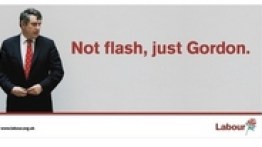
Gordon Brown’s interview in the Daily Telegraph sums up how Brown thinks he can appeal to small ‘c’ conservative voters. He talks, as he did on the Today Programme this morning, heavily about service; telling the Telegraph that, "The only purpose of being in politics is to serve your country. If you are not able to discharge that duty you should not be in that job." He is also trying to mend ties with the armed forces which he shamefully under funded as Chancellor. Later this year, he’ll be releasing a book on British military heroes. Brown emphasises his socially conservative upbringing which resonates with some right of the centre voters.

Bush’s shoulder to cry on

There is a must-read account of George W. Bush’s private mood in the New York Times this morning. Robert Draper, who has interviewed the president for a new book coming out next week, reveals that Bush is more introspective than he appears in public.  Bush tells Draper, “I’ve got God’s shoulder to cry on, and I cry a lot”. Emphasising the point, he says “I’ll bet I’ve shed more tears than you can count as president.” The final purpose of the Bush presidency is, Bush claims, "To get us in a position where the presidential candidates will be comfortable about sustaining a presence [in Iraq]”. Bush is optimistic that by late fall enough progress will be apparent for this to be the case.

Letters to the Editor | 1 September 2007

What would Field Marshal the Duke of Wellington, the coolest of heads, have made of poor William Shawcross’s overwrought emotional plea that we must stay on in Iraq as a kind of act of faith (‘Britain must stay in Iraq’, 25 August)? A menace of our making Sir: What would Field Marshal the Duke of Wellington, the coolest of heads, have made of poor William Shawcross’s overwrought emotional plea that we must stay on in Iraq as a kind of act of faith (‘Britain must stay in Iraq’, 25 August)? Well, the Duke once opined: ‘The real test of a general is to know when to retreat and dare to do it.’ Surely we have reached that point in Iraq, although a retreat needs to be well prepared and deliberate.

Can McCain comeback?

This is the last weekend before the US presidential primaries kick into top gear. At the moment, Rudy Giuliani and Hillary Clinton are comfortably leading their respective fields. But a subway series is far from certain. Hillary might find that the electorate develop an acute case of Clinton fatigue if tawdry scandals begin to dominate the headlines once again. Or, the charismatic Barack Obama could catch fire. While on the Republican side, Giuliani is a particularly vulnerable frontrunner as Matthew Continetti points out in this Weekly Standard piece. One of the things to watch this fall is if the onetime Republican frontrunner John McCain can fight his way back into the race. It is tempting to write off his chances.

In real elections, little sign of the Brown bounce

The Populus data James mentions has been a major factor in soothing nerves within the Tory ranks. I had been told about these figures on two separate occasions by Shadow Cabinet members, but asked not to use it. The data is central to Operation Don't Panic, Cameron's main mission since returning from Brittany. Within some CCHQ quarters, there is concern that Populus data is luring the Cameroons into a false sense of security. But here's another factor to consider: there were 11 council by-elections in August and the Tory lead averaged 12.5% according to Press Association analysis. In these real elections, there is little sign of a Brown bounce. Anyway, if Brown wants to spoil my summer holiday by calling an election, he has about nine hours. I take off at 8.30pm.

The right mission

Tony Blair — remember him? — was better at diagnosis than cure. ‘I think most people would say that in virtually every aspect of their life things are better than they were 30 or 40 years ago,’ he told the Sunday Telegraph in November 2005. Tony Blair — remember him? — was better at diagnosis than cure. ‘I think most people would say that in virtually every aspect of their life things are better than they were 30 or 40 years ago,’ he told the Sunday Telegraph in November 2005. ‘This whole question of respect and law and order, though, is the one area where you’d say we’re probably more fearful, and that is because we can’t deal with these types of new crime in the old ways.

Class and Death

Over at the always thought-provoking Open Kingdom blog, Anthony Barnett makes an interesting point about class, you knew that good only English obsession had to get an airing today, and the rise of emotionalism in the country. Barnett writes that, “At its best (there were also worsts) upper-class behaviour was about good judgement providing the steel for strong emotions and inner integrity. What has changed is that these qualities can now be found more among the lower classes while the upper classes have lost their way… The ranks now know how to deal with loss. Those who once trained them no longer do.”Barnett has some anecdotal examples to back up his point. But I’m not sure there is any huge difference between the way the classes approach death.

A very public display of affection

Come on guys. You are being a little harsh. It may not be "normal" to mark the anniversary of a death - but nothing about Princess Diana's life or death was normal. Prince William and Harry had to share their mother with the entire world. No easy task. Watching today's Service of Remembrance made me cry unashamedly. I would imagine the reason Diana's sons organised this tribute to their mother was because they wanted the world to see they had grown up into two fine men their mother would have been rightly proud of. Harry's speech was not one of a man looking back with anger at the hand fate had dealt him; it was just an articulate, sensitive, moving tribute to a mother he loved. I applaud the pair of them.

Blair’s Diana moment

Thinking back to the events of ten years ago, it is quite remarkable how Blair’s statement grabbed the mood of the nation. Watch this clip and note how Martin Lewis, who up to that point had been sombre but not grief-stricken, choked up summarising Blair’s remarks.  In time the public came to resent Blair for his ability to read its mood and steer it but it is remarkable the extent to which he possessed this skill. One of the odd things about watching The Queen is how the Queen Mother’s cynicism about Blair’s emotionalism that in 1997 seemed to sum up how out of touch the Royals were, now strikes a chord with a cynical, post-Iraq public.

Today will not bring closure

As the excitement about today’s Diana memorial service grows, take a look at Fergus Shanahan’s plain-speaking column in the Sun. He makes the perfectly valid point that the anniversaries of deaths are rarely, if ever, celebrated: there are no services, for example, to mark the passing of the years since Churchill’s death on 24 January 1965. Nor does it seem likely that there will be a major event on 30 March 2012 to mark the milestone of a decade since the Queen Mother’s death.

Diana’s death ten years on

The Britannica blog has been running a rather good forum on Diana and the cult of celebrity. Theodore Dalyrmple’s contribution challenges the sentimentality that has come to surround her in death. “In the orgy of demonstrative pseudo-grief that followed her death, Mr Blair said that the people had found a new way of being British. Indeed so: they had become emotionally incontinent and inclined to blubber in public when not being menacingly discourteous. They had come to believe that holding nothing back was the way to mental health, and their deepest emotional expression was the teddy bear that they were increasingly liable to leave at the site of a fatal accident or at the tomb of someone who had died in early adulthood.” The whole forum is well worth a look.

Miliband and Browne: The Brits have not failed in Iraq

David Miliband and Des Browne take to the Washington Post this morning in an attempt to rebut claims from various US military and intelligence figures that the British have lost the South of Iraq.  The key paragraph of their piece reads:“Commanders on the ground expect that Basra province will in months, not years, be judged to have met the conditions for transfer to full Iraqi security control. As with each of the seven Iraqi provinces already transferred -- four in areas of Iraq previously controlled by U.S.-led forces, three in the south in the U.K.-led area of operations -- the final decision will be taken by the Iraqi government, in consultation with the U.S. commander of the multinational force, based on the conditions on the ground.

German wit

Rosemary Righter’s column in The Times today is trenchant stuff. She calls Diana’s death the “best thing that could have happened to the Royal family”, which seems rather strong even to a Diana-sceptic like myself. (One can only admire, though, her response to her editor when he asked her what all the messages on the tribute bouquets said to her: “One thing,” I said. “The nation cannot spell.” True. Angel was Angle, Heaven was Hevven and Love, more forgivably, was Luv.’) But the reason I am actually writing this post is that Righter has a fantastic example of that rarest of collector’s items, German wit.

Was the Bush administration too principled for its own good in Iraq?

David Ignatius has an intriguing piece in the Washington Post today saying that the Bush administration made a big mistake by not interfering in the Iraqi elections back in 2005. Back then it was viewed as crucial that America did not try and rig the process. Indeed, the conventional wisdom was that the defeat of America’s favoured candidate, Ayad Allawi, was actually a good thing as it demonstrated that it had been a genuine contest. But Ignatius argues that America’s withdrawal from the contest only succeeded in leaving it open for Iran to pervert it to its own ends.

Dave’s wrong choice of words on immigration

I have been mulling over Dave’s Newsnight performance, which was mostly very impressive. I think, however, that his choice of words on immigration was a mistake. The problem with suggesting that there is an acceptable quantum of immigrants, however politely that proposition is expressed, is that it chimes with all that is worst in the party’s history of coping with this thorniest of issues.

Cameron’s Newsnight Review

David Cameron has for some time been wanting to do one of these Newsnight panel-style interviews. Watching it, I can see why. He excels at answering rapid fire questions, and easily recalls all his main slogans and sound bites. Here are my thoughts… 1. He could have been more robust rebutting Michael Crick when he questioned Cameron’s “anarchy in the UK” line. Throughout the Tory years, recorded violent crime peaked at 347,064 a year (in 1997). Last year, it was a record 1.3 million offences. Cameron’s researchers should click through and familiarise themselves with this staggering data. British streets have never been more dangerous.  2. He only mentioned “social responsibility” once. Good.  3.

Cameron impresses in Newsnight grilling

You can watch the Newsnight special with David Cameron here. In it, Cameron confirms Fraser’s earlier report that the Tories will not, thankfully, be stopping all airport expansion. Cameron put in a fairly strong performance. He handled Stephanie Flanders line of questions about whether he felt that she, an unwed mother, should get married or not particularly well. He also did a good job of emphasising that there is nothing inconsistent with modernisation in being tough on crime. Tim Montgomerie has thoughts and analysis here.

Will Brown try and beat the downturn?

Irwin Stelzer has a typically sharp piece in today’s Telegraph in which he makes a crucial point about a rather overlooked political consequence of the recent market turbulence. As Stelzer writes, “The former chancellor surely knows that tax receipts have been sustained largely by payments from high-earners in the City. He knows, too, that it is those very people who are taking a hit from the turmoil in financial markets, and are expecting their incomes to drop this year by at least 25 per cent. Fewer pounds taxed at top rates, lower Treasury receipts, bigger deficits. That forces the Bank to raise interest rates. End of economic growth. Brown must find it tempting to want to beat the downturn.