Eating

Private passions Sir: I was a pupil at St Paul’s School from 1952 to 1957. I remember seeing the bill for a term: £30 tuition, plus £15 ‘extras’ (lunches, books...). I was a scholar, so the £30 was deleted. It was no great distinction to be a scholar, as there were 153 scholars among the 650 pupils. My group of friends all got Oxbridge scholarships. As a student in 1960, I had a holiday job as a milkman. I only earned £12 a week, but some milkmen earned enough commission to bring their weekly wage packet up to £20. In the 1950s, the average milkman could afford to send his son to St Paul’s. The fees now are little under £7,000 a term. Stephen Robinson’s powerful piece (‘Private Grief’, 19 May) shows us what has gone wrong.
Private passionsSir: I was a pupil at St Paul’s School from 1952 to 1957. I remember seeing the bill for a term: £30 tuition, plus £15 ‘extras’ (lunches, books...). I was a scholar, so the £30 was deleted. It was no great distinction to be a scholar, as there were 153 scholars among the 650 pupils. My group of friends all got Oxbridge scholarships. As a student in 1960, I had a holiday job as a milkman. I only earned £12 a week, but some milkmen earned enough commission to bring their weekly wage packet up to £20. In the 1950s, the average milkman could afford to send his son to St Paul’s. The fees now are little under £7,000 a term.
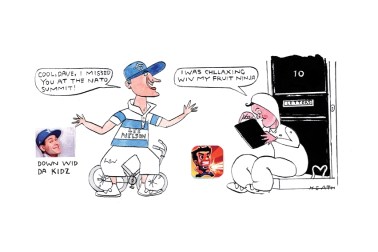
Ministers for funDavid Cameron was reported to be an expert in ‘chillaxing’ through tennis and karaoke. How have other prime ministers been reported to relax? William Gladstone Chopping down trees on his estate Winston Churchill PaintingEdward Heath Sailing, conductingHarold Wilson CookingJim Callaghan FarmingMargaret Thatcher Sorting out piles of towelsJohn Major Watching cricket, making model aeroplanesTony Blair Tennis, swimming after church on SundaysGordon Brown Listening to the Arctic Monkeys Power StruggleThe government published a draft energy bill.
HomeThe International Monetary Fund suggested Britain should undertake more quantitative easing or even cut interest rates. But Christine Lagarde, the IMF’s managing director, said ‘I shiver’ at the thought of Britain’s deficit in 2010 having been left without plans for fiscal consolidation. Vince Cable, the Business Secretary, made a noise for his side of the coalition by writing in the Sun about the report on employment commissioned by the government from Adrian Beecroft, the venture capitalist: ‘Some people think that if labour rights were stripped down to the most basic minimum, employers would start hiring and the economy would soar again. This is complete nonsense.