Social

Goers and go-getters Sir: In her interesting article on the rising equality in the female world (‘Sex and success, 27 April), Alison Wolf states that A*/top-stream girls stay virgins until 20 ‘because they have more important things on their minds’. I am not sure about this. I certainly remember that this was not the case when I was at Wellington in the late 1990s: the A* girls were usually the goers. Nolan Walker London EC1 Ms Kite’s elitism Sir: We would like to take issue with Melissa Kite’s piece (‘Two-wheeled tyranny’, 27 April). I write on behalf of CTC, the national cycling charity. I was delighted to find two of our members are active cycle campaigners with firsthand knowledge of the Kenilworth Greenway, referred to in her article.
Home In the run-up to local elections, Kenneth Clarke, the Minister without Portfolio, described the UK Independence Party candidates as ‘clowns’. RAF Waddington, Lincolnshire, assumed control of ten Reaper drone aircraft in use over Afghanistan. Irfan Naseer, 31, from Birmingham, the ringleader of a plot to use eight suicide bombers in attacks that could have killed thousands, was sentenced to five life sentences; of ten others charged, four men who admitted an offence of travelling overseas for terrorism training were sentenced to three years, and six men to between four and 18 years. Six men from the West Midlands pleaded guilty to planning to bomb an English Defence League rally at Dewsbury; five took a homemade bomb to the rally but arrived too late.
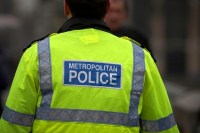
The press, declared Lord Leveson, must not be allowed to mark its own homework. There is one profession, however, which the government seems quite happy to allow to judge its own success. Every few months we are presented with the latest set of crime statistics and invited to believe that crime is falling, clear-up rates are improving and so on. It would be much more convincing if the figures for recorded crime were not themselves compiled by the police — a group with a rather obvious vested interest in presenting those figures in the best possible light. A set of figures teased out of the police this week presents a different picture of police clear-up rates. Constabularies appear to have decided that now even a caution is too harsh a punishment for thugs.
Dots on the map An Edinburgh man is planning to stay 60 days on Rockall, a rocky island in the Atlantic 200 miles off the Western Isles — the longest-ever stay. Rockall was claimed for the United Kingdom in 1955, but it is far from our remotest colonial possession. Other islands include: Oeno A 120-acre island set within a three-mile-wide atoll in the Pacific 89 miles northwest of Pitcairn. It is known as the place Pitcairners go when they want to get away from it all. And unlike Rockall, it has a tap. Ducie Island For those who find Oeno too busy, there is always Ducie Island, a 1.5 square mile island 290 miles east of Pitcairn, discovered during an expedition to capture the mutineers from HMS Bounty.

In her cover piece for this week's Spectator, Alison Wolf describes the divide between ‘alpha females’ and other women. Here are some of the starkest differences, illustrated using figures from her book The XX Factor. 1. The rise of the alpha female. ‘In England, by the age of 16, girls are dividing into two distinct groups. The top sixth set off along a well-signed route: more hard work at A-level, and then a good university (where they can lose their virginity to an alpha-track boy). A full bachelor’s degree and, increasingly often, a postgraduate one as well; and a well-paid “Class 1” alpha job, professional or managerial. It’s the same all over Europe and North America, where half of “Class 1” jobs are held by women.