Beach 2
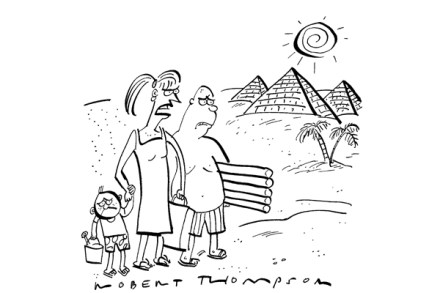
We would not want to return to the days when the transport secretary was actively engaged in the running of the railways, down to what the last wheel-tapper was paid. Nevertheless, Patrick McLoughlin’s answer when invited to condemn the £5 million bonuses which could be on offer to Network Rail directors over the next three years is a depressing comment on everything that is wrong with the railway industry. ‘It is not something I have interfered with because it is a private company,’ he said. Network Rail is a private company of sorts, but it is one which is 100 per cent owned by the taxpayer. If the Transport Secretary is not prepared to speak up on behalf of its 60 million shareholders, then who is?

Absent friends Sir: Alec Marsh (‘Welcome to Big Venice’, 10 August) accurately observes that Londoners are priced out of central London by largely foreign buyers of second homes. Wealthy foreigners not only buy, they also rent, often living in London for a few years, during which they frequently return to their first home for weeks or months at a time. In Marylebone, where I have lived for 43 years, an average earner can neither buy nor rent. Moreover, rentals are only short hold. This contributes to the death of communities: it is not their foreignness which makes the new residents bad neighbours, nor their love of the convenient transport and vastly expensive shops and restaurants, but their transience and consequent lack of interest in local people, history and customs.
Home The population of the United Kingdom rose by 420,000, to 63.7 million, by the middle of last year, with the number of births, 813,000 (more than a quarter to mothers born abroad), being the highest since 1972. Thames Water asked the regulator Ofwat to allow it to impose a 12 per cent increase on bills. Unemployment fell by 4,000 to 2.51 million in the second quarter. Regulated rail fares will rise by 4.1 per cent, a percentage point higher than the rate of inflation in July, which, measured by the Retail Prices Index, fell from 3.3 to 3.1 per cent, and, measured by the Consumer Prices Index, from 2.9 to 2.8 per cent. The rate of house price inflation rose from 2.9 per cent to 3.1 per cent. Jeremy Paxman appeared on Newsnight with a beard.
Ward ceremony There have been 29 health secretaries since 1948. How many have wards that — though not necessarily named after them — bear their surname? NYE BEVAN Hillingdon, Harlow, Ealing, East London, Princess Alexandra, Stepping Hall (Stockport) ENOCH POWELL Lewisham Hospital KENNETH ROBINSON Mile End, Lewes, Chesterfield, St Andrews BARBARA CASTLE Warwick, Royal Berkshire, Worthing PATRICK JENKIN West Cumbria KEN CLARKE Kent and Canterbury, Northwick Park, Royal Hampshire STEPHEN DORRELL Royal Berkshire ALAN JOHNSON Lincoln, Bridling, Buxton (closing) ANDY BURNHAM Nottingham City The price of progress NHS funding has trebled since 1997. Some performance indicators over that period VISITS TO A&E Total number Q2 2003 3.21m Q2 2005 3.
In this week's Spectator, Brendan O'Neill turns on unpaid interns who complain about their lot, arguing that they should instead be paying their employers for the opportunity. He attacks the argument that unpaid internships hit working class young people the hardest, when these placements will encourage self-drive, rather than self pity. O'Neill writes: It speaks volumes about the parlous state of modern history teaching that these interns so liberally refer to themselves as ‘slaves’. Anyone who had been taught properly about the Roman era, or about black slavery in early America, or about the Holocaust, would know that there’s rather more to being a slave than being asked by a gruff boss to buy him a hazelnut latte.

The book reviews in this week’s issue of the Spectator is worth the cover price. Here is a selection of quotes from some of them. The historian Anne Somerset enjoys Leanda de Lisle’s ‘different perspective’ on the Tudor dynasty. She reminds us that these self-invented parvenus had ‘vile and barbarous’ origins. ‘When Henry VII’s surviving son inherited the throne as Henry VIII, he continued his father’s policy of judicially murdering anyone close enough to the throne to imperil the claims of his immediate family. Yet the dynasty’s future remained precarious, for Henry’s six marriages produced only a single male heir.