Laugh
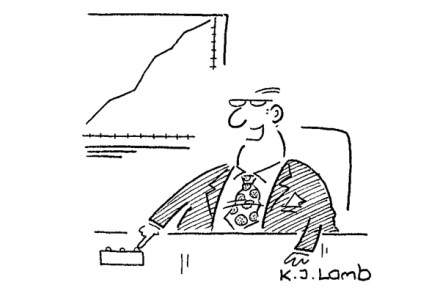
It is good to see the Guardian suddenly rediscover its interest in the sanctity of a free press. Just five months ago, the paper seemed to have given up on the idea, when it backed the statutory regulation of newspapers. It did not show any particular alarm when Rupert Murdoch’s journalists were hauled out of bed at 6a.m. and had their computers confiscated while police tried to identify their sources. But when the Guardian is visited by a civil servant to discuss its possession of secret material concerning British and American intelligence and the partner of one of its journalists is questioned and then released at Heathrow airport, it reacts as if it is the victim of a constitutional outrage.
Some doctors write Sir: Professor Meirion Thomas (‘Dangerous medicine’, 17 August) may be an excellent surgeon but he is uninformed about the nature of GPs’ work. For many older consultants in the NHS, it will have been decades since they last spent any time in a GP setting, if they have at all. He fails to realise that 95 per cent of the work of diagnosing, treating and caring for patients takes place within general practice. Common illnesses range from depression, to diabetes, asthma and hypertension, as well as many others. Dr Meirion Thomas’s idea that nurse specialists are the answer betrays his lack of understanding that most patients present to GP as a complex mix of interrelated symptoms and other factors.
We will remember them A German diplomat called on Britain to commemorate but not celebrate the centenary of the Great War. Some of the events planned so far: — Candle to be extinguished in Westminster Abbey at 11 p.m. on 4 August — First world war paintings to be displayed on 22,000 poster sites around the country — Memorial arch to be constructed in Folkestone, from where many soldiers left for the front — Replicas of biplanes to be flown from Dover to St Omer — Bus used at the front to be restored by London Transport Museum A sense of conviction The Football Association has been attacked for clearing just two out of 473 players brought before it on disciplinary matters in 2011, a ‘conviction’ rate of 99.6 per cent.

Home The cost of the HS2 railway line was expected by some in the Treasury to rise from £43 billion to £73 billion. The number of new homes being built in England rose by 6 per cent in the three months to June. The United Kingdom has lost more than 40 per cent of its bank and building society branches since 1989, according to a report by Nottingham University. The proportion of candidates achieving A or A* grades at A-level fell a little to 26.3 per cent, from 26.6 per cent in 2012. The overall pass rate rose marginally to 98.1 per cent from 98 per cent. David Cameron, the Prime Minister, told the BBC that he was suffering from a ‘protruding disc’ in his back.

The forecast is bad. Football is back. Gloom strikes. Cure the malaise by reading the book reviews in this week’s Spectator. Here's a selection: Richard Davenport-Hines introduces the celebrated American novelist and businesswoman Willa Cather to a British audience: ‘Cather was a pioneering career woman who in the late 1890s supported herself as a magazine editor and then as newseditor at the Pittsburgh Leader — an unprecedented post for a woman. She was later a successful managing director ofMcClure’s Magazine. With her gumption and vitality, she was a stalwart among women facing the ‘rough-and-tumble’ of competitive work.