The Spectator

The Spectator at war: How to talk to a pacifist

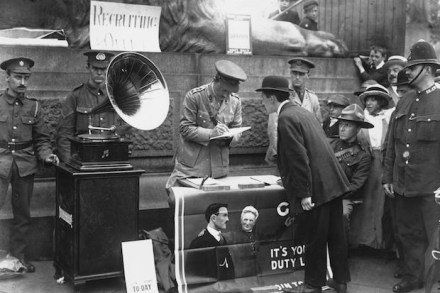
‘Keep your temper’, from The Spectator, 8 August 1914: ‘When a nation goes to war the policy of the Government nearly always fails to carry with it the convictions of a minority.  It is, of course, very rare for a Government who make war to find themselves without the support of the majority – for, as a rule, they would not even contemplate war without ascertaining the general tendency of public opinion – yet such cases have happened. It is probable that the majority were opposed to the war of George III. and Lord North against the American colonists.

Spectator letters: A defence of nursing assistants, a mystery shotgun, and a response to Melanie Phillips

Poor treatment Sir: Jane Kelly’s article (‘No tea or sympathy’, 2 August) on the lack of empathy and emotional support shown to patients is humbling. It is also worth noting that showing patients a lack of compassion has wider consequences. We know for instance that around 13,000 cancer patients feel like dropping out of treatment each year because of how they are treated by staff. In other words, it could risk their lives. It is unfair to say, however, that the nurses who used to be ‘angels’ have been replaced by the ‘mechanistic bureaucrats’ of assistants.

Portrait of the week | 7 August 2014

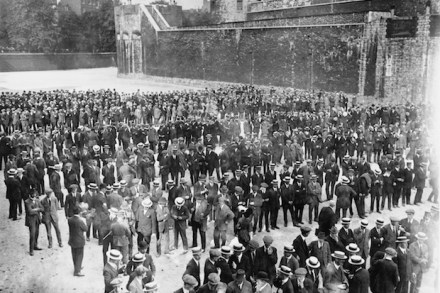
Home The Duke and Duchess of Cambridge joined 50 heads of state at the St Symphorien cemetery near Mons to commemorate the invasion of Belgium in 1914. The Prince of Wales attended a service at Glasgow cathedral; the Duchess of Cornwall attended a service at Westminster Abbey where a lighted flame was put out at 11p.m., the hour that Britain had declared war on Germany on 4 August. Many people in Britain kept one light burning for an hour that evening. The Queen attended a private service at Craithie church, near Balmoral. In the grassy moat of the Tower of London, 888,246 ceramic poppies were being planted, one for each British and Colonial death in the first world war.

Sorry, but trains can’t really replace welfare lines

George Osborne proposed an attractive idea this week: that spending on state benefits should be diverted into new infrastructure in the North. His conceit was that while welfare spending produces no economic return, spending public money on new high-speed railways and the like will inevitably boost the economy. We can’t fault the former assertion: that paying people to be idle is a drain on the public purse. But we take issue with the notion that infrastructure will always serve to boost the economy.