The Spectator

The Spectator at war: Normal public service

From our UK edition

THE WAR AND THE CIVIL SERVICE. [To the Editor of The Spectator] SIR,—May I suggest that some of the normal public services may, for the time, be curtailed in order to give patriotic young men the opportunity of serving their country in another way? The number of deliveries of letters might be reduced without serious inconvenience; a possible curtailment may be suggested in many other directions. Service with the colours is the one thing that matters now, and it should be made plain in every town and village how greatly those who are debarred from it honour and appreciate those who accept it. Everywhere the families of those who have relatives in any branch of the Service should be marked out for special consideration and special distinction.
The Spectator at war: A city at war

From our UK edition

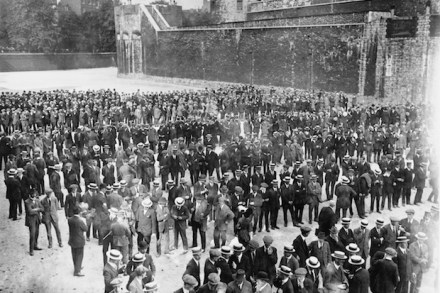
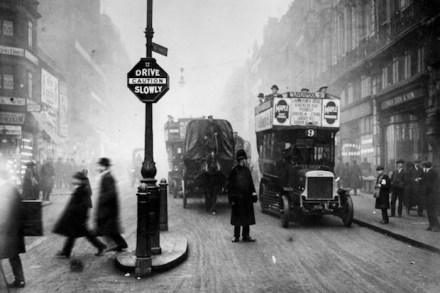
From The Spectator, 5 September 1914: LONDON changes day by day, and the London of the first few days of the war lies far in the past, distant for all of us by differently measured aeons of time. The trainloads of troops, the horses, the hurry, the altered railway service, the packed streets, the questioning crowds, the visible stress and strain of meeting the new conditions and the new standards of the world—these are gone. London instead is very quiet, and exceedingly hard at work. The noise of preparation has ceased, and now the silence that has followed has a quality of its own. There is a new sound in it, which a Londoner returning from travel would detect at once.

Letters: Andrew Roberts on Cameron, and a defence of Kate Bush

From our UK edition

Advice for Cameron Sir: David Cameron once saved my life from a school of Portuguese man o’ war jellyfish, so now’s the time for me to save his political life with this advice: to do nothing. The British people are a fair-minded lot; they will give him another term in office because he and George Osborne have delivered the best growth rates in Europe despite the monstrous overspending and boom-bust of the Blair-Brown years. Every newly incoming ministry since the war has been re-elected — except Ted Heath’s, which broke all the rules anyhow — and this one will be too. Douglas Carswell is an intelligent man who has made a stupid mistake.

An undiplomatic history of British diplomatic dinners

From our UK edition

In poor taste US Ambassador Matthew Barzun attracted the ire of chefs for complaining that he had been served lamb and potatoes too often since arriving in Britain. Some others who have landed in the oxtail soup after complaining about British food: — At a summit in 2005 former French President Jacques Chirac was said to have joked with world leaders that his country’s problems with Nato originated from being persuaded to try haggis by its former secretary-general George Robertson. He went on to say of the British: ‘one cannot trust people whose cuisine is so bad’.

Nato must rediscover its purpose, or it will end up losing a war

From our UK edition

This week’s Nato summit was originally intended to look back on lessons learned from Afghanistan and reflect on the notion that (as Barack Obama put it) a ‘decade of war is now ending’. How naively optimistic that seems now. In the past week a second American journalist has been beheaded in Iraq and the Sunni insurgents who call themselves Islamic State say that a British hostage will be next. So far, their war has claimed more than 25,000 lives. Meanwhile Russia is intensifying its war with Ukraine in a conflict that has seen the loss of at least 2,000 lives.

Podcast: Tory civil war, Scotland’s political soul and naked photos of celebrities

From our UK edition

Do the Tories think they’ve already lost the election? Their behaviour is certainly beginning to suggest so. In this week’s issue, James Forsyth and Isabel Hardman discuss the civil war that is raging in the Conservative party. A party that should be readying itself for victory is now preparing to tear itself apart in opposition. But can Cameron do anything about this? Isabel, James and Fraser Nelson weigh up his options in this week’s podcast. It’s a different story up in Scotland. The referendum debate has ignited politics, and galvanized both sides of the political spectrum.

The Spectator at war: Maintaining the machinery of commerce

From our UK edition

From The Spectator, 5 September 1914: THE general public is quite excusably befogged by the repeated references in the Press to the financial difficulties which are blocking the way to a general resumption of international trade. The sea has been opened by the power of our Navy, but commerce still hesitates to resume its normal course. At the same time, our Stock Exchange remains rigidly closed, and the mora- torium has been extended for another month. These two facts alone suffice to prove that there must be some very grave interruption to the ordinary machinery of finance and commerce. Yet it is known that the Government have taken the unprecedented step of guaranteeing an enormous number of financial transactions with the very object of putting the machinery of finance again in motion.