Share

Let’s subsidise weddings Sir: Fraser Nelson (‘Marrying money’, 15 November) points out that marriages tend to last longer than cohabitations and that this is a good thing. But there is only one obvious difference between being married and merely cohabitating. If you are married you’ve been through a marriage ceremony and if you’re not you haven’t. The marriage ceremony brings the couple together to make vows to each other before God (optionally), the representatives of the state and their gathered families and friends. But crucially at these ceremonies the wedding guests also formally commit to supporting the couple in their marriage. This is a very beautiful thing in itself but its practical consequences are highly beneficial.
Yeah, Bob, they know The answer to the rhetorical question posed by the Band Aid single, ‘Do they know it’s Christmas?’, is broadly yes. Christmas Day is a public holiday everywhere in Africa except Mauritania, Western Sahara, Morocco, Algeria, Tunisia, Libya and Somalia, although countries have widely differing customs associated with the event. — In Liberia, one of the Ebola-affected countries, it more resembles Halloween, where children go from door to door dressed as demons and begging for presents. — The two countries where Bob Geldof’s line might be appropriate are Ethiopia, the target of the first record in 1984, and Egypt.
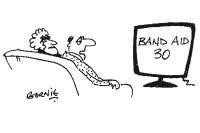
Anyone listening to the BBC this week could be forgiven for thinking that the musician Bob Geldof had just emerged from Africa, like a latter-day Dr Livingstone, the first westerner with news of a deadly new virus. He and his makeshift band of celebrities have adopted Ebola, their song blazing from the radio while Geldof himself has been in every studio exhorting people, with his usual stream of expletives, to buy it. Unless you have been in isolation for the past six months, the Band Aid single will not have raised your awareness of the disease one bit. Since the outbreak was first confirmed in Guinea on 22 March, many hours of news coverage had been broadcast and many millions raised to help the aid effort.

Home David Cameron, the Prime Minister, said: ‘Red warning lights are once again flashing on the dashboard of the global economy.’ He then offered £650 million to a ‘green climate fund’. In a speech in Singapore, Mark Carney, the Governor of the Bank of England, said that fines for banks over rigging foreign exchange rates showed that ‘it is simply untenable now to argue that the problem is one of a few bad apples. The issue is with the barrels in which they are stored.’ Official figures showed that the number of British Army reservists has been boosted by a recruitment drive in the past year from 19,290 to 19,310. Friends of the Earth went to law to secure the future on the river Otter of a family of beavers living wild there.

From The Spectator, 21 November 1914: We are glad to learn that the laudable persistence of the Prince of Wales has been rewarded, and that he has been allowed to go to the front, where he is now an A.D.C. to Sir John French. We can well believe the statement that the Prince is at the present moment the happiest young man in the world. He has got his way, and it is the way of honour, but it would have been a bad example if he had been allowed to go a day before his military superiors reported him sufficiently trained to take his place at the front.
From ‘News of the Week’, The Spectator, 21 November 1914: We are glad to learn that the laudable persistence of the Prince of Wales has been rewarded, and that he has been allowed to go to the front, where he is now an A.D.C. to Sir John French. We can well believe the statement that the Prince is at the present moment the happiest young man in the world. He has got his way, and it is the way of honour, but it would have been a bad example if he had been allowed to go a day before his military superiors reported him sufficiently trained to take his place at the front.
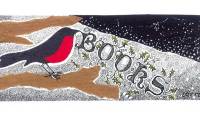
Jane Ridley 2014 has been the year of 1914. In the same way that Christmas puddings appear in supermarkets in October, many of the contestants in the publishing race for 2014 defied starter’s orders and came out pre-maturely in 2013. What has been striking about the bumper crop of first world war books is the terrifically high standard. One of last year’s books which I’ve only just got round to reading in paperback is David Reynolds’s Long Shadow (Simon & Schuster, £9.99). Because the Great War seemed so meaningless, killing so many British soldiers for reasons which remain remote and obscure even today, it has always been especially difficult for the British to make sense of it.
In this week's Spectator, out tomorrow, our leading article looks at the Band Aid 30 single and why it's time for Bob Geldof to pack Band Aid in. Pickup a copy tomorrow or subscribe from just £1 here. Anyone listening to the BBC this week could be forgiven for thinking that the musician Bob Geldof had just emerged from Africa, like a latter-day Dr Livingstone, the first westerner with news of a deadly new virus. He and his makeshift band of celebrities have adopted Ebola, their song blazing from the radio while Geldof himself has been in every studio exhorting people, with his usual stream of expletives, to buy it.


From The Spectator, 21 November 1914: If nations obtain the Governments that they deserve, it may be hoped that they do not always deserve their postage-stamps. If that were so, we should be a less deserving nation than we were in the twenty or thirty years which followed the introduction of "adhesive labels" in 1840, when we had some of the finest stamps that have ever been issued. The black penny, the red penny, and, above all, the blue twopenny stamps of 1840 to 1880 have never been surpassed for strength of colour and simplicity of design. When 1880 brought the brick-red penny, and 1881 began a pale procession of lilacs and greens, surely England fell far.