Blanket
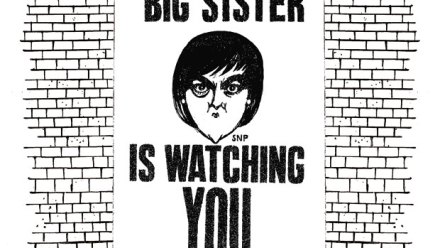
Scotland’s silent majority Sir: Hugo Rifkind’s article (‘Scotland’s nasty party’, 9 May) is a first for the media. It expresses the dismay, disbelief and incomprehension felt at the rise of the SNP by least one — and I suspect many — of the silent majority in Scotland. When will the media confront Nicola Sturgeon’s claim to speak for Scotland, as opposed to allowing her to deliver an unchallenged party political broadcast? She can only speak for the SNP, who at best can speak for half of Scottish voters. Not in my name. I want no part of her strident, demanding, aggressive brand. The article did omit one issue. Thousands of young Scots work in England and abroad, developing and enhancing their expertise before returning home.
Plagued by stigma The World Health Organisation told doctors to stop naming diseases after people, places and animals so as not to stigmatise them. But are diseases even really associated with things that gave them their name? — Spanish flu. First identified in an army hospital in Kansas in March 1918. It gained its name because Spain was a neutral country, and uncensored newspaper reports made it appear uniquely affected. Subsequent theories have had it originating in China or at an army camp in France. — Legionnaires’ disease. First identified after an outbreak at a convention of the American Legion at the Bellevue-Stratford Hotel, Philadelphia, in July 1976. — Ebola.
Home David Cameron, the Prime Minister, soon got used to the surprise of the Conservatives being returned in the general election with a majority of 12. He retained George Osborne as Chancellor of the Exchequer and made him First Secretary of State too. Theresa May, Philip Hammond, Michael Fallon and Iain Duncan Smith also stayed put, but Chris Grayling replaced William Hague, who had left the Commons, as Leader of the House, to be replaced as justice secretary by Michael Gove, who was replaced as chief whip by Mark Harper. Amber Rudd became Energy Secretary. John Whittingdale became Culture Secretary in place of Sajid Javid, who became Business Secretary. Boris Johnson was to attend weekly political cabinets.
As David Cameron lined up beside Nick Clegg and Ed Miliband at the Cenotaph on the day after the general election, he said that he had thought he would be the one writing a resignation statement that day. He may also have imagined how history would have judged him: as a so-so Tory leader who didn’t quite manage to win an election against the reviled Gordon Brown and was booted out after one term. A leader who was good at balancing a coalition but who didn’t stand for (or achieve) very much himself. It would have been a miserable legacy. Luckily he now has the chance to reshape it. The political landscape he surveys has changed utterly. Of all the political parties, only the Conservatives and Scottish Nationalists are intact. The Labour party is settling down for a long civil war.

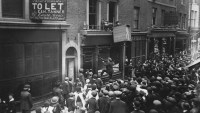
From ‘The Right Spirit of Concentration’, The Spectator, 15 May 1915: It need not be supposed that we are blind to the dangers which arise from a large number of aliens in our midst. We have several times written of these dangers. But latterly, whenever the subject was debated in Parliament, the answer was that the War Office were responsible for the control of aliens who could do harm, and that the War Office were doing what they thought necessary. We may, if we like, suspect that the War Office were not doing enough, but they, at all events, were in possession of the facts and we were not.
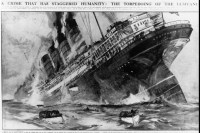
From ‘Germany and the United States’, The Spectator, 15 May 1915: The text of President Wilson’s Note to Germany on the sinking of the Lusitania has not been published at the time when we write, but there is no doubt that the unofficial summaries convey its sense accurately enough. It asks that some assurance shall be given that in future unarmed merchantmen carrying noncombatants shall be searched by the German Navy, and that the passengers and crew shall be transferred to a place of safety, before the prize is destroyed… After his earlier declaration that Germany would be held to ‘strict accountability’ for the loss of American lives, Mr Wilson could not have done less than send such a Note. If he had acted literally on his words he would have done much more.
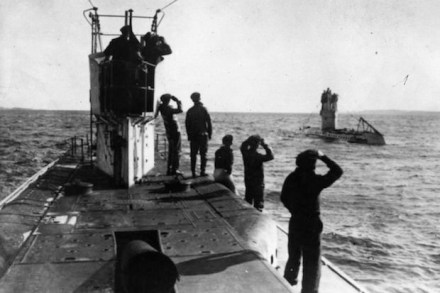
From ‘Germany and the United States’, The Spectator, 15 May 1915: The questions that concern us now to the exclusion of all others are: What will the German answer be to Mr. Wilson? and To what action by the United States will Mr. Wilson's Note lead? We take it for granted that Germany will not consent to abandon her submarine campaign against "unarmed merchant vessels carrying non-combatants," for that would mean an entire reversal of her criminal policy at sea. She attaches enormous importance to that policy, and hopes by means of it ultimately to neutralize the existence of our Fleet. Besides, she has dipped her hands too deep in illegality to draw them out now. She can hope to succeed only by further and worse crimes. Opposed to that fact we have the other fact that Mr.
From ‘News of the Week’, The Spectator, 15 May 1915: SINCE our last issue every day has been to packed with incident and emotion that it is difficult to see events in their right perspective. The diabolical crime of sinking the ‘Lusitania’ is, from a military point of view, of course much lees important than the development of large and critical movements on both fronts of the war. The battle raging in the western theatre is probably the greatest which has yet been fought, and, measured by the employment of artillery, it is probably the greatest battle in history.