The Spectator
Thursday
Letters | 2 July 2015
How to fix Detroit Sir: When I last flew over my native Detroit five years ago, vast tracts of it still resembled Machu Picchu. From the ground, it was little better; in what had been a prosperous Italian-American neighbourhood when I lived there in 1964, there were only five houses left standing. Stephen Bayley (Arts, 27 June) marvels that ‘You could buy an entire house for $10,000’ — but in truth the taxes needed to support Detroit’s notoriously corrupt governments are so high that you can’t give them away unless they are in one of the few islands colonised by the middle classes. Indeed, the city filed for bankruptcy in 2013, with debts estimated at around $20 billion. I have no problem with gentrification, and I’ve done a fair bit of it myself.
Barometer | 2 July 2015
Bank job Should we buy shares in companies which print banknotes in expectation of one getting to print millions of drachma notes? — In May, according to the ECB, there were a total of 17.6bn euro notes in circulation. Given that Greece accounts for approximately 2.5% of the GDP of the eurozone, 441m of these were Greek, and might need replacing with drachma notes in the event the country leaves the euro. — However, there is already a good business in printing replacement euro notes. In May, 2.76bn notes were taken out of circulation and 2.88bn new ones were put into circulation.
Fracking Lancashire
That democracy is a superior form of government to any other goes without saying. But in order to function, it has to be conducted in such a way and on such a scale as to ensure that the people or their elected representatives are making decisions based on genuine alternatives. With this week’s decision by Lancashire County Council to reject a second application for fracking on a site near Blackpool, something has gone seriously wrong. An important national issue has been allowed to be settled according to purely local concerns.
Portrait of the week | 2 July 2015
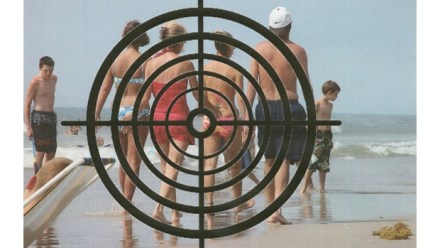
Home At least 30 British people were among 38 shot dead at a beach resort at Sousse in Tunisia by Seifeddine Rezgui, aged 23, a Tunisian acting for the Islamic State and said to have been trained in Libya. Soldiers, emergency services and 1,000 police took part in a two-day exercise in London simulating a terrorist attack. A statutory obligation became binding on public bodies, including schools, to prevent people being drawn towards terrorism. Nicky Morgan, the Education Secretary, said that schools should look out for ‘homophobia’ as a symptom of Islamist jihadism.

Books and arts opener – 2 July 2015

The Spectator at war: Masters of the field
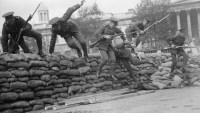
From ‘Bogy-Mongering’, The Spectator, 3 July 1915: Of late there have been all sorts of dark hints and rumours as to wonderful new German devices by air, land, and water. No doubt such devices will be tried, and no doubt they will give us some anxious moments, just as did the poison-gas. It is not, however, by such sensational devices that battles are won. The shell, the bayonet, and the rifle still remain masters of the field. Once again, the danger for us is not in fancy inventions or in the bogy schemes we have described. It is in want of preparation, want of activity, want of men and munitions. It is to procuring these that we must bend our minds and our energies.
Secret weapons
From ‘Bogy-Mongering’, The Spectator, 3 July 1915: Of late there have been all sorts of dark hints and rumours as to wonderful new German devices by air, land, and water. No doubt such devices will be tried, and no doubt they will give us some anxious moments, just as did the poison-gas. It is not, however, by such sensational devices that battles are won. The shell, the bayonet, and the rifle still remain masters of the field. Once again, the danger for us is not in fancy inventions… It is in want of preparation, want of activity, want of men and munitions. It is to procuring these that we must bend our minds and our energies.
Wednesday
Podcast special: The case for Heathrow expansion
After three years and £20m, Sir Howard Davies’ Airports Commission has made its recommendation: Heathrow should have a third runway, and Gatwick expansion should not be ruled out either. But that doesn’t mean shovels will soon be tearing up the ground in West London: David Cameron needs to face up to making a decision, and face down both interest groups and parts of the Conservative party. The questions of where and why we need to build airport capacity remain urgent ones. In this special View from 22 podcast, recorded before the announcement, The Spectator’s Fraser Nelson asks how Britain can best maintain its connectivity to the world.


The Spectator at war: Registering against conscription
From ‘Arraying the Nation’, The Spectator, 3 July 1915: The voluntary system has no doubt certain advantages, but under a great strain it becomes the refuge of the slacker—of the lazy man, the selfish man, and the cowardly man, It is a system which reserves all the blows for the willing horse, and allows the unwilling to trot along in cynical security. But though this is our view, and we should not be candid if we did not set it forth, there is no reason per se why the advocate of the voluntary system should be against a National Register.
Tuesday
The Spectator at war: The value of thrift
From ‘Thrift and the War Loan’, The Spectator, 3 July 1915: There can be little doubt that tens of thousands of people who would never think about the War Loan merely as an investment can readily be persuaded to put their money into it on the ground that it is a patriotic duty so to do. But if every- body is to subscribe, everybody must save money, and part of the object of the campaign which Mr. Asquith and Mr. Bonar Law have inaugurated is the advocacy of thrift. This advocacy must of necessity be directed to all classes in the community. To single out any particular class and urge upon it alone the duty of thrift would be nothing less than an insult. The duty is incumbent upon all citizens, and the only pity is that it was not urged upon the nation at an earlier date.