Books and Arts – 16 February 2017


From ‘The confiscation of enemy property’, The Spectator, 17 February 1917: It is perfectly possible to remove German influences without confiscating German property. This, as far as can be gathered, is the policy which the French have followed, and in their interest as well as in our own we ought also to follow it. The Germans, to give them in this matter the full credit which is due to them, have been very slow to take any steps against British property held in Germany… We do not wish to give them an excuse for fresh crimes. Our business is to punish them as a nation for the crimes they have already committed. In order to effect this object we have to concentrate all our energies upon beating our enemy in the field and on the sea.
No fear Sir: Why does Matthew Parris think I am ‘secretly terrified’ of having voted to leave the EU (‘Brexiteers need ladders to climb down’, 4 February)? Anyone over the age of 50 knew that choosing to vote Leave or Remain was not an easy decision. My own beliefs nudged me just far enough to vote Leave; my partner’s beliefs nudged him just far enough to vote Remain. Mr Parris admits that he can imagine Brexit being a surprising success, and I may have to face the fact that it could be a failure. We are both reasonable people. I was satisfied with the result, but since June I have shut up and kept my head down (I do live in Brighton!).
Match of the knights Emails emerged suggesting David Beckham would rather appreciate a knighthood. How many goals do you have to score for England (or what else do you have to do in football) to gain the honour? — Alf Ramsey (knighted 1967): 3 goals for England, won World Cup as manager — Bobby Robson (2002) 4 goals, took England to World Cup semi-finals — Trevor Brooking (2004) 5 goals, was chairman of Sport England — Stanley Matthews (1965) 11 goals — Tom Finney (1998) 30 goals — Bobby Charlton (1994) 49 goals (David Beckham scored 17 goals for England.
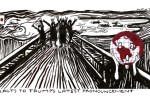
Home John Bercow, the Speaker of the House of Commons, said he was ‘strongly opposed’ to an address being made during a state visit by President Donald Trump, either in Westminster Hall or the Royal Gallery in the Lords: ‘I feel very strongly that our opposition to racism and sexism and our support for equality before the law and an independent judiciary are hugely important considerations,’ he said. Lord Fowler, the Lord Speaker, told the Lords: ‘I was not consulted,’ and added: ‘I will keep an open mind and consider any request for Mr Trump to address this Parliament.’ Alastair Cook, aged 32, resigned as captain of the England Test cricket team after 59 Test matches; he is England’s highest scorer in Tests, with 11,057 runs.

Throughout John Bercow’s political career he has felt the need to atone for his student days when he was a member of the Monday Club. The Monday Club’s policy called for an end to Pakistani immigration, voluntary repatriation, and other ideas that would make Donald Trump blanch. Bercow now parades himself as a champion of liberal values and this week declared that he would not invite Trump to address Parliament on account of his ‘racism’ and ‘sexism’. He had welcomed China’s Xi Jinping and Indonesia’s President Yudhoyono, but decided he must draw the line at the President of the United States. In so doing, Bercow has helped demonstrate why Trump won the American presidential election. Through his bombastic language and taunting 3 a.m.
From ‘The United States and Britain’, The Spectator, 10 February 1917: It would be easy to write down a hundred reasons why unclouded friendship and moral co-operation between the United States and Britain are a benefit to the world, and why an interruption of such relations is a detriment to progress and a disease world-wide in its effects. But when we had written down all those reasons we should not have expressed the instinctive sentiments which go below and beyond them all. To our way of feeling, quarrelling and misunderstanding between the British and American peoples are like a thing contrary to Nature.
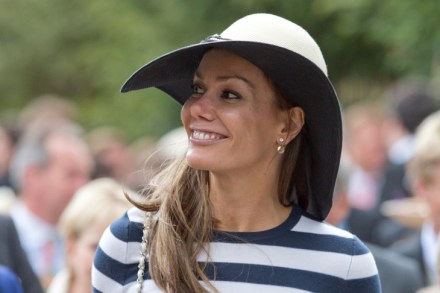
Tara Palmer-Tomkinson, the socialite and reality TV star, has died at the age of 45 from a brain tumour. In the 27 July 1996 issue of The Spectator, she advised people not to believe all that we read about her in the papers: It is agreeable to wake in the morning and find a national newspaper praising one's beauty. It is far less agreeable to discover that this praise has been set in the sour old mould of 'beauty rather than brains'. The Times diary recently printed two stories suggesting — not to put too fine a point on it — that I am stupid. In the first, I had apparently been introduced to a member of the Life Guards and asked him, 'Which beach?' In the second, I had joined a conversation about Sir James Goldsmith's party, saying, 'When is it happening?
Going Dutch Sir: As a Dutch man who lives in Britain, I found it heartening to read two such different but well-considered articles on the state of my home country (‘Orange alert’ and ‘Dutch courage’, 28 January). Douglas Murray is right to attack the Dutch government for its attempts to criminalise opinions it doesn’t like. I take issue, however, with his defence of Geert Wilders, who does indeed resemble Donald Trump in his eagerness to stoke outrage for political gain. His film Fitna, while pretending to be an honest statement about the nature of Islam, was really just an attempt to be so shocking as to provoke the liberal establishment into fierce condemnation, so that he could squawk about free speech. He is a hate-merchant.
Trump’s rivals More than 1.7m people signed a petition on Parliament’s website demanding that Donald Trump’s state visit be cancelled, and more than 200,000 one calling for it to go ahead. What are the most and least signed of the 2,500 or so other live petitions? Most signed Repeal new surveillance laws 209,000 Ban firework sales to public 150,000 Set £1,200 maximum price on car insurance for 18- to 25-year-olds 148,000 Least signed Offer discounted counselling to housing professionals 6 Plain bottles for alcoholic drinks 6 Scrap juries 6 Visiting rites Which countries have been awarded the most state visits to Britain?

This week, 49,000 gay men were granted posthumous pardons. Had Harold Macmillan’s government taken notice of this magazine in 1957 that number would have been far smaller. After the Wolfenden Report, we called for decriminalisation of homosexual acts between consenting adults and at the time we stood out among Fleet Street publications in taking this view, earning us the appellation ‘The Bugger’s Bugle’. It would be tempting to think that the pardons, which form part of the Policing and Crime Bill, mark the end of a dark chapter. No longer, we are invited to believe, could good people like Alan Turing — himself pardoned in 2013 — be hounded to their deaths by misplaced and misapplied hysteria.
Trump news Theresa May, the Prime Minister, let it be known that she was ‘very happy’ about having extended an invitation from the Queen to Donald Trump to make a state visit to Britain. An online petition calling for its cancellation had attracted more than 1.7 million signatures and a rival petition supporting it also gained enough signatures to warrant a Commons debate, scheduled for 20 February. Mrs May had left Washington in a brief interlude of happy achievement after being the first head of government to meet President Trump formally at the White House.

From ‘Lenders and taxpayers’, The Spectator, 3 February 1917: As to the general financial soundness of the country there can be no question… Indeed, one of our worst economic troubles at the present moment is that many classes of people are in possession of more money than they have ever handled before, and cannot resist the temptation of spending it lavishly. Somehow or other their expenditure on their personal gratification has to be controlled in the interests of the state. A considerable amount of control is being exercised through the power which the government possess of regulating our imports. That power, as we shall presently urge, must be more extensively used as regards certain commodities.
What is a university? Sir: As a former Russell Group vice chancellor, I think that Toby Young’s appeal for more universities (Status anxiety, 14 January) needs several caveats. First, what is a university? Recently some have been created by stapling together several institutions without any substantial element of research and renaming them as a university. There is even some suggestion that research is inimical to good teaching, because some university researchers with a duty to teach shirk it. But the presence of a weighty research community lends a university an invaluable ambience. In America, many colleges that teach only to the bachelor degree are well regarded without possessing the title of university.
Nuclear near-misses It was revealed that last June an unarmed Trident missile test-fired off Florida from a British submarine headed in the wrong direction, towards the US. Some other accidents involving nuclear weapons: 24 Jan 1961 A B52 bomber exploded in mid-air after taking off from Seymour Johnson Air Force Base in North Carolina. Three of the four activation devices on one of the two hydrogen bombs it was carrying were turned on. 8 Dec 1964 A B-58 caught fire on the ground at Bunker Hill Air Force Base in Indiana. The nuclear bomb on board was burned but did not explode. 18 Sept 1980 A worker at Little Rock Air Force Base dropped a spanner on a Titan II missile, causing an explosion in which the warhead was blasted 100 feet — without being set off.

Home The Supreme Court ruled by eight to three that, without an act of Parliament, the government could not effectually invoke Article 50 to start Britain’s withdrawal from the European Union. It argued: ‘If, as we consider, what would otherwise be a prerogative act would result in a change in domestic law, the act can only lawfully be carried out with the sanction of primary legislation enacted by the Queen in Parliament.’ The court said that devolved assemblies did not have to assent to the move. In general, it said, ‘The effect of any particular referendum must depend on the terms of the statute which authorises it.’ The government announced a bill to invoke the article.
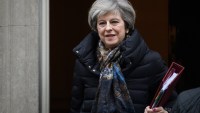
After any other US election it would cause little comment that the new president had chosen the British Prime Minister for his first meeting with a foreign leader. Yet this time, Theresa May’s trip to Washington feels quite a coup. She has fallen out of favour with her fellow EU leaders, sent home from December’s summit in Brussels without any supper as they tried to portray her as internationally isolated. Yet here she is being invited to the White House, lured with the promise of a trade deal. How long ago it seems that Barack Obama was threatening to send Britain to the ‘back of the queue’ if the country voted for Brexit.