The Spectator

GCHQ’s code-crackers have some questions for you

From our UK edition

Solving serious puzzles — to catch criminals and thwart terrorist plots — is what the men and women who work at GCHQ do round the clock. It’s hardly surprising that many of them enjoy setting and solving them in their own time, too, pitting their wits against each other. This selection is from The GCHQ Puzzle Book (Penguin), put together by GCHQ’s spies, containing a Christmas puzzle challenge, too, and raising money for the Duke and Duchess of Cambridge’s Heads Together mental health campaign. 1.  A round of drinks What could follow Mojito, Eggnog, Riesling, Lemonade, Ouzo... ? 2. Composing a sequence What is the final entry in this sequence?

The Spectator Christmas Carol Service, in pictures | 22 December 2016

From our UK edition

The Spectator hosted its annual carol concert at St Bride’s Church on Fleet Street, earlier this month. Fraser Nelson, James Forsyth, Rod Liddle and Low Life columnist, Jeremy Clarke, were among those who gave readings at the event, which was held in aid of Macmillan Cancer Support. As well as getting the chance to mingle with familiar faces from the magazine, Spectator readers were also treated to mince pies and mulled wine after the service.

The Birmingham prison riot is a small sign of the disorder to come

From our UK edition

Last month, prison officers went on strike in an attempt to draw attention to the deteriorating conditions of England's  prisons. It was, by and large, a failure. But recent the 12-hour riot in HMP Birmingham has provided a more vivid example of the crisis that is to come. Yesterday's disturbance has been described by the Prison Officers' Association as the worst since the Strangeways jail riot 26 years ago. But it has hardly come out of the blue. In the past year there have been 625 serious assaults by prisoners on prison staff — up 30 per cent on the previous year — plus six homicides and 2,197 serious assaults against fellow inmates. When schools, hospitals and trains deteriorate, we notice because we can see what is happening.

Did the ‘rise of populism’ really cost David Cameron his job?

From our UK edition

When The Spectator was founded 188 years ago, it became part of what would now be described as a populist insurgency. An out-of-touch Westminster elite, we said, was speaking a different language to the rest of London, let alone the rest of the country. Too many ‘of the bons mots vented in the House of Commons appear stale and flat by the time they have travelled as far as Wellington Street’. This would be remedied, we argued, by extending the franchise and granting the vote to the emerging middle class. Our Tory critics said any step towards democracy — a word which then caused a shudder — would start a descent into chaos. On the contrary, we said, the choice was between reform or a ‘revolution of the most sweeping character’.

Answers to GCHQ puzzles

From our UK edition

1. Tea – the initial letters spell MERLOT. 2. 9th – taking the identified letters spells ‘Beethoven’. 3. Northern Ireland. It is, for example, ‘West of Scotland’. 4. Papa. ‘Mike lives in Quebec, and is very fond of Golf’ etc. 5. a) Charles Dickens, b) Arthur Conan Doyle, c) Evelyn Waugh. 6. Forty (winks!) 7. 2017. They all had prime number ages in a year which was a prime number. 8. THE LIST. The words are anagrams of ROSE, LEEK, SHAMROCK, and THISTLE, which are the symbols of the parts of the UK. THE LIST is an anagram of THISTLE. 9. Anagrams of members of the Rolling Stones: Charlie Watts, Keith Richards, Bill Wyman, Brian Jones, Mick Jagger.

Portrait of the year | 8 December 2016

From our UK edition

January The cost of an annual season ticket from Cheltenham to London rose to £9,800. Oil fell below $30 a barrel, compared with more than $100 in January 2014. David Cameron, the Prime Minister, said that once his negotiations with the EU were done, ministers could campaign for either side in the referendum on Britain’s continued membership. Junior doctors went on strike for 24 hours. In Germany, women protested in the street after gangs of men of Arab or North African appearance assaulted dozens of women in Cologne on New Year’s Eve. David Bowie died two days after releasing an album, Blackstar, on his 69th birthday. February The World Health Organisation declared the Zika virus a global public health emergency. Junior doctors went on strike for another day.

Letters | 8 December 2016

From our UK edition

Taking precedent Sir: In his excellent piece on the Supreme Court Article 50 ruling (‘Brexit in the balance’, 3 December), Joshua Rozenberg says that the 2015 European Referendum Act was not drafted with sufficient precision. But surely the whole basis of having an unwritten constitution is that the law is therefore interpreted on the basis of precedent — i.e. what is not stated. Jeremy Wright should keep the government’s case simple. Parliament’s own sovereignty is derived from the people. The European Referendum Act of 2015 was passed by both Houses of Parliament, clearly giving a mandate from Parliament. Our legal system works on precedent.

Faith in the trenches

From our UK edition

From a letter published under the heading ‘The religion of the ordinary soldier’, The Spectator, 23 December 1916: During a discharge of gas at the beginning of July along our front, one of the cylinders was displaced by the near bursting of an enemy shell. It turned the nozzle round, and the gas began to pour into our own trench. One of my lads, who was acting as orderly, heard from the communication trench that something was happening and ran into the front line… He ran forward unprotected, tugged at the cylinder, and pointed its nozzle outwards again before he fell unconscious. He died a few minutes afterwards. Those who saw it told me it was a quite spontaneous action. This boy would have told you that if his name was on a shell, it was no use running away.

Have you ever had a prayer answered?

From our UK edition

Justin Welby Archbishop of Canterbury There have been lots of wonderful answers to prayer over many years, including recently. One I remember was as a 15-year-old sitting in chapel with the prospect of three frightening tests that day, for which I had done no preparation, and praying that if I got through it then I would do anything for God. I did get through and did nothing about it, except forget about God. Another was praying about whether I should ask my future wife to marry me: I was sitting alone by a canal in Holland. I felt I should, did, and she said yes. It was a wonderful decision. The most recent was when I was going to see some incredible work done by a group of young women helping trafficked sex workers.

Puzzles from GCHQ

From our UK edition

Solving serious puzzles — to catch criminals and thwart terrorist plots — is what the men and women who work at GCHQ do round the clock. It’s hardly surprising that many of them enjoy setting and solving them in their own time, too, pitting their wits against each other. This selection is from The GCHQ Puzzle Book (Penguin), put together by GCHQ’s spies, containing a Christmas puzzle challenge, too, and raising money for the Duke and Duchess of Cambridge’s Heads Together mental health campaign. 1.  A round of drinks What could follow Mojito, Eggnog, Riesling, Lemonade, Ouzo... ? 2. Composing a sequence What is the final entry in this sequence?

Spectator live blog: The Supreme Court’s Brexit hearing, day two

From our UK edition

The second day of the Supreme Court hearing has seen the Government continue to put forward its case for why it should be allowed to pull the Article 50 trigger without the say so of Parliament. And Lord Pannick has been arguing why Parliament must give approval for the start of the process of Brexit. Here's how the day unfolded on our Spectator live blog: 4.30pm: Pannick’s main pitch is about the power of Parliament. He tells the Supreme Court that ‘Parliament is sovereign and only Parliament can remove that which it has incorporated into domestic law’ - meaning that Brexit cannot be started by the Government without the agreement of Parliament.

Barometer | 1 December 2016

From our UK edition

Autumn Budgets Philip Hammond announced that in future the Budget will be held in autumn rather than spring. This is not as revolutionary as some have made out. — In his 1992 Budget Norman Lamont announced that there would be two budgets in 1993, one in spring and one in autumn, and that from then on the date would switch to autumn for good. — The Budget was delivered every November from then until 1996. In 1997, Gordon Brown held his first Budget in July, before reverting to a spring date. — Denis Healey also delivered a November Budget in 1974, soon after the second general election of that year. Tickets please The Department for Transport says it will force train companies to make passengers aware if there is a cheaper ticket available for their journeys.

Brexit strategy

From our UK edition

For months, now, a hunt has been on for the government’s Brexit strategy. Theresa May has quite rightly refused to disclose it. She knows that the European Union needs to be seen to make Britain suffer. She will have to ask for for a lot, only to back down so the EU can have its pound of British flesh. The hope is that she can then emerge with what she wanted all along. So a game of bluff is under way. This has created a rather unsatisfactory situation where Parliament wants to know where she will draw the line, and she refuses to say. Her every word is scoured for clues. None have been forthcoming.

Portrait of the week | 1 December 2016

From our UK edition

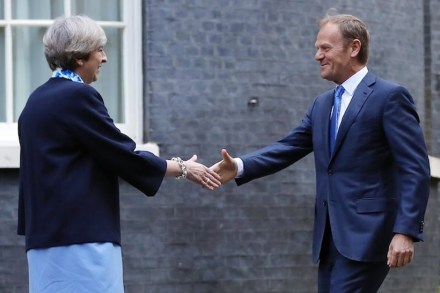
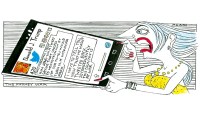
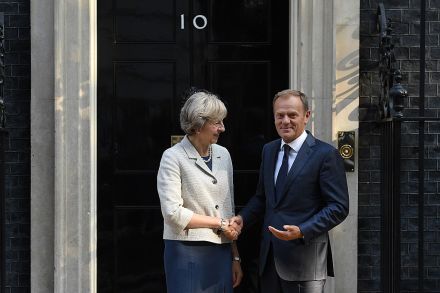
Home Paul Nuttall, aged 39, was elected leader of the UK Independence Party. He said: ‘I want to replace the Labour party and make Ukip the patriotic voice of working people.’ Theresa May, the Prime Minister, was rebuffed by Angela Merkel, the Chancellor of Germany, and by Donald Tusk, the President of the European Commission, when she proposed settling the status of British and EU expatriates even before Article 50 was invoked. She made another attempt in talks with Beata Szydlo, the Prime Minister of Poland. There was some interest in a note photographed on papers being carried after a meeting in Downing Street by Julia Dockerill, an aide to Mark Field, a Conservative MP, that said: ‘What’s the model? Have your cake and eat it.

Food on the home front

From our UK edition

From ‘The food shortage and how to meet it’, The Spectator, 2 December 1916: A rise in prices, if properly understood and properly used, will be our salvation, not our injury. High prices help conservation, and, what is still more important, they help supply… If we artificially cut down prices here, we sterilise instead of stimulating the impulse to feed us from abroad. We are in effect saying to the world: ‘If you are such fools as to send us food, we warn you that you are not going to obtain inflated prices. You will get nothing more here than what we choose to tell you is a fair price. Our people, even if they want to do so, are not going to be allowed to pay you a penny more than we think suitable.