The Spectator

Letters | 13 July 2017

Technical education Sir: I am grateful to Robert Tombs for highlighting the baleful use of ‘declinism’ as part of the anti-Brexit campaign and the persistent underestimation of the United Kingdom’s strengths (‘Down with declinism’, 8 July). It is ironic that the heirs of the old 19th-century Liberal party, the Liberal Democrats, are among its principal proponents, for declinism goes back even further than the 1880s cited in his article. Fearful of the advances demonstrated at the Paris International Exposition of 1867 by continental countries in engineering (e.g.

Hope in Mosul

For the title of world’s most benighted city, Mosul takes some beating. Liberated from Saddam Hussein by US forces in 2003, the ancient Assyrian town was pummelled by years of insurgency before being seized by Isis in 2014 and its population subjected to militant theocracy. It has no water supply, no infrastructure, it has been gutted by occupation and there are some 850,000 displaced citizens. The Iraqi government’s long and bloody battle to regain what remains of Mosul culminated this week in a visit by Prime Minister Haider al-Abadi to declare victory. Many will find it hard to see anything to celebrate, given the destruction that has been wrought in the nine-month campaign to free the city from Isis control.

Portrait of the week | 13 July 2017

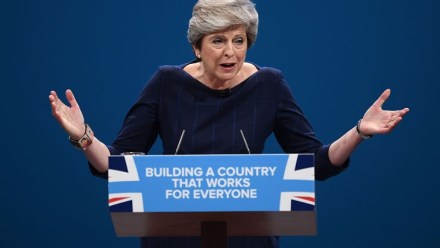
Home In her first big speech since the general election, Theresa May, the Prime Minister, said: ‘I say to the other parties in the House of Commons… come forward with your own views and ideas.’ She was responding to a government-commissioned review of modern working practices by Matthew Taylor, the chief executive of the Royal Society of Arts, and a former adviser to Tony Blair. The report was hostile to payment in cash and suggested that immigrant visas might insist on non-cash payment for work. Unemployment fell by 64,000 to 1.49 million. A leading article in the Evening Standard, edited by one of Mrs May’s enemies, George Osborne, commented on the position of David Davis: ‘For the first time in his political career he is trying to be loyal.

to 2315: Trunk call

4, 40, 43, 1, 3, 16 and 17 were all examples of PORTMANTEAU words, into which are packed the sense (and sound) of two other words.   First prize F. Whitehead, Harrogate, N. Yorks Runners-up Mark Rowntree, London SE10; D.G.

Theresa May’s relaunch speech: full transcript

A year ago, I stood outside Downing Street for the first time as Prime Minister, and I set out the defining characteristics of the government I was determined to lead. A clear understanding that the EU referendum result was not just a vote to leave the European Union, but a deeper and more profound call for change across our country. A belief that at the heart of that change must lie a commitment to greater fairness in our country as we tackle the injustices and vested interests that threaten to hold us back, and make Britain a country that works for everyone, not just a privileged few.

Barometer | 6 July 2017

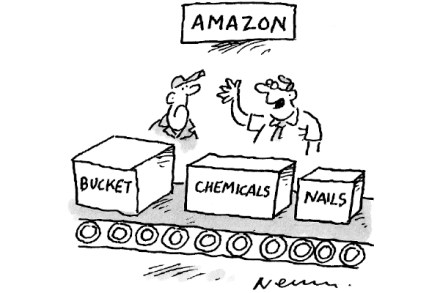
Banking up the wrong tree The Magic Money Tree is such a neat concept it is a wonder it has not featured more widely in literature. But there is a book of that title by Anna Rashid, self- published in April 2009 — just after quantitative easing began in Britain. In the story, a little girl finds a tree brimming with banknotes, which are given to poor ladies and children at a party. The tree grows back every Christmas but only the girl can see it. The self-published book has not yet lived up to its name — last week it was number 7,413,589 on Amazon UK’s bestseller list. Healthy salaries More nurses left the profession than joined it, provoking claims that they are underpaid.

The beginning is nigh

Just a few weeks ago, the Conservatives triumphed in the local government elections and Theresa May was hailed as an all-conquering Brexit Boudicca who could do no wrong. Now, after her general election humiliation, an opposite view has taken hold: that the government is a disaster, the country is in an irredeemable mess, Brexit has been derailed and nothing can go right. This is a sign that parliamentary recess is overdue; a great many people are -exhausted and a little emotional. But the facts, for those with an eye to see them, do not give grounds for such pessimism. The Tories have lost their majority and deserved to do so after an awful campaign.

Portrait of the week | 6 July 2017

Home Philip Hammond, the Chancellor of the Exchequer, urged colleagues to make the case for ‘sound money’; he said, ‘We must hold our nerve,’ as he came under pressure to end the public-sector pay cap of a 1 per cent rise a year. Boris Johnson, the Foreign Secretary, thought that pay rises could be awarded in ‘a responsible way’; Michael Gove, the Environment Secretary, did not think that taxes would need to increase to accommodate pay rises. Firemen boasted of a 2 per cent pay rise. The government won the vote on the Queen’s Speech by 323 to 309 after heading off an amendment by the Labour MP Stella Creasy, by suddenly announcing that women in Northern Ireland (where abortion is illegal) would be able to have free abortions on the NHS in England.

to 2314: 4÷4=8

One of the unclued 4-letter lights is placed in the very middle of another to form each of the four unclued 8-letter solutions: 8, around 30=44; 19, around 22=2, 37, around 25D=20; 38, around 21=13.

Russia’s revolutionary soul

From ‘The Russian awakening’, 6 July 1917: M. Kerensky, the Russian Minister of War, has kept his word. He promised his Western Allies an early military Offensive and on Monday he was able to telegraph to his Prime Minister, Prince Lvoff: ‘On July 1st the Army of Revolutionary Russia took the offensive with great enthusiasm.’ … We wish our Eastern Allies the best of good fortune in the military sense, but whether their offensive succeeds or fails, for the present its significance is not to be measured merely by a military rule laid upon the map.

Letters | 29 June 2017

The Tory quagmire Sir: While the media has been preoccupied in divining what went wrong with the Conservatives’ appalling election result, Fraser Nelson (‘What are the Tories for?’, 24 June) neatly perceives some of the more obvious causes. Quite what possessed seemingly intelligent people to come up with so many half-baked ideas that found their way into a poorly thought-through manifesto is beyond comprehension. To witness the volte-faces was truly nauseating and not worthy of a party with such a long and distinguished record in government. The quagmire Mrs May finds herself in bodes poorly for both Brexit and a host of pressing domestic issues. The Tory party have an enviable economic story to tell — one that should be trumpeted from the rooftops.

Portrait of the week | 29 June 2017

Home In preparation for the vote on the Queen’s Speech, the Government, after weeks of negotiations, bought the support of the Democratic Unionist Party in the House of Commons by promising to spend a billion or two pounds in Northern Ireland on broadband and other good things. In reply to expostulations from the Opposition, Nigel Dodds, the parliamentary leader of the DUP, told the Commons: ‘We might publish all the correspondence and conversations we had in 2010 with Labour front-benchers, and in 2015 with Labour front-benchers, and indeed also the Scottish National party, because some of the faux outrage we have heard is hypocrisy.

Stronger together

There is unlikely to be much of a legacy from Theresa May’s premiership, which could yet be truncated a short way into its second year. Yet one very good thing looks like coming out of it: the strengthening of the United Kingdom. The Union suddenly looks in better health than it has done for several years. Nicola Sturgeon did not quite scotch her dream of a second independence referendum this week, but in delaying the required legislation until the autumn of 2018 at the earliest she has bowed to the inevitable. She has been sent, as the Scottish national anthem says, homeward tae think again. Meanwhile, the importance of Northern Ireland in Westminster has been enhanced. The deal between No.

to 2313: Goldfish

Extra letters in clues gave SAM GOLDWYN, to whom are attributed I’LL GIVE YOU (5) A DEFINITE (8) MAYBE (1A), INCLUDE (23) ME OUT (7), and IN TWO (33) WORDS (34A) IM-POSSIBLE! (38). Goldfish was his former name.

Letters | 22 June 2017

May’s convictions Sir: Nick Timothy seeks sympathy by revealing that his ‘loved ones’ are upset by the personal attacks to which he is now subject (Diary, 17 June). They could have been spared distress if he had not invited retaliation by swearing at senior ministers and civil servants who crossed him. How could a prim vicar’s daughter have allowed endless profanities from this ill-mannered man and his ill-tempered associate Fiona Hill? Perhaps Timothy’s most extraordinary claim is that ‘a return to traditional campaigning methods’ was planned but Lynton Crosby vetoed it. Traditionally the Tories did not contract out their campaign to consultants charging vast fees. The leader and party chairman took charge. The manifesto was carefully costed.

Barometer | 22 June 2017

A mountain to climb Brexit secretary David Davis gave the EU’s chief negotiator, Michel Barnier, a copy of Regards vers l’Annapurna by Maurice Herzog and Marcel Ichaq. What can be read into the gift? — The book is about the 1950 French expedition to scale Annapurna 1, a 26,414ft peak in Nepal. Although the expedition was a success, it was eclipsed by the British Everest expedition three years later. — Annapurna 1 was not scaled again until 1970, when a British army expedition and a separate bid by Chris Bonington to scale the south face reached the summit within days of each other.