The Spectator

Portrait of the week | 26 July 2018

Home Dame Margaret Hodge accused Jeremy Corbyn, the Labour leader, of being an ‘anti-Semite’ and a ‘racist’ in front of a number of MPs at Westminster; within 12 hours she had received a disciplinary letter. ‘People have to be judged on what they do and not on what they say,’ she insisted on BBC radio. The government announced pay rises for a million public sector workers, with 2.9 per cent for the armed forces, 2.75 per cent for prison officers, up to 3.5 per cent for teachers and 2 per cent for police and general practitioners. The budget for London’s Crossrail project rose from £14.8 billion to £15.4 billion.

Troubled water

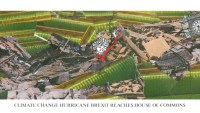
The year 1976 rises like a spectre whenever the sun shines for more than a few days. That long, dry, hot summer has become a regular reference point for people in their late forties and over searching for happy memories of childhood or young adulthood. Those too young to remember it will nevertheless be familiar with photographs of people dipping in the fountains in Trafalgar Square, walking alongside dried-up reservoirs or showing a ‘Blitz spirit’ as they filled buckets from standpipes in the streets. Yet rarely does anyone see the summer of 1976 in a clear light: as a time when our then state-owned water industry failed to cope with adversity.

to 2366: The square

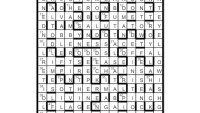
THE RUSSIA HOUSE, TINKER TAILOR SOLDIER SPY and A MURDER OF QUALITY are novels by JOHN (41) LE CARRÉ, whose surname is the puzzle’s TITLE (13) in FRENCH (30).

Hitting home

From ‘The munitions strike’, 27 July 1918: It is necessary for the Government to make it clear that the present strike of munition workers is unlike all previous strikes in that it is a direct challenge to the authority of the State. Such a challenge in time of war is in the nature of sedition and treason, and must be treated accordingly… If this is not made plain, the authority of the Government will disappear, and we may as well all say good-bye to the glorious prospect of handsomely winning the war. If the production of the munitions of war is to be held up, there is no political principle…which can be retained if dispensing with it would help the prosecution of the war.

Letters | 19 July 2018

Remainers are to blame Sir: I was intrigued by the parallel drawn by an ally of Michael Gove’s in James Forsyth’s piece on Brexit (‘Brexit in a spin’, 14 July), comparing Mr Gove to the Irish Independence leader Michael Collins. I think this misses the fundamental point that Collins and the Sinn Fein ultras led by De Valera were agreed on the destination: independence from Britain. It was just the timing and context on which they differed. There was no organised political body within the Irish Free State seeking to remain in the UK. In contrast, to ‘leave’ the EU under Mrs May’s plan, Mr Gove is supporting a platform on which the Remainers will seek to ensure that any difficulty, any problem, becomes a rationale to rejoin the EU.

The road not taken | 19 July 2018

Handling Brexit was never going to be easy for Theresa May, given that the Tories have been fighting a civil war over Europe for at least a quarter of a century. But the past ten days have been so calamitous that there is a real possibility that her Chequers gambit — threatening a general election unless MPs support her watered-down version of Brexit — could lead to the fall of the government and the ceding of power to the most left-wing Labour administration in history. The mood in Parliament is now as anarchic as it was during the last days of the Callaghan government in 1979: the Maastricht crisis in 1992 looks rather tame by comparison.

Portrait of the week | 19 July 2018

Home The administration of Theresa May, the Prime Minister, staggered on, as Conservative MPs exchanged angry words in the Commons, with supporters of Brexit and its enemies voting in turn against government bills. The government even failed to shorten the parliamentary session by five days to avoid trouble, instead provoking threats of defeat on the adjournment debate. An amendment to the Trade Bill seeking to impose a customs union on the government was defeated by 307 to 301, thanks to four Labour MPs who voted with the government. Guto Bebb resigned as minister for defence procurement to vote against the government on amendments that it accepted to the Customs Bill.

to 2365: Beds

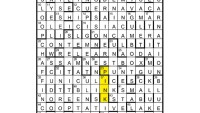
GARDEN (at 46 Across) reveals the theme. Paired solutions are ‘gardens’ in ‘countries’; 8/10, 32/1D, 33/28+29, 12/36, 37/34, 38/2, and 41 on its own.   First prize Helen Stone, Horfield, Bristol Runners-up Jenny Atkinson, Amersham, Bucks; Sara Macintosh, Darlington, Co.

Letters | 12 July 2018

Marriage proposal Sir: Matthew Parris’s proposal that marriage be abolished, and civil partnerships installed in its place, is absurd (‘The term “marriage” needs to be untangled’, 7 July). This would not simplify the ambiguous connotations that the word ‘marriage’ has come to hold; rather, it would diminish its importance at a time when it is greatly needed. Committed and legally recognised relationships are a salient component of a functioning society: providing a stable environment in which to raise children, and serve as a welcome source of privacy in an era where such a concept is scarce.

Portrait of the week | 12 July 2018

Home Boris Johnson resigned as Foreign Secretary the day after David Davis resigned as Brexit Secretary, both in reaction to a government plan for Brexit agreed by the cabinet after being held incommunicado at Chequers for 12 hours, their mobile phones confiscated. At Chequers, Mr Johnson was reported to have said: ‘Anyone defending the proposal we have just agreed will find it like trying to polish a turd.’ In his resignation letter he said that the Brexit ‘dream is dying, suffocated by needless self-doubt’, adding: ‘We are truly headed for the status of a colony.’ Dominic Raab, the housing minister, replaced Mr Davis; Kit Malthouse replaced Mr Raab.

to 2364: Frolicsome Threesome

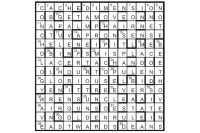
WEIN (2D) suggests 21, 35 and 37 (German wines); WEIB suggests 10, 25 and 42 (Germanic female names); GESANG suggests 14, 27 and 31 (German-speaking composers of sung works). STRAUSS, highlighted, composed the waltz Wein, Weib und Gesang.   First prize P.G.

Barometer | 5 July 2018

Trapped Twelve Thai boys and their football coach were found in a cave ten days after being trapped by rising water. It may be months before they can be brought to the surface. — The longest anyone has been trapped underground and then rescued is 69 days, after the San José mine in Chile collapsed in 2010. The 33 miners were rescued via a shaft drilled to 2,257ft below the surface. — Less fortunate was Floyd Collins, a caver trapped 55ft below ground in Crystal Cave, Kentucky, in January 1925. He survived 14 days, but died around three days before a rescue shaft reached him. Bouncy castles A four-year-old girl died after a bouncy castle on a Norfolk beach was reported to have exploded and blown her 30 feet into the air. How dangerous are bouncy castles?

Portrait of the week | 5 July 2018

Home In an attempt to distract the nation from the toothache of Brexit, the government announced a £4.5 million scheme to encourage homosexuals to hold hands; a law would be considered to ban corrective therapy, which Penny Mordaunt, the Equalities Minister, said could involve rape. A man known as Nick, whose true name is withheld for legal reasons, who alleged there was a paedophile ring at Westminster, was charged with perverting the course of justice. Labour restored the whip to Jared O’Mara, the MP for Sheffield Hallam, from whom it had been suspended in October. Gavin Williamson, the Defence Secretary, was interrupted during a statement to the Commons by the voice of Siri on his mobile phone.

To convey intelligence

In the basement of The Spectator office, there is a 12-volume version of the paper in its original incarnation. That journal, started in 1711 by Joseph Addison and Richard Steele, lasted barely two years. But collections of its essays could be found in almost every educated household for generations after. The first Spectator was seen as an example of something extraordinary: a journal full of humour, wit and civilised discussion at a time when Britain was being torn apart by partisanship and war. It was a freak of its time. On 6 July 1828, a Dundonian printer named Robert Rintoul relaunched The Spectator. He had the good sense to adopt Addison’s formula: ‘the pleasures of books, conversation and the other accidental diversions of life’.

to 2363: Case ending

In Henry VI part II, Dick says to Cade: ‘The first thing we do, let’s kill all the lawyers’, thus potentially victimising Atticus Finch (3A), Perry Mason (20D) and Rumpole (30D).   First prize Mrs R. Bailey, Swindon Runners-up Mrs E.

The Spectator’s Mission

190 years of The Spectator   5 July 1828   The principal object of a Newspaper is to convey intelligence. It is proposed in The Spectator to give this, the first and most prominent place, to a report of all the leading occurrences of the week. In this department, the reader may always expect a summary account of every public proceeding, or transaction of interest, whether the scene may lie at home or abroad.