The Spectator

Review: Mr Oscar Wilde’s poems

From our UK edition

190 years of The Spectator   13 August 1881 The reading of this book fills us with alarm. It is evidently the work of a clever man, as well as of an educated man, but it is not only a book containing poems which ought never to have been conceived, still less published, but it is almost wholly without thoughts worthy of the name, entirely devoid of true passion, with very few vestiges even of genuine emotion, and constituted entirely out of sensuous images and pictures strung together often with so little true art that they remind one more of a number of totally different species of blossoms accumulated on the same stem, than of any cluster of natural flowers.

The duty of England and the American crisis

From our UK edition

190 years of The Spectator   1 June 1861 The time has arrived when the national will on the American quarrel ought to be expressed. A party, numerous in Parliament and powerful in the press, is beginning to intrigue for the recognition of the South. They are aided by the fears of the cotton dealers, who dread an intermission of their supplies, by the anxiety of commercial men, who see their best market summarily closed, and by the abiding dislike of the aristocracy for the men and manners of the North. For the moment, their object is apparently to deprecate debate. They dare not as yet brave openly the prejudices of freemen, or advocate a cause based on antagonism to all that Englishmen hold dear.

The country gentleman and the Corn Laws

From our UK edition

190 years of The Spectator   14 January 1843   The country gentlemen of England never committed a greater blunder than when they passed the Corn Law of 1815. If they would but allow themselves to examine dispassionately their own objects, they could scarcely fail to discover this, and also the necessity of retreating as speedily as possible from the false position in which they then placed themselves. The country gentlemen are the most powerful body in England, and they are fond of their power and proud of it. But the passing of the Corn Law gave a rude shock to the opinion favourable to the power of the country gentlemen. It placed them in the invidious light of men who perverted the office of legislators into the means of passing a law to keep up rents.

To our non-political readers

From our UK edition

190 years of The Spectator   21 May 1831   Lucretius tells us, in some famous lines, that it is a pleasant thing to watch the sea in a tempest, from the shore: it is a far more gratifying employment to be throwing out Manby’s lifesaving apparatus, and saving the sinking mariners from the wreck. We have more than once observed, that it is difficult to be a mere spectator in times like these. It is all very well, in the piping times of domestic content, to sit still and report progress; but when, as in the great business of Reform, everything is at stake, it is the duty of even neutrals to arm. It is sometimes criminal not to take a side — there are cases in which he that is not with us must be against us.

Letters | 28 June 2018

From our UK edition

Harvard’s racial quotas Sir: While I largely agree with Coleman Hughes that racial quotas are counterproductive (‘The diversity trap’, 23 June), he misuses Martin Luther King Jr to buttress his argument. King said that he hoped his descendants would ‘be judged…by the content of their character’, not by their standardised test scores. The grim pursuit of purely quantifiable ratings for intelligence and achievement in American schools — by Asians and white Protestants alike — is an even greater scourge these days than the illiberal goal of ‘diversity’ at any cost.

Portrait of the week | 28 June 2018

From our UK edition

Home The Commons voted in favour of a new runway at Heathrow by 415 votes to 119. Boris Johnson, the Foreign Secretary, who had previously promised to lie in front of the bulldozers, absented himself from the vote, instead meeting the Deputy Foreign Minister of Afghanistan in Kabul. ‘My resignation would have achieved absolutely nothing,’ he said. Greg Hands resigned as trade minister because he opposed the runway. The Scottish government said it still supported the runway even though SNP MPs at Westminster abstained. Spanish-owned Ferrovial, which operates Heathrow, is to move its international headquarters from Britain to Amsterdam because of Brexit.

An unhappy birthday

From our UK edition

When Nye Bevan launched the NHS on 5 July 1948, most of the British population could not expect to celebrate a 70th birthday. Life expectancy at birth for men was 66 and for women 71. That this has since grown to 79.1 years and 82.8 years respectively is in part — though far from entirely — thanks to the NHS. Many insist that Bevan’s description of the service as the ‘envy of the world’ remains true. For Lord Lawson, a former editor of this magazine, the NHS is ‘the closest thing the English people have to a religion’ — an assertion confirmed during the opening ceremony of the London Olympics, when NHS nurses jumped joyfully up and down on old-fashioned hospital beds.

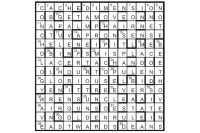
to 2362: MEN OF NOTE IV

From our UK edition

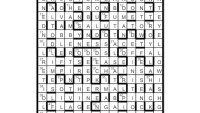
The unclued lights are COMPOSERS whose surnames begin with the letter D.   First prize E.C. Hynard, Guernsey Runners-up Geran Jones, London SW1 R.C.

Full text: Liz Truss’s LSE lecture – ‘I want to take a zero-tolerance approach to wasteful spend’

From our UK edition

As an economics geek, and a committed free marketer, I’ve always admired the London School of Economics. Despite its left-wing reputation, it was the academic home of Hayek. But even more than that, it produced my husband, Hugh O’Leary. It means that whenever I want a late night discussion about supply side reform or econometrics, there’s always someone on hand. And why do I love this stuff? Because I care about freedom. I’ve never liked being told what to do. And I don’t like to see other people being told what to do. Britain is a country that is raucous and rowdy. We have a younger generation of self-starters growing up, who are desperate shape their own futures.

Barometer | 21 June 2018

From our UK edition

Well oiled The government last week ordered a review into the medical use of cannabis. Some cannabis oil available on the internet: — Hemp oil for pain relief. ‘Great peppermint flavour. Promotes overall health and wellness when combined with a regular workout routine and diet.’ $24.97 — Ultra hemp 500 oil drops. ‘Helps with anxiety, chronic pain, sleep, mood, skin and hair. Boosts immunity, sharpens brain function and helps with sleep.’ $36.98 — Heaven’s Bounty ultra refined premium hemp oil. ‘Better sleep, healthy skin and smooth hair… no earthy aftertaste.’ $39.99 Track trespassers Three graffiti artists were killed by a train in south London. Where did people most trespass on railways in 2016?

Letters | 21 June 2018

From our UK edition

Song of myself Sir: As a disabled writer, I thoroughly despise the idea of being the beneficiary of a publisher’s tokenistic diversity initiative (‘When diversity means uniformity’, 9 June). If I’m going to achieve success, I’m going to do so on merit alone. In spite of the added challenges I face as a man on the autism spectrum, the notion that I might be treated differently from any other writer is an affront not merely to my dignity but to everyone else’s. Lionel Shriver is absolutely justified in her condemnation of what appears to be a thinly veiled attempt by Penguin Random House to enforce equity dogma in the publishing domain. It’s important to note that equity is not the same as equality of opportunity.

Refugee lives matter

From our UK edition

The photographs of children in cages at US migration centres, apparently separated from the parents with whom they illegally entered the country, do not reflect well on the Trump administration. Talking tough on migration helped the President to win the election but there is a difference between building a wall and carrying out a policy which appears to use cruelty as a shock tactic. Yet there is a policy towards migrants that is ultimately far crueller, and which is being pursued beneath our noses in Europe. That is to tempt migrants into unseaworthy boats to cross the Mediterranean. Last year, according to the International Organisation for Migration, 3,116 people died attempting to reach European countries from North Africa by sea, in addition to 5,143 deaths in 2016.

Portrait of the week | 21 June 2018

From our UK edition

Home Theresa May, the Prime Minister, said that spending on NHS England would increase by £20 billion a year by 2023. Some of the money would come from economic growth and a ‘Brexit dividend’, but more would come from taxes to be announced by the Chancellor at the next budget. Paul Johnson, the director of the Institute for Fiscal Studies, said that the divorce settlement with the EU and Britain’s commitments to replace EU funding had already accounted for ‘all of our EU contributions’ for the next few years. The government said the use of medicinal cannabis was to be reviewed.

Letters | 14 June 2018

From our UK edition

Exacerbating incivility Sir: I agree wholeheartedly with David Goodhart that if our politics is to ever recover from its current vicious state then all of us need to do our bit to ‘stand up for civility’ (‘The age of incivility’, 9 June). Goodhart explains well that what has ‘gone wrong’ with our politics is exacerbated by, but not entirely due to, social media. If the mainstream media were also to stop and ask whether it has contributed to the problem, that could be a positive step. The Spectator, for example, has at least two regular columnists in Rod Liddle and James Delingpole who seem to find it difficult to express a political opinion without putting their hatred for people they disagree with on display.

Beyond Brexit

From our UK edition

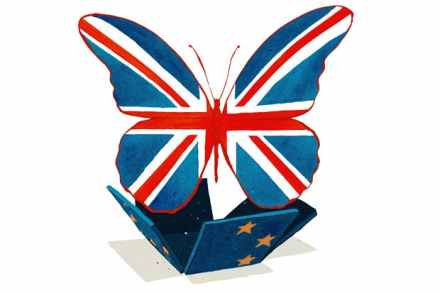
This week Brexit reached its Somme. The government has been bogged down in votes on amendments inserted into its Brexit bill by the House of Lords. Theresa May saw off the threat of cabinet resignations only to have a more junior minister resign, as he put it, in order to voice the concerns of his constituents (although, as has been pointed out, a majority of them actually voted to leave the EU). It all looks a mess. The Brexit process would have been unpleasant enough with the small majority which the Prime Minister inherited from David Cameron.

Portrait of the Week – 14 June 2018

From our UK edition

Home Negotiations over Brexit acquired an even stronger admixture of chaos and old night. Phillip Lee resigned as a little-known justice minister over Brexit, saying: ‘The 2016 referendum is detrimental to the people we are elected to serve.’ The government managed to reject in the Commons by 324 to 298 a Lords amendment on giving Parliament a ‘meaningful vote’ on a Brexit deal, after Theresa May, the Prime Minister, met rebels and promised that parts of an amendment by Dominic Grieve would be accepted. The white paper on Brexit will not now be published before the European Council summit later this month; warring cabinet ministers were invited to Chequers to discuss it.

to 2360: Diplomatic

From our UK edition

THE AMBASSADORS (1D) by HANS HOLBEIN (15 16) includes, as a MEMENTO MORI (17 27), an ANAMORPHIC (11) depiction of a SKULL; this is represented in the grid, in the same area as in the painting, in DIAGONAL (25) form.