The Spectator

The birth of minimalism

The Spectator is responsible for many coinages. One of the most significant came in 1968, when an article by our 24-year-old music critic, Michael Nyman, appeared with the headline ‘Minimal Music’ (reprinted below). It was a wry joke about music that was more experimental than strictly minimal but it stuck and a musical style that, whatever you think of it, has rarely been matched in influence or reach was born. Walking home from the Fugs’ concert, organised by the Middle Earth at the Round House last week, I was shocked by the 4 a.m. silence — by its awesome superiority to a lot of modern music, and by its unfamiliarity.

Barometer | 6 December 2018

Big defeats Could the vote on the Brexit deal set a record for a government defeat in the Commons? Aside from opposition day motions and other votes where nothing substantive is at stake, the post-1945 record is shamefully held by MPs who voted against the Major government’s attempt to limit pay rises for MPs (motion lost by 215 votes). Other hefty defeats (with the margin of defeat): 1978 (Labour, Jim Callaghan) Opposition amendment demanding income tax basic rate be cut from 34% to 33%, 108 votes.} 2014 (Coalition, David Cameron) Under-occupancy rules for social housing, 75 votes. 1978 (Labour, Jim Callaghan) Clause on Wales devolution referendum, 72 votes. 1975 (Labour, Harold Wilson) Disclosure of government economic forecasts, 71 votes.

Beyond May

On Tuesday, MPs will face something rare: a Commons motion which really does deserve to be described as momentous. It will set Britain’s place in Europe and in the world for years to come. The vote will place an especially heavy burden on Conservative MPs, for they have the power to inflict a hefty defeat on their own government, an administration which has no majority and which governs thanks only to a confidence and supply agreement with the DUP. It is all too easy to see where defeat on Tuesday could lead: to the collapse of the government, a general election and the arrival of Jeremy Corbyn in Downing Street. Theresa May’s deal has been rejected by MPs on the left and the right, by radicals and moderates.

Portrait of the Week – 6 December 2018

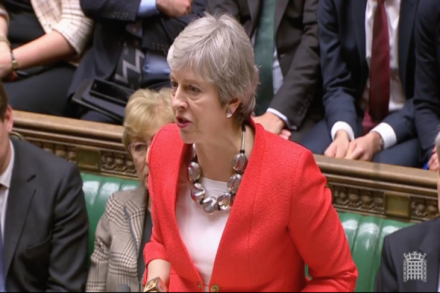
Home Political hobbyists speculated on the future of Brexit if the government fell, if a new Conservative leader was chosen, if a general election was called or if a second referendum was held. Debates were tabled over five days, in prospect of a Commons vote on 11 December on the withdrawal agreement from the EU to which Theresa May, the Prime Minister, had agreed. She told the Commons that it would allow Britain to negotiate, sign and ratify new trade deals from the moment it left next March (even if none could be implemented until the end of the transition period, 31 December 2020 at the earliest, or by any given date, if the backstop came into operation).

to 2385: R and R

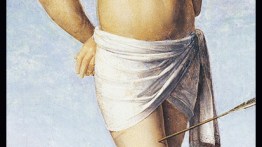
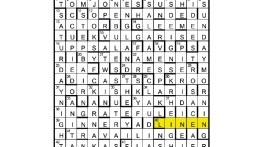
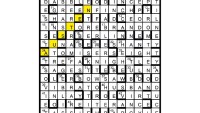
The two people were Prince RUPERT (12) of the Rhine, born 1619 in PRAGUE (6) and died 1682 in WESTMINSTER (48), a SOLDIER (23); and REMBRANDT (45) van Rijn, born 1606 in LEIDEN (9) and died 1669 in AMSTERDAM (13), a PAINTER (33). RHINE (in the eighth row) was to be shaded. First prize John Fahy, Thaxted, Essex Runners-up C.V. Clark, London WC1; C&A Snelson, Leyburn, N.

Full text: The Government’s Brexit legal advice

The Government has published its Brexit legal advice, a day after it was found in contempt of Parliament for refusing to do so. Here's the full text: Legal Effect of the Protocol on Ireland/Northern Ireland Introduction This note sets out my advice on the question I have been asked as follows: What is the legal effect of the UK agreeing to the Protocol to the Withdrawal Agreement on Ireland and Northern Ireland in particular its effect in conjunction with Articles 5 and 184 of the main Withdrawal Agreement? I note that the Withdrawal Agreement, of which the Protocol on Ireland/Northern Ireland (Protocol) forms part, is yet to be finalised. My advice is based, therefore, on an evolving text, which I have had to consider rapidly in light of the fluid situation.

Revealed: the full list of Tory rebels who voted against the Government

The Government has been defeated three times in key votes in Parliament this afternoon. Its an ominous sign for Theresa May ahead of the vote on her Brexit plan a week today. Here is the full list of Tory MPs who went against the Government: Grieve amendment: This hands more power to MPs in the event that May's Brexit plan gets voted down, by effectively allowing them to have a say on what the PM's Plan B should be.

Why I quit Ukip

There has never been a more pressing need for a home for Brexit voters disillusioned by the spectacle of recent events. Yet Ukip, under a leader fixated by EDL founder Tommy Robinson, has marched to a place where very few Leave voters wish to go. When I left Ukip last week, what caused the biggest stir was the fact that it was not to sit as an independent but to join the SDP. Many political journalists did not know that the party still existed, let alone that it has been Eurosceptic for many years. But the party has been growing fast over the past few months as the more moderate elements of Ukip – along with some determined Labour and Tory leavers – have sought a centre-ground party that will campaign to honour the referendum verdict.

Letters | 29 November 2018

The Irish border Sir: Contrary to the assertion that the Irish border ‘only hit the headlines’ after Leo Varadkar became Taoiseach in June 2017, as Liam Halligan claims (‘Irish troubles’, 24 November), the negative impact of Brexit on the peace process and the Good Friday Agreement was clearly signalled during the referendum campaign itself, including by the Irish government and by two former British prime ministers, Sir John Major and Tony Blair. There was no discontinuity in policy when Leo Varadkar succeeded Enda Kenny as Taoiseach, as reflected in the latter’s statement in February 2017. ‘The Irish government will oppose a hard border… This is a political matter, not a legal or technical matter.

Theresa May’s deal is not Canada Plus – it’s Remain Minus. Why pretend otherwise?

While some may doubt Donald Trump’s claim to be a friend of Britain’s, his intervention in the Brexit debate this week has been timely and depressingly accurate. The deal that Theresa May has brought back from Brussels, and which she will put before the Commons on 11 December, is indeed a good deal for the European Union. Brussels retains control over the British economy but no longer has to deal with the British in its various voting procedures. Britain agrees not to become more competitive through regulatory reform, and its chances of striking trade deals are slim. So Trump was merely saying, in his usual offhand manner, what other world leaders have been thinking. His thoughts are echo-ed in Australia, which had been looking forward to doing a trade deal with the UK.

Portrait of the week | 29 November 2018

Brexit Theresa May, the Prime Minister, seemed to succeed in uniting the country in opposition to the withdrawal agreement to which she and the leaders of the other 27 EU members had assented at a summit in Brussels. Sir Michael Fallon called it ‘the worst of all worlds’. The Prime Minister had ‘given up’, according to Arlene Foster, the leader of the DUP, which has propped up the government in parliament. Jeremy Corbyn, the Labour leader, said that Parliament would have ‘little choice’ but to reject the deal when MPs vote on it on 11 December, before a summit of European leaders on 13 December. Parliamentary arithmeticians counted 96 Conservative MPs who should vote against the government. But Westminster was awash with plots and scheming.

to 2384: bang!

Unclued lights, individually or as a pair (38/9), are FIREWORKS.   First prize F. Whitehead, Harrogate, North Yorks Runners-up I.

Letters | 22 November 2018

There is no ‘good’ Brexit Sir: David Harper claims to know ‘what the population of the UK voted for’ in the EU referendum (Letters, 17 November), yet no definitive Brexit plan was ever offered by the Leavers. That is one reason why the government, having prematurely triggered Article 50 and recklessly established its ‘red lines’, has been floundering in an attempt at damage limitation. Harper’s disparagement of the single market ignores the fact that any gains from new trade agreements with non-EU countries would be greatly outweighed by the costs of leaving it and would require exports to these countries to grow at a rate that is unfeasible.

Barometer | 22 November 2018

Black Friday When and where did the term ‘Black Friday’ originate? — It was used to describe a collapse in financial markets on 24 September 1869, prompted by the revelation of a Wall Street conspiracy to drive up the gold price. But in modern usage it was coined by police in 1950s Philadelphia, who had all leave cancelled following Thanksgiving after an influx of shoppers and American football fans into the city centre. — In 1961 retailers in the city saw the potential to boost business by adopting the term. Another explanation is that they saw it as the day by which they would have taken sufficient revenue to ensure making a profit for the year — the day when their accounts moved from red to black. Weighing up Brexit The CBI welcomed the deal on Brexit.

Portrait of the Week – 22 November 2018

Home Five pizza-eating cabinet ministers — Andrea Leadsom, Penny Mordaunt, Liam Fox, Michael Gove and Chris Grayling — put it about that Theresa May, the Prime Minister, could be persuaded to amend the draft withdrawal agreement with the EU before she signs it at a summit this Sunday. But Mrs May said that she had a deal and was determined to ‘deliver’ it. Having warned that if her Brexit withdrawal agreement was rejected Britain could end up either with no deal or no Brexit, Mrs May went off to Brussels, leaving the new Brexit Secretary, Stephen Barclay, behind.

In place of strife

France has been in a state of organised uprising this week, with 300,000 motorists taking to the streets and autoroutes to protest against rising fuel taxes. One protester has died, more than 400 have been injured and even more disruption is on the way. Watching Emmanuel Macron, you wouldn’t know it. He travelled to Berlin to commemorate Germany’s war dead, launching for the second time in a fortnight into his proposal for a single European army, and saying it was Europe’s duty to prevent the world ‘slipping into global chaos’ — apparently unable to recognise the chaotic scenes he had left behind.