Books and Arts – 24 January 2019
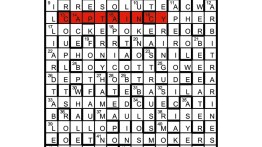
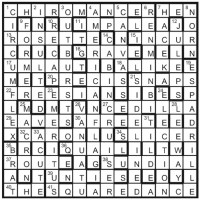
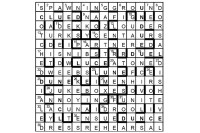
The paired unclued lights are anagrams of one another, most being symmetrically arranged; 2/21, 5/23, 12/41, 15/25, 19D/20. First prize Alan Peevers, Manchester Runners-up Martin Dey, Hoylandswaine, S.
An unexpected outcome of the tortuous process of Brexit negotiations has been the enhancement of Britain’s reputation as a parliamentary democracy. For many years, it has seemed as if political debate was draining away to the TV and radio studios, or even to social media — with MPs reduced to simply rubber-stamping decisions which have already been made elsewhere. This week, the Commons reasserted its authority in the most dramatic way imaginable, inflicting the largest ever government defeat on a substantive motion. The rejection of the Prime Minister’s Brexit deal is a humiliation on a scale which confounded the government’s attempts at expectation-management. To Mrs May’s credit, she immediately conceded that MPs must decide what happens next.
Turkey and the deep state Boris Johnson said that if Brexit was blocked, the public would blame it on the ‘deep state’. The expression comes from the Turkish Derin Devlet — coined to express the conspiracy of military, police, intelligence bodies and even organised criminals which many Turks believed were operating against their democratically elected government. It made its way into the English language in the 1990s when Kurdish separatists were threatening to declare independence. While there is little doubt that police and the military were involved in the underhand suppression of Kurdish insurgents, their efforts did not support the existence of a well-organised secret government.
The straight dope Sir: Much of the media and a large part of the political class in Britain seem to have fallen completely for the propaganda of one of the biggest greed lobbies in the world, the billionaire-backed campaign for cannabis legalisation. Articles such as the one by Robert Jackman (‘Homegrown industry’, 12 January) suggest that marijuana is a benign drug, and make vague claims for its supposed medical benefits. Yet across the world, as Alex Berenson’s new book on the subject, Tell Your Children, shows, worrying developments are correlated with this poorly researched, expensively hyped and brilliantly spun adventure.
Home Brexit threw politics into unpredictable chaos. The government was defeated by an unparalleled majority of 230 — 432 to 202 — on the withdrawal agreement it had negotiated with the EU. The result was greeted by cheers from demonstrators outside the House, both those in favour and those against Brexit. Labour tabled a motion of no confidence for the following day. Theresa May, the Prime Minister, said in the House after the vote: ‘The House has spoken and this government will listen.’ She said she would talk to senior parliamentarians and that the government would return to the House on Monday with proposals. This arrangement was in line with a business amendment by Dominic Grieve that the Speaker had allowed the week before.
An unexpected outcome of the tortuous process of Brexit negotiations has been the enhancement of Britain’s reputation as a parliamentary democracy. For many years, it has seemed as if political debate was draining away to the TV and radio studios, or even to social media — with MPs reduced to simply rubber-stamping decisions which have already been made elsewhere. This week, the Commons reasserted its authority in the most dramatic way imaginable, inflicting the largest ever government defeat on a substantive motion. The rejection of the Prime Minister’s Brexit deal is a humiliation on a scale which confounded the government’s attempts at expectation-management. To Mrs May’s credit, she immediately conceded that MPs must decide what happens next.
As things stand, it looks inevitable that Theresa May's Brexit deal will be defeated in the House of Commons on Tuesday, but what happens afterwards is the great unknown. While a number of MPs have voiced their opposition to May's deal and no deal, the majority still have not made clear what they would support in its place. And unless there is a parliamentary majority for another option, Britain will leave the EU on 29 March without a deal by default. So what is there a majority for in the Commons? In an attempt to find out, Coffee House has compiled the public Brexit position of every single Tory MP. Their views have been split into five different categories: supporting May's deal, no deal, a second referendum, Norway, or 'Undeclared’.
The changing EU Sir: If, as Frederik Erixon writes, ‘there is a strange pre-revolutionary atmosphere in Brussels’ and ‘power will be handed back from Brussels to the nation states’ (‘The Last Heave’, 5 January), isn’t this what we have wanted and shouldn’t we delay our Brexit negotiations in order to see what happens? The Brexiteers have always said that the EU, its immigration policies and the euro are not sustainable. After the elections across Europe in 2019 the forces for change will be greater than David Cameron found. Surely we need to combine with other like-minded nations, as we have done in the past, to strengthen the forces demanding change rather than walking away, leaving us unable to influence what happens in Europe?
For several weeks now, a group of anti-Brexit protesters have found a way of regularly appearing on television news. They wave banners and chant slogans and try to disturb politicians being interviewed. Most MPs take it in good part. Jacob Rees-Mogg even expressed his admiration for those able to shout ‘Stop Brexit’ in a way that is picked up by microphones a hundred yards away. But when pro-Brexit protesters called Anna Soubry a Nazi, dozens of MPs wrote to the police asking them to intervene. The police issued new guidelines to officers. Broadcasters have been conducting interviews with politicians on the green outside parliament for decades. Protesters have rarely interfered. That they do so now on a daily basis is a reflection of the coarsening of political debate.
Home The government drifted towards a vote by the Commons, which it had cancelled in December, on its withdrawal agreement from the EU. British and European officials discussed extending the period under Article 50 before Britain leaves the EU, which would otherwise come into effect on 29 March. ‘We’re continuing to work on further assurances, on further undertakings from the European Union in relation to the concern that’s been expressed by parliamentarians,’ Theresa May, the Prime Minister, said. She even invited groups of MPs for a drink at 10 Downing Street to court their votes. The government was defeated by 303 votes to 296 on a cross-party amendment to the Finance Bill to limit tax-raising powers for no-deal preparations unless authorised by Parliament.
The quotation was ‘IN MY BEGINNING IS MY END’ (12/15) from East Coker (an anagram of the title), second poem of T.S. Eliot’s Four Quartets. Remaining unclued lights are words whose first half is the same as their second half: 5, 16, 42, 43, 10 and 13. ELIOT (diagonally from the twelfth row) was to be shaded. First prize Mike Conway, Grantham, Lincs Runners-up Edward Staveley, London SW15; S.C.
Paths of infection 2019 marks the 100th anniversary of the height of the Spanish flu pandemic which is believed to have killed 3 per cent of the world’s population. But how Spanish was it, and what should it have been called? Spanish flu: There is little evidence it originated in Spain, but news of the disease first appeared in the Spanish press, because the country was not subject to the wartime reporting restrictions of most European countries, so it was assumed it started there. French flu: Virologist John Oxford has suggested the disease crossed to humans at Étaples, a transit and hospital site in the Great War.
Lords reform Sir: How astonishing that the historian Robert Tombs (‘Beyond Brexit’, 15 December) should think that the Lords might ‘at last be seriously reformed’ after more than a century of schemes that foundered in the Commons. MPs have an unthreatening upper house; they will never agree on substantial changes that would increase its power. They will leave the Lords to implement its own sensible plans to cut its numbers to 600 by bringing party strengths into line with those in the Commons over the next few years.
It has been a messy start to the new year for Sajid Javid. For months now, migrants using small boats have been landing in Kent, usually no more than a dozen people at a time. For a country that receives up to 2,500 asylum applications a month, this falls short of a national crisis. It was quite absurd for Tory MPs to talk about deploying the Royal Navy to fend off a few dinghies, and absurd for the Home Secretary to rush back from his holiday to handle the non-crisis and declare it a ‘major incident’. It is a minor incident, but may turn into a major one if the government panics. Migration patterns change, as do the methods.
Home The number of would-be migrants known to have reached England in small boats from France in the last two months of 2018 reached 239, with 40 making the crossing on Christmas Day. Most said they were Iranian. Sajid Javid, the Home Secretary, transferred two Border Force cutters to help the one patrolling the Channel. The government awarded a £13.8 million contract to Seaborne Freight to run goods ferries between Ramsgate and Ostend in the event of Britain leaving the European Union without an agreement; a £46 million contract went to Brittany Ferries and one worth £42 million to the Danish shipping firm DFDS. Without the slightest encouragement, leaders of political parties issued New Year messages.
The HISPANIOLA was the ship that brought the other unclued answers to TREASURE ISLAND in the novel by R L Stevenson. No pirates were named in the grid, except Ben GUNN who joined against them, but (Long John) Silver appeared in the clues, which had a nautical/piratical flavour. The map in Treasure Island had three red X’s, like the grid.