Books and Arts – 4 April 2019
From our UK edition
From our UK edition
From our UK edition
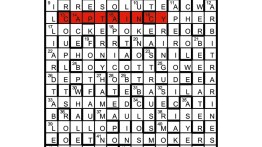
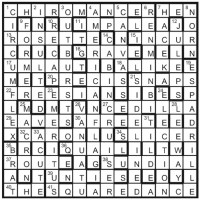
The unclued lights form the folk rhyme ‘Tinker, tailor, soldier, sailor, rich man, poor man, beggar-man, thief’. A.A. Milne (MILNE had to be highlighted) used this as the basis for Cherry-Stones, (9d) though the beggar-man became a ploughboy. Milne’s next five jobs are also mentioned in various clues.
From our UK edition
From ‘The disconsideration of the House of Commons’, 5 April 1919: The House of Commons is legally supreme in the land; it has eaten up and destroyed all competitors and become the sole depository of political power under the Constitution; and yet, instead of earning the respect which one might imagine would belong to such absolutism, it is, as we have said, suffering from a disconsideration such as has never before attached to it in its history. How has this come about? What is it that has, as it were, robbed the House of Commons of the complete authority at which it grasped? Why has its supremacy made it less, not more, respected by the nation at large?
From our UK edition
It is not hard to make the case that vaccination programmes have been one of the greatest contributions to mankind over the past century. It is sufficient simply to list the most common causes of death in 1915 of British children aged under five, in descending order: measles, bronchitis, whooping cough, diphtheria, tuberculosis, pneumonia, infective enteritis and scarlet fever. Few parents in Britain now have to undergo the trauma of nursing a child suffering from any of these conditions, still less of burying a child who has died from one. That these diseases have receded into history is down entirely to advances in medicine and public health.
From our UK edition
Theresa May's Brexit deal has been voted down for a third time in Parliament. MPs rejected the Prime Minister’s withdrawal agreement by 344 to 286 votes, a margin of 58.
From our UK edition
MPs have rejected Theresa May's Brexit deal for a third time in the House of Commons. This time, the Withdrawal Agreement had been split from the Political Declaration, which laid out the future relationship the UK would have with the EU. The deal was rejected by 344 votes to 286 - a majority of 58. 277 out of 314 Tory MPs voted in favour of the deal, but only five Labour MPs rebelled to join them in the division lobbies.
From our UK edition
Despite suffering two historic losses in the House of Commons, Theresa May will bring her Brexit deal back for a third time today, after separating the withdrawal agreement from the political declaration. At the last vote on her deal, the Prime Minister lost by a majority of 149, which included 75 Tory rebels and 10 DUP MPs. Ahead of MV3, Coffee House will be keeping track of the Tory rebels who voted against May's deal last time, but have now publicly announced that they are supporting it. To have any chance of winning, May will need the support of the DUP (who have said they oppose the deal) and roughly the same amount of Labour votes as there are Tory rebels.
From our UK edition
Silly signs The Department for Transport ordered councils to remove ‘obsolete and unnecessary’ road signs. Some examples of the art from around the world: — ‘Sign not in use’ (UK) — ‘Please do not throw stones at this sign’ (Ireland) — ‘Road unsafe when this sign is under water’ (US) — ‘Caution: water on road during rain’ (US) — ‘Caution: road unsuitable for some types of vehicle’ (UK) — ‘Caution: no warning signs’ (US) — ‘Caution: this sign has sharp edges’ (US) Packing in fans Tottenham Hotspur held the first match in its new stadium. Which English clubs can pack in the greatest number of fans?
From our UK edition
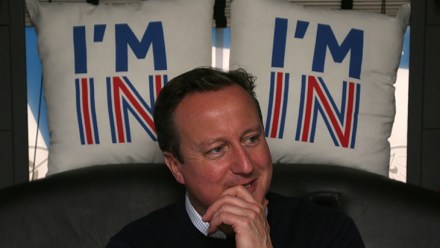
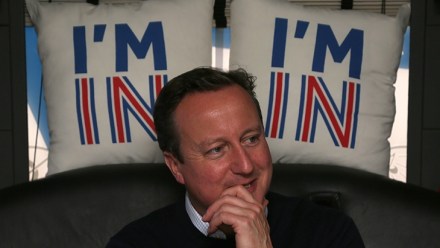
Still better than Cameron Sir: I disagree with your editorial (‘Agony prolonged’, 23 March) that Theresa May is the worst prime minister in our history. Unlike her predecessor, Mrs May — for all the flaws that have been ruthlessly exposed by the Brexit process — did not fail to learn the readily accessible lessons from the 1975 referendum. Harold Wilson played something of a blinder, and even a brief reading of this history would have guided a premier willing to learn. David Cameron clearly failed to do this and must assume the mantle of the worst. History will surely judge the PM who caused our current malaise more harshly than its unfortunate inheritor.
From our UK edition
It is not hard to make the case that vaccination programmes have been one of the greatest contributions to mankind over the past century. It is sufficient simply to list the most common causes of death in 1915 of British children aged under five, in descending order: measles, bronchitis, whooping cough, diphtheria, tuberculosis, pneumonia, infective enteritis and scarlet fever. Few parents in Britain now have to undergo the trauma of nursing a child suffering from any of these conditions, still less of burying a child who has died from one. That these diseases have receded into history is down entirely to advances in medicine and public health.
From our UK edition
Home The House of Commons voted to take Brexit business into its own hands, passing by 329 to 302 an amendment by Sir Oliver Letwin. This was immediately described by Sir Bill Cash in the House as ‘constitutional revolution’. Three ministers resigned so as to vote for the amendment: Alistair Burt, Richard Harrington and Steve Brine. The Commons move followed a sorry visit to the EU summit of the other 27 heads of government by Theresa May, the Prime Minister, who ate pizza outside the room where they all enjoyed dinner. She had asked for Brexit to be delayed till the end of June, but was told that it would take place on 22 May if parliament voted for her withdrawal agreement.
From our UK edition
From our UK edition
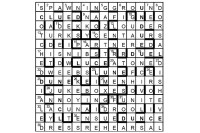
The unclued lights are the names of FAMOUS STEAM TRAINS including the pairs at 14/15 and 17/30.
From our UK edition
Parliamentarians were given the opportunity today to take control of the negotiations, after holding indicative votes on their preferred Brexit strategy. Now, the results are in, and we have found out that they don't support any option at all. For Oliver Letwin's vote, each MP was presented with eight Brexit motions, selected by the Speaker earlier today, on a piece of green voting paper. Inside the division lobby, they could either vote for, against, or abstain on each position, with no limit on the number they could support. Below are the number of votes for each option.
From our UK edition
For many people, next Friday was supposed to be a celebration. Boris Johnson spoke about an ‘independence day’ marking the beginning of a new era of national self-confidence. But as we approach 29 March, not even ardent Brexiteers can claim that there is anything to celebrate. Theresa May has been reduced to asking, or rather begging, the EU for an extension to Article 50 — something that the EU has said it will grant only if Britain can provide a good reason for needing the extra time. So far, the Prime Minister has not provided one, apart from the prolonging of every-one’s agony. When parliament voted to enact Article 50 two years ago, the challenge seemed daunting but perfectly possible.
From our UK edition
Speaker Bercow may have thrown a grenade in the works with his surprise decision to block a vote on May's deal, but now the PM has returned from Brussels with an extension, a third meaningful vote looks set to go ahead next week. Before the vote, Coffee House is keeping track of the Tory MPs May needs to win over to pass her deal. Here, we will monitor the opposition MPs she will need to persuade as well. For every rebel within her own party, May will need a similar number of these opposition votes. Below are the Labour and independent MPs who have said they will support the deal, and those Number 10 are hoping to win round. Many are in seats which heavily voted Leave in the 2016 referendum, or have indicated that they might back the withdrawal agreement.
From our UK edition
The march of time If we leave the EU on 29 March, with which historic events will that date be shared? 845 A Norse fleet sailing up the Seine reached Paris, sacking the city and extracting a ransom from Charles the Bald. 1461 The Battle of Towton, just south of Tadcaster, one of the bloodiest battles fought on English soil, with more than 20,000 men estimated to have been killed. Yorkist victory confirmed Edward IV as king. 1871 Royal Albert Hall officially opened. 1936 Hitler wins plebiscite to annex the Rhineland. 1945 Last recorded strike of a V1 bomb on Britain. Where are you safe? The mosque attacks in Christchurch were especially shocking because New Zealand is perceived to be among the world’s safest countries.
From our UK edition
What’s the point? Sir: Katy Balls asks ‘Will there be an election?’ (16 March). That prompts the question: ‘To what purpose?’ Jeremy Corbyn may be ‘keen for an early election to break the deadlock’, but as the EU has repeatedly emphasised that its withdrawal deal is the only one on the table, how would Labour win a substantively better one than what’s already on offer? Besides, in the 2017 general election, more than 80 per cent of the electorate voted for parties promising to remove Britain not just from the EU, but also from its customs union and single market. Duly returned to the Commons, a majority of these MPs are now openly labouring to renege on their manifesto commitments and to thwart Brexit.
From our UK edition
For many people, next Friday was supposed to be a celebration. Boris Johnson spoke about an ‘independence day’ marking the beginning of a new era of national self-confidence. But as we approach 29 March, not even ardent Brexiteers can claim that there is anything to celebrate. Theresa May has been reduced to asking, or rather begging, the EU for an extension to Article 50 — something that the EU has said it will grant only if Britain can provide a good reason for needing the extra time. So far, the Prime Minister has not provided one, apart from the prolonging of every-one’s agony. When parliament voted to enact Article 50 two years ago, the challenge seemed daunting but perfectly possible.
From our UK edition
Home Theresa May, the Prime Minister, wrote to Donald Tusk, the President of the European Council, asking for a delay of the date for Brexit. She had been wondering whether to solicit a third ‘meaningful vote’ before or after going off to the EU summit in Brussels on Thursday. Heaps of money had been put aside to buy off the DUP and unreal talk had been launched about the Vienna Convention providing a way out of the Irish backstop. But now, asked if Britain was in a crisis, a No. 10 spokesman said: ‘That situation has come to pass.