The Spectator

Budget 2020: as it happened

Rishi Sunak has unveiled his first Budget. The Chancellor has promised a £30bn war chest for tackling coronavirus. There is also £6bn of new funding for the NHS, a new £2.5bn pothole fund and £5.2bn for flooding defences. Here are the main headline announcements: A promise to increase public spending by 2.

Full text: Labour’s suspension letter to Trevor Phillips

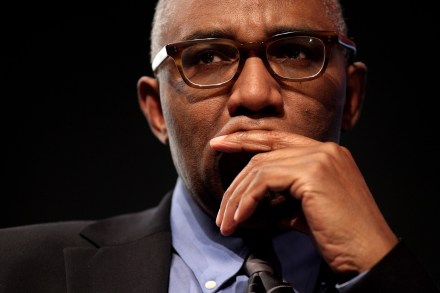
News broke this morning that the former head of the Equalities Commission Sir Trevor Phillips had been suspended from the Labour party over allegations of Islamophobia. Phillips has spent his career documenting the realities of race and integration in British life.  The think tank Policy Exchange has now released the correspondence between Sir Trevor and the Labour party disciplinary department. Phillips is a senior fellow at the research institute.

Portrait of the week: Coronavirus plans, Boris’s baby and Priti Patel under fire

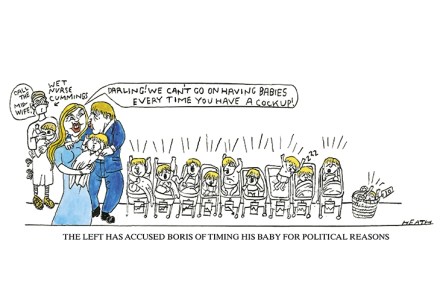
Home After a Cobra emergency meeting about the coronavirus Covid-19, when the number of cases in the United Kingdom had reached 40, Boris Johnson, the Prime Minister, said that they had ‘agreed a plan so that as and when it starts to spread — as I’m afraid it looks likely that it will — we are in a position to take the steps that will be necessary’. The plan expects up to a fifth of the workforce to be off sick during the peak of an epidemic. After a week in which shares lost 12 per cent of their value, the Bank of England said that it was working ‘to ensure all necessary steps are taken to protect financial and monetary stability’. The Budget had to be adjusted.

The Tories cannot afford a war with the civil service

Thirteen years ago, when John Reid became Home Secretary, he declared the ministry he presided over ‘not fit for purpose’. He was talking about border control but he might well have been referring to the department in general. When Theresa May became PM, things at the Home Office went from bad to worse. Her paranoid style as PM, developed as a survival mechanism when she was Home Secretary, was disastrous. The Windrush debacle, the most shameful example of government dysfunction in recent times, was a sign that change was long overdue. And yet this chaotic department, riven with internal feuds and a lack of accountability, now has a gargantuan task ahead of it.

Barometer: Is climate change making the weather more windy?

Heathrow’s nine runways When was a third runway for Heathrow first proposed? Heathrow was always planned to have multiple runways. On 10 April 1946, before the airport was even open, the Minister for Civil Aviation, Lord Winster, announced that the then London Airport was to have nine runways. Six would be in a Star of David pattern on the present site of Heathrow; the other three would form a triangle to the north of Bath Road, where the current proposal for a third runway is based. This was supposed to allow 160 aircraft movements per hour in good weather and 120 in bad weather. When Winster made his speech, three runways were already under construction. The third was later taken out of use, although part of it is still used as a taxiway.

Full text: Boris Johnson releases coronavirus battle plan

The government has released its official action plan to deal with the coronavirus epidemic, warning people that 'we are all susceptible to catching this disease'.  During a press conference at Downing Street this morning, the Prime Minister told reporters that the government's plan involved four phases: 'contain, delay, research, mitigate'. Boris Johnson said: 'Let me be absolutely clear that for the overwhelming majority of people who contract the virus this will be a mild disease from which they will speedily and fully recover'.  However, he added: 'It is highly likely that we will see a growing number of UK cases'. There are currently 51 known cases across the UK.

The ‘Westminster paedophile ring’ is a lesson in how not to carry out a police investigation

A cornerstone of any -functioning democracy is the separation of police and the courts on one hand, and government and parliament on the other. Where the latter are charged with making the law, they should never, ever be allowed to interfere with the enforcement of that law. Politicians have no power to tell the police what to investigate. As Lord Denning once observed, no policeman is subject to orders of the Secretary of State: ‘No minister of the Crown can tell him that he must, or must not, keep observation on this place or that. Or that he must prosecute this man or that one… He is answerable to the law, and to the law alone.’ In Britain, for most of the time, that separation has been respected.

Letters: How to really revitalise the North

Devolved or decentralised? Sir: Paul Collier (‘Northern lights’, 22 February) conflates what devolution has come to mean, in UK terms, with decentralisation of authority. Thus it is adrift to imply that Edinburgh has benefited from a conscious decentralising of powers from central government. It was simply that Scotland as a whole got devolution and Edinburgh is its capital city, whereby it administers the devolved responsibilities. Until such time as commentators and politicians distinguish properly between devolution and decentralisation, they will continue to prompt fears that England could be balkanised rather than treated as a national entity on a par with Scotland.

Barometer: Who can use the word ‘royal’?

What a hole The World Health Organisation added processed meats to its list of ‘known’ carcinogens. A few of the other things which have been claimed to be linked to cancer in the past fortnight: A hole built into the wall of a NatWest bank branch in Ilkeston, Derbyshire, became an unlikely tourist destination with five-star reviews on TripAdvisor. Some other surprising attractions: — The Bude tunnel is a 230-yard Perspex tunnel linking a supermarket to its car park in Bude, Cornwall. It started to gain five-star reviews when it was decorated with Christmas lights.

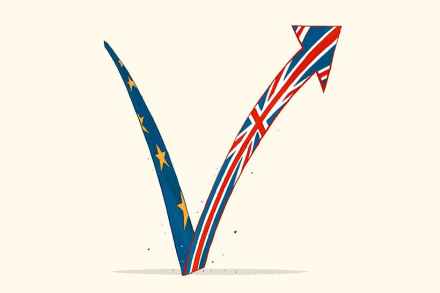
The UK is booming – despite Brexit

After the vote for Brexit, it was often said that our departure from the EU was most likely to harm the very people who voted for it: the industrial workers of the Midlands and North. Didn’t they know that a vote for Brexit would, in itself, lead to 500,000 more job losses? Couldn’t they see that Nissan was bound to wind down its operations in Sunderland and move business to mainland Europe? Almost four years on, it’s safe to say that most of the economic doom-mongering was nonsense. This week’s figures on jobs and earnings show that, since the referendum, employment is up by one million — and it is rising still. Unemployment in the UK is at its lowest since 1974. Unemployment in Wales is at its lowest since records began.

Portrait of the week: Cabinet reshuffle, another royal divorce and coronavirus hits iPhones

Home The Budget, still scheduled for 11 March, had to be rewritten after Rishi Sunak was made Chancellor of the Exchequer when Sajid Javid resigned rather than agree to his special advisers being sacked and provision being pooled between No. 10 and No. 11 Downing Street. Questions were asked about how far this was the work of Dominic Cummings, the chief adviser to Boris Johnson, the Prime Minister. In the cabinet shuffle, Julian Smith was replaced as Northern Ireland Secretary by Brandon Lewis. Suella Braverman replaced Geoffrey Cox as Attorney General; she had recently written an article regretting that ‘decisions of an executive, legislative and democratic nature have been assumed by our courts’.

Britain is booming – despite Brexit

After the vote for Brexit, it was often said that our departure from the EU was most likely to harm the very people who voted for it: the industrial workers of the Midlands and North. Didn’t they know that a vote for Brexit would, in itself, lead to 500,000 more job losses? Couldn’t they see that Nissan was bound to wind down its operations in Sunderland and move business to mainland Europe? Almost four years on, it’s safe to say that most of the economic doom-mongering was nonsense. This week’s figures on jobs and earnings show that, since the referendum, employment is up by one million — and it is rising still. Unemployment in the UK is at its lowest since 1974. Unemployment in Wales is at its lowest since records began.

Barometer: Who actually goes on a cruise?

Breeding controversy A Downing Street aide, believed to have been recruited as a result of Dominic Cummings’s advert for ‘weirdos and misfits’, resigned after it was revealed he had spoken favourably of eugenics in the past. Where did eugenics come from?— The term was coined in 1883 by Francis Galton, a half-cousin of Charles Darwin. As well as studying meteorology and introducing the first weather map to the Times, he proposed experiments to test the heredity of intelligence — including the somewhat unethical proposal of separating twins at birth. The weak, he proposed, should be prohibited from breeding. Galton himself failed to have any effect on the gene pool because, in spite of 43 years of marriage, he never fathered a child. Right as rain?

2442: Don’t nod solution

ROTAVATOR (4A), NAURUAN (12), DEED (25), DEIFIED (36), MALAYALAM (39), REIFIER (4D), TERRET (15D), and REPAPER (18) are palindromes as is 2442, the NUMBER (3) of the PUZZLE (30), and its title.

Letters: How to make a cup of tea

No defence Sir: Jon Stone (Letters, 15 February) recalls the horrors and miseries of being subjected to bombing from the air. How right he is to do so. The deliberate burning and crushing of civilians in their homes is a revolting and indefensible form of warfare. It is no surprise that Hitler used it. What is surprising is that people in this country continue to make excuses for our own use of this method, which was actually far more extensive and deadly than the German bombing of the United Kingdom. There are no such excuses. Those who fall back on utilitarian justifications will also find that these do not work. The bombing of Germany failed on its own terms.

Full text: Top UK Brexit negotiator David Frost on his plans for an EU trade deal

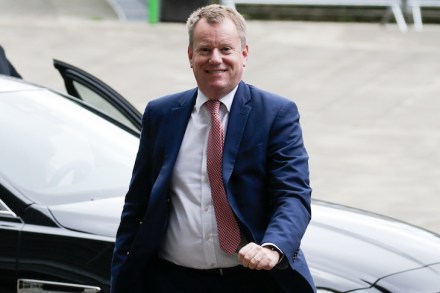
Boris Johnson's top Brexit negotiator David Frost gave a major speech at ULB Brussels University on Monday evening where he set out the British government's plans for a UK-EU trade deal. This is an edited transcript of his speech: Thank you much everyone for that very kind introduction. It is a really huge pleasure to be here at your university. I would like to say thank you also to the Institute for hosting me, and your distinguished President, Ramona Coman, for being kind enough to host me here tonight. Your institute here has really made a huge contribution to the study of European politics and European integration – and long may that continue.