The Spectator

Covid-19 update: Coronavirus costs skyrocket

The Spectator brings you the latest insight, news and research from the front line. Sign up here to receive this briefing daily by email, and stay abreast of developments both at home and abroad: News and analysis Boris Johnson spent a second night in intensive care overseen by the ‘most knowledgeable respiratory specialist in the country’.The EU’s top science adviser has resigned over a disagreement with Brussels leaders over Covid-19 strategy.Meanwhile, talks between EU finance ministers over a €1.5 trillion bailout package for the southern member states have stalled after a marathon 16-hour discussion.

Covid-19 update: Boris ‘in good spirits’ – but still in ICU

The Spectator brings you the latest insight, news and research from the front line. Sign up here to receive this briefing daily by email, and stay abreast of developments both at home and abroad: No. 10 says the PM is ‘good spirits’ in the Intensive Care Unit of St Thomas’ Hospital in London. He is receiving standard oxygen treatment but is not on a ventilator. Isabel Hardman has the latest.Donald Trump has asked two pharmaceutical companies in London developing potential Covid-19 therapies to offer assistance to the PM.A new report from University College London finds the school closures ‘do not appear to have a significant effect’ on the spread of Covid-19.

Full list: senior government figures affected by coronavirus

Boris Johnson, who has tested positive for coronavirus, was admitted to the Intensive Care Unit of St Thomas' Hospital in London on Monday night, after his symptoms worsened. According to Number 10 officials on Monday, Boris remains conscious and was moved to the ward as a precaution in case he requires ventilation. The Times reports today that he has not been intubated and only needed four litres of oxygen – the normal threshold for intensive care is 15 litres.

The haunting beauty of empty cities

From our US edition

COVID-19 has a horrid ability to turn fiction into fact. Deserted modern cities are usually the realm of post-apocalyptic sci-fi movies. Now, many of us live in them. The world's greatest streets are dramatically empty; suspended suddenly in a dream-like quiet. It's eerie and also very beautiful. We usually often don't notice how remarkable our cities are the commotion. We are distracted by the crowds, the commotion and the congestion. Now it is hard for urbanites to notice anything else. The Spectator has looked around the world, and asked various writers in various places to describe where they live in lockdown.

empty cities london

Full list: Keir Starmer’s new Shadow Cabinet

Keir Starmer, the newly elected leader of the Labour party, has taken no prisoners with his cabinet reshuffle. Corbyn allies like Richard Burgon are out, and Ed Miliband is back. Here is the full make-up of Starmer's top team: Shadow Chancellor of the Exchequer: Anneliese DoddsFormerly: John McDonnellAn Oxford PPE graduate, Dodds is a long time supporter of Starmer's leadership campaign. She has served as a shadow Treasury minister since July 2017. She had even been tipped for promotion by the former Shadow Chancellor John McDonnell in early March, as he said he was ‘hoping she gets a significant role in the new administration’. Dodds is the first woman to be appointed Shadow Chancellor (and potentially Chancellor, if elected to office).

Covid-19 update: Is Boris still in charge?

The Spectator brings you the latest insight, news and research from the front line. Sign up here to receive this briefing daily by email, and stay abreast of developments both at home and abroad: News and analysis Boris Johnson was admitted to hospital for further coronavirus tests last night. Foreign Secretary Dominic Raab will take over day-to-day operations while the PM is in hospital. James Forsyth has the details.Scotland’s chief medical officer has resigned after personally breaking the lockdown guidance by visiting her second home (twice). Podcast here.It could be a month before the UK finds a Covid-19 antibody test that works, according to Oxford University’s Professor Sir John Bell.

Portrait of the week: Coronavirus hits cabinet, EasyJet grounded and postman soldiers on

Home Boris Johnson, the Prime Minister, contracted the coronavirus disease Covid-19, as did Matt Hancock, the Health Secretary. The Prince of Wales had earlier been tested in Scotland and isolated himself with the disease for a week. Chris Whitty, the government’s chief medical adviser, also isolated himself after suffering symptoms, as did Dominic Cummings, the Prime Minister’s chief strategist. By Sunday 29 March, 1,228 people in the United Kingdom had died of the disease, compared with a total of 281 a week before. Two days later the total was 1,789. Two more temporary hospitals, in Birmingham and Manchester, in addition to the Nightingale Hospital in the London docks, were being built. Restrictions might last six months.

How much are people eating during lockdown?

People power Boris Johnson said that the reaction to the coronavirus crisis showed ‘There really is such a thing as society’ — an apparent reference to an interview Mrs Thatcher gave to Woman’s Own in 1987. A reminder of what she actually said: ‘I think we have gone through a period when too many people have been given to understand “I have a problem, it is the government’s job to cope with it!”… and so they are casting their problems on society, and who is society? There is no such thing! There are individual men and women and there are families and no government can do anything except through people, and people look to themselves first.

Letters: Why coronavirus is so hard to investigate

Corona mysteries Sir: John Lee highlights the issue of dying of seasonal flu vs dying of coronavirus when assessing attributable deaths (‘The corona puzzle’, 28 March). The obvious solution would be a high autopsy rate. However, autopsies on known or suspected coronavirus deaths are not being done in case they lead to mortuary technologists and pathologists becoming infected. (Tuberculosis, HIV and even rabies infections are easier to prevent in mortuary work than coronavirus.) This contributes to a lack of information about how coronavirus affects people. In the long term, it also seems unlikely that anatomical examination of the dead will revert to its pre-coronavirus autopsy rate of 17 per cent of all deaths (in England and Wales).

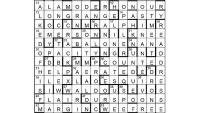
2448: Issues solution

The novels are A Modern Utopia (anagram of AORTAE IMPOUND 17/5), The Time Machine (HEATHEN/MIMETIC 22/27), Tono-Bungay (BATON/YOUNG 29/31) and Men Like Gods (SMOG/LIKENED 8/26) by H.G. WELLS (33). First prize Joanne Aston, Norby, Thirsk Runners-up David Morgan, Gilesgate, Durham City; R.R.

Covid-19 update: UK will be world leader in antibody testing, says Matt Hancock

The Spectator brings you the latest insight, news and research from the front line. Sign up here to receive this briefing daily by email, and stay abreast of developments both at home and abroad: News and analysis The UK aims to be a world leader in Covid-19 antibody testing, says Matt Hancock.Singapore, which was thought to have beaten the virus, is closing schools to ‘pre-empt escalating infections’.The first person to be charged with breaching lockdown legislation has conviction dropped after police admitted they had misunderstood new laws.NHS makeshift hospitals to open in Bristol (1,000-patient) and Harrogate (500 beds). NHS Nightingale, in London, was officially opened by Prince Charles this morning.Global Covid-19 infections pass one million.

Matt Hancock: How we’ll get to 100,000 tests a day

The health secretary Matt Hancock spoke to BBC Radio 4's Today programme earlier this morning where he explained how he thought the government could reach his new target of 100,000 coronavirus tests a day. This is an edited transcript of that conversation:  Mishal Husain How do we get from a testing level of 10,000 tests a day to 100,000 a day in England by the end of the month? That target, unveiled by the government yesterday, includes both swab tests, currently being used to diagnose whether people have the coronavirus, and the as yet unvalidated antibody test, which would identify those who have had it and which could therefore be a key part of adjusting the social distancing rules currently in place.

Covid-19 update: UK lockdown sends nearly a million applicants to Universal Credit

The Spectator brings you the latest insight, news and research from the front line. Sign up here to receive this briefing daily by email, and stay abreast of developments both at home and abroad: News and analysis Almost a million people have applied for universal credit in the first two weeks of the government lockdown, nearly ten times the normal number.UK Covid-19 deaths rose by 569 yesterday, bringing the total to 2,921 – the largest daily increase, up six from yesterday’s figures.One in five small businesses could fold over the next month, due to collapse in demand and difficulties in accessing loans, according to research by a group of accountants. No lockdown please, we’re Swedish: Fredrik Erixon’s letter from Uppsala.

Coronavirus roundup: deaths jump by 563 in one day

The Spectator brings you the latest insight, news and research from the front line. Sign up here to receive this briefing daily by email, and stay abreast of developments both at home and abroad:  News and analysis UK Covid-19 deaths rose by 563 yesterday, it emerged, by far the largest one-day rise. The total is now 2,352. But there are still, as of today, no reports of hospitals being overwhelmed – not even in London.Just 2,000 out of 500,000 frontline staff in NHS England have been tested for coronavirus, No. 10 has said.NHS staff may not get the protective equipment they need for another two weeks, Robert Jenrick, the Communities Secretary, has said.US government scientists have said their aim is to keep Covid-19 deaths in America under 240,000.

Former Supreme Court Justice: ‘This is what a police state is like’

The former Supreme Court Justice Jonathan Sumption, QC, has denounced the police response to the coronavirus, saying the country is suffering 'collective hysteria'. This is an edited transcript of his interview with BBC Radio 4's World at One programme earlier today.  Derbyshire police have shamed our policing traditions BBC interviewer Jonny Dymond 'A hysterical slide into a police state. A shameful police force intruding with scant regard to common sense or tradition. An irrational overreaction driven by fear.' These are not the accusations of wild-eyed campaigners, they come from the lips of one our most eminent jurists Lord Sumption, former Justice of the Supreme Court. I spoke to him just before we came on air.

Portrait of the week: Salmond cleared, Olympics postponed and Britain told to stay home

Coronavirus Sunday dawned with 233 people in the United Kingdom dead thus far from the coronavirus Covid-19 (a week earlier it had been 21), and more than 12,000 in the world. Three days later it was 442 in the UK and more than 18,000 worldwide. About 107,000 of the world’s 410,000 cases detected had recovered. A billion people in the world were confined to their homes, joined from Sunday by a billion more in India, where confusion reigned. Testing was uneven, but, in fatalities, Italy, with 6,820 by Tuesday, had gone far beyond China (with 3,277). Iran admitted to 1,934 deaths and Spain had 2,800. China was reporting few new home-transmitted cases and Wuhan was to lift its lockdown in April.

Letters: Civilisation will survive coronavirus

Covid questions Sir: I worry that Matt Ridley and others are trying to frighten us about Covid-19 (‘Like nothing we’ve known’, 21 March). The fact is that we do not know how deadly the virus is. We know that it is widespread; but that does not make it deadly. How long-lasting is the danger from Covid-19? Will it remain in the system after the pandemic scare is over? We do not know. But will civilisation survive? You betcha! I was called up to National Service in 1952 and while waiting for the train to take me to Aldershot, I bought a book at the station called Earth Abides by George R. Stewart. Written in 1949, this was about a deadly virus that wipes out 99.9 per cent of humanity. Civilisations collapsed, but slowly the remaining humans regrouped.

How much food have we really been stockpiling?

Time out When did British workers start being ‘furloughed’? The word furlough is first recorded in the English language in 1625, believed to be derived from the Dutch verloffe, meaning a leave of absence of a sailor from the navy. It seems to have come back into parlance in Britain thanks to it being used in the US prison system to describe temporary leave for an inmate. It was the title of a 2018 American film in which a female prisoner is allowed out of jail for the weekend to visit her dying mother. The film was later renamed Time Out, perhaps because not everyone knew what ‘furlough’ meant. But to no avail — the film, which is reported to have cost $3 million to make, grossed just $8,472 at the US box office.