The Spectator

Portrait of the week: Coronavirus hits pubs, offices, sport, the FTSE and Mount Everest

From our UK edition

Coronavirus The government asked all people over 70 to cease from social contact for at least 12 weeks in order to avoid catching the coronavirus Covid-19. If anyone had a high temperature or new continuous cough, the whole household should stay in for 14 days. Everyone should work from home if they could and avoid pubs and theatres. All non-urgent operations in England would be postponed from 15 April. Boris Johnson, the Prime Minister, said: ‘Although the measures are extreme, we may well have to go further.’ Earlier, he had said that many families would ‘lose loved ones before their time’ to the disease.

Where does ‘helicopter money’ come from?

From our UK edition

Taking off Who came up with the concept of ‘helicopter money’? — The term is derived from an essay in 1969 by the economist Milton Friedman, who suggested a theoretical experiment where a helicopter flew over a community suffering from low growth and dropped $1,000 of banknotes which were then eagerly collected by the residents and spent. — The idea was revived in a speech by the then chairman of the Federal Reserve, Ben Bernanke, in 2002. — Come the banking crisis, however, central banks opted for an indirect way of pumping extra money into the financial system, via quantitative easing.

Letters: The perfect song to wash your hands to

From our UK edition

British science Sir: Dr Fink is right that the UK bats well above its weight through curiosity-driven research (‘Back to basics’, 14 March). This forms the bedrock of scientific progress, but it is misleading to imply that ‘blue skies’ thinking and practical application are mutually incompatible. Should we not nurture both? In this way the UK will lead in discovery and exploitation for societal benefit through the earliest application of new ideas, preventing us from dropping the ball as we have in the past. He is right that we should let scientists focus on delivering new science, but is it too much to spend a few weeks outlining forward plans every five years?

The lockdown list: books to read during quarantine

Now we’ve got time on our freshly cleaned hands, The Spectator’s literary luminaries are lubricating the wheels on time’s wingèd chariot and seizing the chance to boost their morale and brain function, reflect on the meaning of life and catch up on a good book or six. Each day, the Lockdown List carries our bibliophilic recommendations. Day 74: Indian summerRoss Clark The success of Black Lives Matter has deflected attention from a group which has no less a cause for grievance over its treatment throughout US history: native Americans. Indeed, to this day Native Americans, thousand for thousand, have an even greater chance of being killed by police officers as do African Americans.

custer

The Spectator launches new website to mark its 10,000th issue

From our UK edition

Today The Spectator launches a new website, designed to showcase its world-class journalism, popular podcast channels and 24/7 news coverage and commentary. The website has been designed in advance of our 10,000th issue, as The Spectator – the oldest magazine in the word – becomes the first publication in history to reach this milestone The issue, which goes on sale on 23 April – St George’s Day – will look back on our 192-year history as well as mark the start of a new digital era. The website’s redesign pays tribute to the print magazine, while modernising our look and feel to showcase the variety of what The Spectator produces.

Is Boris about to abandon his own debt rules?

From our UK edition

It’s always tempting for governments to respond to economic trouble with a debt-fuelled spending splurge, but it’s a notoriously blunt tool. The root of the current problem is not financial panic but a rational response to the coronavirus. People are travelling less, staying away from shops and the workplace, delaying various projects, and they will keep doing so while the uncertainty remains. This disruption is painful but temporary. It is not symptomatic of financial malaise. It would be a mistake for the Conservatives to use this as a pretext to abandon their five-year plan to control the public finances. The £30 billion stimulus to address jitters over coronavirus was quite a figure, especially as the extent of the economic impact of Covid-19 is far from clear.

Letters: The BBC licence fee is an anachronism

From our UK edition

Coronavirus predictions Sir: While precautionary advice regarding the coronavirus should be followed, Ross Clark is right (‘Feverish imaginations’, 29 February) to urge an open mind on the doomsday predictions which are edging us towards panic. In 1996 the then government’s chief scientific adviser, Professor Kenneth Calman, predicted that 500,000 people could die within a few years from the human form of BSE. Another official adviser, Professor Richard Lacey, described the disease as ‘the time bomb of the 20th century, equivalent to the bubonic plague’. In the event, the reported death toll was 177, while the scare cost the UK an estimated £7 billion.

Portrait of the week: Panic buying, Budget announcements and farewell to Harry and Meghan

From our UK edition

Home At the beginning of the week 319 people in the United Kingdom had been found to be suffering from the coronavirus Covid-19, with five deaths by Monday evening; by the next day there were another 54 cases and another death. Of the total, 91 were in London. Testing was extended to anyone hospitalised with a respiratory tract infection. Nadine Dorries, a health minister, caught the virus. Shares in London fell by 7.8 per cent on Monday, like those in other European exchanges, then bounced back a little. Supermarkets were allowed to receive deliveries in the dead of night to avoid shortages. There was a curious tendency to panic-buy lavatory paper. The Bank of England announced an emergency cut in interest rates from 0.75 per cent to 0.

The great Tory Budget giveaway

From our UK edition

It’s always tempting for governments to respond to economic trouble with a debt-fuelled spending splurge, but it’s a notoriously blunt tool. The root of the current problem is not financial panic but a rational response to the coronavirus. People are travelling less, staying away from shops and the workplace, delaying various projects, and they will keep doing so while the uncertainty remains. This disruption is painful but temporary. It is not symptomatic of financial malaise. It would be a mistake for the Conservatives to use this as a pretext to abandon their five-year plan to control the public finances.

Full text: Rishi Sunak’s Budget statement

From our UK edition

Rishi Sunak unveiled his first Budget today. The Chancellor has promised a £30bn war chest for tackling coronavirus. There is also £6bn of new funding for the NHS, a new £2.5bn pothole fund and £5.2bn for flooding defences. Here is his full speech: I want to get straight to the issue most on everyone’s mind– coronavirus COVID19. I know how worried people are: worried about their health, the health of their loved ones, their jobs, their income, their businesses, their financial security. And I know they get even more worried when they turn on their TVs and hear talk of markets collapsing and recessions coming. People want to know what’s happening, and what can be done to fix it.

Budget 2020: as it happened

From our UK edition

Rishi Sunak has unveiled his first Budget. The Chancellor has promised a £30bn war chest for tackling coronavirus. There is also £6bn of new funding for the NHS, a new £2.5bn pothole fund and £5.2bn for flooding defences. Here are the main headline announcements: A promise to increase public spending by 2.

Full text: Labour’s suspension letter to Trevor Phillips

From our UK edition

News broke this morning that the former head of the Equalities Commission Sir Trevor Phillips had been suspended from the Labour party over allegations of Islamophobia. Phillips has spent his career documenting the realities of race and integration in British life.  The think tank Policy Exchange has now released the correspondence between Sir Trevor and the Labour party disciplinary department. Phillips is a senior fellow at the research institute.

Portrait of the week: Coronavirus plans, Boris’s baby and Priti Patel under fire

From our UK edition

Home After a Cobra emergency meeting about the coronavirus Covid-19, when the number of cases in the United Kingdom had reached 40, Boris Johnson, the Prime Minister, said that they had ‘agreed a plan so that as and when it starts to spread — as I’m afraid it looks likely that it will — we are in a position to take the steps that will be necessary’. The plan expects up to a fifth of the workforce to be off sick during the peak of an epidemic. After a week in which shares lost 12 per cent of their value, the Bank of England said that it was working ‘to ensure all necessary steps are taken to protect financial and monetary stability’. The Budget had to be adjusted.

The Tories cannot afford a war with the civil service

From our UK edition

Thirteen years ago, when John Reid became Home Secretary, he declared the ministry he presided over ‘not fit for purpose’. He was talking about border control but he might well have been referring to the department in general. When Theresa May became PM, things at the Home Office went from bad to worse. Her paranoid style as PM, developed as a survival mechanism when she was Home Secretary, was disastrous. The Windrush debacle, the most shameful example of government dysfunction in recent times, was a sign that change was long overdue. And yet this chaotic department, riven with internal feuds and a lack of accountability, now has a gargantuan task ahead of it.

Barometer: Is climate change making the weather more windy?

From our UK edition

Heathrow’s nine runways When was a third runway for Heathrow first proposed? Heathrow was always planned to have multiple runways. On 10 April 1946, before the airport was even open, the Minister for Civil Aviation, Lord Winster, announced that the then London Airport was to have nine runways. Six would be in a Star of David pattern on the present site of Heathrow; the other three would form a triangle to the north of Bath Road, where the current proposal for a third runway is based. This was supposed to allow 160 aircraft movements per hour in good weather and 120 in bad weather. When Winster made his speech, three runways were already under construction. The third was later taken out of use, although part of it is still used as a taxiway.

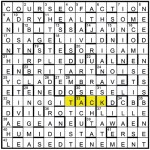
2444: Ones in the country solution

From our UK edition

The unclued answers are all words inChambers, having their origin in Indonesia (clued by wordplay in the title). First prize Kailash Vernalls, Thame, OxonRunners-up Paul Davies, Reading, Berks; Mrs J.

Full text: Boris Johnson releases coronavirus battle plan

From our UK edition

The government has released its official action plan to deal with the coronavirus epidemic, warning people that 'we are all susceptible to catching this disease'.  During a press conference at Downing Street this morning, the Prime Minister told reporters that the government's plan involved four phases: 'contain, delay, research, mitigate'. Boris Johnson said: 'Let me be absolutely clear that for the overwhelming majority of people who contract the virus this will be a mild disease from which they will speedily and fully recover'.  However, he added: 'It is highly likely that we will see a growing number of UK cases'. There are currently 51 known cases across the UK.