Svitlana Morenets

Svitlana Morenets

Svitlana Morenets is a Ukrainian journalist and a staff writer at The Spectator. She was named Young Journalist of the Year in the 2024 UK Press Awards. Subscribe to her free weekly email, Ukraine in Focus, here

Svitlana Morenets, Michael Simmons, Ursula Buchan, Igor Toronyi-Lalic, Richard Morris & Mark Mason

37 min listen

On this week’s Spectator Out Loud: Svitlana Morenets says that Trump has given Zelensky cause for hope; Michael Simmons looks at how the American healthcare system is keeping the NHS afloat; Ursula Buchan explains how the Spectator shaped John Buchan; Igor Toronyi-Lalic argues that art is no place for moralising, as he reviews Rosanna McLaughlin; Richard Morris reveals how to access the many treasures locked away in private homes; and, Mark Mason provides his notes on bank holidays. Produced and presented by Patrick Gibbons.

Trump has given Zelensky cause for hope

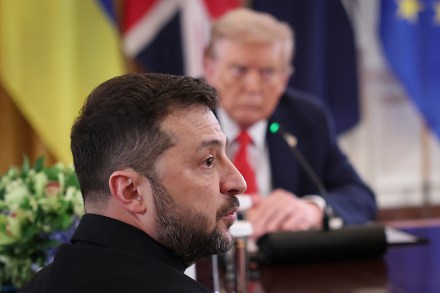
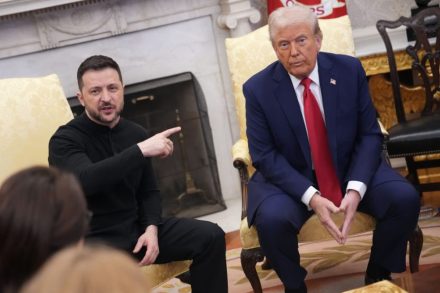
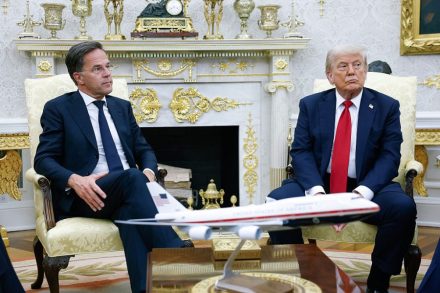
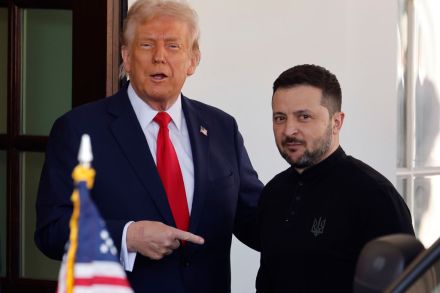
On Volodymyr Zelensky’s last visit to the White House, he brought a gift: a championship belt from one of Ukraine’s boxing legends. But talks collapsed before the gift-giving stage. This time, he brought a golf club from a wounded soldier and a letter from Olena Zelenska, Ukraine’s first lady, to Melania Trump. Donald Trump not only accepted them but reciprocated with symbolic ‘keys to the White House’. The exchange signalled that Trump, who once slammed the door on Ukraine, is now willing to listen, if the approach is right. Just six months ago, Trump was ruling out any American role in guaranteeing peace in Ukraine. This week, such guarantees are at the centre of negotiations in Washington.

Zelensky’s diplomatic masterclass

13 min listen

What a difference six months makes. The last time Zelensky and Trump met in Washington we were mourning the end of America’s commitment to security in Europe and a new era of isolationism. But yesterday was a totally different story – and Zelensky deserves much of the credit for his change in tactics. Trump complimented Zelensky’s suit as he arrived at the White House, the two exchanged warm words of thanks, and while they didn’t manage to settle on anything substantial when it comes to a peace deal, there was some vague consensus on security guarantees. The stage seems set for a Trump/Putin/Zelensky trilateral. The mood seems positive but is it too soon to celebrate? Lucy Dunn speaks to James Heale and Svitlana Morenets. Produced by Oscar Edmondson.

Putin was the real winner of the Alaska summit

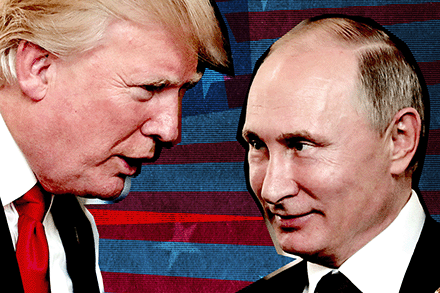
Vladimir Putin couldn’t stop smiling at the spectacle awaiting him in Anchorage yesterday, as American soldiers knelt to adjust a red carpet rolled out from his presidential plane. Donald Trump applauded as the Russian President walked towards him under the roar of fighter jets and stepped onto American soil for the first time in a decade. The pair shook hands for the cameras, ignoring a journalist who shouted, ‘Mr Putin, will you stop killing civilians?’ before riding off together in the presidential limo to the summit site. A royal reception, not a ceasefire, was what the international pariah had come out of his bunker for.

Putin’s summer offensive is gaining momentum

Vladimir Putin is set to arrive at his meeting with Donald Trump in Alaska on Friday with additional leverage: his summer offensive has finally reached momentum. In recent days, Russian forces have breached Ukraine’s defensive line near Dobropillia, north of Pokrovsk, pushing up to ten miles deep into the western sector of the Donetsk region still under Ukrainian control. The advance, carried out mainly on foot and motorbikes, has yet to crystallise into a full-scale breakthrough, but it ranks among the fastest Russian gains of the past year – and comes at the worst possible moment for Kyiv.

Will Zelensky’s appeal to Trump fall on deaf ears?

Over 1,265 days of full-scale war, Volodymyr Zelensky has delivered almost as many nightly addresses to the nation. Only a handful have been truly decisive. There was one just hours before the invasion when he asked, ‘Do the Russians want war?’ and vowed that Ukraine would defend itself. The next day, standing outside his office in Kyiv with his top officials, he told the world: ‘I’m here. We’re all here.’ And last weekend, when he declared that Ukraine would not surrender its land to the occupier – and that the war must end with a just peace: [Putin’s] only card is the ability to kill, and he is trying to sell the cessation of killings at the highest possible price. It is important that this does not mislead anyone.

Zelensky’s anti-corruption overhaul will not be forgotten quickly

Last week, the Ukrainian parliament voted to destroy two key anti-corruption institutions. Outrage followed, and now lawmakers have been forced to cut short their summer holidays and return to Kyiv to reverse the law. More than a thousand demonstrators shouted ‘Shame!’ as the MPs drove past them to the Verkhovna Rada.  In two rapid back-to-back readings, 331 lawmakers voted to restore the independence of Ukraine’s anti-corruption agency, Nabu, and the office of the anti-corruption prosecutor, Sapo. Zelensky signed it immediately. The reputational damage, though, was irreversible. The circus that followed the vote only deepened public disgust toward the politicians they no longer want to represent them.

Can Ukraine forgive president Zelensky?

For six years in office, Volodymyr Zelensky never experienced the raging crowd beneath his window. But Ukraine's wartime president grew too powerful, too confident, bathing in the unwavering support of Ukrainians in the face of a greater evil. He overstepped. When Zelensky signed the bill stripping the anti-corruption institutions of their independence, he assumed Ukrainians would look the other way. They didn’t. Protests against the law swept through the country. He did well to listen – and back down. But the damage to his image in Ukraine – and abroad – may now be beyond repair.

Ukraine’s anti-corruption institutions are under attack

The war for Ukraine’s future is being fought not just on the battlefield, but also within its democratic institutions. Today, one of those battles was lost. The parliament passed a bill that destroys the independence of Ukraine’s key anti-corruption bodies. If signed into law, it would effectively dismantle their ability to investigate all senior officials in the country without interference. The new legislation will allow Ukraine’s prosecutor general to take control over National Anti-Corruption Bureau (Nabu) and Special Anti-Corruption Prosecutor’s Office (Sapo).

Trump has given Ukraine a chance to stop Putin in his tracks

It took Donald Trump six months, at least six useless phone calls with Vladimir Putin and more than a thousand Ukrainian civilians killed since the start of his second term for the realisation to finally hit: Russia has no intention of ending the war. Today, the American President took a U-turn from praising Putin and unveiled a new plan to arm Ukraine. Nato allies will purchase ‘billions of dollars’ worth of US military equipment to send to Ukraine, with 17 Patriot air defence systems already being prepared for delivery. Trump will also impose 100 per cent tariffs on Russia and its trade partners if Putin doesn’t make a deal to end the war in 50 days.

Trump’s weapons pause will help Putin win

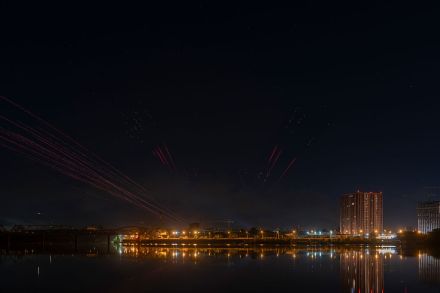
Vladimir Putin launched one of the largest air assaults of the war overnight, just hours after admitting to Donald Trump that Russia would not abandon its war aims in Ukraine. Some 550 missiles and drones were fired over more than 11 hours, most targeting Kyiv. Residents who endured another sleepless night were advised to keep their windows shut as smoke and dust from the blasts turned the air toxic. The civilian death toll would have been catastrophic had 90 per cent of the incoming missiles and drones not been intercepted. But Ukrainians will not be able to count on such protection for much longer as the Trump Administration halted air defence deliveries this week. The move caught Ukraine’s leadership off guard as they learned of the weapons freeze from the media on Tuesday.

Russian forces break into yet another Ukrainian region

Vladimir Putin’s summer offensive is fully under way: all day and night, Russian infantrymen run at Ukrainian positions in endless waves. Even when struck, the survivors don’t retreat or take cover but keep running forward, until there are so many of them that no amount of drones or shells can stop them. That’s how Russian troops have broken into yet another Ukrainian region: the Dnipropetrovsk Oblast. Turning another Ukrainian region into a war zone strengthens Moscow’s hand at the negotiating table The push came near the village of Horikhove, on the border between the Donetsk and Dnipropetrovsk regions, as the Kremlin declared a new phase in its ‘denazification’ campaign.

Why the Kerch bridge must fall

Vladimir Putin has hit back against Ukraine’s ‘Spiderweb’ operation, which recently destroyed or damaged at least two dozen Russian bombers. Overnight, Russia fired 45 missiles and more than 400 drones at Ukrainian cities and apartment blocks. At least six people were killed, including three rescuers searching for survivors in Kyiv. More than a hundred civilians were injured across the country. Putin’s spokesman, Dmitry Peskov, claimed the mass attack on ‘military targets’ was a response to the ‘terrorist acts of the Kyiv regime’. But Ukraine is far from done; the Kerch bridge, which links the occupied Crimea to the Russian mainland, is high on the hit list.

Did Trump just allow Putin to bomb Ukraine?

Donald Trump has had another one of his ‘good conversations’ with Vladimir Putin, this time to commiserate over Ukraine’s drone raid that destroyed dozens of Russian heavy bombers across four airfields on Sunday. Trump wrote on Truth Social that their 75-minute call was a ‘good conversation, but not a conversation that will lead to immediate peace’. Then, sounding more like the Kremlin’s press secretary than the President of the United States, Trump relayed Putin’s plan to retaliate against Ukraine.  ‘We discussed the attack on Russia’s docked airplanes, by Ukraine, and also various other attacks that have been taking place by both sides,’ Trump wrote, as though those very same planes hadn’t bombed Ukraine for the last three years.

Zelensky is in an impossible position

The Ukrainian president said this week he hopes the war will end by next June. Not this summer. Not this year. But in 12 months’ time. Sanctions, he believes, and four years of gruesome war will finally hit the Russian economy, pushing it into a deep budget deficit. The IMF’s latest forecast sort of backs this up. Russia’s GDP growth is set to slow to 0.9 per cent next year, down from over 4 per cent in 2024. Most of Russia’s workforce is already employed and its central bank’s key interest rate is at 21 per cent. Still, for many Ukrainians, Russia’s downfall feels like yet another fairy tale. They’ve heard it all before. In the first days of the full-scale invasion, Ukrainians were told it would be over in ‘two to three weeks’.

Putin orders new offensive

‘You want a ceasefire? I want your death,’ said Russia’s chief propagandist Vladimir Soloviev during prime time television, the camera zooming in on his face. His message was aimed at both Ukrainians and Europeans urging the Kremlin to stop the war. Soloviev, alongside a chorus of other Kremlin loyalists and military experts, has lately been gloating about how Vladimir Putin weathered western pressure and secured Donald Trump on his side. There will be no peace, they say, until Ukraine capitulates to Russian demands. Putin, as if to prove the point, announced yesterday that he had ordered the military to begin creating a ‘security buffer zone’ along the Ukrainian border – which is not quite the peace process Trump has been calling for.

Why the Istanbul talks failed

Only one conclusion can be drawn from today’s talks in Istanbul: Russia has once again rejected the proposed unconditional 30-day ceasefire. In the first meeting between Ukrainian and Russian delegations in three years, Moscow demanded Kyiv withdraw its troops from the four regions Vladimir Putin has claimed but failed to capture completely. When Ukraine refused, Russia’s chief negotiator Vladimir Medinsky reportedly threatened to seize even more: Kharkiv and Sumy regions next. He warned that Russia is prepared to fight forever, before asking: can Ukraine? ‘Maybe some of those sitting here at this table will lose more of their loved ones.’  Threats and unrealistic demands are part of the Russian negotiation strategy to push Ukraine to withdraw from the talks.

Zelensky counters Trump’s surrender deal

I open the calculator on my phone to count how many civilians have been killed in Ukraine over the past five days. The number 38 stares back at me. I hope I haven’t missed anyone. An apartment block in Kyiv. A five-story building in Pavlohrad. A bus in Marhanets. Russian missiles and drones found Ukrainians in their beds, on their way to work or school. In Kherson, the traffic lights had to be switched off to stop Russian drones striking civilian cars as they stopped at junctions. The city remains a training ground for fresh Russian recruits. Hunting real people teaches them more quickly than hitting lifeless dots on a screen. Yet the peace talks continue.

There was Easter but no truce on Ukraine’s frontline

Kramatorsk, Donetsk region In a wooden Greek-Catholic church on the frontline of a warzone, encircled by red tulips and military vehicles, the priest’s sermon is woven through with the war – just like the soldiers’ Easter baskets, packed not only with paska bread, pysanky and sausages, but also with drones, waiting to be blessed. ‘This drone will be at work tonight – enforcing the ceasefire,’ a soldier whispers to me, smiling. The priest looks over a hundred soldiers in front of him, the church so packed that some must listen from the outside, and says that Ukraine will defeat evil, just as Jesus did. ‘The enemy is killing Him in our men and women, they are torturing Him in captivity, our mothers wash their faces with His tears,’ he says.

Giving Putin Crimea will not end the war

When Volodymyr Zelensky speaks of the Ukrainian territories under Russian control, he always calls them ‘temporarily occupied’. The phrase, first used by Zelensky’s predecessor, has been engraved into Ukrainian politics since 2014, after Vladimir Putin seized Crimea. That terminology is more than symbolic – it’s a promise that Ukraine will one day, even if it takes decades, reclaim all of its land. Now, Donald Trump wants to take that chance away. Trump is reportedly considering recognising Crimea as part of Russia in exchange for a ceasefire in Ukraine. And if the peace agreement isn’t reached soon, he threatens to walk away.