Svitlana Morenets

Svitlana Morenets

Svitlana Morenets is a Ukrainian journalist and a staff writer at The Spectator. She was named Young Journalist of the Year in the 2024 UK Press Awards. Subscribe to her free weekly email, Ukraine in Focus, here

Dozens dead after Russian strike on the city of Sumy

From our UK edition

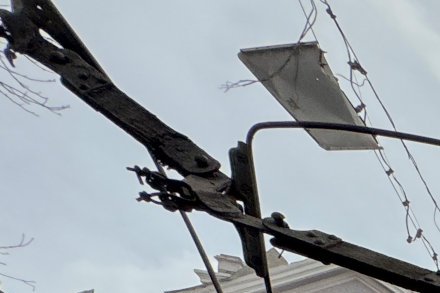
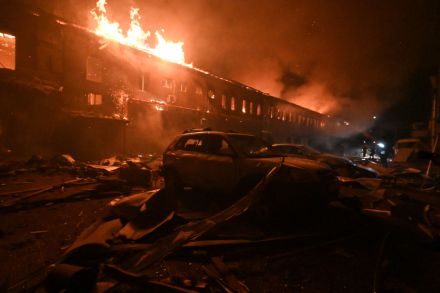
Two Russian missiles loaded with cluster bombs hit the city centre of Sumy this morning – on Palm Sunday, when Ukrainians traditionally go to church ahead of Easter. At least 32 people were killed, including two children. More than 80 were injured. The deadliest hit was on a trolleybus, pictured above. After the strike, a Russian military blogger calling himself ‘Terem’ posted this: ‘My opinion as a good Christian – the Russians must destroy these people. They are preventing us from building the Third Rome… they must pay with their blood. The end justifies the means.’ The attack on Sumy comes just a week after another Russian Iskander missile, also filled with cluster bombs, struck a playground in Kryvyi Rih – Volodymy Zelensky’s hometown.

Trump’s toxic mineral deal for Ukraine

From our UK edition

Donald Trump’s latest scheme to exploit Ukraine is gaining momentum. Kyiv has been handed a rewritten, 58-page minerals deal, which obliges Ukraine to repay every cent of US military and humanitarian aid it has received since Russia’s 2022 invasion. Washington is also demanding control over half of Ukraine’s income from its natural resources, including oil and gas. The deal is indefinite: Ukraine cannot break or amend it without US approval. What does Ukraine get in return? Absolutely nothing. Trump is pushing for the deal to be signed next week, but even if Volodymyr Zelensky is forced to agree to the terms, it would be very unlikely to be ratified by Ukraine’s parliament. The current draft would leave Ukraine owing the US at least $120 billion.

Ukraine is looking like the loser in Russia-US peace talks

From our UK edition

Ukraine’s worst nightmare is coming true: Vladimir Putin has presented the bill to end his war – and Donald Trump is forcing Kyiv to pay it. After 12 hours of talks with seasoned Russian diplomats in Saudi Arabia, the US delegation was so worn out and desperate for a win that they agreed to ease sanctions on Russia. In return, Moscow pledged not to bomb civilian vessels in the Black Sea and to halt strikes on energy and oil infrastructure if Kyiv does the same. But soon after the meeting ended, the Kremlin extended its list of demands.

Putin has set a trap for the Ukraine ceasefire plan

From our UK edition

Vladimir Putin has set his conditions for Donald Trump’s ‘unconditional’ ceasefire: Kyiv must not mobilise or train troops, nor receive military aid, then Ukraine must ultimately accept a final peace deal that eliminates the ‘root causes’ of the conflict – i.e., which erases Ukraine’s sovereignty. The Kremlin’s terms remain the same as they were three years ago: Ukrainians must cede four partially occupied regions to Russia. He also wants Kyiv to dismantle its independent government and surrender the right to choose its alliances. Surprisingly for Ukraine, Trump decided to get harsher on Russia too Putin has no reason to end the bloodshed until his imperialistic terms are met. His troops are rapidly advancing in the Kursk region.

Losing Kursk is a big blow to Zelensky

From our UK edition

After eight months of fighting on Russian soil, Ukrainian troops are pulling back from the Kursk region. This morning, Russian forces raised their flag over Sudzha and are now closing in on the last 50 square miles of Ukrainian holdouts. The retreat couldn’t come at a worse time for Kyiv – just as a ceasefire and potential peace deal are on the table. Zelensky had hoped to trade the Kursk salient for Ukrainian land in negotiations. Now, that leverage is almost gone. Russian troops, reinforced by North Koreans, have been steadily clawing back the 500 square miles of Russian territory seized by Ukraine last August.

Will Zelensky’s apology work on Trump?

From our UK edition

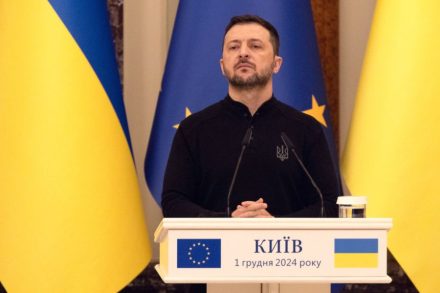
Volodymyr Zelensky is offering Donald Trump an olive branch after the American president paused all US military aid to Ukraine last night. Zelensky has expressed his regrets about the confrontation in the Oval Office and said his team is ready to come to the negotiating table ‘as soon as possible’. Ukraine wants to sign the minerals agreement with the US at ‘any time and in any convenient format’. Zelensky also praised Trump’s ‘strong leadership’ and offered the first steps towards a cease-fire. Will this be enough? White House officials earlier stated that aid would be on hold until Zelensky apologises for the Oval Office spat and demonstrates his readiness for peace.

Did Zelensky fail his nation?

From our UK edition

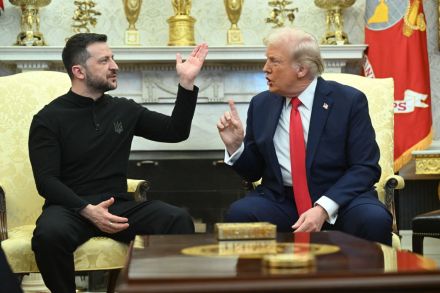
Volodymyr Zelensky fought for Ukraine’s security guarantees so fiercely last night, it was as if he'd been invited to sign a surrender to Russia, not a mineral deal with the US. It was neither the time nor the place to take on Donald Trump and JD Vance for parroting Kremlin talking points – a fact Zelensky seemed to acknowledge later on Fox News. Looking visibly distressed, he admitted such matters should be handled behind closed doors. There was regret, but no apology to Trump’s camp. ‘I respect President Trump and the American people, but I’m not sure we’ve done something bad. We must be open and honest’, Zelensky said.

Holy War and Antichrist: The rise of extremist rhetoric inside the Russian Orthodox Church

From our UK edition

35 min listen

The subject of Ukraine shattered the unity of Eastern Orthodoxy long before Russia’s full-scale invasion began. In 2018 the Ukrainian Orthodox Church declared independence from Moscow with the approval of the Ecumenical Patriarch of Constantinople. In response, Patriarch Kirill of Moscow broke off all relations with Constantinople, creating arguably the greatest schism in Orthodoxy for 1,000 years. There are now two main Ukrainian Orthodox Churches: one that supports independence and one still loyal to Moscow. As The Spectator’s Ukraine correspondent Svitlana Morenets points out, Ukrainians who previously didn’t care which church they attended now have to decide which to attend.

Trump is making sure that Zelensky is re-elected

From our UK edition

Ukrainians don’t like it when foreign leaders tell them what to do – whether they are Vladimir Putin or Donald Trump. Last night, Trump blamed president Volodymyr Zelensky for ‘starting’ the war with Russia and demanded that elections take place in Ukraine if it wants to be involved in the peace negotiations. Trump also expressed his disappointment that Zelensky hadn’t struck a deal with Russia before now, and said that Zelensky only had a ‘4 per cent’ approval rating in Ukraine. Trump may have been trying to put pressure on Ukraine to make peace faster, but his comments are actually only helping Zelensky secure a second presidential term.

The US and Russia must not force Ukrainian elections

From our UK edition

After four hours of talks in Saudi Arabia, Russian and American negotiators have reportedly come up with a three-stage plan to end the war in Ukraine. According to Fox News, the plan includes a ceasefire, elections in Ukraine and the signing of a final agreement. Ukrainian leader Volodymyr Zelensky, who was neither informed nor invited to the talks, said that Russia and the US are discussing the same old ultimatum Moscow set at the start of full-scale war. ‘I wonder – if we didn’t accept such ultimatums in our most difficult moment, why does anyone think we would now?’, he said. Back in February 2022, Russian president Vladimir Putin said he invaded Ukraine to protect people from the ‘Nazi regime in Kiev’.

Can Ukraine stop the bombings at its draft offices?

From our UK edition

On 1 February, a young man walked into a military enlistment office in Rivne with a bomb in his backpack. Moments later, it detonated, killing him instantly and injuring eight Ukrainian service members. He was just 21, recruited online by Russian intelligence operatives who offered quick cash for sneaking the bomb inside. This attack was not an isolated incident – it was the beginning of a wave of deadly bombings targeting draft offices across the country. Two more attacks followed this week. In Kamianets-Podilskyi, in the Khmelnytskyi region, a man walked into a recruitment centre, bag in hand, claiming he had personal items to hand over. The bomb went off before he could drop off the bag, killing him and severely injuring two doctors, a soldier and a member of staff.

Why Putin is feeling more confident

From our UK edition

At a recent closed-door session in Ukraine’s parliament, Kyrylo Budanov, the country’s spy chief, was asked how much longer Ukraine could hold on. His answer reportedly stunned the room: ‘If there are no serious negotiations by summer, very dangerous processes could begin, threatening Ukraine’s very existence.’ Ukraine’s military intelligence rushed to deny the statement, but his warning rings true. Vladimir Putin has every reason to believe he can still break Ukraine into submission later in the year, and plans to stall any peace settlement in the upcoming talks with Donald Trump. Russian troops are advancing faster than they did in 2022.

Putin is engineering a humanitarian crisis in Transnistria

From our UK edition

Sandwiched between Ukraine and Romania, the tiny republic of Moldova has been easy prey for Russia in the past. Its 2.5 million people are among the poorest in Europe and the Kremlin has been able to exploit the country’s dependence on cheap Russian gas to keep it as an ally. Putin has decided to let the people of Transnistria freeze so he can pin the blame on Moldova’s pro-EU government But Moldovans, like Ukrainians, have begun to choose another path. In 2022, they applied to join the European Union to be part of the democratic world, and then elected a pro-western president last year. Vladimir Putin’s response has been to engineer a humanitarian crisis in the region, which is now underway.

Is the Kursk operation still worth the cost?

From our UK edition

Gruesome images of dead North Korean soldiers sprawled in the mud and snow have flooded military Telegram channels this week. Pyongyang’s troops joined the battle for Russia’s Kursk region, but so far haven't been able to evade the Ukrainian drones. South Korean intelligence claimed that at least 100 North Korean soldiers have been killed and 1,000 wounded this month as Vladimir Putin races to strip Volodymyr Zelensky of his only bargaining chip before Donald Trump takes office in the US next month. Since November, Russia has deployed around 12,000 North Korean troops to reclaim the Kursk region from Ukrainians. The language barrier and difficulties with integration into Russian military ranks have caused delays in getting them battle-ready.

Why there will be no Christmas truce in Ukraine

From our UK edition

On Christmas Eve 1914, British and German soldiers laid down their arms and crossed trenches to exchange gifts, bury the fallen and even play football – a brief, poignant truce amid the horrors of the first world war. This week, Hungary’s Viktor Orban has tried to emulate that spirit of goodwill by proposing a symbolic Christmas ceasefire and a prisoner exchange between Russia and Ukraine. He called Vladimir Putin, talked to him for an hour, and then teamed up with the Kremlin to pin the blame on Volodymyr Zelensky for rejecting a Christmas truce. So, what really happened? A ceasefire is the last thing Putin wants right now A heated exchange started after Zelensky slammed Orban for discussing the war with Putin behind Ukraine’s back.

Why is Poland building a barrier with Ukraine?

From our UK edition

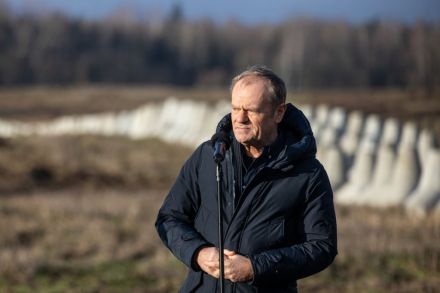
A ceasefire in Ukraine is far from being agreed, yet Poland is already preparing for its collapse. In recent months, Warsaw has been digging an anti-tank ditch along its border with Russia and Belarus – and has decided to extend it to Ukraine. The 400-mile-long ‘East Shield’ will almost double in size and include minefields and bunkers, anti-drone systems and AI-powered defences to protect Poland from possible invasion. Ukraine’s closest neighbour clearly puts little trust in Donald Trump’s promise of peace with Russia: if Vladimir Putin rearms and comes back for more, Poland must be ready to meet battle-hardened Russian troops at its border. Donald Tusk called the £2.5 billion project an ‘investment in peace’ to deter and discourage any possible aggressor.

SAS betrayal, the battle for Odesa & in defence of film flops

From our UK edition

48 min listen

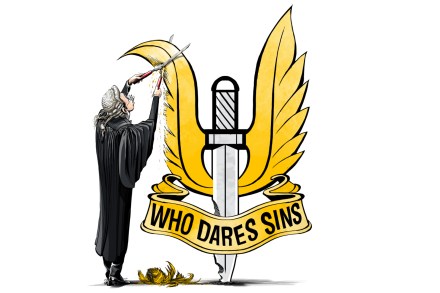
This week: SAS SOS The enemy that most concerns Britain’s elite military unit isn’t the IRA, the Taliban or Isis, but a phalanx of lawyers armed with the European Convention on Human Rights (ECHR), writes Paul Wood in The Spectator. Many SAS soldiers now believe that if they kill a terrorist during an operation, they’ll spend decades being hounded through the courts. Paul speaks to former SAS soldiers who say that stories of men being ‘dragged back to be screamed at in interview rooms’ are ‘flying around the canteens now’. Soldiers feel like ‘the good guys have become the bad guys – and the bad guys are now the good guys’. This is hurting morale and may eventually hit recruitment.

Can Ukraine’s army survive its deserter crisis?

From our UK edition

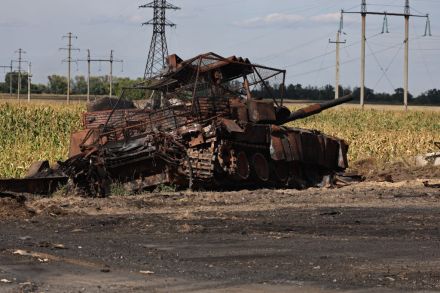
Not since the summer of the 2022 invasion have Russian troops been making more progress in Ukraine. Last month alone, they took almost 200 square miles in the Donetsk region. Just 15 miles now separate the Russian forces from entering the Dnipropetrovsk Oblast. If Russia succeeds, a sixth region will be swallowed by hostilities.  What’s changed? Russia’s ranks are swelling with highly paid contractors and fresh North Korean reinforcements, while Ukraine’s forces are thinning fast. Desertions are adding to crippling manpower shortages. Officially, some 90,000 Ukrainian soldiers have deserted (almost half of them this year), but the unofficial number is much higher. Desertion is becoming a crisis.

Joe Biden has put Ukraine in an impossible position

From our UK edition

This week, Joe Biden lifted one of the many restraints placed on Ukraine in its war with Russia. The outgoing US president has allowed Kyiv to use long-range US-made ATACMS missiles in the Russian region of Kursk, a part of which is currently held by Ukraine. Last night, Kyiv used these missiles to strike a large Russian weapons depot in the Bryansk region neighbouring Kursk, suggesting Ukraine will also be able to use ATACMS on other Russian border regions. Biden’s move is mainly intended to ‘send a message’ to North Korea – which has sent 10,000 troops to aid Russia – and to thwart the Kremlin campaign to force Ukraine out of Kursk.

Ukrainians brace for Trump’s return

From our UK edition

‘Donald Trump is like the light at the end of the tunnel’, an American told me last night at the only Washington DC bar throwing a pro-Trump election party. For many Ukrainians, though, he’s more like the end itself. Trump has called himself ‘good friends’ with Vladimir Putin. He said ‘Ukraine no longer exists’ and that ‘even the worst deal [with Russia] would be better than what is now’. Ukrainians got the hint and hoped for a Kamala Harris’s victory. But Americans have chosen, and now Kyiv will bend over backwards, trying to convince its biggest military backer not to abandon Ukraine.  Trump has called himself ‘good friends’ with Vladimir Putin Volodymyr Zelensky was one of the first leaders to congratulate Trump this morning.