Suzi Feay

From man of words to man of action: Hotel Milano, by Tim Parks, reviewed

From our UK edition

The global disruption of 2020-21 posed a special challenge to novelists. As a subject it seems irresistible; but how to find order and pattern in a series of seemingly blank, eventless days? Stuck in the pandemic doldrums, Tim Parks’s elderly narrator at least has memories of the past and a richly stocked mind to call upon when lockdown bites. Frank Marriot embarks on an ill-advised trip to Italy at the very start of the pandemic, when he is begged to attend the funeral of an old friend, Dan Sandow. Oddly, Frank has heard nothing about a virus spreading from China. A former cultural commentator and magazine feature writer, he has long undertaken a print and TV detox, so is unaware that he is being flung into the rapidly heating cauldron of Covid. ‘Ben, I don’t do news.

Helpless human puppets: Liberation Day, by George Saunders, reviewed

From our UK edition

George Saunders’s handbook published last year, A Swim in a Pond in the Rain, gave masterclasses on seven short stories by four Russian masters of the form: Tolstoy, Turgenev, Chekhov and Gogol. His critical observations can be taken as the manifesto for his own work. (The winner of the 2017 Man Booker prize with his first novel, Lincoln in the Bardo, he is still best known as a short story writer.) It’s fair, then, to apply his stated rules to the pieces in his new collection. The last story, ‘My House’, although briefer, holds up well against Chekhov’s ‘In the Cart’. The title immediately contains a twist, because it’s not the narrator’s house, even though the historical building is for sale and he can easily afford the asking price.

Explorer, author, soldier, lover: The Romantic, by William Boyd, reviewed

From our UK edition

William Boyd taps into the classical novel tradition with this sweeping tale of one man’s century-spanning life, even to the extent of providing the accustomed framing device: the chance discovery of a cache of papers and mementoes. The items listed by ‘WB’ in his ‘Author’s Note’ – a musket ball, a fragment of a Greek amphora, a crinkly lock of hair – all find their place in the tale of this 19th-century adventurer, lover, traveller and author. Cashel Greville Ross (his name turns out to be as mutable as his identity and nationality) is born in Ireland in irregular circumstances – so irregular that a swift flight to England as a boy is effected, the first of his many transitions.

Hysterical outbursts: Bewitched, by Jill Dawson, reviewed

From our UK edition

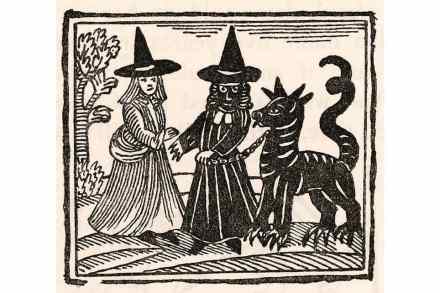
‘Witch-hunt’ has become a handy metaphor for online persecutions, especially of women, though these days it is reputations that go up in flames rather than bodies. The mob mentality behind the phenomenon may not have changed as much as the medium or the mindset. In retelling a celebrated case from Elizabethan England, Jill Dawson enters thoroughly into her characters’ religious world view, while giving a meaningful glance at the issues of today. The fate of the Warboys witches – three members of one family – was recounted in prurient pamphlets of the time, but Dawson colours in the crude woodcut of history with passionate emotions and plausible motivations.

The Victorian origins of ‘medieval’ folklore

From our UK edition

I would guess that contemporary pagans have a love-hate relationship with Ronald Hutton. With books such as The Triumph of the Moon and Stations of the Sun, scholarly accounts of the history of modern witchcraft and the ritual year in Britain, no one writes more sensitively about their worldview. On the other hand, as an academic, Hutton assiduously seeks to saw off the branch on which many of their fondest assumptions sit. The paradox can be explained. Queens of the Wild returns to one of Hutton’s key themes: the debunking of the idea that pagan practices and beliefs survived intact in Europe from archaic times.

Smugglers’ gold: Winchelsea, by Alex Preston, reviewed

From our UK edition

The atmospheric medieval town of Rye on the south coast still celebrates being a former haunt of smugglers, and on foggy nights it’s not hard to imagine stealthy figures in the shadows rolling barrels of illicit rum down its cobbled streets. Alex Preston has relocated to nearby Winchelsea, making it the setting for this maritime yarn. But any residual glamour attaching to these tax-averse citizens of Sussex is largely dispelled in a tale with as many moral qualms as thrilling exploits. Goody Brown recounts the cross-dressing adventures of her youth as the sole female member of the infamous Hawkhurst gang in the 1740s. Rescued from the sea as a baby (her mother was not so lucky), she is adopted by a kindly local couple and brought up in a house named Paradise.

Interpreting for a dictator: Intimacies, by Katie Kitamura, reviewed

From our UK edition

If this is a cautious and circumspect novel, it’s because it involves a cautious and circumspect job: that of interpreter. The young woman at the centre of the story speaks fluent English, Japanese and French, with some German and Spanish. She grew up in Paris, then lived in New York, but death and disruption in the family mean that city no longer feels like home. On a sudden impulse, she applies for a temporary job at The Hague, working at ‘the Court’. What she doesn’t speak is Dutch, though linguistically she’s a quick study. The instability felt when negotiating a new city without fully understanding the language is echoed by the moral relativity involved in her new task, translating for a Francophone African former dictator accused of genocide.

Death and dishonour: The Promise, by Damon Galgut, reviewed

From our UK edition

If death is not an event in life, as Wittgenstein observed, it’s a curious way to structure a novel. But since death is certainly an event in other people’s lives, Damon Galgut’s family saga, shrunk to the moments of passing, is ingenious. That the narrative takes great leaps over time yet also gives a firm sense of continuity is impressive. The various deaths in the Swart family take place over decades of political change in South Africa, which they barely register on their remote farm. Theirs is a mostly unexamined life, with white rule a given, practically ordained by God. The first death, that of Rachel, or ‘Ma’, is not unexpected.

Cairo in crisis: The Republic of False Truths, by Alaa Al Aswany, reviewed

From our UK edition

Certain novels complicate the very notion of literary enjoyment. This, by the author of the international bestseller The Yacoubian Building, is such a one. Despite its gripping narrative, compelling structure and vivid characters, every time I picked it up it was with a sinking heart. In telling the story of the Egyptian revolution of 2011 through the viewpoint of a variety of Cairenes both for and against, Alaa Al Aswany holds out the slender straw of hope against the slashing shears of repression. General Ahmad Alwany has just supervised the torture of a man and the abuse of his wife at his HQ. But it’s not as though he’s devoid of human sentiment; he adores his daughter, Danya, a medical student.

The Generic Asian Man: Interior Chinatown, by Charles Yu, reviewed

From our UK edition

Of the handful of things we can establish about Willis Wu, the protagonist of Charles Yu’s second novel, the most crucial is that he has occasional small roles in an American TV detective series, Black and White, set in Chinatown. In a group of similarly complexioned jobbing actors, his scope is limited to Background Oriental Male, Striving Immigrant or Generic Asian Man. His dream, like everyone else’s, is to rise to the athletic heights of Kung Fu Guy. Printed in the form of a script, with a typeface that looks as though it’s come straight off a manual typewriter, Interior Chinatown comically charts Willis’s progress through the ranks of extras.

A brutal education: At Night All Blood is Black, by David Diop, reviewed

From our UK edition

Alfa Ndiaye, a Senegalese soldier fighting for France in the trenches of the Great War, is consumed by bloodlust, which you’d think might be an asset under the circumstances. But after watching the protracted, gruesome death of his friend and ‘more than brother’, Mademba, a switch is flicked in Alfa’s mind. He becomes, in effect, a sadistic serial killer, until war itself cannot provide sufficient cover for his extremity. David Diop’s powerful novel, not much more than novella length, is full of echoes and portents. Over the course of his self-justifying narrative, Alfa says ‘God’s truth’ so often that the notion is drained of meaning.

A dazzling fable about loneliness: Piranesi, by Susanna Clarke, reviewed

From our UK edition

Susanna Clarke is a member of the elite group of authors who don’t write enough. In 2004, the bestselling debut from a cookery book editor seemed to promise an unfailing fountain of the creative imagination: Jonathan Strange and Mr Norrell, a three-volume reworking of Britain’s military tussle with Napoleon, but with added fairies, felt like Jane Austen brewed up with spells and a dash of the Brontës’ Angria sagas. A short story collection, The Ladies of Grace Adieu, set in the same eerie territory, followed, and since then — silence. Piranesi is a publishing event, therefore. Austere and classical, it has no fairies but plenty of magic. The title character lives secluded in a mansion of dizzying perspectival queasiness.

Madcap escapades: The All True Adventures (and Rare Education) of the Daredevil Daniel Bones, by Owen Booth, reviewed

From our UK edition

The narrative of an adolescent travelling by water with an older companion, undergoing trials and ordeals, encountering scoundrels and villains, with glimpses of society from high to low as they drift pass: it doesn’t take long before the flavour of this picaresque novel starts to seem hauntingly familiar. In his mid-teens towards the end of the 19th century, Dan, like Huckleberry Finn, escapes from a drunken father, and, though his journey is down the waterways of Europe rather than the Mississippi, the way he silently registers the corruption he sees all around him is deeply reminiscent of his literary forebear.

The sorrows of young Hillary: Rodham, by Curtis Sittenfeld, reviewed

From our UK edition

Question: which American president and first lady would you care to imagine having intercourse? If that provokes a shudder, be assured that the sex scenes between Yale law students Hillary Rodham and Bill Clinton in Curtis Sittenfeld’s latest novel are cringe-free — even the one involving manual stimulation that takes place in a moving car. They’re young, they’re in love, it’s adorable. For Hillary, who has ruefully accepted that a fierce intellect is a drawback when it comes to dating, the leonine charmer from Arkansas is a gift dropped from heaven. Until he isn’t. A stumbling first paragraph sounds a warning about the limitations and non-literary quality of Hillary’s first-person narration.

Dr Livingstone becomes a dead weight : Out of Darkness, Shining Light, by Petina Gappah

From our UK edition

The scope of Petina Gappah’s impressive novel is laid out in the prologue: the death of the Victorian explorer David Livingstone and the ferrying of his desiccated body by loyal servants to the East African coast, so it could be returned in glory to his native Britain. A passage in Herodotus sent Livingstone on a fruitless search for four mythical fountains which he believed were the source of the Nile. Out of Darkness, Shining Light restores the identities, personalities and passions of his unruly household, whose funerary quest is carried out with a courage and sense of honour that aligns them with classical heroes rather than servants. They even cry ‘The sea, the sea!’ on reaching their goal, the town of Bagamoyo.

The wanderings of Ullis: Low, by Jeet Thayil, reviewed

From our UK edition

Jeet Thayil’s previous novel, The Book of Chocolate Saints, an account of a fictional Indian artist and poet told in a multiplicity of voices, was a tub filled with delicious things. It also contained quite a lot of bran. His follow-up, Low, is slimmer and more condensed, its scope just a few days rather than a lifetime, with a sole narrator, a troubled Indian poet named Dominic Ullis. We first encounter him on a plane to Bombay (his preferred name for the city). He has spent the flight from Delhi in a haze (‘The Ambien bloomed soon after take-off, all 20 milligrams at once’) and awakes to find his bejewelled neighbour, Payal, stealing the cutlery — presumably they’re in first class.

Beetle invasion

From our UK edition

Silicon Valley moguls might not find Zed a particularly amusing read. Joanna Kavenna’s latest mindbender features the CEO of a multinational tech company whose sway has long outstripped that of mere governments. Guy Matthias’s creation, Beetle, has invaded western lives to an unprecedented degree. BeetleBands on wrists advise users when they need to eat, hydrate or calm down. Very Intelligent Personal Assistants or Veeps perform tasks and offer factual information. Monetary systems have long since switched to the cryptocurrency Beetlebits, leaving late adopters penniless. Beetle runs the premier mode of transport, all telecommunications and the ubiquitous surveillance cameras. The information is fed back to individual, constantly adjusted Lifestreams.

The pursuit of beauty

From our UK edition

Michelangelo seems never to have travelled to Turkey to advise the Sultan on a bridge to span the Golden Horn, but he was asked to provide an architectural drawing after the design of his great rival, Leonardo da Vinci, was rejected. An ‘Author’s Note’ to this enigmatic novella references a sketch attributed to Michelangelo ‘recently discovered in the Ottoman archives’, together with a list purporting to be an inventory of possessions he left behind. From these intriguing if flimsy historical traces, Mathias Enard imagines the 30-year-old Michelangelo in Constantinople in 1506, transfixed by the majestic city and its captivating people, but baffled by court ritual and the scale of the engineering problem at hand.

Oedipus vex

From our UK edition

Coming 12 years after his acclaimed debut, Londonstani, Gautam Malkani’s second novel Distortion features a vivid argot, complicating and defamiliarising everyday terms and activities. In its pages, young people do things in exciting new ways, for example going down stairs: ‘It’s the most longed-out staircase you ever saw. Steps so far apart you gotta keep checking your stride.’ Old-dude technology requires explanation: ‘Deskphone’s got some caller-display screen but it only does its thing if they dial you direct.’ Actually, everything requires explanation, nearly always called ‘mansplaining’, the narrator Dillon/Dhilan/Dylan missing the point that it’s what men do to women they assume are stupid. Why the three names?

Playing for time

From our UK edition

In a pleasing nod to Marcel Proust, Eustace, the middle-aged protagonist of Patrick Gale’s new novel, is propelled into memories of his childhood by a piece of music. An online flirtation via Skype with a much younger serving soldier is beginning to consume his thoughts, at least until a health crisis looms. Telling Theo nothing about his cancer diagnosis, Eustace goes for radio-active iodine therapy, having been warned to bring nothing with him that he doesn’t mind throwing away after. Saint-Saens’s ‘The Swan’ drifting through on his MP3 player leads him to relive his boyhood as a devoted cellist, and to reflect which parts of his past can also now be discarded.