Suzi Feay

From Troy to the Troubles

From our UK edition

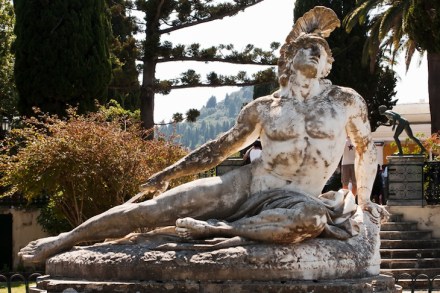
Recently there has been a spate of retellings of the Iliad, to name just Pat Barker’s The Silence of the Girls, focusing on the female slaves, and Colm Tóibín’s take on the aftermath of the Trojan war, House of Names. For his second novel, Michael Hughes attempts something more literal and more challenging: to transpose the narrative of Homer’s war epic as closely as possible to the Troubles. The story concerns Achill, a disenchanted IRA sniper, and his paramilitary boss, who fall out over a girl. Pig is just as unappealing as Agamemnon; Helen is local beauty Nellie; Hector is SAS man Henry; and Patroclus pleasingly, becomes Pat, Achill’s young protégé but not bed partner.

All their wits about them

From our UK edition

From Aphra Behn to Virginia Woolf, women who make a living by their pens have frequently felt the need to announce their singularity; to be, as Mary Wollstonecraft announced, ‘the first of a new genus’. Each of the women in Michelle Dean’s survey of mostly American essayists, reviewers and novelists had to defend her right to debate, critique and observe. The lives of Sontag, Arendt, Parker, West, Didion, Ephron and others are woven into a thick braid running the length of the 20th century and into ours. It’s not quite a group biography, but more a study of how their lives and work dovetailed with each other and with the major political and cultural movements of the era.

Getting away with murder | 22 March 2018

From our UK edition

This true-crime narrative ought, by rights, to be broken backed, in two tragic ways. One is that the serial attacker it concerns, a sneaking California rapist who graduated to multiple murder, was never caught. The other is that its author died aged 46 before the book could be completed. That it is nevertheless so gripping and satisfying is thanks to its sensitive editors and compilers, but mainly due to the remarkable skills of Michelle McNamara herself. The subtitle is ‘One Woman’s Obsessive Search for the Golden State Killer’. McNamara coined the catchy nickname for the shadowy figure that slaughtered five couples and two women between 1978 and 1986.

Just a few tweaks…

From our UK edition

As I ploughed through this semi-autobiographical behemoth about an author and travel writer obsessed with his siblings and mother, I tried to imagine what a hapless editor might have had to say about the manuscript. ‘I like the way you, I mean Jay the narrator, makes the point that your, sorry his, mother is just like a scheming medieval queen, but I think you can assume readers willing to tackle 500-page literary novels will remember, so you don’t need to keep saying it, especially since the idea’s implied in the title,’ such a person might begin. ‘Likewise, the idea that the siblings interact like members of cannibal tribes that Jay encounters on his travels. So funny and apt, but just the one mention will do.

Something scary in the attic

From our UK edition

How do you like your ghosts? Supernatural fiction is arguably the hardest to get right. Ideally it should terrify, but what appals A might bore B and merely confuse C. The mechanics of apparition, however fanciful, must be internally consistent, and explanations kept simple. M.R. James excelled at giving his spectres agency and focus, but in some hands ambiguity is more effective. Read a Robert Aickman and half the time you have no idea what happened, if indeed anything did. I was once put off by a description in a novel of a ghost drifting round a house at night and contemplating its sleeping inhabitants. While that might give you the willies, for me that violates an essential requirement for manifestation: that it involve interplay between deceased and living consciousness.

A gruesome retelling

From our UK edition

‘A shudder in the loins engenders there/ The broken wall, the burning roof and tower/ And Agamemnon dead’ intoned W.B. Yeats in his sonnet ‘Leda and the Swan’, seeing in this avian rape the germ of the Trojan war. Leda gave birth to Helen of Troy and her sister Clytemnestra, the one renowned as the casus belli, the other the most infamous agent of the aftermath. Another Irish writer now takes up the story, without the magnificent cloak of myth. House of Names is a portrait of a brutal, disenchanted world of political tyranny, slaughter and revenge.

Perilous times

From our UK edition

Helen Dunmore’s new novel concerns lives, consequential in their day, that pass away into utter oblivion. Appropriately, the ‘solitary and no doubt rather grim middle-aged man’ of the opening pages is unnamed and never appears again, once he discovers a forgotten grave near the pathway of the title. Bearing the image of a quill, the headstone commemorates a radical 18th-century writer, Julia Fawkes, who died in Bristol in 1793. The stone was ‘Raised… in the Presence of her Many Admirers’. But who was this Julia, wife of an equally obscure pamphleteer, and what is left of the works that, the stone optimistically proclaims, ‘Remain Our Inheritance’?

Changing lanes

From our UK edition

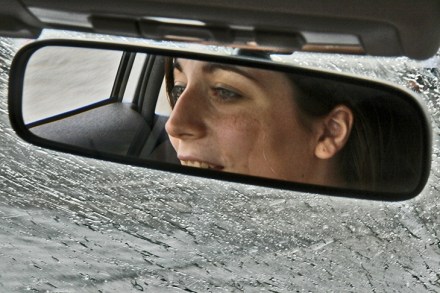
It’s fair to say Sonja Hansen’s life has stalled. Forties, tall and ungainly, veteran of failed relationships, she’s an uncomfortable fit for modern life in bustling Copenhagen. Geographical, spiritual and emotional immobility is expressed in her physical lack of ease, including ‘positional vertigo’ which renders the manoeuvre of the title difficult. Not without a certain quiet defiance, she still feels unable to fire her driving instructor, aggressive, non-stop-nattering Jytta, who won’t let her shift the gears herself. In between bouts of gossip and racist abuse of other drivers, Jytta bellows instructions at her cowering pupil: ‘GREEN ARROW, TURN GODDAMMIT, BIKE!’ In this short novel Nors manages to condense the essence of a life.

Riding the storm

From our UK edition

Clover Stroud opens her memoir with the crippling bout of post-natal depression that hit after the birth of her fourth child. ‘I felt like a fist. Dash was always naked, plastered bare to my breast, sucking from me as my body dripped milk and tears.’ She even contemplates harming the baby then killing herself, guilelessly telling the health visitor: ‘But isn’t that normal?’ We spiral back in time to the cataclysmic events that spurred Stroud’s distress. Stroud’s life was idyllic up to the age of 16. Home was a rambling country house in the village of Minety, Wiltshire, filled with adorable siblings and presided over by her father Rick, a TV executive, and her exuberant earth mother Charlotte.

The American dream goes bust

From our UK edition

One happy aspect of Lionel Shriver’s peek into the near future (the novel opens in 2029) is the number of unusually rounded elderly characters she presents. Her pitiless eye notes every mark of age and vanity in the older generation of the Mandible family, but they remain in robust health, sharp without being merely spry, and full of personality. They have too much life as far as the younger family members are concerned, waiting impatiently for the wealth to trickle downwards. Jayne and Carter, already in their sixties, will be disappointed, for Shriver’s doomsday scenario concerns a catastrophic devaluation of the dollar which wipes out the family fortune overnight. The Mandibles descend the social order rapidly, along with everyone else in the United States.

Angry, funny, timely

From our UK edition

It’s not Paul Murray’s settings or themes — decadent aristocrats, clerical sex abuse, the financial crisis — that mark him out as original, it’s his handling: the wild plotting, the witty dialogue and the eccentricity of his characters. The follow-up to his widely admired second novel Skippy Dies swaps the adolescent funk of a Catholic boys’ boarding school for the testosterone whiff of a fictional investment bank in Dublin. The Bank of Torabundo rode out the demise of the Celtic Tiger thanks to its cautious and effective CEO, but he has now been replaced by a flamboyant financial genius whose last bank collapsed in tatters.