Stephen Daisley

Stephen Daisley

Stephen Daisley is a Spectator regular and a columnist for the Scottish Daily Mail

At least Rachel Reeves is trying

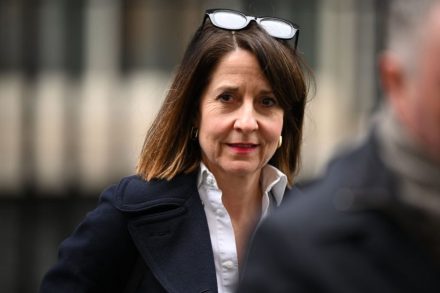
Rachel from accounts is settling up. In a speech at Siemens Healthineers near Oxford, the Chancellor signalled her commitment to development by backing a third runway at Heathrow, placing her on a collision course with net-zeroers, Nimbys and the other forces of decline. The interests ranged against her are mighty and loud, but if she delivers she will draw crucial battle lines for the next general election: a Labour government that gets things done versus the party of inertia and stagnation. The UK spent 14 years in stasis under a succession of Tory governments that preferred the maintenance of office to the exercise of power.

Against the death penalty, even for Axel Rudakubana

Should the Southport killer swing? Lee Anderson thinks so. The Reform MP posted an image of a noose on X, with the words: ‘No apologies here. This is what is required!’ It’s not the first time Anderson has backed the return of the rope, and not the first time I’ve contended that he’s wrong, but there’s something I want to say before getting into the nitty gritty. Wanting Axel Rudakubana dead is a thoroughly mainstream and entirely understandable view. Among those who have children, I would go further and suggest that it is the natural response.

Axel Rudakubana should never have been free to kill

Coulter’s Law, named after its originator, the right-wing polemicist Ann Coulter, holds that the longer it takes the authorities or the news media to identify the suspect in a terrorist attack or other notorious incident the less likely that suspect is to be white. Allow me to propose a British corollary to this rule: the law of displaced culpability. Where the identity or motivation of the suspect in a major crime requires the British state to confront shortcomings in its established doctrines, such as multiculturalism, untrammelled immigration or autonomy-maximising liberalism, it will displace culpability onto another factor, one that is secondary or even irrelevant to the crime but which the authorities feel more comfortable talking about.

Nine reasons why Trump means business this time

Since Franklin D. Roosevelt, every new US administration has been judged on its first hundred days, but it is in the first 24 hours, with a flurry of executive orders and memorandums, that a president sets the tone for the coming four years. The first 24 hours hint at nine themes that will define Donald Trump’s second administration. Trump is determined to settle scores Theme one: Trump II will see ‘America First’ placed at the heart of White House policy even more so than during Trump I.

It’s no surprise that democracy is losing its appeal

The Guardian reports that one in five voters under the age of 45 would prefer to do away with democracy and have an authoritarian strongman govern Britain. It’s almost touching that so many think Britain is still capable of being governed, but it’s concerning that a fifth of millennials and Gen Z have adopted the Kent Brockman position: ‘I’ve said it before and I’ll say it again: democracy simply doesn’t work.’ The findings come from the as yet unpublished FGS Global Radar report. More than 2,000 UK adults were asked to say whether ‘the best system for running a country effectively’ was democracy or ‘a strong leader who doesn’t have to bother with elections’.

Devolution is shortchanging England

The English taxpayer is not the primary audience for the Scottish government’s annual Budget, but one wonders what they might make of today’s announcements from SNP finance minister Shona Robison. An extra £2 billion for health and social care, bumping the overall cost of that portfolio to just under £22 billion. An additional £800 million for social security benefits and £768 million for affordable housing, taking the total spend on social justice to £8.2 billion. Plus, £1 billion for roads, raising the transport budget to £4 billion; £355 million for two new prisons as part of the £4.2 billion justice and home affairs budget; and a boost of £158 million to the £4.2 nillion education and skills budget.

The slippery slope to the return of the death penalty

Parliament has voted to proceed with Kim Leadbeater’s assisted suicide bill, which will see the NHS offer terminally ill people the opportunity to kill themselves and the lethal drugs with which to do so. The debate over assisted suicide is complex and often heated, with sincere and well-intentioned people approaching its profound moral and ethical quandaries from very different but passionately held perspectives. I would like to set those questions aside for now and ask a different but related one: if the state can help end the lives of terminally ill people, why shouldn’t it end the lives of murderers? The state can now be a party to the premature death of a citizen The last time capital punishment was used in the UK was 1964.

Britain has a blasphemy law in all but name

Anyone outraged by Labour MP Tahir Ali calling on the government to introduce blasphemy laws has clearly not been paying attention, for there are already blasphemy laws in this country. All Ali wants to do is make them official. When he urges Sir Keir Starmer to prohibit the desecration of the Qur’an and other Abrahamic religious texts, as he did at Prime Minister’s Questions, he will be aware that people are already punished for desecrating the Muslim holy book, including children. The Prime Minister is too progressive to allow himself to disagree with a religious reactionary In March 2023, a 14-year-old boy was suspended from school in Wakefield after a copy of the Qur’an was ‘scuffed’.

Why Scots are less angry than the English

The Scots have long been stereotyped as dour, miserable whingers, and we finally have proof that this is pure slander. Ailsa Henderson, a political scientist at Edinburgh University, has produced a presentation into political anger in the wake of the general election. She finds that the English are three times as angry about politics as the Scots, with 60 per cent fuming south of the border and just 20 per cent north of the Tweed. Voters for the two most anti-mainstream parties, Reform and the Greens, are the angriest, and while Liberal Democrats are the least angry there are still 53 per cent of them fit to be tied. Meanwhile, only 25 per cent of Scottish Tories and 20 per cent of SNP supporters express similar feelings.

The International Criminal Court must fall

The arrest warrants for Israeli prime minister Benjamin Netanyahu and former defence minister Yoav Gallant should be the last the International Criminal Court (ICC) issues. The ICC accuses the men, whose nation is embroiled in a multi-front war against enemies sworn to its destruction, of using ‘starvation as a method of warfare’, ‘murder, persecution and other inhumane acts’, and ‘intentionally directing an attack against the civilian population’. Merely to say the charges out loud is to expose their absurdity. Not only is there no evidence that Israel is denying the Palestinians food as a military tactic, there is copious evidence to the contrary: 1.1 million tonnes, to be precise.

Democrats don’t need their own Joe Rogan

One of the new cliches of American politics is that progressives need their own Joe Rogan. The comedian turned podcaster has an audience that is four-fifths male and 51 per cent aged 18-34, and it has not escaped the Democrats’ notice that, while women aged 18 to 29 voted overwhelmingly for Kamala Harris, men in the same age group went narrowly for Donald Trump. This tracks with pre-election research which showed a majority of Rogan listeners, regardless of sex or age, planned to vote Republican while only a quarter intended to back the Democrats. Rogan himself endorsed Trump, crediting Elon Musk for making ‘the most compelling case for Trump you’ll hear’. Since Rogan is America’s most popular podcaster, with 14.

How will progressives explain Amsterdam’s latest anti-semitic violence?

Since the scenes of Jews being hunted, beaten and kicked as they lay on the ground pleading for mercy in Amsterdam, antisemites have sought excuse, or that weaselly insinuator ‘context’, in the reported behaviour of a number of Maccabi Tel Aviv football hooligans, who are said to have attacked a taxi, tore down a Palestinian flag and sang anti-Arab chants. Video footage reportedly shows rioters chanting ‘kankerjoden’, Dutch for ‘Jewish cancer’ I wrote in the wake of those events that any Israeli fan who engaged in such yobbery is to be condemned but that their actions did not justify a modern-day pogrom that plunged Israelis and other Jews into a night of violence, fear and dread.

Amsterdam shows the limits of liberalism

Whenever Jews are killed or beaten, on 7 October or last night in Amsterdam, well-meaning sorts solemnly intone that this latest outrage must be a ‘wake-up call’ about the threat of anti-Semitism. Ah, the Wake-Up Call. Much vaunted, long awaited, never heard. There have been no shortage of wake-up calls. Off the top of my head, there has been 7 October, Neve Yaakov, Monsey, the 2019 New York attacks, Poway, Jersey City, Pittsburgh, the stabbing intifada, Hypercache, Kehilat Yaakov, Merkaz HaRav, and the second intifada. That list isn’t remotely comprehensive and doesn’t stretch back further than 2000. Amsterdam will be condemned – though by no means universally – but it will not change anything.

Will Democrats blame Israel for Kamala Harris’s defeat?

One of the few western nations where public opinion was in favour of Donald Trump returning to the White House is Israel. Israelis trust him as the man who recognised Jerusalem as their capital, moved the US embassy there, recognised Israeli sovereignty over the Golan Heights, and said that settlement-building was not per se against international law. So most Israelis regard a second Trump term as good news for their country, its security and its relationship with the United States. That might be the case in what we see from his new administration, but Trump’s re-election could prove in the longer term to be a fracture point between the United States and Israel.

My unsolicited advice to Kemi Badenoch

If there are two things new leaders of political parties dread, it’s unsolicited advice and Scotland. The advice because, even when it’s helpful, and it’s mostly not, it underscores the sheer volume of work that lies head. Scotland because, in recent years at least, its politics have been so volatile and unpredictable that anyone stepping into it, especially an English politician, has done so only under duress. I intend to combine these two political headaches by offering Kemi Badenoch some advice on Scotland, but to make up for it my advice draws on the example of one of her political heroes. After Margaret Thatcher took over the leadership of the Conservative party, she tore up the party’s Scotland policy, which had been steered in a pro-devolution direction by Ted Heath.

Make Halloween scary again

It was the early evening of 31 October and I was three years old, sitting in the living room with Mum, on the brink of bedtime, when I turned to the corner and a decorative wicker armchair. (It was the 1980s.) ‘Mum,’ I enquired sweetly, ‘who’s that man sitting there?’ Mum, suitably unnerved, asked me for details about the invisible guest, whereupon I outlined a farmer resembling every description Mum had heard of her great-grandfather. Her great-grandfather was a 19th-century ploughman who worked the fields where our home would later be built. My parents had never spoken of him in my presence.

Is Russell Findlay the Kemi Badenoch of Scotland?

When Russell Findlay stood to be Scottish Conservative leader, he talked the familiar language of ‘change’. I predicted that this would translate to a rightwards shift for the party and his first major speech in the job confirms it. Findlay is not entirely comfortable with the ‘right wing’ label – he is a Tory, after all – but it is the readiest descriptor of the positions he is setting out. Since he took over in September, the Tories have become the only party in the Scottish parliament to oppose free bus travel for asylum seekers, additional aid for schools in Africa and early prisoner releases to tackle overcrowding. Findlay says: Left-wing parties at Holyrood point to our opposition to the mass early release of hundreds of prisoners.

What Fight Club got right

There are three great makers of popular man-art working in Hollywood today – Michael Mann, Christopher Nolan and David Fincher – and all three work with broadly the same materials: male identity, its associated violence, and post-industrial societies with no place for either. Mann’s neon-noir aesthetic focuses on status, whether James Caan’s safecracker in Thief, with his $150 slacks, silk shirts, and $800 suits, or Jamie Foxx in Collateral, who dreams of running his own limo firm, but only idly, having long since sunk into his reassuring routine as night-time cab driver.  Nolan’s theme is personal darkness, whether Christian Bale’s Bruce Wayne in the Dark Knight trilogy, or Al Pacino’s sleepless LAPD detective in Insomnia.

Murray Foote’s departure is yet another blow to the SNP

The SNP just can’t catch a break. The party is still reeling from a catastrophic general election result, a backlash over its decision to mimic Rachel Reeves’ cuts to winter fuel payments, and the ongoing police investigation into its finances. Now chief executive Murray Foote has cleared his desk just 14 months after taking up the position. In a statement, Foote, the former editor of the Daily Record tabloid, said he was stepping down to let someone else oversee party reorganisation and other preparations for the 2026 Holyrood elections. The Nationalists retained only nine seats on 4 July, a plummet from the 48 secured at the previous election, and are divided over the failure to deliver independence and support for gender identity ideology.

The SNP will regret expelling John Mason

You might have missed the news that the SNP has expelled one of its MSPs, announced as it was following the death of Alex Salmond. John Mason has represented the SNP almost continuously for a quarter-century, first as a Glasgow councillor, then as the MP who wrested away Labour heartland seat Glasgow East in a seismic 2008 by-election, and for the past 13 years as an MSP for the equivalent Holyrood constituency, Glasgow Shettleston. Shettleston is a place with many social and economic problems and even Mason’s opponents acknowledge that he is a hard-working representative. Mason’s expulsion has nothing to do with principles or rules and everything to do with politics and prejudice Mason has rather a lot of opponents, most of them inside his own party.