Stephen Daisley

Stephen Daisley

Stephen Daisley is a Spectator regular and a columnist for the Scottish Daily Mail

Labour’s manifesto reveals one thing: the Left has run out of ideas

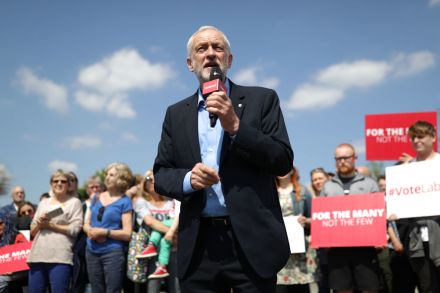
Just when you thought things couldn't get any worse for Labour, Noam Chomsky goes and endorses Jeremy Corbyn. 'If I were a voter in Britain, I would vote for him...He’s quiet, reserved, serious, he’s not a performer,' Chomsky told the Guardian. But the more you read of Chomsky's endorsement, the more you wonder if he was put up to it for a bet. He says that: 'The shift in the Labour party under Blair made it a pale image of the Conservatives.' Tony Blair, that infamous electoral dud. Chomsky is regularly cited as the world's 'top public intellectual'. It's a slippery phrase. Friedrich Hayek called his ilk 'the secondhand dealers in ideas'. I certainly wouldn't buy a used ideology from Noam Chomsky.

The boring mystery of Theresa May

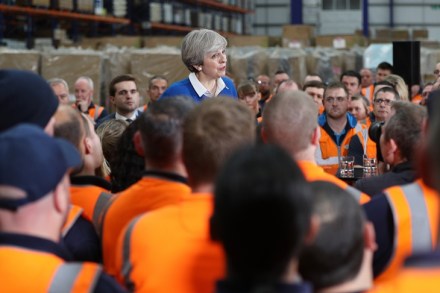
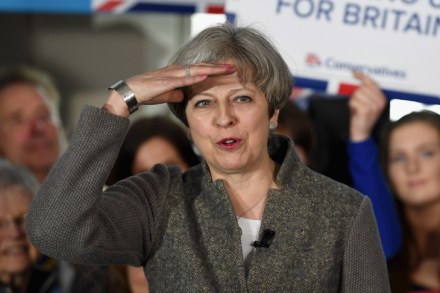
Theresa May spent the weekend in Scotland and not even the civilised bit. The Prime Minister was posted to the wilds of Aberdeenshire, which are handsome and underpopulated but not exactly a commuter hub. Journalists grumbled about the remoteness of the location, well aware that inaccessibility was the point. May has not been campaigning in this election so much as touring the nation’s emptiest rooms, occasionally bringing along another borough councillor who will be elected to Parliament in five weeks’ time. The punters have been kept far away from the Prime Minister for reasons of security — political security. Party strategists have long memories. They remember the name Sharon Storer.

The cruel hounding of Tim Farron is bloodsport for secularists

For the benefit of Sky News, standard Christian doctrine says gay sex is a sin. It's the sin that gives sinning a good name. There ought to be a stewards' inquiry into why it didn't make it into the Ten Commandments. But, yes, it's one of those trespasses we ask to be forgiven.  Sky's Darren McCaffrey demanded to know Tim Farron's view on the matter at a Lib Dem event on Monday. In case you're wondering, Farron hasn't proposed banning the love that once dared not speak its name and now won't shut up about it. Nor does he want to roll back any of the gains the gay rights movement has made in the last 20 years. In fact, he has criticised equal marriage legislation for failing to accommodate the rights of trans people and wants to see the 'spousal veto' scrapped.

Voting Green is about feeling morally superior to lesser mortals

In this, as in all things, Paul Keating was right. It was the former Aussie Prime Minister, a Beethoven of political invective, who called his country’s Green Party 'a bunch of opportunists and Trots hiding behind a gum tree trying to pretend they’re the Labor Party’. Keating's acid scherzo could apply just as readily to our own Greens, self-appointed conservationists of righteousness. Caroline Lucas, their only MP, has been at the forefront of calls for a 'progressive alliance' between left-wing parties.

Len McCluskey’s hollow victory

Len McCluskey has seen off a challenge to be elected to a third term at the helm of Unite. And what a seeing off it was. When the votes starting to come in, and reportedly showed the top two contenders neck-and-neck, McCluskey’s rival was promptly suspended. Gerard Coyne was stripped of his duties as West Midlands regional secretary - although it’s not clear what he’s supposed to have done wrong or who his accusers are. Coyne has been a thorn in the side of the McCluskey hierarchy for some time. The Guardian points out that he was given a written warning in 2016. His offence? Speaking at an event hosted by moderate Labour MPs Chuka Umunna and Tristram Hunt.  His challenge certainly was not welcomed.

Theresa May is right to say no to a TV debate

I worked on the first TV debate of the Scottish referendum. I was involved in countless more. I was to be found on the production team for televised clashes during the 2015 general election and the 2016 vote for Holyrood. So I speak with some experience when I say TV debates are a terrible idea. Theresa May's refusal to participate in any is the first good news to come out of the general election. When the format debuted in 2010, I was optimistic. Here was an opportunity to extract a good deal more honesty and accountability from the overspun and media-managed Gordon Brown and David Cameron. Cleggmania (remember that? Come to think of it, remember him?

The trial of Kelvin MacKenzie

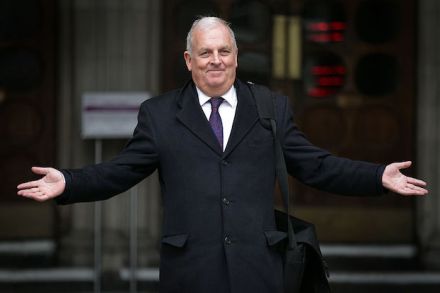
Kelvin MacKenzie’s baffling compulsion to pick at Liverpool has brought him up a cropper again, with the Sun pulling his latest polemic on Everton FC player Ross Barkley. MacKenzie has compared the footballer, recently victim of an assault in a nightclub, to 'a gorilla at the zoo' and added that, in Liverpool, 'the only men with similar pay packets are drug dealers and therefore not at nightclubs, as they are often guests of Her Majesty'. Liverpool is outraged. Fair enough. Everton has mimicked Anfield in banning the Sun. Why blameless footie hacks should be punished is beyond me, but that's up to the club. In a fairly extraordinary step, however, the Sun has suspended its columnist and denounced his copy as 'wrong', 'unfunny', and 'not the view of the paper'.

Labour has abandoned workers. Trade unions must avoid doing the same

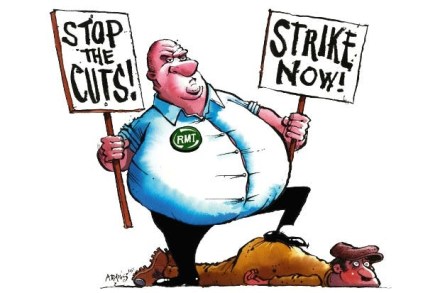
I’m not a member of a trade union, but I should be. As a freelance journalist, my employment situation is precarious — yet it still wouldn’t occur to me to join the National Union of Journalists. My reasons are both personal and political, but mostly practical: the NUJ talks tough but, in the end, seldom achieves more than a few quid extra in your redundancy package. Still, the union movement seems bent on wooing me; at least that’s how I’m interpreting Gerard Coyne’s campaign to oust Len McCluskey as Unite’s general secretary. Coyne’s manifesto touches on expected areas — better value for membership dues; a Brexit focus on training and skills — but it is in the main a prosecution of McCluskey’s leadership.

Pepsi’s advert gives protesters exactly what they want: another opportunity to protest

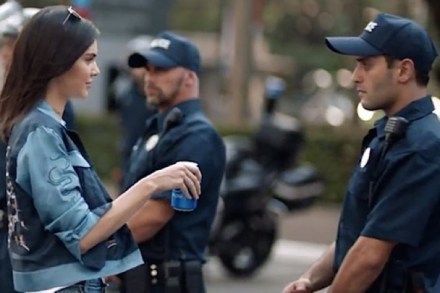
No sooner had Pepsi skooshed open its latest ad campaign, the internet burped it back up.  The soft drink giant's new commercial features Kendall Jenner (ask a young person) emerging from a crowd of protestors to offer a can of Pepsi to an officer on a police line. The advert is more sugary than the fizzy beverage it hawks. A parade of suspiciously attractive demonstrators march through the streets of a US city, powered only by air punches and smugness.  Their cause is unclear — but the placards bear such subversive slogans as ‘Join the conversation’. A confrontation with the least intimidating cops this side of a Keystone silent is mercifully averted when Jenner shows up and charms an amenable bobby with a can of pop.

The Labour party has become institutionally anti-Semitic

Listen to Douglas Murray and James Forsyth debating Ken Livingstone's non-expulsion: In the past, Labour has been quick to take a stand against bodies where racism, sexism, and homophobia were allowed to fester. Discrimination was discrimination, and institutions in which it routinely took place were culpable for it. But anti-Semitism now routinely takes place in the Labour party - and party members must acknowledge this. By its own definition, the Labour party is institutionally anti-Semitic.  No fair-minded person can read the failure to expel Ken Livingstone from the party any other way.

Parliament must take back control of Brexit

In the early, sunlit days of New Labour, the left-wing comedian John O’Farrell had a skit on how the Tories, after a generation of dominating British politics, found their party and its principles rejected by the electoral mainstream. ‘Now the Conservatives are like a lunatic fringe party,' he said. 'Soon we can expect to see them outside Woolworths next to the Socialist Workers on a Saturday afternoon shouting "Daily Telegraph! Get your Daily Telegraph! Britain out of Europe!"'  A generation on, the Tories are in power, Woolworths is gone, the Socialist Workers are running the Labour Party, and Britain is indeed coming out of Europe.

Forget ‘virtue signalling’ – ‘empathy patrolling’ is the new moral phenomenon

I’ve had just about enough of being told how to feel about what happened last Wednesday.  I feel angry. I still feel shock. I feel a keen ache for the families of those murdered, especially the loved-ones of PC Keith Palmer.  I feel that cold spite that works its way into your heart at times like these, vengeful cruelty passing itself off as hard-headedness. When I remember this, I feel ashamed to have given in to it.  I feel scared of an ideology that crashed into the 21st century in an outrageous spectacle but has now made its choreography more low-key.  I feel contempt for the demagogues who seek to exploit the raw emotions of After Wednesday. I feel disdain towards those rolling their eyes at the locution ‘After Wednesday’.

Martin McGuinness – a man who put the ballot before bullets

Ulster is where memory burns long and forgiveness comes slow. The death of Martin McGuinness will pass without the spilling of sorrow by many Unionists in Northern Ireland and here in mainland Britain, where the IRA’s terror campaign paid regular, outrageous visits, there will be those who mutter a cold ‘good riddance’.  Douglas Murray writes:  '[W]hile the eulogists lament the fact that McGuinness hasn’t enjoyed much of his old age, our thoughts really ought to be with the many people who – thanks to McGuinness and his friends – never made it as far as middle age.’ This is undoubtedly true. McGuinness was a terrible man who did terrible things and the good things he did in later years did not change that.

MPs can no longer employ family members – and SpAds are delighted

It wasn’t quite our answer to the West Wing — too young, too cynical — but it filled a Bartlet-shaped hole in the TV schedule. Party Animals followed a clique of sexually bipartisan political advisers at Westminster in the dying days of New Labour. Matt Smith and Andrea Riseborough played researchers to a Caroline Flintish Home Office minister, pragmatic and idealistic in the right measure, while Shelley Conn and Pip Carter worked for her shadow number, a sort of dishy Ed Vaizey eager to modernise the Tories one decriminalised spliff at a time. There was little in the way of Sam Seaborn idealism and the implausibly attractive leads seemed to switch romantic allegiances in the time it took to power-walk down a corridor in Portcullis House.

How Buffy the Vampire Slayer transformed pop culture

Buffy, the Vampire Slayer. Right there, those four ridiculous words, are why it shouldn't have worked. What was this? Some low-camp Russ Meyer knock-off? Joss Whedon's generation-defining TV hit debuted 20 years ago tonight. Its anniversary is being marked by the fans who adored it and the critics whose cool detachment it drove a stake through. It is fourteen years since Sunnydale collapsed into the Hellmouth and Buffy left the airwaves after seven seasons. But far from turning to dust, this unlikeliest of cultural landmarks has enjoyed an afterlife through graphic novels, fan fiction, merchandise, conventions and the long-running chatter about a Hollywood adaptation, a rumour that has proved harder to kill than the show’s durable lead. (She died twice.

People of faith are being driven from public life

'They will hate you because of who I am,' Jesus says in the Gospels. He forgot to add: 'And the ones who don't have a clue will point and laugh.' It's a lesson Carol Monaghan has learned abruptly. Monaghan is MP for Glasgow North West and a member of the Scottish National Party. A former science teacher, it’s fair to say she hasn’t grabbed the media spotlight in the way some of her colleagues have since entering Parliament in 2015. Still, she’s gone about her duties as an MP, seeing to the needs of her constituents, and serving on the Commons science and technology committee. This week, the TV cameras finally found her. On Wednesday, Monaghan turned up to her committee and was met by a colleague’s question. What was that on her forehead?

Gerald Kaufman: Labour hero, Jewish villain

Gerald Kaufman, who has died aged 86, was instrumental in saving the Labour Party, back when the Labour Party was something that could still be saved. It was Kaufman who pithily pegged the 1983 manifesto as 'the longest suicide note in history'. He knew the phrase would hang around the far-left and dog any attempt to dodge responsibility for the calamity.  In his heart, he was a radical, but he parted ways with the 1980s Labour left in its mush-headed confusion of ends and means. The mush is now party policy but Kaufman expended considerable wit keeping it at bay during the Kinnock years.

Trump has done what journalists should have done: boycotted the White House Correspondents’ dinner

The most dangerous place in Washington DC, the old joke goes, is between a politician and a television camera. It's a wonder there are any such places left, so intimate have the third and fourth estates become. Periodically, American journalism gets itself into a funk over its proximity to power and the consequences for integrity and neutrality. The lamentations are sincere but short-lived and before long the quarrelling lovers are reconciled and slip into old habits. ‘I hate myself for loving you,’ sang Joan Jett & the Blackhearts, lashing at the morbid affections of co-dependency. Iraq was supposed to be The Line. The press corps concluded in retrospect that it had been too credulous about the Bush administration’s claims.

How to get away with murder

Given our seamy obsession with serial killers, real and fictional, one would expect the crimes of Stephen Port to have made more of a mark on the national psyche. Port was convicted in November of the rape and murder of four young men in Barking, east London over a 15-month period. His modus operandi was cold and calculating: He would contact men on gay hook-up sites and incapacitate them with 'date rape drug’ GHB, before sexually assaulting and murdering them. A further seven men were drugged and/or raped but lived. Port is serving a whole-life sentence; he will die in prison. What makes these crimes particularly shocking is that the Metropolitan Police apparently had multiple chances to stop them and failed each and every time.

Is Donald Trump good for the Jews?

Yakov Blotnik, world-weary custodian of the synagogue in Philip Roth’s short story 'The Conversion of the Jews’, has a simple outlook on life: “Things were either good-for-the-Jews or no-good-for-the-Jews”. The Blotnik Test confronts us as the new administration in Washington begins to take shape. We've just seen the first hints of what to expect at today's joint press conference between Donald Trump and Benjamin Netanyahu. The US president used to it to break with the US's decades-old commitment to a two-state solution, insisting the arrival at a peace deal was more important than its details. “I’m looking at two states and one state,” he admitted.