Stephen Daisley

Stephen Daisley

Stephen Daisley is a Spectator regular and a columnist for the Scottish Daily Mail

The SNP are guilty of shocking chutzpah in their claims over a Tory ‘stitch up’

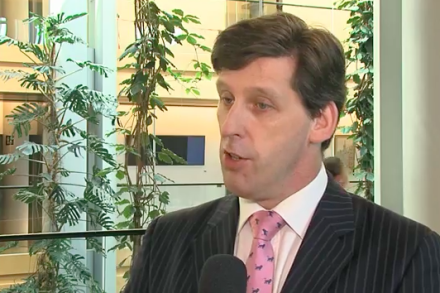
I have an awkward relationship with the House of Lords. On the one hand, it regularly proves a doughty guardian of liberties against a rash, headline-chasing executive. On the other hand, it’s the House of Lords. Hereditary peers, bishops, Liberal Democrats — the clientele are a rum lot. We don’t have our constitutional troubles to seek but we might want to look at getting ourselves one of those elected upper chambers, albeit one independent of Downing Street and party managers.  Nevertheless, the Lords has its uses, and one of the most welcome is bringing experience to government. A good example is Ian Duncan, the Scottish Tory MEP who is reported to be heading for the red benches and from there to a junior ministerial post in the Scotland Office.
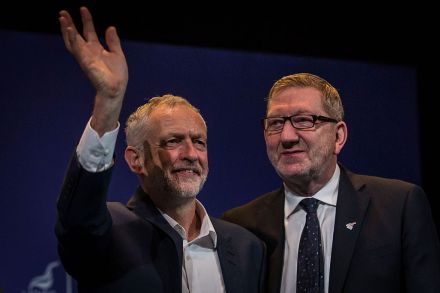
Gerard Coyne’s show trial is a stark warning to Labour moderates

‘There is no step, thought, action, or lack of action under the heavens,’ wrote Aleksandr Solzhenitsyn, 'which could not be punished by the heavy hand of Article 58’. Unite the Union’s rules appear to operate on much the same basis as the Soviet provision against 'counter-revolutionary action’. Gerard Coyne, Unite’s West Midlands secretary, has been sacked after what he claims was a 'kangaroo court’.  So far, so internal union politics. But Coyne is not just some provincial functionary. He was most recently a contender for General Secretary of Unite, losing to incumbent Len McCluskey by around 5,500 votes.

Independence is the SNP’s day job. Everything else is a distraction

'Get back to the day job.' The six magic words that delivered the Scottish Tories their best election night in decades. Ruth Davidson recited this incantation endlessly during the campaign and Labour and the Liberal Democrats quickly joined in. As messages go, it was blunt but effective, capturing the public mood that Nicola Sturgeon has allowed herself to be distracted by the independence issue.  After the UK chose to leave the EU despite Scotland's Remain vote, the First Minister planned to parlay opposition to Brexit into support for independence. But her scheme went from no-brainer to harebrained in a breathtakingly short period of time. Like Theresa May's snap election gamble, the opportunism was too naked and overestimated Sturgeon's public support.

The Tories must learn fast to avoid the chilling prospect of Prime Minister Corbyn

Nick Timothy has penned an honest and reflective piece about the Tory election boorach. It can’t have been easy to write less than a week on from defeat and his departure from Downing Street. The most important point he makes is substantive. Theresa May abandoned the One Nation vision she sketched out on the doorstep of Number 10 upon becoming Prime Minister. It was a blueprint for a modern conservatism that believed in markets but didn’t worship them, that championed liberty but also the freedom to take advantage of its opportunities. It was a communitarian Toryism halfway between Burke and Berlin — the kind of politics advocated by Robert Halfon, sacked by the PM in an apparent effort to make sure she had alienated absolutely every last person who ever rated her.

Labour has surrendered to Corbynism

When I heard the Tories were cutting a deal with a party of bigots and terrorist-sympathisers, I thought, ‘would a national unity government really work?’ It turns out Theresa May is tapping up the DUP rather than the Labour Party. PMQs is accused of ‘yah-boo politics’ as it is; wait till the questions are asked and answered from behind balaclavas. Arlene Foster's party doesn't have the extensive paramilitary history of the Progressive Unionist Party, or Sinn Fein/IRA for that matter, but while Mrs Foster has forcefully rejected violence (she and her family were victims of terrorism during the Troubles) the DUP's past is murky to say the least.

By loving independence so much, the SNP may have killed it

When Alex Salmond lost the Scottish independence referendum, he sought to console himself and the ranks of the vanquished by declaring ‘the dream shall never die’. It was the salve that soothed the disappointment of a nationalist movement. But today that dream appears to lie in ruins. Two years ago, the SNP swept all before it, claiming 56 of Scotland’s 59 constituencies at Westminster; on last night, they lost almost 40 per cent of those same seats. The reversal cannot be overstated. Salmond, the SNP’s former leader, lost in Gordon. Angus Robertson, their leader in the Commons, lost in Moray.

Nothing can justify a vote for Jeremy Corbyn

For Labour moderates agonising over whether they can vote for the party led by Jeremy Corbyn, an answer to their dilemma comes from a surprising quarter.  The quandary of party or principles comes down to whether you agree with Margaret Thatcher or Enoch Powell. Early in her premiership, Mrs T paid a visit to the Conservative Philosophy Group and got into an unexpected row with the original tribune of the New Right. Posed a problem — whether one owed first loyalty to country or values — the divergence of Thatcherism and Powellism was stark. Powell said: 'I would fight for this country even if it had a Communist government.’ Thatcher was horrified: ‘Nonsense, Enoch. If I send British troops abroad, it will be to defend our values.

When will the Six-Day War finally end?

This week, Israel is marking the 50th anniversary of its improbable victory over Arab assassins. Egypt's Gamal Abdel Nasser saw annihilation of the Jewish state as a uniting mission for his project of pan-Arab nationalism and had declared: 'Our path to Palestine will be covered with blood.' In June 1967, he enlisted Syria and Jordan in his plans for invasion and few thought Israel, then a meagre strip of land nine miles wide at its narrowest point, could withstand the onslaught. Herzl’s dream in the desert was about to be unwilled.

Jeremy Corbyn has just given the best speech of the election campaign so far

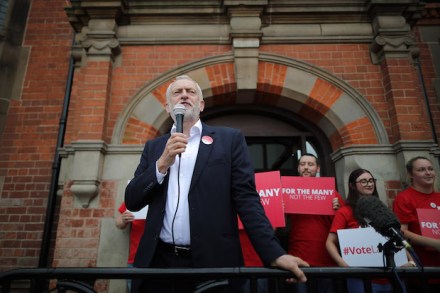
Campaigning starts again tomorrow, but in his speech in Carlisle today Jeremy Corbyn made what is – for any Labour leader – a fairly obvious point: 'You cannot protect the public on the cheap. The police and security services must get the resources they need not 20,000 police cuts. Theresa May was warned by the Police Federation but she accused them of "crying wolf".' In a radical departure for Corbyn, that is exactly what happened.

Paul Nuttall, the hopeless populist

Paul Nuttall doesn't want to be a hangman after all. There was some doubt over the weekend when the Ukip leader said he'd bring back the death penalty and would even pull the lever himself.   This left Andrew Neil somewhat curious and so he used his election interview to enquire if Nuttall had been signalling a career move. But it turns out he wasn’t. He’d be up for stringing up nonces to make a point but wasn't seeking new opportunities in that sector. 'I don't want to be Albert Pierrepoint,' he told Neil. 'That's not what I want to go into after politics.

The three lies that Jeremy Corbyn told Andrew Neil

We learned something important from Jeremy Corbyn’s interview with Andrew Neil: The Labour leader wants to be Prime Minister and will do whatever it takes. His soppier critics often announce their sympathy for a man who would be much happier on the backbenches. Do not believe a word of it. Listen instead to what he told the BBC presenter and you will hear a man trying to rewrite his record and trusting that most voters know too little to challenge him.  Corbyn told Neil: 'I didn’t support the IRA. I don’t support the IRA. What I want everywhere is a peace process.’ This is a lie. Corbyn opposed the Anglo-Irish agreement. He reportedly lobbied the government on behalf of IRA prisoners.

Labour knew about Corbyn and the IRA. Now the country knows

The security services are a rum lot. All that intrigue gets to you eventually, and that’s not counting those who sign up with less than laudable intentions. Harold Wilson was paranoid but not necessarily wrong.  So when Jeremy Corbyn’s MI5 file finds its way onto the front page of the Daily Telegraph, even those not well-disposed to the Labour leader could be forgiven for arching an eyebrow. Are the spooks spooked by the possibility of Britain’s first Marxist prime minister?  For those who came up with Corbyn in 1970s and ‘80s, those heady days of the hard-Left when revolution was ever round the corner, this is obviously the case.

Ten Labour MPs that Tories should vote for

The Conservatives are going to win the election -- that much we know. The question is what kind of opposition Britain is going to be left with. If a slew of moderate Labour MPs are swept out, the Corbynite grip on the party will strengthen. The leader will not go and Labour will take a great leap forward in its journey to oblivion.  Tories should not relish this outcome. It would do serious violence to our parliamentary democracy, which was not designed to cope with one dominant party and no real opposition. Legislation would not face proper scrutiny, ministers would become less accountable, and the business of government would be less transparent. Tory MPs, eager to be 'team players', would begin to soften their questions and pull their punches.

The one question Theresa May should ask Labour voters — in order to win them over

Prime Minister, I have good news and bad news.  The good news is that you have been denounced in the letters page of the Daily Telegraph. One correspondent huffs: 'I wonder if Theresa May and her small group of advisers closeted in Westminster are aware of the fact that each initiative they introduce in an attempt to win over traditional Labour voters risks having the opposite effect on traditional Conservative voters.’ Another damns your energy price cap as ‘wrong-headed’ and even accuses you of ‘play[ing] into the hands of Jeremy Corbyn’s muddle-headed electioneering economics’. Lord Tebbit echoes these fears: 'The further Labour goes Left, that would mean the further we go Left. We need to stick to sensible, Conservative economics.

Labour’s manifesto reveals one thing: the Left has run out of ideas

Just when you thought things couldn't get any worse for Labour, Noam Chomsky goes and endorses Jeremy Corbyn. 'If I were a voter in Britain, I would vote for him...He’s quiet, reserved, serious, he’s not a performer,' Chomsky told the Guardian. But the more you read of Chomsky's endorsement, the more you wonder if he was put up to it for a bet. He says that: 'The shift in the Labour party under Blair made it a pale image of the Conservatives.' Tony Blair, that infamous electoral dud. Chomsky is regularly cited as the world's 'top public intellectual'. It's a slippery phrase. Friedrich Hayek called his ilk 'the secondhand dealers in ideas'. I certainly wouldn't buy a used ideology from Noam Chomsky.

The boring mystery of Theresa May

Theresa May spent the weekend in Scotland and not even the civilised bit. The Prime Minister was posted to the wilds of Aberdeenshire, which are handsome and underpopulated but not exactly a commuter hub. Journalists grumbled about the remoteness of the location, well aware that inaccessibility was the point. May has not been campaigning in this election so much as touring the nation’s emptiest rooms, occasionally bringing along another borough councillor who will be elected to Parliament in five weeks’ time. The punters have been kept far away from the Prime Minister for reasons of security — political security. Party strategists have long memories. They remember the name Sharon Storer.

The cruel hounding of Tim Farron is bloodsport for secularists

For the benefit of Sky News, standard Christian doctrine says gay sex is a sin. It's the sin that gives sinning a good name. There ought to be a stewards' inquiry into why it didn't make it into the Ten Commandments. But, yes, it's one of those trespasses we ask to be forgiven.  Sky's Darren McCaffrey demanded to know Tim Farron's view on the matter at a Lib Dem event on Monday. In case you're wondering, Farron hasn't proposed banning the love that once dared not speak its name and now won't shut up about it. Nor does he want to roll back any of the gains the gay rights movement has made in the last 20 years. In fact, he has criticised equal marriage legislation for failing to accommodate the rights of trans people and wants to see the 'spousal veto' scrapped.

Voting Green is about feeling morally superior to lesser mortals

In this, as in all things, Paul Keating was right. It was the former Aussie Prime Minister, a Beethoven of political invective, who called his country’s Green Party 'a bunch of opportunists and Trots hiding behind a gum tree trying to pretend they’re the Labor Party’. Keating's acid scherzo could apply just as readily to our own Greens, self-appointed conservationists of righteousness. Caroline Lucas, their only MP, has been at the forefront of calls for a 'progressive alliance' between left-wing parties.

Len McCluskey’s hollow victory

Len McCluskey has seen off a challenge to be elected to a third term at the helm of Unite. And what a seeing off it was. When the votes starting to come in, and reportedly showed the top two contenders neck-and-neck, McCluskey’s rival was promptly suspended. Gerard Coyne was stripped of his duties as West Midlands regional secretary - although it’s not clear what he’s supposed to have done wrong or who his accusers are. Coyne has been a thorn in the side of the McCluskey hierarchy for some time. The Guardian points out that he was given a written warning in 2016. His offence? Speaking at an event hosted by moderate Labour MPs Chuka Umunna and Tristram Hunt.  His challenge certainly was not welcomed.

Theresa May is right to say no to a TV debate

I worked on the first TV debate of the Scottish referendum. I was involved in countless more. I was to be found on the production team for televised clashes during the 2015 general election and the 2016 vote for Holyrood. So I speak with some experience when I say TV debates are a terrible idea. Theresa May's refusal to participate in any is the first good news to come out of the general election. When the format debuted in 2010, I was optimistic. Here was an opportunity to extract a good deal more honesty and accountability from the overspun and media-managed Gordon Brown and David Cameron. Cleggmania (remember that? Come to think of it, remember him?