Stephen Daisley

Stephen Daisley

Stephen Daisley is a Spectator regular and a columnist for the Scottish Daily Mail

In defence of the BBC: a force for unity in a divided Britain

The BBC is our other national religion and like the NHS it inspires a devotional intensity that can be a little creepy. The disclosure of star salaries over £150,000 certainly brought out the worst in the Corporation's self-styled defenders. Their argument could have been designed to annoy: market dogmatists wanted to destroy the BBC because it's too successful, they say. But not so successful that it could survive without the Licence Fee - which by the way isn't a tax and at £147 is actually great value for money. If anything, we should be grateful the BBC deigns to broadcast to us.

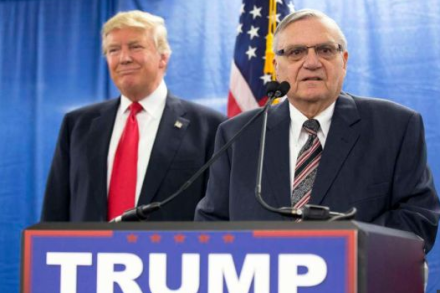
Labour moderates should learn from the mistakes of Trump’s reluctant cheerleaders

Demagogues have had a good run of late but the tide may be turning. Geert Wilders and Marine Le Pen failed to pull off widely predicted electoral coups, while the Austrian far-right fell short in presidential elections. The SNP can no longer rouse a rabble like it once did and Ukip, out-Kipped by Labour and the Tories, is now an irrelevance. But none is as dramatic as the stalling of the Donald Trump bandwagon, which could yet come off its wheels. The President faces allegations of colluding with the Russians during the 2016 election. Springing into action, his son Donald Trump Jr. tweeted out campaign emails in an effort to refute the charges. In fact, the correspondence confirmed that Trump Jr. had met with a Russian lawyer offering dirt on Hillary Clinton.

Why do gay lefties hate Tories but ignore Corbyn’s ugly record?

Gay lefties have hated gay Tories ever since learning of their existence. The concept baffles them, like pro-life women or alcohol-free wine. Those with long memories are aware of the Conservative Party's ugly record on gay equality. This is the party of Section 28, of differential consent laws, of fretting about children 'being taught that they have an inalienable right to be gay'. But gay Tories, having largely rehabilitated their party and with many of the major gay rights battles settled favourably, hoped the rainbow flag might finally have space for a stripe of blue.

Unesco has enacted a grim piece of historical revisionism against Israel

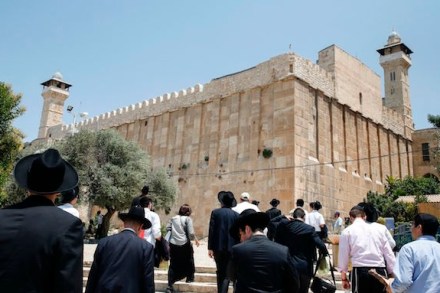
Until its liberation in the Six-Day War, Jews were not allowed to climb beyond the seventh step outside Ma'arat HaMachpelah, the Cave of the Patriarchs. Despite being built on land purchased by Abraham almost 4000 years ago, despite being the burial place of the patriarchs and matriachs of Judaism, despite the stone walls around the location being erected under King Herod, successive Arab and Islamic occupiers forbad Jews access to their second holiest site. Unesco has kicked Jews back down the steps. The UN body nominally responsible for promoting peace through culture has voted to designate Ma'arat HaMachpelah a Palestinian heritage site. It is a grim act of historical revisionism, an effort to negate the millennia-old Jewish connections to the tomb and the surrounding land.

How to shut down criticism of Scottish independence in four easy steps

Step One: Businessman criticises independence. In this case, Les Montgomery, chief executive of the Highland Spring mineral water brand. On Sunday, he told PA: 'Businesses are fed up. The Scottish Government should be getting on with the job they are there to do. Focusing on employment, investment, those kinds of things. Independence isn't the job that the Scottish Government is supposed to be doing.' Step Two: Scottish Government calls businessman. After being told of Montgomery's remarks, SNP economy minister Keith Brown instructed officials to contact Highland Spring to see if they would like to 'discuss them further'. Highland Spring confirmed that it was approached by the Scottish Government but wouldn't say if discussions involved ministers or just civil servants.

Scotland needed government. It got nationalism instead

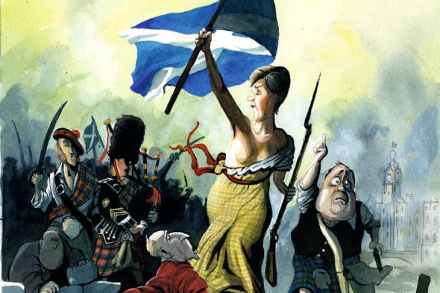
As you approach the Scottish Parliament from the Royal Mile, a modest curve juts out from the obnoxious angles. This camber, the Canongate Wall, is studded with 26 slates of Scottish stone each bearing a quotation from the Bible and scriveners of more questionable repute. Among them is the instruction to 'work as if you live in the early days of a better nation', etched on Iona marble and attributed to the novelist Alasdair Gray. The words are totemic for Scottish nationalists, a rallying cry heard often during the 2014 referendum. And why not? They bear the promise of national rebirth, of hope in even the darkest days.  Inside, where the SNP can not only work but legislate for a better nation, inertia reigns.

Jeremy Corbyn and the cult of anti-knowledge

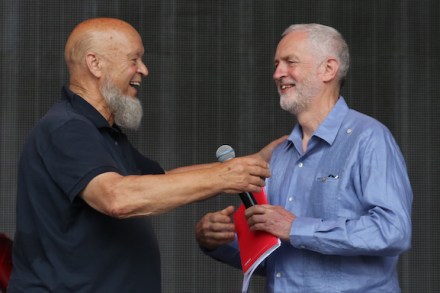
A funny thing happened on the way to the revolution. On Saturday, thousands of earnest millennials – and better-humoured Gen-Xers pretending to be millennials – gathered in a field in Somerset for a concert. The headliner was an ancient rocker of an even older tune but the crowd cherished every word as their own – new, meaningful, of the moment. They cheered. They applauded. They sang this year's secular Te Deum: 'Oh Jeremy Corbyn', wailed to the tune of 'Seven Nation Army' by the White Stripes. And the snake oil flowed. Corbyn, a soft-spoken evangelist, testified and got them raptured up: 'Politics is actually about everyday life. It’s about all of us: what we dream, what we want, what we achieve and what we want for everybody else.

The SNP are guilty of shocking chutzpah in their claims over a Tory ‘stitch up’

I have an awkward relationship with the House of Lords. On the one hand, it regularly proves a doughty guardian of liberties against a rash, headline-chasing executive. On the other hand, it’s the House of Lords. Hereditary peers, bishops, Liberal Democrats — the clientele are a rum lot. We don’t have our constitutional troubles to seek but we might want to look at getting ourselves one of those elected upper chambers, albeit one independent of Downing Street and party managers.  Nevertheless, the Lords has its uses, and one of the most welcome is bringing experience to government. A good example is Ian Duncan, the Scottish Tory MEP who is reported to be heading for the red benches and from there to a junior ministerial post in the Scotland Office.

Gerard Coyne’s show trial is a stark warning to Labour moderates

‘There is no step, thought, action, or lack of action under the heavens,’ wrote Aleksandr Solzhenitsyn, 'which could not be punished by the heavy hand of Article 58’. Unite the Union’s rules appear to operate on much the same basis as the Soviet provision against 'counter-revolutionary action’. Gerard Coyne, Unite’s West Midlands secretary, has been sacked after what he claims was a 'kangaroo court’.  So far, so internal union politics. But Coyne is not just some provincial functionary. He was most recently a contender for General Secretary of Unite, losing to incumbent Len McCluskey by around 5,500 votes.

Independence is the SNP’s day job. Everything else is a distraction

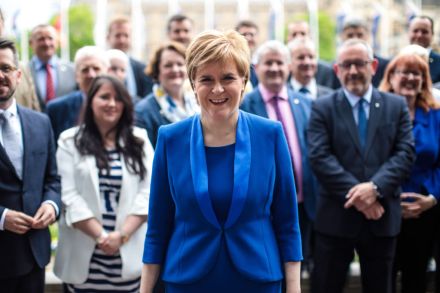
'Get back to the day job.' The six magic words that delivered the Scottish Tories their best election night in decades. Ruth Davidson recited this incantation endlessly during the campaign and Labour and the Liberal Democrats quickly joined in. As messages go, it was blunt but effective, capturing the public mood that Nicola Sturgeon has allowed herself to be distracted by the independence issue.  After the UK chose to leave the EU despite Scotland's Remain vote, the First Minister planned to parlay opposition to Brexit into support for independence. But her scheme went from no-brainer to harebrained in a breathtakingly short period of time. Like Theresa May's snap election gamble, the opportunism was too naked and overestimated Sturgeon's public support.

The Tories must learn fast to avoid the chilling prospect of Prime Minister Corbyn

Nick Timothy has penned an honest and reflective piece about the Tory election boorach. It can’t have been easy to write less than a week on from defeat and his departure from Downing Street. The most important point he makes is substantive. Theresa May abandoned the One Nation vision she sketched out on the doorstep of Number 10 upon becoming Prime Minister. It was a blueprint for a modern conservatism that believed in markets but didn’t worship them, that championed liberty but also the freedom to take advantage of its opportunities. It was a communitarian Toryism halfway between Burke and Berlin — the kind of politics advocated by Robert Halfon, sacked by the PM in an apparent effort to make sure she had alienated absolutely every last person who ever rated her.

Labour has surrendered to Corbynism

When I heard the Tories were cutting a deal with a party of bigots and terrorist-sympathisers, I thought, ‘would a national unity government really work?’ It turns out Theresa May is tapping up the DUP rather than the Labour Party. PMQs is accused of ‘yah-boo politics’ as it is; wait till the questions are asked and answered from behind balaclavas. Arlene Foster's party doesn't have the extensive paramilitary history of the Progressive Unionist Party, or Sinn Fein/IRA for that matter, but while Mrs Foster has forcefully rejected violence (she and her family were victims of terrorism during the Troubles) the DUP's past is murky to say the least.

By loving independence so much, the SNP may have killed it

When Alex Salmond lost the Scottish independence referendum, he sought to console himself and the ranks of the vanquished by declaring ‘the dream shall never die’. It was the salve that soothed the disappointment of a nationalist movement. But today that dream appears to lie in ruins. Two years ago, the SNP swept all before it, claiming 56 of Scotland’s 59 constituencies at Westminster; on last night, they lost almost 40 per cent of those same seats. The reversal cannot be overstated. Salmond, the SNP’s former leader, lost in Gordon. Angus Robertson, their leader in the Commons, lost in Moray.

Nothing can justify a vote for Jeremy Corbyn

For Labour moderates agonising over whether they can vote for the party led by Jeremy Corbyn, an answer to their dilemma comes from a surprising quarter.  The quandary of party or principles comes down to whether you agree with Margaret Thatcher or Enoch Powell. Early in her premiership, Mrs T paid a visit to the Conservative Philosophy Group and got into an unexpected row with the original tribune of the New Right. Posed a problem — whether one owed first loyalty to country or values — the divergence of Thatcherism and Powellism was stark. Powell said: 'I would fight for this country even if it had a Communist government.’ Thatcher was horrified: ‘Nonsense, Enoch. If I send British troops abroad, it will be to defend our values.

When will the Six-Day War finally end?

This week, Israel is marking the 50th anniversary of its improbable victory over Arab assassins. Egypt's Gamal Abdel Nasser saw annihilation of the Jewish state as a uniting mission for his project of pan-Arab nationalism and had declared: 'Our path to Palestine will be covered with blood.' In June 1967, he enlisted Syria and Jordan in his plans for invasion and few thought Israel, then a meagre strip of land nine miles wide at its narrowest point, could withstand the onslaught. Herzl’s dream in the desert was about to be unwilled.

Jeremy Corbyn has just given the best speech of the election campaign so far

Campaigning starts again tomorrow, but in his speech in Carlisle today Jeremy Corbyn made what is – for any Labour leader – a fairly obvious point: 'You cannot protect the public on the cheap. The police and security services must get the resources they need not 20,000 police cuts. Theresa May was warned by the Police Federation but she accused them of "crying wolf".' In a radical departure for Corbyn, that is exactly what happened.

Paul Nuttall, the hopeless populist

Paul Nuttall doesn't want to be a hangman after all. There was some doubt over the weekend when the Ukip leader said he'd bring back the death penalty and would even pull the lever himself.   This left Andrew Neil somewhat curious and so he used his election interview to enquire if Nuttall had been signalling a career move. But it turns out he wasn’t. He’d be up for stringing up nonces to make a point but wasn't seeking new opportunities in that sector. 'I don't want to be Albert Pierrepoint,' he told Neil. 'That's not what I want to go into after politics.

The three lies that Jeremy Corbyn told Andrew Neil

We learned something important from Jeremy Corbyn’s interview with Andrew Neil: The Labour leader wants to be Prime Minister and will do whatever it takes. His soppier critics often announce their sympathy for a man who would be much happier on the backbenches. Do not believe a word of it. Listen instead to what he told the BBC presenter and you will hear a man trying to rewrite his record and trusting that most voters know too little to challenge him.  Corbyn told Neil: 'I didn’t support the IRA. I don’t support the IRA. What I want everywhere is a peace process.’ This is a lie. Corbyn opposed the Anglo-Irish agreement. He reportedly lobbied the government on behalf of IRA prisoners.

Labour knew about Corbyn and the IRA. Now the country knows

The security services are a rum lot. All that intrigue gets to you eventually, and that’s not counting those who sign up with less than laudable intentions. Harold Wilson was paranoid but not necessarily wrong.  So when Jeremy Corbyn’s MI5 file finds its way onto the front page of the Daily Telegraph, even those not well-disposed to the Labour leader could be forgiven for arching an eyebrow. Are the spooks spooked by the possibility of Britain’s first Marxist prime minister?  For those who came up with Corbyn in 1970s and ‘80s, those heady days of the hard-Left when revolution was ever round the corner, this is obviously the case.

Ten Labour MPs that Tories should vote for

The Conservatives are going to win the election -- that much we know. The question is what kind of opposition Britain is going to be left with. If a slew of moderate Labour MPs are swept out, the Corbynite grip on the party will strengthen. The leader will not go and Labour will take a great leap forward in its journey to oblivion.  Tories should not relish this outcome. It would do serious violence to our parliamentary democracy, which was not designed to cope with one dominant party and no real opposition. Legislation would not face proper scrutiny, ministers would become less accountable, and the business of government would be less transparent. Tory MPs, eager to be 'team players', would begin to soften their questions and pull their punches.