Stephen Daisley

Stephen Daisley

Stephen Daisley is a Spectator regular and a columnist for the Scottish Daily Mail

Corbyn couldn’t have done it without ‘moderates’ like Jess Phillips

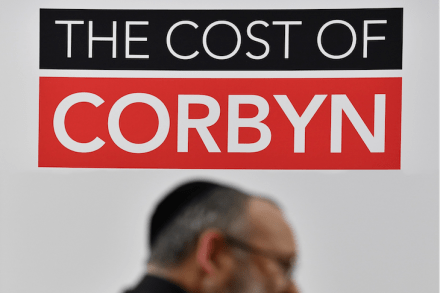
Thursday was a routing for Labour but the reckoning is still to come. Four years into the Corbyn project, and two years after it should have happened, the country crushed the Labour party for embracing the most extreme and dangerous figure in mainstream British politics since Oswald Mosley. For British Jews, who have been put through intolerable torment since 2015, this past weekend marked the first Shabbat dinner at which Jeremy Corbyn’s name could be raised in something other than anger or exasperation or dread. In a break with much of Jewish history, Gentiles were on the right side for once. And while it is naive to assume anti-Semitism was the decisive factor for most voters, for some it was and for others it was swimming around in the broth.

Has Nicola Sturgeon pulled off a second historic victory?

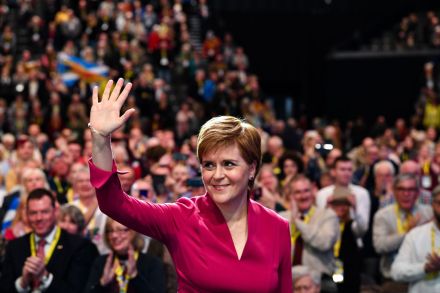
It’s just an exit poll. They can be wrong. They were, substantially, in 1992 and lowballed the Tory result in 2015. Those caveats stated, we have to address that number for the SNP. Fifty-five seats, every seat but four north of the border, would represent the Nationalists’ best result since 2015. Before polls closed, SNP insiders were nervous they might lose some marginal seats to a combination of the Tories and Labour. If the exit poll is broadly accurate, Nicola Sturgeon has pulled off a second historic victory. Since she placed Brexit and Scexit at the centre of her campaign — stopping the former and securing a second referendum on the latter — we can expect her to say the result establishes a mandate for just that.

‘Progressive’ Britain is no more if Jeremy Corbyn comes to power

At the outbreak of World War I, the Jewish Chronicle, which had been wary of conflict with Germany, threw its support behind the war effort in a leader proclaiming: ‘England has been all she could be to Jews, Jews will be all they can be to England.’ A banner reading the same and urging Jews to enlist, was hoist outside the newspaper’s London offices. The Jewish World published a full-page poster insisting ‘There must be no Jewish slackers’ and urging ‘young Jewish men’ to ‘do your duty to your faith and your country’. Naturalised British Jews urged Russian emigres to sign up, even though as foreign nationals they were initially exempt.

Nicola Sturgeon’s failings are catching up with her

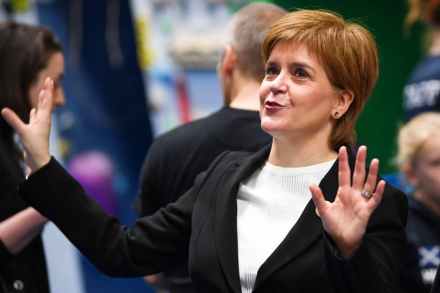
Nicola Sturgeon has had a change of heart. Gone are the ultimatums, the stridency and the self-righteous rhetoric. In an interview with today’s Daily Record, we see Sturgeon the Introspective: ‘Brexit gave me an insight, maybe that I didn’t have before, of how No voters would have felt had the referendum on independence gone the other way.’ We see Sturgeon the Pluralist: ‘Scotland belongs to those who oppose independence just as much as it belongs to those who support independence.’ There is even Sturgeon the Collegial.

Take it from this expert: Jeremy Corbyn is an anti-Semite

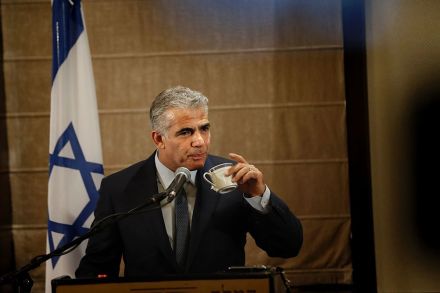
‘Racists are racists are racists and Jeremy Corbyn is a racist.’  Yair Lapid is not mincing his words. One of the leaders of Israel’s main centre-left party broke with protocol this morning at a conference in Jerusalem to urge British voters not to elect Jeremy Corbyn.  He said the Labour leader was an anti-Semite, but that his anti-Semitism was not the ‘new anti-Semitism’ seen in recent decades as a result of the ‘black and red coalition’ of traditional fascists and leftists. ‘This is old-school, plain anti-Semitism,’ he said. Lapid, a former television presenter, entered politics in 2012 with a new liberal party, Yesh Atid.

The 15 Scottish seats that could decide the general election

For at least a generation — something we define loosely up here — Scottish hacks have been trying to interest London newsdesks in Scotland’s role in general elections. Then, in 2015, we had the good fortune of Scotland deciding to up and turn into a one-party state overnight. Then, in 2017, we revised our arrangements to a one-and-a-bit-party state when Ruth Davidson’s Conservatives liberated 12 seats from Nationalist control. Scotland may end up being the main story of this election too, if, as Eeyore types like me have been warning, the Tories do not romp home on December 12.

Boris should threaten to back Corbyn’s ridiculous Brexit plan

The decline of the Liberal Democrats continues to give Labour a boost and rattle Tory nerves. Middle class Remainers who dislike Jeremy Corbyn are nonetheless deciding that he is their last best chance to thwart Brexit. Electing an anti-Semitic government so you don’t need to show a passport at Paris Charles de Gaulle is quite the ethical choice but there you go. It’s also a pretty big gamble. We know that Corbyn is a Brexiteer who believes freedom of movement drives down workers’ wages because he has told us as much. Voting for him to stop a hard Brexit isn’t so much holding your nose as poking your own eye, but Remainers know Labour backbenchers will hold him to his promises on a second referendum. Right?

Jo Swinson’s Andrew Neil interview exposed her party’s Brexit extremism

Jo Swinson’s ordeal at the hands of Andrew Neil dramatised (painfully) the anguish of being a liberal in an age of populism. The Liberal Democrats are the ultimate fence-sitters, the men too broadminded to take their own side in a quarrel, per Robert Frost’s aphorism. But in this election they have tried to represent the centre while advocating the most extreme position on Brexit. As Neil pointed out to Swinson on tonight’s BBC One interview, her policy of revoking Brexit without a vote (in the event of a Lib Dem majority government) was so fundamentalist it has proved off-putting even to some Remainers. He suggested this might have contributed to Swinson’s ever-declining favourability ratings, and he’s probably onto something there.

The shame of Labour’s liberal supporters

There are many reasons why I am suspicious of the Conservatives’ current lead in the polls. The Tories may have peaked too soon. Labour voters flirting with the Liberal Democrats could return the more they see of Jo Swinson. Many Conservative target seats, while Brexity, have voted Labour since there was a Labour Party to vote for. Landlines still dominate over mobile phones in the sampling methodologies of some pollsters, under-reflecting younger and poorer voters. Labour supporters and Remainers are more likely to turn out than Tories and Brexiteers and a million more voters have joined the roll than did prior to the last election, which just reeks of young people.

Trump is right about West Bank settlements – but it won’t help Israel

In the dying days of Bush’s America, when the culture war was a light skirmish over gays getting hitched in Massachusetts, ABC aired a primetime drama called Brothers and Sisters. Sally Field was the liberal matriarch of a glossy family divided by politics but united by the struggles of being rich, white and trapped in a soapy remake of the West Wing. It was simpering. It was derivative. It was camp-as-all-get-out. I never missed a single episode. In one episode, Calista Flockhart, who played an Ann Coulterish talking-head, returns home from flaming a Democrat on TV and is greeted by her lefty Uncle Saul: ‘Great show last night. As usual, you were right about Israel and wrong about everything else.

Banning Halal and Kosher slaughter would be un-British

Do we want Jews and Muslims to live in this country? It’s a serious question and one prompted by the National Secular Society calling on the next government to ban non-stun ritual slaughter of animals. Dhabihah (halal slaughter) and shechita (its kosher equivalent) cater for Muslims and Jews who observe strict dietary laws on the preparation of livestock for food. Generally, animals must be stunned before being bled, be it by a bolt-gun to the brain, gassing or electric shock, but shechita requires no stunning while the two main halal monitoring bodies disagree over whether some stunning methods (water-bathing and electric-tonging) are permissible. The law currently makes an exemption to allow for these practices.

The shamelessness of the Labour moderates

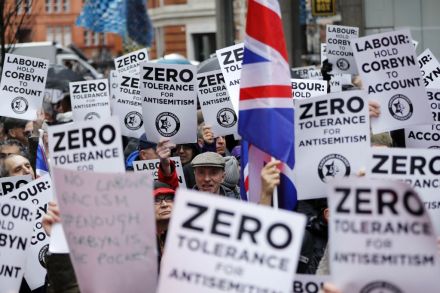
Anti-racism campaign Labour Against Anti-Semitism (LAAS) has today issued its position on the General Election. LAAS, responsible for exposing a litany of anti-Semites in Labour’s ranks, warns party members that ‘Jeremy Corbyn is unfit to be Prime Minister and that the Labour Party is unfit to be in government’. It says Labour poses ‘the greatest risk to our democracy and to the safety and security of the British Jewish community’. As such, they urge the general public to vote ABC: ‘Anyone but Corbyn’.  Other positions are available, most notably from Labour MPs who once spoke of Corbyn in the same terms as LAAS. But where are they now?

A vote for Labour is a vote for anti-Semitism

The December election that now looks inevitable will be, as all elections are, a test. A test of a decade-old government that isn’t entirely sure what its achievements in office have been. A test of the public’s continuing appetite for Brexit and its tolerance for parliamentary histrionics. A test, too, of whether the country is ready to return to majoritarian government or whether volatile voter intentions and hung parliaments will be with us a while longer.  None of these is the most important metric. That dubious honour goes to the anti-Semitism test: will the UK put a party of Jew-haters into power? All of us will have to confront that test and each and every one will be judged on how they measure up.

Can the Tories hold on to their Scottish seats?

The prospect of a Christmas election is one the Scottish Conservatives do not greet with enthusiasm. The party has lost its leader, must fight a Brexit election in a country that voted 62 per cent Remain, and faces an SNP riding high in the polls. It is not difficult to imagine a scenario in which the party is flattened by another 1997-style wipeout. After that election, it took the Tories 20 years to recover their standing north of the border. Another trip to the ballot box will be a retention operation: how many of their 13 seats can the Scottish Tories hold onto? The SNP could not ask for a better set of circumstances in which to fight an election.

Voters are likely to turn their frustration on Parliament’s Brexit-blockers

Rumours of the Prime Minister’s death in a ditch have been greatly exaggerated. Parliament’s rejection of the Government’s programme motion for its withdrawal agreement bill makes it all but impossible for Boris Johnson to extricate the UK from the EU by 31 October as promised. It is an obvious defeat for a PM who got the job by swearing to Tory members that he would have us out by Halloween, no tricks, no treats, no last-minute scares. It is also, however, probably the optimal way for Johnson to break his oath. To the uninvested voter with only a passing interest in the goings-on at Westminster, tonight was not about the PM’s new withdrawal agreement or the programme motion or which Labour MPs trotted through the Aye lobby.

What Caroline Flint’s Brexit critics fail to understand

It must feel pretty lonely being Caroline Flint right now. The Labour MP has made herself unpopular with her comrades by backing Boris Johnson’s deal to leave the EU. Flint campaigned for Remain but accepts that her Don Valley constituency voted 68 per cent Leave. In the former mining towns of her South Yorkshire seat, Flint points out, the figure was closer to 80 per cent. ‘The voices in our mining villages remain unheard, despite their support for Labour over many decades,’ she records in her Labour case for respecting the outcome of the 2016 referendum.  Both Flint and her case have now felt the ire of the progressive Brexitariat, the analysts, academics and activists who frame elite debate on EU withdrawal.

Spain was wrong to jail the Catalan separatists

Some things just don’t pass the gut test. Your head tells you they’re right, all the facts point in their favour, but you can’t suppress a dyspeptic rumbling. The jailing of Catalan separatist leaders should give us all political indigestion. On Monday, Spain’s Supreme Court sentenced 12 activists and key figures from the autonomous government and parliament of Catalonia, all of whom helped organise an illegal referendum in October 2017 to secure independence for the Spanish region. Nine defendants, including former ministers and the parliamentary speaker, were jailed for up to 13 years for offences including sedition and misuse of public funds. Three others were fined for lesser offences.

Mumsnet, Flora and the spread of the corporate culture wars

There is something endearingly British about Mumsnet’s bloodymindedness. A website that, in theory, should be about the extortionate cost of childcare and moaning that Dear Husband forgot to take the bins out again has somehow found itself in the vanguard of the radical feminist movement. That quirk has now cost the site a partnership with Flora, which severed ties over what activists called ‘trans-hostile posts’ on Mumsnet’s forums. A margarine substitute producer might not be the kind of firm you’d expect to have strong political views but women discussing their sex-based rights on the internet seems to scrape their toast the wrong way. I can’t believe it’s not misogyny. Here’s what happened.

Thwarting Brexit probably won’t stop Brexit

What if they succeed in thwarting Brexit? The odds seem weighted against Boris Johnson delivering his do-or-die (-in-a-ditch) promise to get the UK out of the EU by Halloween. The Benn Act has tied the government’s hands so there is no need for Brussels to budge. Donald Tusk can wait until Johnson cracks and complies, or until the Remain Parliament ousts him and installs a prime minister who will hold a second referendum or revoke Article 50 altogether.  Because MPs have no commonly agreed position, we can’t be sure which eventuality we’re heading for, but we can agree that Britain’s membership continuing on November 1 would represent a big defeat for the Prime Minister, his government and the Brexit movement.

10 questions for Remainers, from a Remainer

We told them so, didn’t we? We said it was a terrible idea and would all end in tears. We pointed out that the UK doesn’t send £350 million a week to Brussels, that Turkey was not about to join the EU, and that Britain held the weaker hand and couldn’t dictate the terms of any new relationship. Now, 30 days out from our supposed departure date, Remainers find ourselves in the strongest position yet to thwart Brexit. Parliament has been unprorogued, the government’s hands have been tied, its majority obliterated, and opposition parties have learned to work together (more or less) to frustrate ministers.