Stephen Daisley

Stephen Daisley

Stephen Daisley is a Spectator regular and a columnist for the Scottish Daily Mail

What now for Scottish nationalists?

The Scottish parliament does not have the power to legislate for a referendum on independence. The Supreme Court has made that clear and it is a rare piece of good news for Scotland’s embattled Unionists. What, though, of the other side? Not Nicola Sturgeon and the SNP; Iain Macwhirter has written insightfully about that elsewhere on Coffee House. I mean the voters, the roughly half of Scots who consistently tell pollsters they favour independence. What do they do now? It’s important to note, first off, that believing in independence does not equate to wanting another referendum any time soon. An October YouGov poll found 51 per cent of Scots would vote No in a second referendum while 49 per cent would vote Yes.

Can Scottish nationalists tolerate media scrutiny?

BBC Scotland’s news department has issued what must be one of the strangest clarifications in the Corporation’s history. It’s not a correction of a factual error or a retraction of an inaccurate or misleading item. It’s a statement justifying their journalists’ decision to report a major news story to the public, accurately and with all relevant parties given a right of reply. The statement reads: https://twitter.com/bbcscotnewspr/status/1594666616163536902?s=20&t=mw66p8sMol82W1NFWvRtvw That is, BBC Scotland felt the need to explain itself for doing journalism.  The story was about a sensitive document BBC journalists had got their hands on. These were the draft minutes of a meeting of Scotland’s top NHS executives in September.

Britain is no country for young men

If I had to give one piece of advice to Britons under 30 it would be this: go. Leave. Skedaddle. Get one of those work visas for New Zealand or Canada and start a new life. Fret not over the details. Those can be worked out once you’re there. Don’t make excuses, don’t defer, don’t delay. Trust me, you’ll regret it one day. Think of Britain as the creepy, cobweb-bound manor from a thousand schlocky horror movies: get out while you still can.  Aptly for a horror flick, the call is coming from inside the House. In delivering his Autumn Statement to the Commons, the Chancellor announced ‘the biggest ever increase in the state pension’.

Does Westminster even care about the Union?

The Supreme Court will hand down its judgment in the Scottish independence referendum case next Wednesday. This is the reference brought by the Lord Advocate, Scotland’s most senior law officer, over Nicola Sturgeon’s proposed Scottish Independence Referendum Bill. Downing Street has refused to grant a re-run of the 2014 referendum, in which Scots voted to remain part of the United Kingdom. Sturgeon has said her government will simply hold a referendum of its own. Going to the Supreme Court is a political move, and presumably reflects Sturgeon’s suspicion that Holyrood holding a referendum in defiance of Westminster is unlawful.  The issues before the justices are threefold. One, whether this is a ‘devolution issue’.

Sunak should acknowledge Jerusalem as Israel’s capital

When Liz Truss’s premiership came to an abrupt end, it appeared to spell doom for a historic policy shift raised in her leadership campaign. In a break from a widely held but diplomatically fruitless consensus, Truss stood on a platform of reviewing the location of the British embassy in Israel.  That legation is still based in Tel Aviv despite Israel proclaiming Jerusalem its capital in December 1949 and placing its parliament, government and Supreme Court there. Successive UK governments have deemed Jerusalem a ‘corpus separatum’ and withheld recognition, noting only Israel’s ‘de facto’ authority over the western portions. This is despite Israel exercising all the functions of a sovereign in Jerusalem.

In defence of Ash Regan’s gender bravery

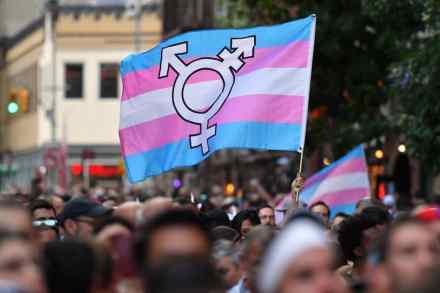
Ash Regan’s decision to resign as Nicola Sturgeon’s community safety minister will not have been taken lightly. The Scottish parliament has today passed stage one of the Gender Recognition Reform Bill, legislation championed by Sturgeon which will make it easier to access a gender recognition certificate, remove medical experts from the process and lower the applicable age to 16. Regan told Sturgeon in her resignation letter that ‘my conscience will not allow me to vote with the government’.  Regan was one of a handful of SNP politicians who signed an open letter in 2019 warning ministers: ‘Changing the definition of male and female is a matter of profound significance. It is not something we should rush.

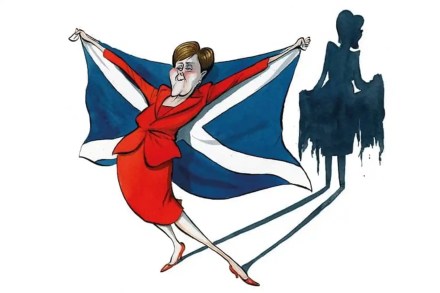
Three ways Nicola Sturgeon will attack Rishi Sunak

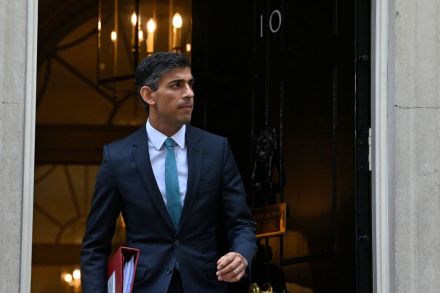
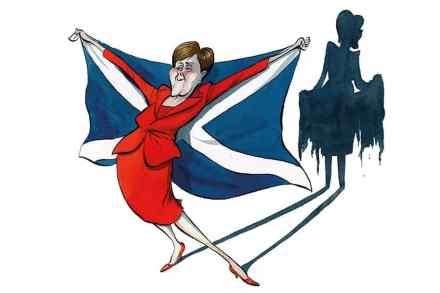
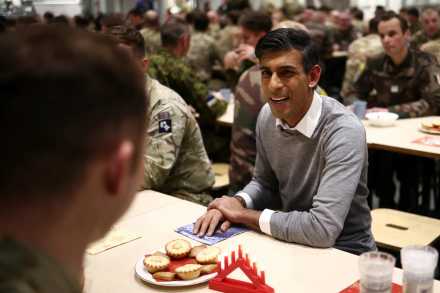
Rishi Sunak’s first order of business will be restoring stability to the government and, thereafter, regaining the confidence of the markets. But the incoming prime minister will eventually have to confront a looming threat of even greater import: Scottish independence. Lawyers for the UK and Scottish governments are currently battling over the matter before the Supreme Court. Nicola Sturgeon wants to hold another referendum on independence next year, but Westminster has refused to grant one like it did in 2014 – so now Holyrood is testing whether the Scotland Act, which set up the devolved parliament, bars the Scottish government from holding a plebiscite of its own.

Tory troubles are a reflection of the crisis facing Britain

One of the quaint superstitions of the moment is a belief that our political dysfunction has a ready solution. The government stumbles from one crisis to another but things will pick up once Liz Truss is gone. Rishi Sunak warned that she would fail and so he is best placed to succeed her. He will calm the markets and lead us back to growth. Tories tell themselves he might even be able to beat Labour next time.  Other Tories put their faith in Boris Johnson, not least Boris Johnson. His withdrawal will be greeted with relief by MPs but there are costs attached. Whatever mandate this government still has is his. He won the Red Wall. He is said to have delivered Brexit. He grasped the need for the Tories to spend money and be seen as patriotic and anti-woke, albeit only rhetorically.

The problem with Mordaunt’s trans conversion

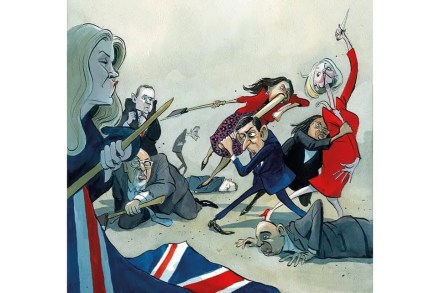
Penny Mordaunt’s entry into the Tory leadership race was widely predicted and she has now become the first to throw her hat into the bin fire. I’m totally impartial in this contest. I think any Tory MP would be just as hopeless as the next. But there’s a point worth underscoring: if Mordaunt were to win, she would be the third liberal in a row to lead the Conservative party. Now, when I say ‘liberal’, I mean liberal in a Tory context. Boris Johnson, the long-time social liberal, immigration liberal and, until 2016, pro-EU liberal, convinced the right to hoist him as its standard bearer when the time came to replace Theresa May.

How Truss can secure her legacy

Liz Truss needs an exit strategy. Unless she can eke past Canning’s 119 days, the Prime Minister will go down in history as Britain’s shortest-serving premier. That ignominy will only be compounded by the absence of a legacy. Nothing is going to overshadow a fleeting and calamitous spell in No. 10, but there are scraps she can throw future historians searching for something, anything consequential to say about her tenure other than its brevity. Trexit will be hugely embarrassing but it need not be an unmitigated humiliation. Time is not on her side, so whatever she does must be readily achievable while reflecting her political instincts and worldview. The most immediate way to go about this is by using the despatch box.

How to stop Just Stop Oil

The National Gallery is home to Van Gogh’s still life Sunflowers. It’s an oil on canvas that, according to the Times, has been valued at £75 million. It is a cherished work of modern European art and one of the most important to come from the post-impressionist movement. This morning, two activists from Just Stop Oil went into Room 43 of the National Gallery and drenched Sunflowers in Heinz cream of tomato soup, before glueing themselves to the wall. One of the young women said:  Is art worth more than life? More than food? More than justice? The cost of living crisis is driven by fossil fuels. Everyday life has become unaffordable for millions of cold, hungry families. They can’t even afford to heat a tin of soup.

Kanye West is not OK

Ye is the rapper formerly known as Kanye West. Even more formerly, he was known as Yeezus, back when he was dropping tracks like ‘I Am A God’. But Kanye is not the messiah; he’s an extremely naughty boy.  This week he appeared on US television show Tucker Carlson Tonight to attack Trump's son-in-law Jared Kushner's role in the Abraham Accords between Israel, the UAE and Bahrain. Kanye claimed this was done ‘to make money’ and said of the Kushner family, who are Jewish:  ‘I just think that's what they're about, is making money. I don't think that they have the ability to make anything on their own. I think they were born into money.

The preventable death of the Scottish Tories

The Ruth Davidson era is over. It has been three years since the now Baroness Davidson stood down as leader of the Scottish Tories, but the last decade of opposition politics has belonged to her. It was Davidson who parlayed opposition to independence into tactical support for the Scottish Conservatives, convincing a section of older, blue-collar Labour voters to lend her their vote to stop the SNP. In doing so, she took the Tories from third to second place at Holyrood and, in 2017, to their biggest win in a general election since the days of Margaret Thatcher. What she failed to do was make the Scottish Tories a viable party of government (a tall order at the best of times) and now the gains she made look set to be reversed.

Liz Truss is a liberal. So how will she approach immigration?

Should Tories already be feeling buyer’s remorse over their new leader? It has been only 20 days since Boris Johnson, a liberal who pretended to be a populist, was replaced by Liz Truss, a liberal who doesn’t pretend to be anything other than a liberal. Whereas Johnson’s was a patrician liberalism with a keen sense of public opinion, Truss is an economic liberal with a swot’s enthusiasm and a swot’s grasp of human instincts. In short, the Tories have swapped a lazy dissembler for an ardent geek. It’s not all they’ve swapped. The communitarian shift that began under Theresa May has been set in reverse and libertarianism has regained the upper hand in the Tory party.

The Tories are to blame for Scotland’s tax mess

Lost amid much of the commentary on Kwasi Kwarteng’s income tax and stamp duty cuts is that they will not apply to Scotland. Income tax is largely devolved to Holyrood, as is stamp duty, or land and buildings transaction tax as it is now known north of the border. The Barnett formula, the fiscal mechanism by which the Scottish government is funded, means the devolved administration will be given an additional £630 million as a result of the Chancellor’s new measures. However, Nicola Sturgeon is under no obligation to use it for similar tax cuts in Scotland. She can spend it elsewhere or not spend it at all. The SNP leader was quick to deprecate Kwarteng’s tax cuts, saying the 'super wealthy’ would be ‘laughing all the way to the actual bank'.

In praise of France’s tributes to the Queen

The death of Elizabeth II has reacquainted Britain with all the cherished irrationalities that make us who we are. Hereditary monarchy. Unfathomable pageantry. Democratic grief. The joy taken in queuing. There’s no understanding these customs; tradition exists to be followed, not deduced. To love the British, you have to love, or at least accept, their curious foibles. There is one irrationality that is not exactly cherished but endures nonetheless and the Queen’s death has underlined just how irrational it is and how difficult to love. The British aversion to the French seems all the more perverse given la république’s extraordinary reaction to the passing of Britain’s longest-serving monarch.

Liz Truss should increase Universal Credit

Liz Truss’s plans for a two-year energy bill freeze, estimated to cost £100 billion, underscore three points. One, the incoming Prime Minister expects the energy crisis to be with us for more than one winter. Two, she grasps how lethal it will be to the Tories’ hopes of re-election if the Treasury doesn’t intervene in a big way. Three, she is prepared to run up government debt even further in order to mitigate a crisis that threatens people’s quality of life. This third point is the crucial one. When a neo-Thatcherite like Truss concedes the merits of transformative interventions funded by borrowing, it opens up a broader conversation.

The case against a snap election

Unless Her Majesty throws us all a curveball, Liz Truss will be the next prime minister. So let’s knock something on the head here and now: she is under no obligation to call an election before January 2025. The replacement of one prime minister with another in the middle of a parliamentary term is not a democratic deficiency. It is parliamentary democracy in action. The prime minister and their cabinet colleagues are the Queen's ministers and when one ministry replaces another, power does not transfer directly but through the sovereign. It is the Queen who issues an invitation to form a government in her name and she does so on the basis of advice about who can command the confidence of the House of Commons.

A referendum act won’t thwart the Scottish nationalists

As someone who has been banging the drum for Westminster to legislate to secure the Union, it might seem churlish to gripe when legislation is proposed. In my defence, I am Scottish: churlishness is my birthright and griping my national pastime. So allow me to explain my grievances with the referendum act, which the Sunday Times says Liz Truss will introduce to ‘wreck the campaign for Scottish independence’. For one thing, I’m a traditionalist in these matters. I prefer the wrecking of the campaign for Scottish independence to be left to the experts: campaigners for Scottish independence. For another, passing a referendum act plays into the nationalist narrative that another referendum, or even independence itself, is inevitable. It is not.

The extremism on the unionist side of Scotland’s independence debate

When a nationalist mob descended on the Tory leadership hustings in Perth recently, those of us who criticise the SNP’s degrading of Scottish political discourse seized on the ugly scenes as another example. However, extremism is not limited to one side of Scotland’s constitutional divide. Last week, as she was attending an event at the Edinburgh Festival, Nicola Sturgeon was protested by a group called ‘A Force For Good’. Their number would generously be characterised as a handful and there is no suggestion they engaged in the sort of behaviour reported in Perth. In videos posted by the pro-Union outfit, a man can be heard shouting at Sturgeon, asking her to ‘apologise for damaging Scotland’ and asking when she will resign.