Stephen Daisley

Stephen Daisley

Stephen Daisley is a Spectator regular and a columnist for the Scottish Daily Mail

What makes a proper Dracula film?

From our UK edition

If Dracula is about anything, he’s about sex. Renfield, in theatres now, is the latest revamp of the Transylvanian bloodsucker mythos, and it is not about sex. In fact, it is a thoroughly sexless movie which might be why, despite some gusto performances and gloriously icky make-up effects, Renfield is a flaccid, directionless affair.  There is an early red flag that signals where the movie is going. Nicholas Hoult as the titular minion and Nicolas Cage, playing fiction’s most feared set of fangs, are laying low in an abandoned hospital in New Orleans, having fled there after a nasty run-in with some vampire hunters in the old country. Famished for fresh blood, Dracula demands that Renfield bring him ‘a busload of cheerleaders’. ‘Female cheerleaders?

Why I love Israel

From our UK edition

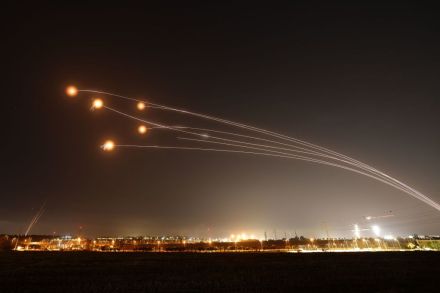
Israel is marking 75 years of its existence in one of the most difficult peacetime periods the country has ever seen. Peacetime is a relative concept in the Middle East but the past six months have been extraordinarily trying for Israelis and their friends overseas. Benjamin Netanyahu returned to power 16 months after being ousted by an improbable coalition of left and right, secular and Islamist – everyone except the voters. But his comeback was only possible by doing a deal with the devil and bringing the far right into his government. Unsavoury allies like Itamar Ben-Gvir and Bezalel Smotrich, the Laurel and Hardy of Israeli ultranationalism, have proved comically inept in ministerial office but have also become more extreme with power.

China is right to chuckle at Britain’s foreign policy

From our UK edition

The Foreign Office has seven ministers, 16,000 employees, an £11bn credit card and one of these days it might get itself a foreign policy. If the trailed excerpts of James Cleverly’s speech to the Lord Mayor’s Easter Banquet are to be believed, the Foreign Secretary will articulate the government’s pivot back towards Beijing. Cleverly will reportedly declare that ‘no significant problem… can be solved without China’. He will say that while ‘it would be clear and easy – perhaps satisfying – for me to declare a new cold war and say that our goal is to isolate China’, it would be ‘wrong’, ‘a betrayal of our national interest’ and even a ‘wilful misunderstanding of the modern world’.  This pro-China tilt does not come out of the blue.

Scotland should prepare for life after Humza Yousaf

From our UK edition

All political careers end in failure but Humza Yousaf has managed to begin his there. Three weeks ago, he clinched the leadership of the SNP in a 52-48 per cent photo finish. Since then, he has deepened divisions within his party by shunning MSPs who failed to support his leadership bid, launched a legal challenge to Westminster to restart his government’s unpopular gender reforms, and watched as police raided Nicola Sturgeon’s home and arrested Peter Murrell, her husband and the SNP’s former chief executive, amid a probe of party finances.   Tuesday was supposed to mark a ‘reset’, because Yousaf’s leadership is in such dire straits that, less than a month in, it already needs resetting.

Coffee House Scots: can Humza save the SNP after treasurer’s arrest?

From our UK edition

10 min listen

The arrest of the SNP's treasurer Colin Beattie in relation to the probe into the party's finances has overshadowed Humza Yousaf's relaunch speech scheduled for today. Beattie has been taken into custody two weeks after Peter Murrell, the SNP's chief executive, was questioned by police regarding loans made in June 2021. Can Yousaf distance himself from the chaos in his own party? What does this mean for Scottish Labour's chances at the next election? Michael Simmons speaks to Katy Balls and Stephen Daisley. Produced by Oscar Edmondson.

Resurrecting Scotland’s gender law battle is an error for Humza Yousaf

From our UK edition

Humza Yousaf's decision to challenge the British government in court over Scottish gender laws is a tactical play. And yet it confirms just how little the new First Minister knows about tactics. Yousaf is having a terrible old time of it. Almost half of SNP members voted against him becoming leader. He has stuffed his government with loyalists: just one of his 27 ministers endorsed his leadership rival. The SNP’s finances are under police investigation, former chief executive Peter Murrell was arrested, the home he shares with Nicola Sturgeon raided by officers, and Yousaf only just learned that his party’s auditors quit months ago. (Neither Murrell nor anyone else has been charged with any offence.

Independence is no longer the SNP’s chief concern

From our UK edition

Humza Yousaf’s government will be defined by two legacies, Nicola Sturgeon’s and his own as health secretary. The Sturgeon legacy can only be understood by looking at the distance between the previous first minister’s rhetoric and her record. Sturgeon was always heavy on mission statements but light on delivery. During the leadership election, Yousaf initially embraced his designation as the ‘continuity candidate’ then pivoted to reject the label. That ambivalence reflects not only the shifting tactics of a troubled campaign but the political realities that the victor would inherit.

Humza Yousaf wants a fight. Good

From our UK edition

Westminster is not plotting to steal powers from Holyrood or roll back devolution, contrary to the campfire stories the Scottish establishment likes to scare itself with. In reality, neither Labour nor the Tories are interested in considering what impact Holyrood has had on the Union.  It’s peculiar, given both parties have self-interested reasons for rethinking the arrangements of devolution. Less than a decade into the experiment, the SNP had seized control of Holyrood and unilaterally renamed the Scottish executive ‘the Scottish government’. The party has used the Scottish government, and the UK civil servants who staff it, to plot both independence and a separate Scottish foreign policy, despite both matters being reserved to Westminster.

Kate Forbes quitting is a nightmare for the SNP

From our UK edition

Kate Forbes has reportedly quit the Scottish government after new SNP leader Humza Yousaf offered her the job of rural affairs secretary. Given that Forbes has been finance secretary for the past three years, and a junior finance minister for two years before that, it’s a fairly transparent play: humiliate her into quitting government altogether.  After all, it would be the equivalent of Rishi Sunak reshuffling Jeremy Hunt to the Department for Environment, Food and Rural Affairs. Arguably it’s worse, because Forbes spent years rebuilding relations with the business community, which had been good under Alex Salmond but fell off a cliff once Nicola Sturgeon took over.

Coffee House Scots: Humza wins – what’s next?

From our UK edition

11 min listen

Humza Yousaf has been announced as the new leader of the SNP after a narrow victory over second placed Kate Forbes. What will this mean for the cause of Scottish independence? Katy Balls speaks to Michael Simmons, Stephen Daisley and Fraser Nelson.  Produced by Oscar Edmondson.

Why Kate Forbes is still the SNP’s best hope

From our UK edition

They have thrown everything at Kate Forbes. She has been subjected to a secular inquisition marked by triviality and partiality. Journalism is a trade neither teeming with religious believers nor one well-equipped for Biblical exegesis, and it shows.  ‘Gotcha’ interrogation has focused on scriptural provisions offensive to progressive attitudes pervasive among journalists (e.g. on homosexuality and fornication) and not other teachings with as much potential bearing on policymaking, such as the iniquities of the rich and powerful or the superior virtue of the poor and meek.

Don’t rush for tickets on Nicola Sturgeon’s farewell tour

From our UK edition

Nicola Sturgeon’s valedictory address to the RSA was her ‘And now we turn to the liars…’ speech. The outgoing SNP leader’s remarks were nominally about inequality and climate change but she was really there to talk about the distorting impact of social media on democratic politics. Given her departure was possibly hastened by the pushback against her Gender Recognition Reform Bill, which saw women’s rights campaigners and others organise via social media, it’s understandable that the First Minister would feel a little irked by these disruptively democratic platforms.  The ‘nature of the discourse’, Sturgeon opined, was ‘undermining our ability… to address the big issues’.

The whole SNP project is now in danger

From our UK edition

And so the Nicola Sturgeon years end with neither a bang or a whimper but with one pitiful desk-clearing after another. Peter Murrell, Sturgeon’s husband and the chief executive of the SNP, has announced his resignation. It comes after Murray Foote, the party’s chief spin doctor, walked on Friday. He had been rubbishing media reports that the party’s membership rolls had shrunk by 30,000 since 2021.  Then, Ash Regan, a candidate in the leadership contest to replace Sturgeon, questioned the integrity of that process and demanded the membership numbers be made public. Backed into a corner, SNP HQ released the figures, which showed a drop in members of 32,000 over the last two years.

Jeremy Hunt’s war on Scotch whisky is bad politics

From our UK edition

The Chancellor’s decision to slap a ten per cent duty hike on Scotch whisky is bad economics. Exports broke the £6 billion mark last year and the industry employs 11,000 people in Scotland while supporting 42,000 jobs across the UK. But whisky is a luxury item in a competitive global market where increases in retail price impact consumer behaviour. Five of the top ten export destinations by value (United States, France, Germany, Japan and Spain) are economies experiencing sharp declines in household income.  Driving up the industry’s costs also hampers one of the biggest export challenges facing Scotch whisky today: breaking India. Per bottle sales rose 60 per cent last year but Scotch still only accounts for two per cent of the Indian whisky market.

The wiliest politician in the Middle East is back – but not in charge

From our UK edition

Bibi is back. Benjamin Netanyahu has returned to the prime ministership of Israel two years after a motley coalition of his many enemies banded together to topple him. With him removed from power and facing trial on corruption charges, many assumed that the Netanyahu era was over. They under-estimated the wiliest politician in the Middle East. In last November’s elections, Netanyahu ousted his ousters and won for himself a sixth term in which to wreak vengeance on the leftist establishment he believes is ranged against him. The most powerful man in Israel presents himself as the helpless victim of ‘leftist’ journalists Victory did not come without a price. He had to team up with the disreputable right.

Kate Forbes is a terrifying prospect for Unionists

From our UK edition

If you believe in the United Kingdom, it’s hard not to revel in the bitter infighting occasioned by the contest to replace Nicola Sturgeon. Senior SNP ministers are monstering one another on TV, trashing their government’s record and talking about sacking their rivals if they win. After 16 years of iron discipline, which helped them steamroller through election after election, it’s all gone horribly wrong. And by ‘horribly’, I mean ‘gloriously’. But Unionists are in danger of becoming complacent.  On its face, the Sky News poll that accompanied Monday night’s SNP leadership debate was encouraging for supporters of the United Kingdom. Eight years after 45 per cent of Scots voted to break away, support for Scexit is down to 39 per cent.

Gary Lineker was always going to win against the BBC

From our UK edition

The BBC’s decision to back down and allow Gary Lineker to return to presenting is a welcome conclusion to a weekend of extreme silliness. In withdrawing the Match of the Day presenter from the airwaves over a crass and stupid tweet in which Lineker compared the government’s rhetoric on illegal migration to that of 1930s Germany, the Corporation escalated a minor skirmish into an all-out war, a war it could not win.  It’s the Tories, not Gary Lineker, who compel you to fund his £1.35 million fee Lineker is a highly opinionated chap whose opinions mostly stand in opposition to the Tory party and right-of-centre ways of thinking. His own views aren’t all that left-of-centre, just the usual midwit progressivism that gets status-hungry blue-ticks retweeting like crazy.

The BBC shouldn’t have taken Gary Lineker off air

From our UK edition

The BBC’s decision to take Gary Lineker off the air is the sort of self-harming stupidity at which the Corporation excels. The Match of the Day presenter tweeted that the Illegal Migration Bill was ‘an immeasurably cruel policy directed at the most vulnerable people’ and done ‘in language that is not dissimilar to that used by Germany in the 30s’. As his social media activity makes clear, Lineker’s views are checklist progressive: anti-Tory, pro-Palestinian, anti-Brexit, pro-taking-the-knee. The BBC has previously censured him for a tweet it found to breach social media guidance and editorial standards of impartiality.

Kate Forbes is playing a risky game

From our UK edition

Kate Forbes has made her case. She handily won last night’s STV debate between contenders for Nicola Sturgeon’s job. She spoke past the contest, which will be decided by SNP members, to the country at large, that latter constituency having been forgotten in the process to chose the next first minister. She brought the conversation back time and again to the need to listen to those who don’t support independence and to govern Scotland’s public services competently. If you want to ask people to put you in charge of an independent country, Forbes’s argument runs, you’ll have to show them you can run a devolved one first.