Stephen Daisley

Stephen Daisley

Stephen Daisley is a Spectator regular and a columnist for the Scottish Daily Mail

Can gender rebel Ash Regan win the SNP leadership race?

From our UK edition

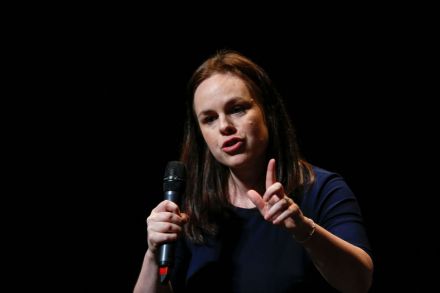
Ash Regan is the latest MSP to launch a bid for the SNP leadership. The former Holyrood minister, who quit Nicola Sturgeon’s government over gender recognition reforms, addressed party members and journalists at the Hilton in North Queensferry this morning. Her pitch was red meat to the rank and file, abandoning referendums as the mechanism to achieve independence. Instead, she argued, 50 per cent plus one vote for the SNP and other nationalist parties in any Scottish or UK election would be grounds to enter negotiations with Westminster for Scotland’s secession. She noted that this was once a widely-held view inside the SNP and even among some of its Unionist opponents.

The real reason to be scared of Kate Forbes

From our UK edition

Kate Forbes’s religious views remain the only thing anyone wants to talk about in the contest to replace Nicola Sturgeon. I expected as much. Forbes, a member of the Free Church of Scotland, has come under fire for saying that she wouldn’t have voted for same-sex marriage and that she believes children should be born within wedlock. She has stressed that she wouldn’t roll back any existing rights. These are personal articles of faith rather than policy prescriptions. Nevertheless, her views are out of step with Sturgeon’s and those of almost the entire Scottish political firmament. Her political opponents – inside and outside the SNP – are aghast.

Can progressives handle Christian politicians?

From our UK edition

The SNP leadership contest should not be about Kate Forbes’ religious faith but that issue has quickly come to dominate. The 32-year-old is a member of the Free Church of Scotland, a small outfit that hews to Scripture on the sanctity of marriage and life. Now that she is running for SNP leader, she is being asked whether she would have voted to permit same-sex marriage had she been an MSP at that time.  She says ‘no’, but that she would do nothing as First Minister to roll back rights already established. She has spoken about how her Christianity instructs her to love her neighbour and how that would drive her to serve all people to the best of her ability.  That ought to be the end of the matter. It is not.

Humza Yousaf looks like Nicola Sturgeon 2.0

From our UK edition

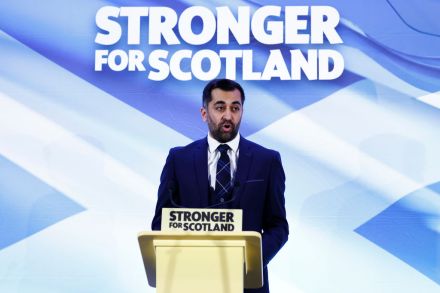
Humza Yousaf, the frontrunner to succeed Nicola Sturgeon, formally entered the race this morning. The venue was humble: Clydebank Town Hall. The town once took pride of place in the British shipbuilding industry, but was hit hard by the closure of the yards. Although it has benefited from regeneration in recent decades, deprivation remains a stubborn feature of life there. Clydebank was also home to the Singer sewing machine factory, where Yousaf’s grandfather worked when he brought his family to the UK from Pakistan in the 1960s.  The venue may have been humble but the staging was slick.

Why the Tories fear Kate Forbes

From our UK edition

Whenever a governing party changes leader midway through a parliament, it’s interesting to note what the main opposition makes of the contest. Specifically, which candidate they would be more comfortable to see win — and which they dread the most.  So, as the SNP begins choosing Nicola Sturgeon’s replacement as party leader and first minister, I’ve been asking Scottish Tories what they think so far. Whomever the Scottish Nationalists pick will be staring down Douglas Ross every week at First Minister’s Questions, while the Scottish Tory leader will have to update his strategy and rhetoric for a post-Sturgeon era.  So far there are two declared candidates.

Humza Yousaf would be Sturgeon’s continuity candidate

From our UK edition

The Daily Record has reported that Humza Yousaf, currently the Scottish health secretary, will stand for election to succeed Nicola Sturgeon as leader of the SNP and First Minister of Scotland. The 37-year-old Sturgeon ally is said to believe he can unite the party and a source tells the paper he has ‘a lot of support from MPs and MSPs’.  If Yousaf did replace Sturgeon, it would be a landmark moment for Scotland Yousaf’s views on the constitution and gender identity are indistinguishable from Sturgeon’s and he can expect to be considered a continuity candidate. He is also a seasoned media performer, though no stranger to the occasional on-camera mishap. The Record says he will stress his ‘experience’ but that could go either way.

Kate Forbes is the obvious successor to Nicola Sturgeon

From our UK edition

The contest to replace Nicola Sturgeon really shouldn’t be a contest at all. The obvious successor is Kate Forbes, the Scottish finance secretary. She is young at 32 but she was even younger three years ago when she stepped in to deliver the Scottish budget just 12 hours after finance minister Derek Mackay was forced by scandal to resign. Her plaudit-winning performance showed her to be a woman of ability and nerve.   If you want to keep evangelical zeal out of politics, Kate Forbes is the least of your worries These are not her only qualities. Forbes is Cambridge-educated and a disciplined media performer. She is a true believer in the cause of independence but a moderate in tone and temperament.

Revealed: Aberdeen’s ‘curriculum decolonising’ plans

From our UK edition

The Granite City is an unlikely front in the cultural revolution, but Aberdeen University is about to change that. A document from the institution’s education committee has been passed to me. Titled ‘Decolonising the Curriculum – Timelines and Approval Processes’, it sets out plans to ‘embed a bold, progressive and sustained programme of antiracist curricular reform’. All courses will be given three years to ‘decolonise’. Academics are required to ‘review their reading lists’ and provide ‘additional perspectives on the course subject’. New courses must explain ‘how the curriculum will address the principle of decolonisation’. This will be ‘a constant process… not a linear project with a definite end’.

Why is Nicola Sturgeon resigning?

From our UK edition

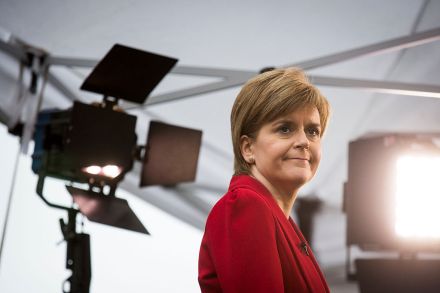
Nicola Sturgeon is resigning as First Minister of Scotland. We don’t yet know when — or why. After eight years in the role, unchallenged the whole time, she has hit troubles recently over gender law reform, the placement of Isla Bryson, a rapist, in a women’s prison and Sturgeon’s failure to deliver a promised second referendum on independence. If any of these is the reason for her departure, it would be odd as, although highly controversial, none has produced a rival for the crown. There is also a police investigation ongoing into a £667,000 independence fighting fund donated by supporters. (There is no suggestion Sturgeon has done anything illegal or improper.

A modest proposal for the death penalty

From our UK edition

Lee Anderson has changed my mind. I’ve always been an opponent of capital punishment but the Tory deputy chairman makes an irrefutable point: ‘Nobody has ever committed a crime after being executed.’ I could make a number of objections. I could say the death penalty violates the sanctity of human life. I could say it is vulnerable to wrongful conviction and execution. I could say handing power over life and death to a state that locked us in our homes for two years and forced old and sick people to die alone is remarkably trusting, to say nothing of forgiving.  Instead of saying any of that, I’ll say this: fine, let’s bring back the death penalty.

Rishi’s cabinet reshuffle won’t rescue him

From our UK edition

The philosopher and sociologist Jean Baudrillard famously claimed in a 1991 book that The Gulf War Did Not Take Place. Baudrillard wasn’t suggesting that Desert Storm literally did not occur. Rather, he proposed that, in both its battlefield prosecution and the mediation of events through CNN, the conflict was a simulacrum of a war, the work of ‘a gigantic apparatus of simulation’. In short, we saw the symbols and signifiers of war but not a war itself.  While postmodernism is not something to be encouraged, allow me to make a Baudrillardian claim of my own: The cabinet reshuffle did not take place. Consider the evidence. There weren’t any great comings or goings. No rivals were banished and no rising stars brought into the fold.

It will take more than a scolding from Salmond to see off Sturgeon

From our UK edition

Watching Alex Salmond rail against Nicola Sturgeon for sidetracking the Scottish independence movement with gender identity ideology is both uncanny and oddly nostalgic. Salmond was Sturgeon’s mentor and is largely responsible for putting her in the post she now holds. For ten magical years between 2004 and 2014, they were the dream team of Scottish politics. Together they wrested control of Holyrood from Labour, lead a nationalist march through the institutions and civil society, and convinced 45 per cent of Scots to vote for secession. They made history and came damn near close to unmaking the United Kingdom.

Women prisoners are being let down

From our UK edition

The safety of women in prisons cannot be allowed to plummet back down the news agenda after the latest Sturgeon saga is over. Not least because today has seen the publication of a report into one women’s prison in Gloucestershire that makes for troubling reading. HMP Eastwood Park, which holds 348 women, was the subject of an unannounced inspection in October last year. Staff from HM Inspectorate of Prisons made several findings that you’d expect: high levels of mental ill health; backgrounds of criminality, homelessness and substance abuse; and prison understaffing.  However, they found plenty more. There was ‘no central record or oversight of the number of women who had been segregated, the reasons why or for how long’.

Why won’t the Palestinian ambassador condemn the Jerusalem massacre?

From our UK edition

Husam Zomlot is head of the Palestinian mission to London and an adviser to the country’s president Mahmoud Abbas, currently in the 18th year of his four-year term. Zomlot was interviewed by Sky News’s Kay Burley this week in response to Burley’s interview with Tzipi Hotovely, Israel’s ambassador to Britain. Both interviewees were asked about the synagogue murders in Jerusalem last Friday, in which seven Israelis were killed. They were also asked about a prior Israeli raid on an Islamic Jihad terrorist cell in Jenin, which killed ten Palestinians, including a civilian woman. At the outset of the interview, Zomlot complained about Hotovely’s characterisation of the synagogue murders.

The fish rots from the head in Sturgeon’s Scotland

From our UK edition

Nicola Sturgeon is going nowhere. Some of her more excitable critics reckon the complete implosion of her policy on transgender prisoners could finish off her premiership. Not least since it comes just as she was planning a fightback against the UK government’s decision to block her Gender Recognition Reform (GRR) Bill. The SNP leader has been subjected to cringe-making TV interviews about whether she thinks rapists are women if they say so and awkward questions at Holyrood about placing male sex offenders in women’s prisons. She has been forced to U-turn repeatedly and has rushed out new regulations on transgender prisoners at odds with the self-identification principle at the heart of her GRR Bill.

Why do some Palestinians celebrate violence against Israel?

From our UK edition

Jerusalem, 13 May 1998. Khairi Alkam, a 51-year-old Palestinian labourer, left home early in the morning to pray at al-Aqsa mosque before going to work. As he was walking through the Mea She’arim neighbourhood, a suspected Jewish terrorist stabbed him in the back and left him to bleed to death in the street. He left behind a wife and nine children.  The crime horrified Israelis and Palestinians alike. Ezer Weizman, then president of Israel, visited Alkam’s widow Dalal to pay his respects and described the killing of her husband as ‘a murder by cowards’. Dalal was not eligible for compensation under the Victims of Hostile Actions (Pensions) Law – no perpetrator had been identified and the 1970 legislation was drafted with only Palestinian terrorism in mind.

Why do young people fall for Holocaust conspiracies?

From our UK edition

Millennials and Generation Z pride themselves on being ‘anti-racist’. We might, then, expect that remembering the Holocaust properly would be important to them – it was the largest act of racial hatred in modern history. The truth is very different and more troubling. New research commissioned by the Claims Conference finds Dutch millennials and Gen Z are more likely than the rest of the public to be ignorant of the Holocaust, deny the facts, oppose acknowledging the Netherlands’s role, and be sympathetic to contemporary Nazism. While 12 per cent of Dutch adults believe ‘the Holocaust is a myth’ or ‘the number of Jews who died has been greatly exaggerated’, that jumps to 23 per cent among those aged 18 to 39.

The problem with Britain’s benefits debate

From our UK edition

A report claiming a majority of us receive more in benefits than we stump up in tax made headlines yesterday. The analysis produced by the think tank Civitas contends that 36 million Britons, or 54 per cent, live in households that get more out than they put in. This finding may well appeal to those who reckon the country consists of lazy, feckless scroungers on the take from hard-working people like them.  At risk of spoiling the fun, the truth is a little more prosaic. For one, Civitas gets to its 54 per cent figure by counting not only pensions and welfare payments but ‘benefits in kind’, i.e. the ‘imputed value’ of the NHS treatment, state education and social care each household receives.

The SNP’s positive discrimination plan is too little, too late for Scottish students

From our UK edition

Will no one think of the middle classes? It’s not the most stirring call to arms. When Scottish Labour MSP Michael Marra complained that ‘the doors are closed’ at universities to ‘Scottish pupils from ordinary families and an average school’, Nicola Sturgeon quipped that she ‘used to be regularly criticised for the fact that too few young people from deprived communities were going to university’, but now she was ‘being criticised for the fact that too many of them are going to university’. As ever with Sturgeon, the rhetoric is facile and the reality much more prosaic. That more young people from disadvantaged backgrounds are getting into university is no bad thing, but nor is it a symbol of an egalitarian Scotland.

Is it time to replace Scotland’s sporting anthem?

From our UK edition

'Flower of Scotland' is the unofficial national anthem north of the border but soon enough we may never hear its like again. Jim Telfer, one of the country’s most celebrated rugby coaches, has called for the song to be dropped at sporting events in favour of an alternative that ‘shows us standing for something rather than against something as a country’. His plea has been echoed by former Scotland international Jim Aitken, who wrote to the Times dismissing the song as an ‘anti-English dirge’.  Telfer’s complaint prompted Lord McConnell, a former Labour first minister, to urge a more ‘positive’ musical number, while Scottish Tory MSP Murdo Fraser deemed the current tune too ‘jingoistic’.