Stephen Daisley

Stephen Daisley

Stephen Daisley is a Spectator regular and a columnist for the Scottish Daily Mail

Humza Yousaf can still turn things around for the SNP. Here’s how

From our UK edition

Humza Yousaf’s government is adrift, of that there can be no doubt. The question is how much longer the drift will be allowed to continue before the SNP leader corrects course. In the four months since he replaced Nicola Sturgeon, Yousaf has staggered from one catastrophe to another. The First Minister has seen his predecessor and other senior figures arrested (and released without charge) by police investigating the SNP’s financial affairs. His government’s flagship deposit return scheme has imploded after failing to gain the support of business and Westminster. He has been forced to U-turn on plans to ban fishing in 10 per cent of Scottish waters.

Why is the UK so indulgent of Scottish separatism?

From our UK edition

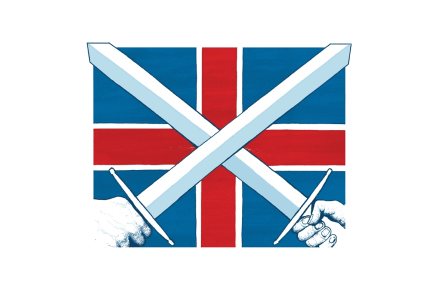
Scottish nationalists can sometimes be heard to say the United Kingdom is not a normal country. As evidence, they point to the unelected head of state, absence of a codified constitution and what they see as the dominance of one nation over other, smaller nations within the state. This analysis only underscores the very cultural overlap the SNP tries to downplay — for in their splendid ignorance of the political character of much of the democratic world they echo uncannily those London and university town progressives who delude themselves that the UK’s immigration debate is an insular outlier in an open and tolerant Europe.  It is not normal, in sum, for a sovereign state to facilitate and finance a process intended to separate it from part of its territory.

Ann Clwyd was a humanitarian unlike any today

From our UK edition

Ann Clwyd, who has died aged 86, never held ministerial office or high office of any kind. Unless, of course, you count a stint as chair of the parliamentary Labour party, though that is more of a penance than a power trip. She did a few tours on the opposition front bench under Neil Kinnock, John Smith and, briefly, Tony Blair, but she was too independent-minded and probably not metro enough for a New Labour red box. That she was rebelling against the government a few months into its first term only confirmed that. Voting against an early Harriet Harman benefit cut, designed to force single parents into the labour market, Clwyd pointed out there were ‘about 1,500 single parents and only 200 jobs available’ in her Cynon Valley constituency.

Tories shouldn’t deceive themselves over their Uxbridge win

From our UK edition

Some Conservatives are going to take heart from the by-election results. They may have lost Somerset and Frome to the Liberal Democrats on a 29 per cent swing. Selby and Ainsty may have fallen to Labour, who overturned their biggest ever majority (20,137) at a by-election. But they held on in Boris Johnson’s former seat, Uxbridge and South Ruislip. By just 495 votes, mind you, but a win is a win. Labour is blaming its defeat on local opposition to Sadiq Khan’s Ulez policy.  The lesson some Tories will take from this is that they must pivot to champion ordinary people, particularly motorists, over policies to limit carbon emissions. Put Sir Keir Starmer on the wrong side of the very workers he has to win back to form a Labour government. There are a few problems with this.

The liberal case for Nigel Farage

From our UK edition

After ‘it’s not happening’, ‘it may be happening, but for different reasons’, and ‘would it be such a bad thing if it was happening?’, we have finally arrived at the ‘it’s happening and it’s a good thing’ stage of the Nigel Farage banking story. This now-familiar pattern of motivated reasoning was first identified by conservative writer Rod Dreher in his law of merited impossibility, which described how progressives could simultaneously hold the views that gay marriage wouldn’t diminish religious liberty and that the religious liberty of opponents of gay marriage ought to be diminished. As Dreher put it: ‘It will never happen, and when it does, you bigots will deserve it.

I’m proud of my rip-off degree

From our UK edition

Whenever the right gets itself in a froth over ‘Mickey Mouse’ degrees, I keep my head down. You see, I am the holder of such a qualification: a degree in film and television studies. I rush to point out that my student days preceded the global financial crisis. There were so many jobs sloshing around that we could dismiss criticism of these courses as a tabloid trope.  I wouldn’t change my ‘rip-off’ degree for the world Let me describe the labour market that awaited meedja students in the mid-2000s. Every Monday, I’d pick up the Guardian at the student union. This was the old frumpy Guardian, before it slipped into a sleek little Berliner number, and inside was wedged The Bible: Media Guardian. God, it was glorious.

It’s time the SNP was honest about EU membership

From our UK edition

There’s a school of thought that, since Scotland isn’t likely to become independent anytime soon, interrogating the SNP’s claims about what independence would mean in practical terms is hypothetical and academic. This view is usually expressed by Unionists rather than nationalists, and reflects a frustration with the refusal of the constitutional question to go away. Journalists and commentators, they complain, are artificially invigorating a debate that would otherwise fade to silence.  Setting aside the wishful thinking required to sustain such a belief, there are two stories in the news that illustrate why continuing examination of the case for independence is necessary.

Who’s to blame for Scottish drug deaths?

From our UK edition

Scotland is the drug deaths capital of Europe and changing that is going to take something radical. The Scottish government thinks it’s found that something: the decriminalisation of all drugs for personal use. Humza Yousaf’s administration has issued a call for ‘a caring, compassionate and human rights informed drugs policy, with public health and the reduction of harm as its underlying principles’.  Between 2000 and 2021, 14,426 Scots died a drug-related death.

Humza Yousaf’s leadership isn’t dead yet

From our UK edition

If you just ignore the opinion polls, Humza Yousaf’s first 100 days as First Minister have been an unqualified disaster. Yousaf eked across the finishing line after an internal election drenched in ruthless skullduggery and bitter factionalism. In the aftermath, he alienated and exiled his party rivals and turned the SNP backbenches from a North Korean military parade into a Holyrood remake of House of Cards.  His deposit return scheme imploded and his proposed ban on fishing in 10 per cent of Scottish waters was sunk by public opposition.

The moment I fell in love with Mhairi Black

From our UK edition

I think it was when she described Margo MacDonald as ‘just magic’ that I fell in love with Mhairi Black. As summations of pivotal political figures go, it’s akin to a first-time Labour parliamentary candidate calling Nye Bevan an absolute mad lad. This is how Black speaks, assessing political history as if she’s talking about that time Architects played the Cathouse. It’s not what you might expect from a middle-class lassie from Ralston, but it’s nothing so cynical as an act. Glasgow zillennial patter is a rhetorical mix of  imported American sitcoms and a self-consciously Scottish tone. It’s like someone remade The Big Bang Theory with an all-Weegie cast.

How Humza Yousaf could take advantage of Labour

From our UK edition

The campaign for Scottish independence is at an impasse. Humza Yousaf used the SNP’s conference in Dundee to set out his party’s latest strategy for achieving statehood for Scotland. That strategy isn’t all that different from what the party faithful has heard before: keep winning elections, keep up the pressure on Westminster, and sooner or later something will happen.  The problem with this tartan Micawberism is that something has been going to happen for rather a long time. Here is a list, by no means exhaustive, of events that were supposed to shift the dial on independence: the SNP’s commanding wins in the 2015 and 2019 general elections; its victories at Holyrood in 2016 and 2021; the UK’s vote for Brexit; the arrival of Boris Johnson in No.

The French Connection and the trouble with streaming censorship

From our UK edition

We are ten minutes into William Friedkin’s The French Connection and we’ve just seen our two heroes beat the shit out of a black guy. Jimmy ‘Popeye’ Doyle (Gene Hackman) is a hard, cynical New York City police detective, a proto Dirty Harry who shoots first and asks questions never. His partner, Buddy ‘Cloudy’ Russo (Roy Scheider), is no less tough but more grounded, often having to pull Popeye back from the brink. They patrol an urban hellscape awash with drugs and crime and have identified the black guy (Alan Weeks) as a pusher. He earns his beating by pulling a blade and slashing Cloudy’s arm.  After they book him, Popeye chides his partner for being caught off-guard: Cloudy: ‘How the hell did I know he had a knife?

How Winnie Ewing transformed Scottish politics

From our UK edition

Icon. Legend. Pioneer. None of the descriptions we have heard since the news of her passing are fitting for Winnie Ewing. She was an iconic figure in Scottish nationalism, to be sure – her victory in the 1967 Hamilton by-election heralding a new political consciousness north of the border. She did take on a legendary quality, not least after she was dubbed ‘Madame Ecosse’ and became a symbol for an outward-looking Scottish Europeanism. She was a pioneer, the first female SNP MP at a time when both her party and parliament were the domain of men.  Yet Ewing’s foremost contributions were not symbolic but tangible and practical.

Emmanuel Macron should sink more pints

From our UK edition

Civilisation’s last line of defence runs through the Élysée Palace. Emmanuel Macron has been lambasted by his opponents for necking a beer with Toulouse rugby players to celebrate their victory over La Rochelle in the Top 14 final. The video of le Président chugging down the offending brew has got mustard up the noses of French legislators across the political spectrum.  https://www.youtube.com/embed/bQP_jqQvbJE The Times reports that Socialist senator Laurence Rossignol condemned Macron for ‘a macho cliché’ while Gilbert Collard, an MEP for the far-right Reconquête, dismissed Macron’s actions as ‘showing off’. Green deputy Sandrine Rousseau accused the president of engaging in ‘toxic masculinity’.

Is this Wickes’s Gerald Ratner moment?

From our UK edition

Big businesses are increasingly torn between activist leadership and a customer base that just wants to stump up its cash and be on its way. Customers’ patience is wearing thin. The latest company seemingly eager to pick a fight with its clientele is DIY chain Wickes. A video dug up by campaigner James Esses shows the shop's chief operating officer Fraser Longden taking part in a panel at PinkNews’s Trans+ Summit. The discussion, which took place last month, was entitled ‘The Role of Senior Leaders in Trans+ Inclusion’. So far, so corporate. At least it was until Longden was asked whether Wickes had received any backlash for its stance.

What good will locking up Carla Foster do?

From our UK edition

During the Covid-19 pandemic, a 44-year-old woman, Carla Foster, unlawfully aborted her unborn baby. She procured the necessary drugs from the British Pregnancy Advisory Service (BPAS) by leading them to believe her pregnancy was just over seven weeks in. In fact, she understood herself to be either 28 or 30 weeks in gestation. A post-mortem on her otherwise healthy baby girl, Lily, indicated the pregnancy was somewhere between 32 and 34 weeks.  The Abortion Act 1967, as amended in 1990, sets 24 weeks as the upper time limit for lawfully obtaining an abortion in Great Britain, with exceptions where the woman is at risk of death or significant harm, or where serious foetal abnormalities are detected.

Will Scots forgive the SNP and Sturgeon for the party’s legal troubles?

From our UK edition

Nicola Sturgeon’s arrest by police investigating the SNP’s finances would seem to be a gift to her opponents and those of her party. Labour, in particular, saw the weekend begin with the resignation of Boris Johnson, the man who drubbed them so thoroughly in 2019, and ended with police questioning the woman who seized almost all their Scottish seats in 2015.  Sir Keir Starmer is certainly having a remarkable streak of good fortune, though mostly because his rivals are seemingly bent on electoral self-destruction. Even so, it is unclear whether the woes beleaguering the Scots Nats will lead them into a similar political death spiral as that engulfing the Conservatives.

Tucker Carlson and the danger of antisemitism

From our UK edition

Tucker Carlson is many things but stupid is not one of them. So when he describes Ukraine’s Jewish president (‘a man called Zelensky’) as ‘sweaty and rat-like’, ‘a persecutor of Christians’ and ‘our shifty, dead-eyed Ukrainian friend’, I suspect he knows exactly what he’s doing.  Carlson made the remarks in a monologue on his new show, Tucker on Twitter. Elon Musk’s social media platform signed up the populist broadcaster after his ousting at Fox News. The first episode of Tucker on Twitter has been viewed 111 million times. (Twitter counts a view as a video playing for two or more seconds while 50 per cent or more of the video element is on-screen.

The cynical treatment of Pauline McNeill

From our UK edition

Pauline McNeill is an impeccable left-winger. The Scottish Labour MSP is a socialist, a feminist, and a devolutionist. All her pros (rent controls, Palestine, gay rights) and antis (inequality, war, western imperialism) line up as you would expect. Yet the Scotsman reports that she has been forced to pull out of a meeting with some lawyers and feminists after Scottish Labour received a complaint.  Why would anyone object to such a thing? Come on, let’s not be coy. We all know why. The event, scheduled to take place at Holyrood next week, is titled ‘The Meaning of Sex Under the Equality Act 2010’. There is plenty to discuss. There’s the Gender Recognition Reform Bill, which would remove medical experts from the gender transition process in favour of self-identification.

How Pride lost itself

From our UK edition

I was in my fondly forgotten twenties when I made it to 53 Christopher Street, site of the 1969 Stonewall riots and, since 1994, the second most historic address in Greenwich Village. (The apartment building from Friends is three blocks over.) The Stonewall Inn that stands there now is only the latest establishment to bear that name, the premises having served as a stables, then a bakery, and later a speakeasy before the mafia relaunched it as a gay bar in the late Sixties. There were no fire doors and no running water; the walls were painted black to cover up past fire damage. It was no Studio 54. In the small hours of 28 June 1969, police carried out a routine raid but this time were met by resistance from patrons in an uprising that lasted six nights.