Stephen Daisley

Stephen Daisley

Stephen Daisley is a Spectator regular and a columnist for the Scottish Daily Mail

Scotland’s gender bill mess was made in Westminster

From our UK edition

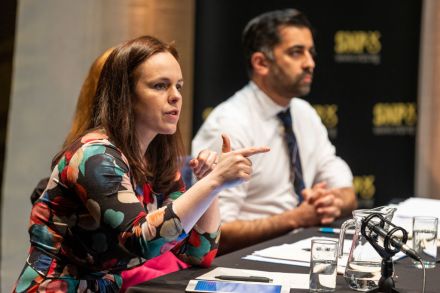
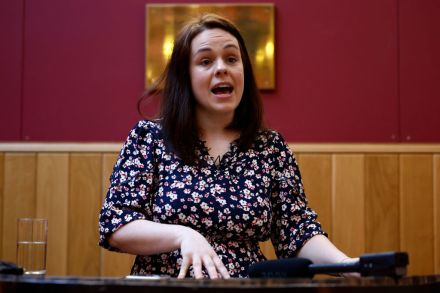
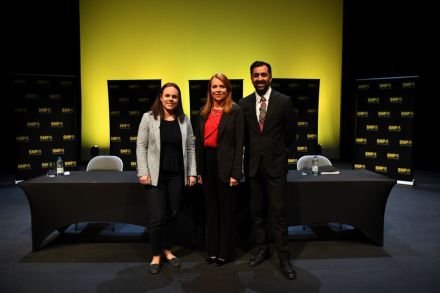
Nicola Sturgeon is angry. The UK government has confirmed it will block her party’s controversial gender Bill, which removes key safeguards from the process by which someone can have their preferred gender rather than their biological sex recognised in law. Opponents, critics and legal commentators warned during the Bill’s passage before Christmas that it could change how the law operates not only in Scotland but in England and Wales, too. Sturgeon decided she knew better, a genre of governance already familiar to people in Scotland. She pushed the Bill through and now the Secretary of State for Scotland Alister Jack has invoked Section 35, a never-before-used provision of the Scotland Act which impedes Royal Assent for a devolved Bill.  Hence why Sturgeon is angry. Very angry.

Sturgeon’s gender bill poses a problem for the Tories

From our UK edition

Ministers will come under increased pressure to block Nicola Sturgeon’s gender legislation with the publication of a new Policy Exchange paper today. This examination of the Gender Recognition Reform Bill concludes it will have serious impacts on the rest of the UK. The Bill removes the safeguards involved in obtaining a gender recognition certificate, the means by which a man can have the law treat him as a woman, and vice versa. It was pushed through the Scottish parliament before Christmas with little time for debate At present, the law requires an applicant to be 18 or older, to have been diagnosed with gender dysphoria by a clinician and to prove they have lived in their preferred ‘gender identity’ for at least two years.

Nicola Sturgeon has been exposed

From our UK edition

The Scottish parliament returned from its Christmas recess today and held its first debate of 2023. Take a guess what it was about.  Yes, independence. Holyrood occasionally touches on other matters – the NHS, the educational attainment gap – but these are mere throat-clearings in a never-ending dialogue between the SNP government and its hardline followers.  This strategy, though counter-intuitive, has thus far proved pretty useful to Nicola Sturgeon: the more she gins up her supporters with talk of breaking away from the UK, the less they seem to notice that she hasn’t taken them a single inch in that direction in eight years as SNP leader.

Challenging anti-Semitism is a moral imperative for non-Jews

From our UK edition

One of the functions of the honours system is to articulate our principles and priorities. Amid the cringe cronyism and inexplicable baubles for even more inexplicable mainstays of public life (Sir Chris Bryant, Lord preserve us), there are the nods to good people doing good work, whether in their community, the charity sector, industry, research or other areas of public life. In acknowledging their efforts, we say something about what we value as a nation: bravery, excellence, compassion, innovation and public service. These are our ideals and we want those who practise them to be rewarded — and emulated.

The 2024 election will be cataclysmic for the Conservatives

From our UK edition

I spend a lot of my time fantasising about the death of the Conservative Party. I like to picture election night 2024 and Huw Edwards struggling to keep up with the mounting Tory defeats: ‘Labour gains Chingford from Iain Duncan Smith, former leader of — Wait, I’m being told Labour has also gained Chipping Barnet. I think that’s been Tory since Reginald Maudling won it in — Goodness. We go live to Laura Kuenssberg with some significant news about Priti Patel. Laura, we understand Witham is heading for a recount…’  The fantasy reaches a crescendo with the election’s Portillo moment: Suella Braverman — out. This reverie is not motivated by any enthusiasm for Labour. I doubt if I’ll ever be able to vote for them again.

Yes, Rishi Sunak’s wealth is a problem

From our UK edition

The Tories are finally coming to see what has long been plain to the rest of us: Rishi Sunak is a dud. He’s not a walking catastrophe like Liz Truss but he’s hopelessly out of touch, helplessly out of his depth and has no plan for turning things around. His conversation with a homeless man at a shelter, in which the Prime Minister chirpily enquired whether the bloke was a business owner, has been somewhat misrepresented by Labour and its colleagues in the activist media. Sunak did not blurt out his silly question from nowhere: the man had been questioning him about his management of the economy and the benefits to London of a booming financial sector.

Are Holyrood and Westminster heading for another Supreme Court showdown?

From our UK edition

The UK government’s threat to block Nicola Sturgeon’s Gender Recognition Reform Bill took many by surprise. The powers, under Section 35 of the Scotland Act, have never been used before. The assumption from some observers, this one included, was that this was a negotiating tactic ahead of inter-governmental discussions on the Bill’s implementation and cross-border issues that might arise. That assumption appears to be wrong. I understand that raising the spectre of Section 35 is not a negotiating tactic: ministers are seriously contemplating it and legal advice is being sought. Among ministers’ concerns are questions over passports, driving licences and public safety.

What Sturgeon’s Gender Recognition Act could mean for England

From our UK edition

One of the fundamental flaws in the Scottish devolution settlement set up by Labour and radically expanded by the Tories is the ability for policy divergence in Scotland to impact on the rest of the UK. The Gender Recognition Reform Bill, on the cusp of being passed by the Scottish parliament, might prove an object lesson. The Bill overhauls the process by which a person obtains a gender recognition certificate (GRC). This is the document which recognises an applicant’s gender identity in place of their biological sex. For example, a male who identifies as female and acquires a GRC becomes female in the eyes of the law.  The Bill being pushed through Holyrood by Nicola Sturgeon’s government makes this process easier, faster and open to more people.

Scotland’s messy Gender Recognition Act is a symptom of Holyrood’s weaknesses

From our UK edition

The Scottish parliament will today consider final amendments to the Gender Recognition Reform Bill. The Bill, a key priority of Nicola Sturgeon’s SNP-Green government, will update the Gender Recognition Act 2004, the legislation governing the acquisition of a gender recognition certificate (GRC). Once a person obtains a GRC, ‘the law will recognise them as having all the rights and responsibilities appropriate to a person of their acquired gender’.  At present, a man who wishes the law to recognise him as a woman, or vice versa, must be at least 18 years of age and must undergo a long process based on medical evidence of gender dysphoria.

Pete Wishart’s resignation letter is damning for the SNP

From our UK edition

No matter how heavily it snows today nothing will be as frosty as Pete Wishart's resignation letter. The senior SNP MP has exited the front bench following the coup that replaced Ian Blackford with relative newcomer Stephen Flynn.  Blackford is an ally of Nicola Sturgeon and discontent had grown in the party's Westminster group of MPs about his perceived lack of independence from the leadership in Scotland. Flynn, who at 34 only entered Parliament in 2019, is expected to put distance between his Westminster group and the SNP government in Edinburgh. As MP for Aberdeen South he is seen as less hostile to the North Sea oil and gas industry than Sturgeon, a recent convert to the climate cause.  https://twitter.

Nicola Sturgeon’s Stephen Flynn-sized headache

From our UK edition

Nicola Sturgeon did not want Stephen Flynn to be the new leader of the SNP at Westminster. His victory represents not only a generational shift – Flynn is 34 and his deputy Mhairi Black is 28 – but a sharp left turn in political sensibilities. Where outgoing Commons leader Ian Blackford was cautious and loyal to Sturgeon, the Flynn-Black team is expected to be more independent-minded.  Their instincts are closer to those of the SNP grassroots: they are impatient with the pace of progress towards another referendum. The Supreme Court ruling on where the power to call a referendum lies has only thrown such frustrations into relief. The SNP will have to find a new way forward and a fresher, younger face was thought better suited to that task.

Gordon Brown is deluding himself about the SNP

From our UK edition

Gordon Brown needs a hobby. Golf, perhaps, or jazzercise. Anything but meddling in the constitution. He means well but his answer is always the same: make things worse but in a way that sounds really clever to Westminster types. To a hammer everything is a nail and to Gordon Brown there isn’t a problem in all Creation that doesn’t call for a commission, a committee or a convention.  His own commission into ‘the UK’s future’ has now reported and all I can say is the future ain’t what it used to be. A New Britain is a backwards-looking prospectus, its new constitutional settlement largely doubling down on the old settlement. That old settlement has been a stunning failure but can’t be acknowledged as such because Brown was partly responsible for it.

What now for Scottish nationalists?

From our UK edition

The Scottish parliament does not have the power to legislate for a referendum on independence. The Supreme Court has made that clear and it is a rare piece of good news for Scotland’s embattled Unionists. What, though, of the other side? Not Nicola Sturgeon and the SNP; Iain Macwhirter has written insightfully about that elsewhere on Coffee House. I mean the voters, the roughly half of Scots who consistently tell pollsters they favour independence. What do they do now? It’s important to note, first off, that believing in independence does not equate to wanting another referendum any time soon. An October YouGov poll found 51 per cent of Scots would vote No in a second referendum while 49 per cent would vote Yes.

Can Scottish nationalists tolerate media scrutiny?

From our UK edition

BBC Scotland’s news department has issued what must be one of the strangest clarifications in the Corporation’s history. It’s not a correction of a factual error or a retraction of an inaccurate or misleading item. It’s a statement justifying their journalists’ decision to report a major news story to the public, accurately and with all relevant parties given a right of reply. The statement reads: https://twitter.com/bbcscotnewspr/status/1594666616163536902?s=20&t=mw66p8sMol82W1NFWvRtvw That is, BBC Scotland felt the need to explain itself for doing journalism.  The story was about a sensitive document BBC journalists had got their hands on. These were the draft minutes of a meeting of Scotland’s top NHS executives in September.

Britain is no country for young men

From our UK edition

If I had to give one piece of advice to Britons under 30 it would be this: go. Leave. Skedaddle. Get one of those work visas for New Zealand or Canada and start a new life. Fret not over the details. Those can be worked out once you’re there. Don’t make excuses, don’t defer, don’t delay. Trust me, you’ll regret it one day. Think of Britain as the creepy, cobweb-bound manor from a thousand schlocky horror movies: get out while you still can.  Aptly for a horror flick, the call is coming from inside the House. In delivering his Autumn Statement to the Commons, the Chancellor announced ‘the biggest ever increase in the state pension’.

Does Westminster even care about the Union?

From our UK edition

The Supreme Court will hand down its judgment in the Scottish independence referendum case next Wednesday. This is the reference brought by the Lord Advocate, Scotland’s most senior law officer, over Nicola Sturgeon’s proposed Scottish Independence Referendum Bill. Downing Street has refused to grant a re-run of the 2014 referendum, in which Scots voted to remain part of the United Kingdom. Sturgeon has said her government will simply hold a referendum of its own. Going to the Supreme Court is a political move, and presumably reflects Sturgeon’s suspicion that Holyrood holding a referendum in defiance of Westminster is unlawful.  The issues before the justices are threefold. One, whether this is a ‘devolution issue’.

Sunak should acknowledge Jerusalem as Israel’s capital

From our UK edition

When Liz Truss’s premiership came to an abrupt end, it appeared to spell doom for a historic policy shift raised in her leadership campaign. In a break from a widely held but diplomatically fruitless consensus, Truss stood on a platform of reviewing the location of the British embassy in Israel.  That legation is still based in Tel Aviv despite Israel proclaiming Jerusalem its capital in December 1949 and placing its parliament, government and Supreme Court there. Successive UK governments have deemed Jerusalem a ‘corpus separatum’ and withheld recognition, noting only Israel’s ‘de facto’ authority over the western portions. This is despite Israel exercising all the functions of a sovereign in Jerusalem.

In defence of Ash Regan’s gender bravery

From our UK edition

Ash Regan’s decision to resign as Nicola Sturgeon’s community safety minister will not have been taken lightly. The Scottish parliament has today passed stage one of the Gender Recognition Reform Bill, legislation championed by Sturgeon which will make it easier to access a gender recognition certificate, remove medical experts from the process and lower the applicable age to 16. Regan told Sturgeon in her resignation letter that ‘my conscience will not allow me to vote with the government’.  Regan was one of a handful of SNP politicians who signed an open letter in 2019 warning ministers: ‘Changing the definition of male and female is a matter of profound significance. It is not something we should rush.

Three ways Nicola Sturgeon will attack Rishi Sunak

From our UK edition

Rishi Sunak’s first order of business will be restoring stability to the government and, thereafter, regaining the confidence of the markets. But the incoming prime minister will eventually have to confront a looming threat of even greater import: Scottish independence. Lawyers for the UK and Scottish governments are currently battling over the matter before the Supreme Court. Nicola Sturgeon wants to hold another referendum on independence next year, but Westminster has refused to grant one like it did in 2014 – so now Holyrood is testing whether the Scotland Act, which set up the devolved parliament, bars the Scottish government from holding a plebiscite of its own.

Tory troubles are a reflection of the crisis facing Britain

From our UK edition

One of the quaint superstitions of the moment is a belief that our political dysfunction has a ready solution. The government stumbles from one crisis to another but things will pick up once Liz Truss is gone. Rishi Sunak warned that she would fail and so he is best placed to succeed her. He will calm the markets and lead us back to growth. Tories tell themselves he might even be able to beat Labour next time.  Other Tories put their faith in Boris Johnson, not least Boris Johnson. His withdrawal will be greeted with relief by MPs but there are costs attached. Whatever mandate this government still has is his. He won the Red Wall. He is said to have delivered Brexit. He grasped the need for the Tories to spend money and be seen as patriotic and anti-woke, albeit only rhetorically.