Sebastian Payne

The government’s latest High Speed 2 argument: we need more capacity

From our UK edition

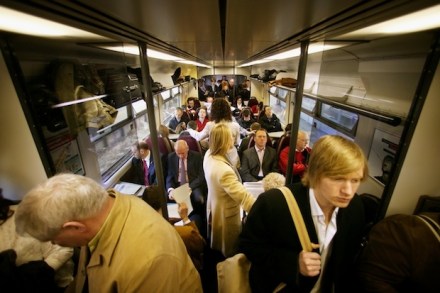
40 u-turns and counting, the coalition has a habit of dropping difficult policies. One notable exception is High Speed 2, which is still being keenly promoted. Today, members of a new HS2 growth task force have been announced. The advocates are an  impressive selection of council leaders, academics, businessman and trade unions. Their job will be to counter the view that HS2 does not make financial sense. As Janan Ganesh pointed out in the Financial Times yesterday (£), the government’s enthusiasm for HS2 is in marked contrast to its dithering over airport capacity. But, the public doesn’t share this enthusiasm. The last YouGov poll suggests that 46 per cent are against HS2 and 34 per cent in favour.

Lord Howell says fracking should be carried out in ‘desolate’ North East

From our UK edition

Lord Howell has got himself into a spot of fracking bother this afternoon. The Newcastle Chronicle reports that George Osborne’s father-in-law says fracking should be carried out in ‘unhabituated and desolate areas’. Nothing too controversial about that, except Howell singled out the north east of England, where there is apparently ‘plenty of room’. Howell — an energy secretary under Margaret Thatcher — said at Lords’ questions: ‘I mean there obviously are, in beautiful natural areas, worries about not just the drilling and the fracking, which I think are exaggerated, but about the trucks, and the delivery, and the roads, and the disturbance, and those about justified worries.

Getting the GIST on government spending?

From our UK edition

Did you know that DFID cost each person in the country £97 last year? Or that the DWP spent £173 billion in 2012-13? Or that the BBC cost each person £21.59 last quarter? Well, you do now thanks to GIST, the government’s new spending website launched today. In an attempt to fix the messy Data.gov.uk, GIST ‘presents government spending data in a clear, intuitive and user-friendly way’, according to the Cabinet Office. It is, apparently, the most advanced site of its kind in the world. Taxpayers, journalists and politicos can now all see where and how the government spends our money — at least that's the theory. The hip kids at the Government Data Service (who brought you GOV.

Yet again, Labour’s self-serving efforts to block The King’s School merger have failed

From our UK edition

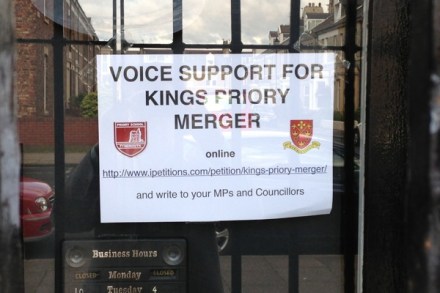
Labour's war against The King’s School merger continues to be fought fruitlessly, despite rebuttal after rebuttal from the Department of Education. As first reported in the Spectator two weeks ago, Michael Gove has signed off funding for the independent King’s School and state Priory Primary School in Tynemouth to merge into the new Kings Priory Academy. North Tyneside Council are not happy with Gove's decision and decided to call an ‘Extraordinary Council Meeting’ last week to decide what to do next. Like many of the school wars in Britain, Labour’s response has been a bureaucratic one. If they can keep the indecision rolling until September, the new academy would be delayed and possibly never open.

The View from 22 — baby boomers vs. the jilted generation, an indecent housing proposal and the royal baby

From our UK edition

Are the baby boomers propping up the lazy 'jilted generation' while driving Britain's economic recovery? On this week's View from 22 podcast, Daily Mail columnist Melanie Philips debates The Guardian's Shiv Malik on the latest round of generational warfare, including on whether there is any need to blame one group for the country's economic woes. How big a factor is culture and immigration in the differing employment levels between generations? Are the younger generations simply dragging their heels, or do they genuinely face more difficult circumstances than Britain's post-war generation? Maurice Mcleod discusses with Fraser Nelson the Chancellor's generous offer for council tenants to purchase their properties at knock-down rates.

Poll shows public support teacher pay changes reviled by unions

From our UK edition

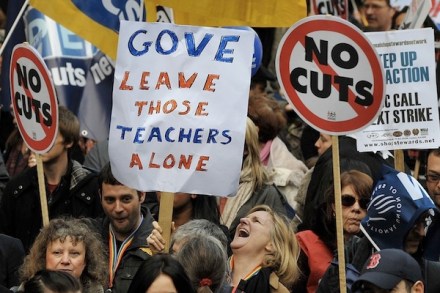
The coalition's biggest clash with trade unions so far is fast approaching. From October, the NASUWT and NUT teaching unions are carrying out a series of regional walkouts over the introduction of performance related pay. Unfortunately for the unions, new polling from Populus shows the public are not on their side. When questioned on how teachers' pay should be decided, 61 per cent of those polled said they agreed that ‘schools should be able to set the pay of individual teachers based on the quality of their performance as determined by an annual appraisal’, as opposed to 28 per cent who believe teachers should receive the same amount, based on time served and not performance.

An inconvenient interview: Andrew Neil defends his grilling of Ed Davey

From our UK edition

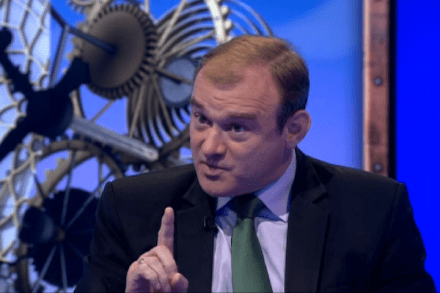
Andrew Neil’s interview on Sunday Politics the other week triggered much reaction – and protest from those who do not believe that there is a debate to be had. Andrew has replied at length today, and we thought you might be interested in what he has to say. First, the offending interview: The viewers included one Dana Nuccitelli, who works for a private Californian environment company and blogs at the Guardian. He objected to the Sunday Politics graph showing the absence of warming and said it should be 'should be totally disregarded and thrown out'. His conclusion: 'Throughout the show Neil focused only on the bits of evidence that seemed to support his position.

Porn, porn everywhere. But will David Cameron’s proposals actually work?

From our UK edition

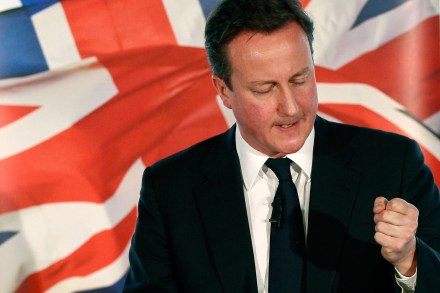
Has the Prime Minister been too naïve in cooking up plans to tackle unadulterated online access to porn? Today’s Daily Mail is totally ecstatic at the proposals, but fails to take into account how difficult regulating the Internet can be. Unless David Cameron decides to go for the totalitarian Great Firewall of China approach — which filters every tiny piece of traffic, known as packets — the proposals will have a similar effect to alcohol prohibition. Porngraphy will go even deeper underground; into the encrypted untraceable bowels of the web which are nigh impossible to infiltrate. Some of Cameron’s proposals are not entirely useless.

Parents vs. the system: which side is Labour on?

From our UK edition

Should Labour support private schools joining the state sector? Yes, is probably your immediate response but in reality, Labour’s position is unfathomable. A case in point is the battle for The King’s School, which I've written about in this week’s Spectator. The King's School is due to move into the state sector this September and merge with the local Priory Primary School to create the all-new King's Priory Academy. North Tyneside, where both schools reside, is one of the poorest boroughs in the country. Opening up an excellent fee-paying school to parents who (like mine) can't afford a £10,000 per-year education should be welcomed by all. But Labour, locally and nationally, have failed to back the merger.

Another good private school wants to join the state system. Why is Labour trying to stop it?

From our UK edition

When my parents came to choose a secondary school, they were naturally keen to send little Sebastian to the best possible place — regardless of whether it was state or independent. Their first choice was Emmanuel College in Gateshead, where we lived — one of Kenneth Baker’s original city technology colleges and inspiration for Labour’s academy programme. The next was the fee-paying King’s School in Tynemouth. Emmanuel declined to offer me a place and King’s turned out to be too expensive. I ended up at a respectable, above-average comprehensive — so I was luckier than most. King’s would have been superb; it’s one of best schools in the north-east. But it is only open to those who can afford it. Until now.

Five things you need to know about the MPs’ pay rise

From our UK edition

Today’s recommendations from IPSA on MPs pay have been with met the condemnation we've come to expect regarding our politicians — snouts in troughs, out of touch political class, etc. But it's not simply MPs giving themselves more money. Here are the key five points of what the independent recommendations are actually proposing: 1. Overall cost of politics will increase Despite the reshuffling of MPs’ remuneration (see point 4 for details), IPSA estimates the overall spend will increase £0.5 million by 2015. The headline figure that the cost of politics is going up is just the sort of story MPs like Conor Burns are keen to avoid.

The View from 22 — why the Met always gets it wrong, Miliband’s Clause 4 moment and nationalising private schools

From our UK edition

Why has the Met Office become so inaccurate at predicting weather in the UK? On the latest View from 22 podcast, author Rupert Darwall explains why out of the last 13 years of weather predictions by the Met, 12 have been incorrect. How does the Met Office go about predicting weather? Are these inaccuracies down to technological or human error? And in what way does the government's climate change policies feed into their decisions? James Forsyth and Isabel Hardman also discuss Labour's union manoeuvres and Ed Miliband's Clause 4 moment he didn't want but is now stuck with. Has the Labour leader made the right decision to take on the unions? Can the Falkirk-Unite scandal be contained by his bold move? And how will the departure of Tom Watson affect their 2015 general campaign chances?

The View from 22 — the new God squad, Labour’s campaigning quandary and the secrets to a successful marriage

From our UK edition

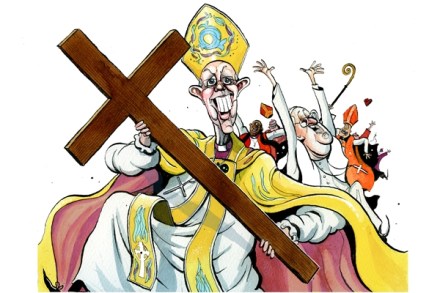
Are Lambeth Palace and the Vatican about to undergo a significant transformation in how they operate and present themselves in public? On the latest View from 22 podcast, the Telegraph's Damian Thompson explains how the evangelicals are taking over both the Catholic and Church of England, which will result in a dynamic shift in how they are viewed by the outside world. He also examines the similarities surrounding the appointment of both Pope Francis and Archbishop Welby. James Forsyth also discusses the problems Labour face on running their general election campaign, and why David Cameron has won a major concession on the EU referendum bill. With the resignation of Tom Watson today as campaign co-ordinate, who will run Labour's 2015 campaign?

The next Spectator Debate: too much immigration, too little integration?

From our UK edition

When David Cameron announced ‘state multiculturalism has failed’, the chattering classes gasped in disbelief. Here was a Prime Minister, bull dozing his way into  the tricky area of immigration — one his predecessors had shied away from. The speech was praised by the right, and lambasted by those on the left — including his coalition partners. David Goodhart received a similar reaction with the publication of his book  The British Dream. In it, he examines the success and failures of post-war immigration in Britain. On the right, the book was welcomed as a thorough examination into multiculturalism.

Boris Johnson: an eminently likeable politician who poses little threat to David Cameron

From our UK edition

Even Boris can't help the toxic Tories. That's the upshot of Lord Ashcroft's latest polling, which asked 8,000 people (including several focus groups outside of London) about what they think of the mayor. Although Boris Johnson is the country’s most loved politician, he is not the voters’, or even Conservatives’, top choice as prime minister. David Cameron remains the favourite at 33 per cent to Boris’ 29: Half of those polled said that if Johnson was leader of the Conservative party, it would 'make no difference' as to whether they were more or less likely to vote Conservative. This is a blow to the Cameron dissenters, who have always believed that Boris would encourage more people to vote Tory.

The View from 22 — Osborne’s spending review, the return of America and goodbye to Mervyn King

From our UK edition

George Osborne's latest spending review has demonstrated how little progress he has made on pushing Britain towards fiscal sanity. On the latest View from 22 podcast, James Forsyth and Isabel Hardman analyse Osborne's statement to the Commons yesterday, the political significance of his plans and how Labour managed to fluff their response. Colleen Graffy, a former US state department official under George W. Bush, also joins Fraser Nelson to discuss our cover on the return of America as a significant presence on the world stage. How has the superpower regained its economic clout and what role, if any, did Barack Obama play in this miraculous recovery? Plus, Martin Vander Weyer discusses Mervyn King's departure as Bank of England governor. How was his final Mansion House speech received?

Spending review 2013: Crossrail 2 is a clear win for Boris Johnson

From our UK edition

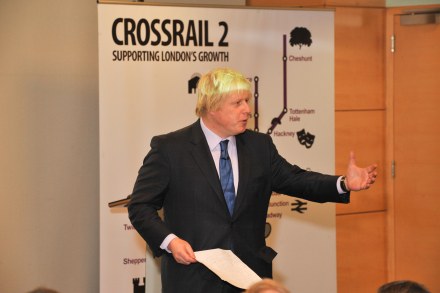
Boris Johnson's powers of persuasion have once again wooed George Osborne. In today's spending review, the Chancellor has put aside £2 million to investigate Crossrail 2 — a new underground line for London. The fact the Mayor was able to bag another win from Osborne — Crossrail 1 was protected from funding cuts in 2010 — is testament to the political power of both the Mayor and the capital. Boris doesn't even have re-election to think about this time. Crossrail 2 is key to Boris' London legacy.

Tories use Let Britain Decide campaign to hunt voters’ data

From our UK edition

The Tories have earned rare praise for their LetBritainDecide campaign for James Wharton's Private Member's Bill. Everyone accepts that the slick website and social media campaign are (surprisingly) impressive. But there's another — largely unnoticed — aspect to this campaign which has a lot less to do with change in Europe and more to do with change in CCHQ's campaigning methods. The clever 'co-sponsorship' option allowing anyone to add their names to the bill doesn't just create hype, it also allows CCHQ to build a large database of the names, email addresses and postcodes of voters with a particular interest in European affairs. Why is this important? The data allows CCHQ to target voters with specific campaign messages that interest them personally.

The View from 22 — Cuts, what cuts?, the rise of individualism and the green shoots of economic recovery

From our UK edition

Is George Osborne cutting enough into public sector spending? In this week's Spectator cover feature, Ross Clark examines how the Chancellor isn't making much of a dent at all into government waste and how he is wasting numerous opportunities for being austere. On the latest View from 22 podcast, Matthew Sinclair of the Taxpayers' Alliance goes head-to-head with Charlie Elphicke MP on some of the cuts Clark argues aren't being made. Is it a political problem, that the British public are unwilling to accept deeper cuts? Or does the Cabinet lack the courage to take on the Whitehall machine more aggressively? But it's not all bad for Osborne.

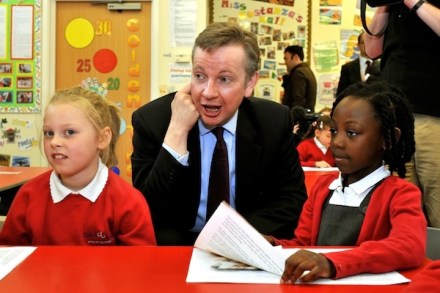
Michael Gove is vindicated by Ofsted – our brightest kids are being let down

From our UK edition

Ofsted has provided an independent boost for Michael Gove today. Just days after his plans to toughen up GCSEs were finally confirmed; a survey lambasts non-selective secondary schools for systematically failing thousands of bright children. Instead of challenging their abilities, Ofsted says the most intelligent pupils are being left to ‘tread water'. The numbers in the report back up these disturbing claims. After surveying 41 schools and observing 2,000 lessons, Ofsted says 65 per cent of high-attaining pupils at primary school failed to achieve an A* or A grade in non-selective secondary schools. A quarter of pupils (27,000) previously classified as high attaining did not achieve a B grade in GCSE English or Mathematics.