Sebastian Payne

Tim Loughton attacks ex-families minister Sarah Teather for having no children

From our UK edition

Tim Loughton has done his bit to fuel coalition tensions today. At the Conservative Renewal conference this weekend, the former children and families’ minister appeared to suggest Sarah Teather, the former Lib Dem families minister, did a poor job ‘because she didn’t produce one of her own’. As Matthew Holehouse reveals at the Telegraph, Loughton made the following remarks he has claimed were 'off the cuff': ‘I guess I have form...particularly since leaving the DfE as minister for children and families so made my pronouncement on family policy. It's not just that I have changed my mind when I was no longer minister. 'The person who was actually really in charge of family policy amongst the ministerial team at the DfE was Sarah Teather.

Lib Dem conference: Monday fringe guide

From our UK edition

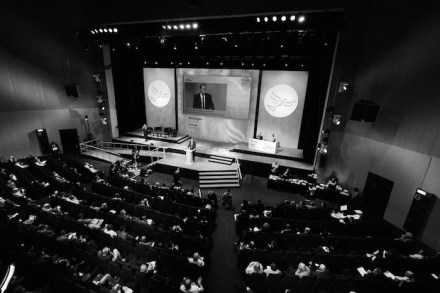
Every morning throughout party conference season, we’ll be providing our pick of the fringe events on Coffee House.  The Liberal Democrats’ conference in Glasgow has entered its third day and like yesterday, there are interesting sessions with key Lib Dem figures, MPs, MSPs and pollsters as well as plenty of interviews throughout the day: Title Key speaker(s) Time Location Auto Enrolment: its talked the talk, but can it walk the walk? Steve Webb 07:45-09:00 Crowne Plaza, Castle 3 Killing the zombies and raising the innovators Danny Alexander 07:30-08:45 Crowne Plaza, Jura Banking on growth: Are local banks the answer?

The Tories are facing a serious Ukip problem

From our UK edition

Is Ukip damaging the Tories in crucial marginal constituencies? As I wrote earlier this week, the next election is looking to be close, but there has been much speculation as to what extent Ukip will split the Tory vote. Could this unwittingly lead to a Labour victory? Lord Ashcroft has polled 40 of the most marginal Conservative seats (32 Labour targets and 8 Lib Dem) for the third time since the last election to try and answer that question. From today's snapshot, the answer is that Ukip pose a great electoral threat to the Tories.

Lib Dem conference: Sunday fringe guide

From our UK edition

Every morning throughout party conference season, we’ll be providing our pick of the fringe events on Coffee House.  Today is the second day of the Liberal Democrats’ conference in Glasgow and there is much more going on as the conference gets into full swing. Key Lib Dem MPs, ministers and party leadership figures are making appearances on a variety of issues throughout the day: Title Key speaker(s) Time Location Transport Q&A Norman Baker 09:15-10:15 SECC, Dochart 2 Greening the UK economy: challenges and opportunities Vince Cable 13:00-14:00 SECC, Alsh 1 Populism: have politicians got the message? Norman Lamb, Sarah Teather 13:00-14:00 SECC, Boisdale 2 4000%: Are payday loans ever in the consumer interest?

Lib Dem conference: Saturday fringe guide

From our UK edition

Every morning throughout party conference season, we’ll be providing our pick of the fringe events on Coffee House.  Today is the first day of the Liberal Democrats’ conference in Glasgow so the pick of the fringes is a little sparse to say the least. But some cabinet ministers will still be making appearances throughout the day: Title Key speaker(s) Time Location Action for Land Taxation & Economic Reform film showing and Q&A Vince Cable 13:00-14:00 SECC, Leven Jobs and apprentices Q&A Vince Cable and Jo Swinson 16.30-17.30 Alsh 1 A Million Jobs for a Stronger Economy rally Nick Clegg and Paddy Ashdown 18:30-19:30 SECC, Clyde Auditorium Green industrial policy: a contradiction in terms?

Not even Conservative MPs want to attend their own party conference

From our UK edition

Party conference season kicks off this weekend, but who is actually going? A ComRes poll out today suggests 38 per cent of Conservative backbenchers will be unlikely to attend their party’s annual gathering in Manchester. 14 per cent of Labour MPs have also stated they won’t be attending but thankfully for the Lib Dems, everyone polled said they would be probably or definitely be going: Why is this a particular problem for the Tories? In this week’s Spectator cover feature, Ross Clark examines the plight of all parties and their conferences.

Ed Miliband: weak, weird and out of his depth

From our UK edition

The next election is going to be close. Very close, according to new polling from YouGov. When asked which government they would prefer after the next election, 41 per cent said a Conservative government led by David Cameron compared to 40 per cent for a Labour government led Ed Miliband. This does not mean Miliband is gaining momentum. In July, Labour had a 13 point lead in YouGov polls. Today, it has more than halved to just six points. The Times puts this down (£) to the Labour leader himself. The polling suggests he’s seen as weak, out of his depth and weird. When asked for three words to describe the Labour leader, the top choices are: Not that Cameron comes off much better.

The View from 22: the end of political parties, RBS and Lib Dem conference preview

From our UK edition

Have political parties had their day? On this week's View from 22 podcast, Ross Clark and Fraser Nelson debate whether party conferences are now pointless, filled with lobbyists not members, and whether parties no longer have a purpose. Are we entering a post-party politics? What, if anything, can be done to fix the relationship between Britain's interest in politics and our parties? The Telegraph's Iain Martin also discusses the breakup of RBS with the publication of his new book Making It Happen this week. What did RBS fail in such a spectacular fashion? How strong was the Scottish connection to the financial crash? Was Fred the Shred entirely responsible? What role did Alex Salmond and Gordon Brown play in RBS' downfall?

Patrick McLoughlin: we don’t need HS2 for speed

From our UK edition

Finally, an HS2 argument from the government that isn’t entirely based on speculative forecasts or political positioning. The transport secretary Patrick McLoughlin has given a speech at the Institution of Civil Engineers this morning, taking on HS2’s growing number of critics. Of course, it wouldn't be a transport speech without some economic forecasts. The Department for Transport have released a new report from KPMG, suggesting the line will lead to a £15 billion annual boost to the economy. But the overall theme is about making the HS2 debate about capacity: ‘The reason we need HS2 isn’t for its speed…the benefits of faster journeys are easy to explain.

Deputy Speaker Nigel Evans resigns following sex charges

From our UK edition

The Conservative MP for Ribble Valley Nigel Evans has resigned as Deputy Speaker following an announcement he will be charged with offences including sexual assault, indecent assault and rape. The Crown Prosecution Service said in a statement this evening: 'Following an investigation by Lancashire police, the Crown Prosecution Service has received a file of evidence in the case of Mr Nigel Evans MP which concerns allegations of a sexual nature. 'After careful consideration, we have concluded that there is sufficient evidence and that it is in the public interest to prosecute Mr Evans. Lancashire Constabulary has therefore been authorised to charge two counts of indecent assault, five counts of sexual assault and one count of rape relating to a total of seven alleged victims.

Who donates what to the Labour party?

From our UK edition

Who donates to Labour? It’s a question asked countless times since Ed Miliband began to reconsider his party’s links with the trade unions but there has been much confusion over the numbers, in particular the importance to Labour of union funding. Here’s a quick guide to who donates how much to the Labour party. 1. How much do Labour receive in donations? In 2012, Labour received £19 million in donations, which is roughly the same as the year before and in 2008, a similar point in the electoral cycle. It’s still down from £25 million at the last general election: For comparison, the Conservative party received £14 million in 2012 and the Liberal Democrats £3 million. 2. How much do the trade unions donate?

Scottish voters don’t like independence, their Parliament, what it does or the leaders

From our UK edition

What do Scottish voters think about the Scottish Parliament? Nothing particularly pleasant, according to Lord Ashcroft’s latest polling. The Tory peer has asked 12,000 Scots over the last few months what they think about their Parliament, the work it undertakes, its leaders and the notion of independence. The resulting picture isn’t a very happy one. Firstly, the role of the Scottish government. Just 14 per cent claim to have a ‘very good idea’ of how power is divided up between Holyrood and Westminster, while 40 per cent claim to have ‘very little idea’. Just over half think  Scottish Parliament elections are of equal importance to Westminster and 18 per cent believe it is more important.

David Cameron’s Small Island songs

From our UK edition

In response to some snarky comments from Russia about Britain, the Prime Minister has just released this bizarre statement on his Google+ page about how he feels about our country: 'Britain may be a small island, but I would challenge anyone to find a country with a prouder history, a bigger heart or greater resilience. 'Britain is an island that has helped to clear the European continent of fascism - and was resolute in doing that throughout World War Two. 'Britain is an island that helped to abolish slavery, that has invented most of the things worth inventing, including every sport currently played around the world, that still today is responsible for art, literature and music that delights the entire world.

The View from 22: Obama’s zigzagging path to war and Cameron’s tiff with his MPs

From our UK edition

What is behind Barack Obama's wobbly approach to Syria? In the latest View from 22 podcast, former US State department official Colleen Graffy and the Spectator's Douglas Murray discuss Obama's latest manoeuvres in Washington and whether the American people still have an appetite for going to war with Syria.  What will happen when the issue hits Congress next week? James Forsyth and Isabel Hardman also discuss how the developing Syria situation has affected the political landscape in Westminster. Are Conservatives feeling disgruntled with their party leadership over the disastrous vote? What can we expect to see from the main parties in the next few weeks before party conference season? Have Labour regained the ground they lost over the summer?

The role of technology is changing in classrooms – and independent schools are leading the way

From our UK edition

Ah, happy memories of the 1990s classroom. The flicker of the CRT screen; the interactive whiteboard; the screeching from the dial-up internet modem; the frantic searching for the Encyclopedia Britannica CD-Rom. These images are now as archaic as the blackboard and the slide rule. Gone are the boxy computers under a dust sheet in the corner. They’ve been replaced by hordes of gadgets, now mostly in the hands of the pupils. Walking into a classroom today is like visiting an Apple Store. The role of technology in schools has evolved in three phases. It all began in the 1980s with the arrival of the BBC Micro and the affordable personal computer. These shiny wonder machines provided useful diversion for excited pupils and confused teachers.

How can Labour respond to the rapid rise and popularity of free schools?

From our UK edition

As the new school year begins, the Department for Education has announced 93 new free schools are opening — more than double opened last September — creating 46,000 new places. With a total of 174 free schools now open, the evidence suggests Michael Gove's free school programme is taking off. This is how many have opened since the election: But though free schools are flourishing, there's still a squeeze underway.

Could making Whitehall smaller, better, faster, stronger save £70 billion?

From our UK edition

The government could save £70 billion from the Whitehall spending bill by moving into a new digitised age. That's the gist of a new report from Policy Exchange, detailing the amount of archaic waste that exists in the civil service. Some of the examples in the Smaller, Better, Faster, Stronger report are astounding — the Crown Prosecution Service prints one million sheets of paper every day. Two articulated lorries loaded with letters and paperwork drive into the DVLA every day. Policy Exchange suggests many of these wasteful paper-based services could be taken to a central online location, aka the GOV.UK website. Bringing the government’s online presence into once place has been divisive.