Sebastian Payne

The Spectator app arrives on Kindle Fire

From our UK edition

The digital evolution of The Spectator continues apace and I’m delighted to announce our new app for Android. It is due to popular demand: after listening to your feedback, we decided our first priority was to have an app for owners of the Kindle Fire, Fire HD and Fire HD 8.9". Like our popular iPad and iPhone editions, we’ve taken the same approach to create an elegant easy to use Android edition that mirrors the print edition of the magazine. Also like our iOS app, you receive one month absolutely free when you subscribe to our monthly or annual plans. Alternatively, you can purchase individual issues with a 30 per cent saving on the news stand price. The Spectator Magazine for Android is available now through the Amazon App Store.

Welcome to Ukipland: where Nigel Farage’s dreams come true

From our UK edition

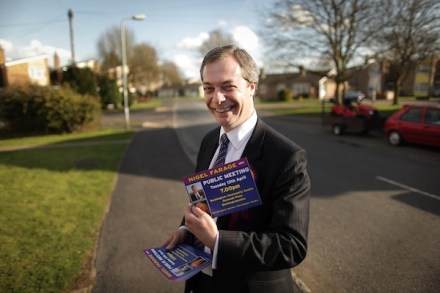
‘Where do you expect to do well in these local elections?’ I asked the Ukip spokesman. ‘England!’ he boomed down the phone. On Wednesday afternoon, this seemed typical of Ukip's bullish exuberance but judging by their predicted ‘phenomenal performance’ parts of Britain (like Boston) have become Ukipland overnight. Yesterday, I went to find some real Ukip voters in the Home Counties and discover why they have abandoned the three main parties. Nigel Farage stood in Buckingham at the 2010 general election and received just 17 per cent of the vote against Commons speaker John Bercow.

The View from 22 — Ukip vs Westminster, Ukip vs the Tories and intervening in Syria

From our UK edition

Is UKIP a bunch of fringe lunatics, or a party ready to shake the establishment to its core? In this week's Spectator cover feature, James Forsyth examines the Ukip mission and Nigel Farage's plan for dominating the political landscape. On the latest View from 22 podcast, James reports in from South Shields on how Farage is being received on the stump, how the party is coping with growing into a serious force and what to expect in this week's local elections. Someone who certainly doesn't think they should be ignored is James Delingpole.

Ed Miliband faces calls to remove Ken Livingstone from Labour NEC after ‘disgusting’ remarks

From our UK edition

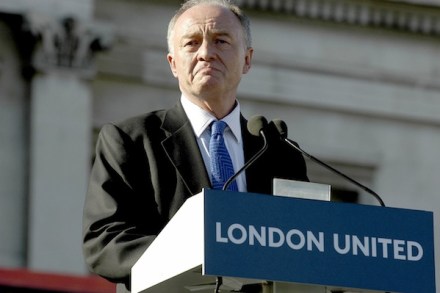
Ken Livingstone’s remarks about the motives of the Boston bombing suspects have been widely condemned for suggesting that American foreign policy ‘fuels the anger’ that drove such young men into acts of terrorism. Tory chairman Grant Shapps has demanded the former Mayor of London apologise for causing offence: ‘These are irresponsible, insensitive and thoughtless comments which show why Ken Livingstone is not fit to hold public office. He should unreservedly apologise for the distress he has caused’ Brooks Newmark MP has gone one step further and written to Ed Miliband this afternoon, asking the Labour leader to also condemn the remarks and remove Livingstone from Labour’s National Executive Committee.

The View from 22 — Sex and success, Conservative vs. Labour unity and the two-wheeled tyranny of cyclists

From our UK edition

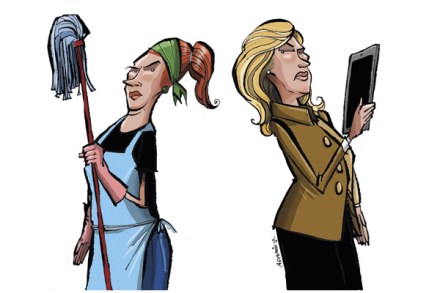
What do Margaret Thatcher, Sheryl Sandberg and Angela Merkel have in common? They are the ultimate alpha-female icons, according to Alison Wolf. In this week's Spectator cover feature, Alison examines the ultra-competitive female elites who are pulling ahead and leaving the rest of the 'sisterhood' behind. On this week's View from 22 podcast, the Spectator's deputy editor Mary Wakefield discusses with Alison what makes an alpha female, why they are only interested in alpha males and how feminism is response for this new divide. Melissa Kite and Gary Lingard also debate whether the world now revolves around cyclists. In this week's magazine, Melissa argues that beautiful country paths should stop be turned into tarmac cycle routes.

The View from 22 — Margaret Thatcher’s secret Kremlin files, remembering her funeral and the Boston bombings

From our UK edition

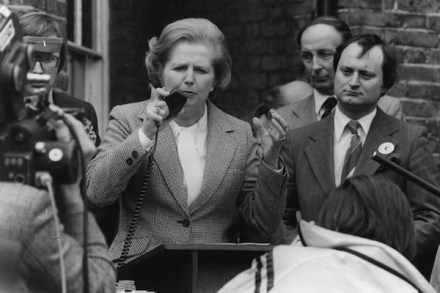
Were Margaret Thatcher's relationships with foreign leaders as straightforward as they appeared to the public? In this week's Spectator cover feature, Pavel Stroilov provides a special insight into one particular relationship — Mikhail Gorbachev. Stroilov reveals the official Kremlin records of what Thatcher said to Gorbachev behind closed doors. On our View from 22 podcast, Thatcher biographer and advisor Robin Harris analyses her foreign policy legacy with Fraser Nelson, examining her relationship with world leaders, the personal and political differences that existed and the lessons the world today can take from her.

Andrew Neil discusses Margaret Thatcher’s funeral

From our UK edition

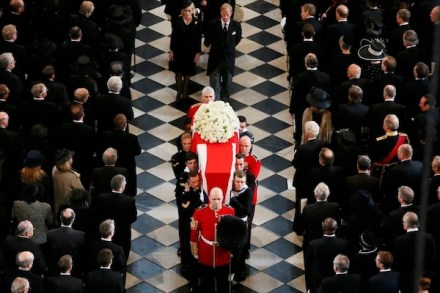
In tomorrow's View from 22 podcast, BBC presenter and Spectator chairman Andrew Neil discusses attending Margaret Thatcher's funeral, the significance of the event in British history as well as his personal encounters with the former Prime Minister. We're delighted to bring you the interview below. Subscribe to the View from 22 here to receive the whole episode first thing tomorrow morning, featuring Baroness Thatcher's biographer Robin Harris and Spectator editor Fraser Nelson on the lesser known side of her foreign policy.

Exclusive: George Osborne on GOV.UK winning Design of the Year

From our UK edition

One of the government’s lesser known reforms, the GOV.UK website, has just been named as the 2013 Design of the Year. Before the coalition, the public sector was represented online by nearly 1,000 websites. Under the auspices of the Government Digital Service — a newly recruited band of nerds based outside of Whitehall — GOV.UK has been an attempt to reboot the government’s web presence with a slicker site under a single unifying brand. This award suggests that the project has been a success. Up against tough competition from the Shard and Olympic cauldron, the win is a triumph for the GDS.

No battle at Trafalgar in the name of Margaret Thatcher

From our UK edition

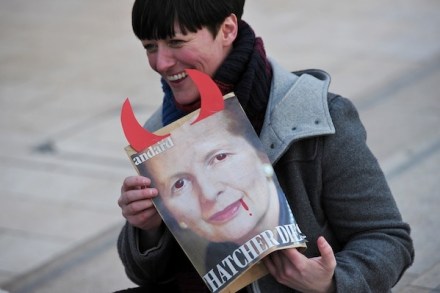
Ever since the Poll Tax riots and Margaret Thatcher’s exit from Downing Street, the Iron Lady’s most fervent opponents have been talking about how they'd descend on Trafalgar Square the first Saturday after her death. Although a washout only in the literal sense, last night's ‘celebration’ to mark the end of Thatcherism was nothing like the carnage of the 1990 protest. The crowd consisted of the usual few troublemakers, bemused observers, hurt miners and the anti-everything brigade. At the gathering’s peak (~7:30pm) roughly 2,000 seemed to be present: Like the impromptu Brixton party, on which I dropped in earlier this week, many of the attendants were simply there to mess about and have a party. Dancing, drums and drink were in copious supply.

The difficult legacy of Margaret Thatcher in Sunderland

From our UK edition

Margaret Thatcher remains a truly hated figure in the north of England. The 1984 Miners' Strike and retrenchment of the shipyards had a phenomenal social impact which has pretty much written off a generation (or more) of voters for the Conservative party. Sunderland makes a good case study of the challenges faced by Tories in the wake of Thatcherism. As this anecdote from a Tory activist on the stump highlights, voters in the neck of those woods seem unable to forgive her: "I met a man in his mid 60s from Morton. He started to call Thatcher all the names under the sun for no apparent reason -- I had not remotely mentioned her — and said that the "only thing that f***ing woman had ever done for me was let me buy my council house and my British Gas shares".

The View from 22 — Francis Maude and Liz Truss on Margaret Thatcher

From our UK edition

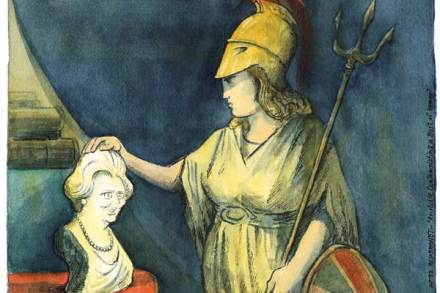
How does Margaret Thatcher's legacy impact Tory MPs today? This week's Spectator magazine contains a 16-page supplement considering the premiership of Baroness Thatcher, both high and low points. On this week's View from 22 podcast, Francis Maude debates whether Thatcher was the original moderniser. One of the few ministers to serve under both Thatcher and David Cameron, Maude offers his insights into what Thatcher thought of the present-day Tory party, why she actually avoided some particular battles, and how she is seen by the Prime Minister, who Maude suggests is completing the Thatcherite project. The Children and Families minister Liz Truss — a self-proclaimed Thatcherite — also joins us to discuss what the 2010 intake of Tory MPs think about Margaret Thatcher.

Introducing our first ebook: Margaret Thatcher in The Spectator 1975-1990

From our UK edition

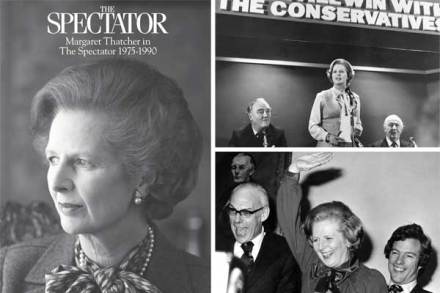
No publication understood the Thatcher project better than The Spectator. We backed her for the leadership in 1975 when no other national publication would. We understood her opportunities, foibles and genius when many of our rivals were baffled by this coarse-sounding lady and her popular appeal. We have put together 21 essays from the period into our first-ever ebook: Margaret Thatcher in The Spectator 1975 - 1990. It's available today on the Kindle, for just 99p. It begins with Patrick Cosgrave advocating Thatcher as Tory leader, then gives a six-month and one-year progress report. Ferdinand Mount describes the uneasiness that followed the 1979 triumph. Then, as now, The Spectator was no a Tory fanzine and we gave vent to critical voices.

An alternative reaction to Margaret Thatcher’s death

From our UK edition

On my way home last night, I dropped by Windrush Square in Brixton to observe an alternative reaction to Baroness Thatcher’s death. It was easy to find the party simply by following the cacophony. Around 200 people turned out to engage in a cold evening of drinking, dancing and heckling. Three competing sound systems blasted music against occasional shouts of 'Maggie Maggie Maggie, dead dead dead'. Was the crowd attempting to make a serious point or was it just an excuse for a drunken party? These pictures should give you an impression of the impromptu event: Ironically from what I could see, many in the crowd appeared rather too young to remember Thatcher: some looked too young to have even been alive when she was in power.

The View from 22 — North Korea and Asia’s arms race, and Owen Jones vs. Toby Young

From our UK edition

Are Iain Duncan Smith's welfare reforms necessary to bring fairness to our benefits system? This week's Spectator leading article argues the work and pensions secretary returned to front-line politics for one reason only — to end the present waste of human potential. Author and Independent columnist Owen Jones disagrees; he debates with our associate editor Toby Young on this week's View form 22 podcast (10:38). Will IDS' reforms radically change the welfare system for the better? Is the government striving for more or less equality? And will the coalition's legacy stand up to closer scrutiny from the left at the next general election? Clarissa Tan discusses her cover feature on Asia's arms race (0:41).

To Save Everything, Click Here, by Evgeny Morozov — review

From our UK edition

Technology may not have taken over the world, but it is making quite good progress in taking over our lives. Thirty years ago, receiving a phone call was the height of communication stimulus. Now, we are programmed to expect several emails an hour and can become anxious if we don’t receive them. It’s worse than a bad habit. Scientists suggest the constant distractions offered by technology have even altered the chemical balance in our brains. The information revolution has made us more connected, switched-on and informed than ever before. Thanks to near-universal access to the internet, humans can access almost every piece of knowledge accumulated by mankind in the blink of an eye.

Fifty years on from Beeching and Britain’s railways are better than ever

From our UK edition

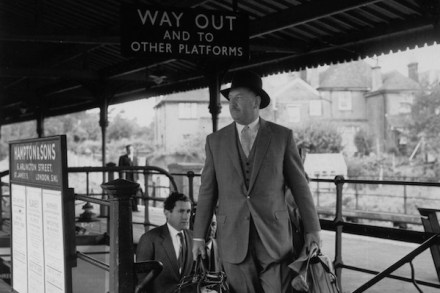
On 27 March 1963, ‘The Reshaping of British Railways’ was published. Better known as the Beeching Report, the paper was a seminal moment for Britain in the twentieth century. Dr Beeching’s report (and subsequent axe) recommended the closure of 5,000 miles of tracks and 2,363 stations, with 67,000 jobs lost. Most of Beeching’s initial suggestions were eventually implemented and our railways were changed forever. Beeching is still a controversial figure. The trade unions, then and now, paint him as a mad axeman who destroyed a noble institution and the livelihoods of thousands of railway men. No wonder one ‘Dr B. Ching’ is still lampooned in Private Eye every week. But serious reforms were needed.

Could a digital and more transparent NHS prevent another Mid Staffs scandal?

From our UK edition

Digital politics is all the rage. Take what Rachel Sylvester described in today’s Times as ‘digital Bennism’ — an online movement that is becoming increasingly influential to the Labour party’s campaign methods. And in the forthcoming Spectator, I’ve a piece discussing why policymakers are adopting internet-centric ideals to challenge the traditional way of doing things. The government’s digital ventures were discussed at Policy Exchange this afternoon. Rohan Silva — David Cameron’s senior policy advisor — said the government’s digital work is the ‘most radical thing people haven’t heard of’.

‘Small-scale’ bloggers hear the chimes of freedom

From our UK edition

Bloggers of the United Kingdom rejoice - an exemption from the all-new press controls looks to be on the way. We are waiting today to see if any of the amendments tabled on Friday will pass but the Financial Times reports (£) that cross-party talks over the weekend will result in a successful amendment on blogging: 'Tri-party talks took place over the weekend to agree a wording for an amendment to the crime and courts bill which will be discussed in the House of Lords on Monday.' At some point, that is. The amendments are being considered in the Lords right now but there has been no sign of anything from the government.

It’s down to the House of Lords to save the bloggers

From our UK edition

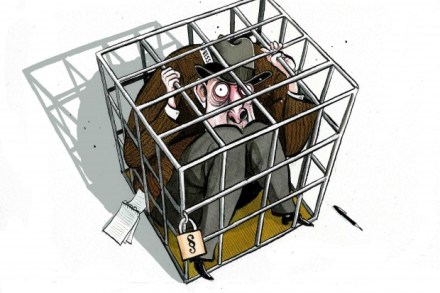
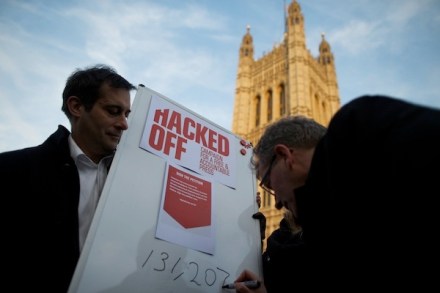
On Monday, Parliament will decide the future of blogging in this country. As the government's press regulation proposals stand, blogs big and small would come under the new press regulator. This would make bloggers liable for significant compensation sums (aka exemplary damages), fees for joining the regulator as an ‘associated member’ (newspapers join as full members) as well as for increased legal costs. While the proposals could send bloggers rogue, to host their sites abroad and out of Parliament's jurisdiction, others who can’t face the hassle may decide to close down. The problem stems from Leveson’s lack of concern for (or understanding of) the Internet. His report devoted just one page to the Internet.