Sean Thomas

Sean Thomas

Sean Thomas is a bestselling author. He tweets from @thomasknox.

It’s time to get rid of your pet

From our UK edition

Around the tolerant British dining table, there are few opinions which will see you shunned, instantly. ‘Bring back the birch’ might be one, unless you’re supping with someone who recently had a bike stolen. ‘Xi Jinping has really good hair’ will certainly silence people. However if you say ‘keeping pets is usually wrong, especially cats and dogs’, I can guarantee universal rejection. Still, the point needs to be repeated – not least because we have new, disturbing evidence of the damage these pets are doing: to the environment. Fluffy may not look like an ecological supervillain, but I am afraid it is the case That evidence comes in the ongoing collapse in British insect life.

Why is Britain so ugly?

From our UK edition

Family holidays always carry a risk of dismaying revelations. Suddenly you are thrust together, 24/7, over many days, in a way only matched by Christmas (which is equally perilous). And so it was that, after ten days of driving around Provence and Occitanie, from Arles to the Camargue to the mighty Gorges of the Tarn, my older daughter this week suddenly said: ‘Why is Britain so hideous?’   The outburst was clearly prompted by the comparative beauty of France. My daughter is 18 and her only prior experience of France was grey wintry Paris in a boring school trip, so she was probably expecting more of the same dreariness.

Avant garde is boring

From our UK edition

Of all the places to witness the circus parade of modern French history, you can do a lot worse than the tiny town of Espalion, in the beautiful department of L’Aveyron, in the south of France. Because there are few destinations more unchanged than L’Aveyron, and this extremely French place is where I saw the opening of the French Olympic Games, in an al fresco brasserie. And this is where I sensed a weird unease. No one booed, no one catcalled, no one mocked. They sat there, sipping cold bière, and at times they vehemently cheered and laughed. Yet they also appeared a touch confused, and, I suspect, this is because they thought – like the rest of the world – ‘this is quite often a load of bollocks’.

Keep Michelin men out of our hotels!

From our UK edition

It’s probably escaped most people’s attention, what with the football, the election, the Ukraine war, the horrors of Gaza, the assassination attempt and the revelation that the most powerful human on the planet has the intellectual sharpness of a daffodil. But in the past few weeks, the world of travel has been roiled by a surprising innovation: Michelin stars for hotels. Though the stars are stylised as ‘keys’. This may not seem like big pommes de terre, but it is quite important. Because, if the concept takes off and hotels start striving for Michelin accolades, then we can expect the best and most ambitious to go the same way as Michelin-mad restaurants. And that will be bad. You could argue it shouldn’t be a problem, as hotels already have star ratings.

My day in Le Pen land

From our UK edition

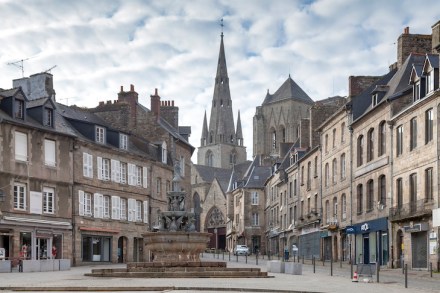
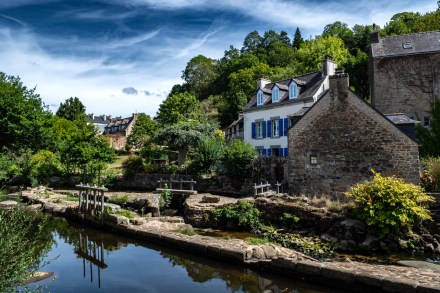
At first glance, for the visitor driving by, Guingamp in northwest Brittany looks idyllic. It is a typically lovely stone-built French small town, it has a sweet river running through the middle, it has pretty ramparts and a ducal chateau and riverbank gardens, with agreeable new fountains in the centre. It even has a decent-sized supermarket open on Sunday. In Guingamp, on a dead Sunday afternoon, I somehow felt more uneasy than I did in war-torn Ukraine At least it did last Sunday, the first French election day, when I paid a visit. The difference for me is that – unlike most trippers – I didn’t breeze on after a peek at the historic watermills. I lingered.

Why the French are so pessimistic

From our UK edition

I am sitting in a little bar overlooking the jaunty marina of Trinité-sur-Mer, on the opulent south-east coast of Brittany. My Kir Breton is cold, fizzy, sweet and rubescent. Everyone around me is swigging Sancerre and cidre as the sun slowly nods below the green, southerly Celtic hills. The water glitters, the pretty people parade, the douceur de vivre is palpable. If you look at what has happened to Paris and Marseille, you can see how this can easily go wrong, how France’s good fortune can be squandered I've been here in Brittany five days, having got the ferry over from Portsmouth. And, quite frankly, the difference in life quality has been stark.

Katy Balls, Gavin Mortimer, Sean Thomas, Robert Colvile and Melissa Kite

From our UK edition

31 min listen

On this week’s Spectator Out Loud: Katy Balls reflects on the UK general election campaign and wonders how bad things could get for the Tories (1:02); Gavin Mortimer argues that France’s own election is between the ‘somewheres’ and the ‘anywheres’ (7:00); Sean Thomas searches for authentic travel in Colombia (13:16); after reviewing the books Great Britain? by Torsten Bell and Left Behind by Paul Collier, Robert Colvile ponders whether Britain’s problems will ever get solved (20:43); and, Melissa Kite questions if America’s ye olde Ireland really exists (25:44).  Presented by Patrick Gibbons.

The day I met a sun priest

From our UK edition

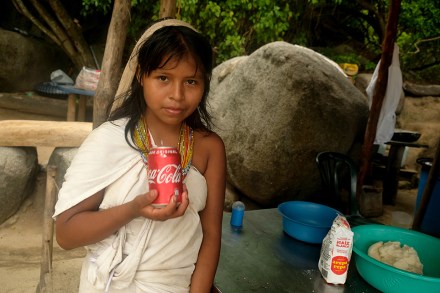
Palomino, Colombia I’m in a truly wonderful place: the Caribbean coast of Colombia. It’s got more bird species than most of Europe, exquisite cotton-top tamarin monkeys that hop through jungles, and one of the world’s highest coastal mountain ranges. There are empty beaches, shimmering lakes, colonial townscapes and a recent folk memory of terrible gangsters. Some male babies are largely kept in caves from birth, in the darkness, until they are nine  It also boasts several indigenous tribes, one of which – the Kogi – I had never heard of until I got here. But the more I read about them from my hammock on the beach, the more I become determined to encounter them – and to talk to one. A Kogi. Why? Because they are so strange.

The forgotten forests of Italy

From our UK edition

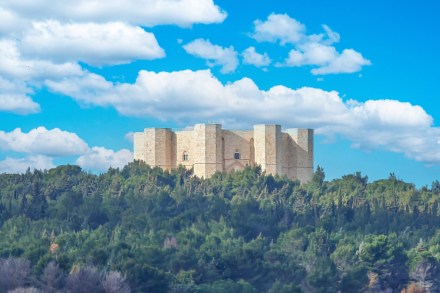
Everyone knows that Italy is a boot. Many people know that the boot has a heel – the rocky, sunburnt region of Puglia. Perhaps a few know that the heel has a spur – the Gargano Peninsula. Yet virtually no one knows that the Gargano hides a magical woodland – the Foresta Umbra – a national park and treasure. And one of a dozen or more Italian parklands that are practically unvisited by foreign tourists.

AI will change everything – so why is the election ignoring it?

From our UK edition

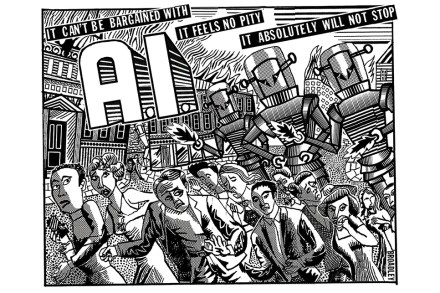
Imagine if you somehow knew a war was coming in the next few years. Imagine if you knew this war would change societies, transform economies, and possibly even endanger humanity. Now imagine Britain held a general election, with that certain knowledge of imminent turmoil, and no one mentioned it, and instead the politicians waffled on about stealth taxes, low traffic neighbourhoods, and making energy drinks harder to obtain for children aged 15 and 3/4. Not only is this raging silence insane, it is bizarrely, recklessly irresponsible That would be mad, right? And yet that is what we are doing in Britain today, in regards to the looming revolution that is Artificial Intelligence. We are simply not talking about it.

The Farage factor

From our UK edition

45 min listen

This week: The Farage factor. Our cover piece looks at the biggest news from this week of the general election campaign, Nigel Farage’s decision to stand again for Parliament. Farage appealed to voters in the seaside town of Clacton to send him to Westminster to be a ‘nuisance’. Indeed, how much of a nuisance will he be to Rishi Sunak in this campaign? Will this boost Reform’s ratings across Britain? And could it be eighth time lucky for Nigel? The Spectator's political editor Katy Balls joins the podcast to discuss, alongside former Clacton and UKIP MP, Douglas Carswell (2:32).Then: Gavin Mortimer reports from France ahead of the European and local elections this weekend, where the country is moving to the right.

Tourists are the new pariahs

From our UK edition

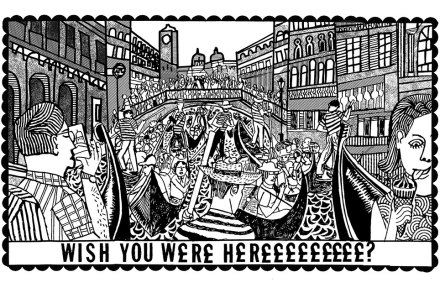
Think of Majorca and what do you picture? Maybe it is elegant tapas bars in the Gothic quarter of Palma, full of yachties and foodies from across the world. Maybe it is literary pilgrims trekking to the house of Robert Graves or noisy parties of Brits and Germans, squabbling over sunbeds in Magaluf. In one Japanese town, residents have erected a screen to block a much-prized view of Mount Fuji Any which way, what you picture is tourists. Lots of tourists. So many tourists that the reality of Majorca as an authentic place is quite obscured, invisible under the weight of visitors. And if you think that sounds bad, so do the Majorcans, which is why they are finally – perhaps belatedly – rebelling.

Sick of Cornwall? Visit Cornouaille

From our UK edition

I am Cornish. Indeed I am so Cornish my sister lives about three miles from where my echt Cornish ancestors lived in the 13th century (near Falmouth), and my mum makes working-class Cornish recipes so obscurely Cornish most of the Cornish have barely heard of them (‘date and lemon pie’). As such, I am pretty fond of the place, and I like to go back as much as I can. Except in summer, when it’s crowded. And increasingly May. Or September. Or October. Or the rest of autumn. And Christmas, And Easter. And New Year. And any weekend at any time, ever.

Sam Altman is not evil

From our UK edition

It’s a classic trajectory. You start as a likeable and geeky tech tyro, you morph into a squillionaire with disagreeable habits, and somewhere on the way you become loathed by large sections of the population.  It happened to Bill Gates – remember when he was an amiable nerd making glitchy but intriguing software? Now he is a mogul apparently injecting us with nanobots. Look at the career of Elon Musk, once a move-and-break-things hero sending amazing jets into the sky. Now he’s the brooding Trumpite Satan, who has supposedly turned Twitter into a fascist hellhole. Steve Jobs of Apple nearly went through the same process, but avoided it by the devious means of dying too young. Now the same evolution seems to be happening to OpenAI CEO Sam Altman.

No tips please, we’re British

From our UK edition

I hate tipping, not because I am intrinsically mean but because of the anxiety it induces. You pitch up at some glam hotel, after a gruelling flight, then the guy next to the concierge takes your bags to your room, and, as you go, you fumble in your pockets, searching for the mysterious notes and coins, even as you try to estimate the right amount to tip the porter. Tipping is yet another toxic byproduct of America’s tragic past and should be treated like an invasive species This is a complex equation at the best of times, as it involves so many imponderables: the state of the local economy, the likely wages hereabouts, the emotionally correct sum to give – not insultingly little but not so much that you look like an oligarch.

AI is coming for artists

From our UK edition

It’s a famous theme in science fiction: the idea that, one day, humanity and the thinking machines will somehow go to war. It’s the narrative spine of The Terminator films. It’s implied in 2001, A Space Odyssey. You can find it in Neuromancer, The Hyperian Cantos, Ex Machina, The Creator and I, Robot (the Asimov stories and subsequent film). In one of the fundamental texts of sci-fi, Frank Herbert’s Dune, this apocalyptic conflict is given a name: the ‘Butlerian Jihad’. Personally, I’ve always dismissed the concept of Butlerian Jihad as fanciful, even as I accept that Artificial General Intelligence – machines as smart as the best of us – is coming at us fast. And yet in recent weeks I’ve started to wonder.

Sean Thomas, Kara Kennedy, Philip Hensher, Damian Thompson and Toby Young

From our UK edition

35 min listen

On this week’s Spectator Out Loud: Sean Thomas worries that Paris has lost some of its charm (1:21); Kara Kennedy reports on US-style opioids arriving in Britain (8:43); Philip Hensher describes how an affair which ruined one woman would be the making of another (15:32); Damian Thompson reflects on his sobriety and his battle with British chemists (23:58); and, Toby Young argues a proposed law in Wales amounts to an assault on parliamentary sovereignty (29:26). Produced and presented by Patrick Gibbons.

Paris, city of blight

From our UK edition

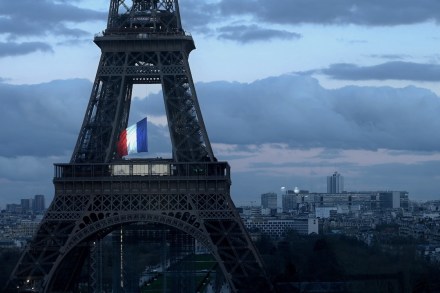
You know that feeling when you haven’t seen someone for several years and when you do, you really notice the changes? Generally it is a melancholy moment: you spot the extra wrinkles, the added pounds. Occasionally it can be positive: gym-toned physique, amusing new green-and-orange hair. Lots of us had these moments as we emerged, blinking and bewildered, from the bunker of Covid. I’ve just had this same experience, but with a city. Paris. The French capital is a place that I know well. I must have visited a dozen times over the decades. I’ve seen the Louvre Pyramid go up, I’ve seen Notre-Dame go down in flames (on TV, in a horrified airport in Vegas). But I have not been to Paris since before the pandemic, so I was keen to check out how the old girl was doing.

Why we love hideous food

From our UK edition

I’m sitting on a stone terrace in the winsome south Breton port of Sainte Marine, which oversees France’s prettiest river (the Odet), and I’m excitedly tucking into a dozen gleaming Morbihan oysters. I am doing this partly because I am writing about travel in Brittany and oysters are very much part of the package here – you come to Brittany, you must consume oysters (also cake, cider, biscuits, tinned sardines and chunky buckwheat crepes). But I’m also eating oysters because I really love oysters. The idea is bad, the texture is worse – slimy, crunchy feathers and bones At this point I imagine a reasonable percentage of Spectator readers will be wincing. Because oysters are a divisive issue.

Why is Latin America so violent?

From our UK edition

As locations go, they don’t get more humdrum than the address ‘Carrera 79B, #45D/94’. It is so anonymous it sounds encrypted. Nor, in reality, does it look like anything special: a flat roof, next to a shuttered language school, above a wall of graffiti, in a lower middle-class suburb of another Spanish speaking city. But then you notice the razorwire surrounding the nearby boutique. The armed guard outside the local bank. And you remember why this address, in the inner suburbs of Medellin Colombia, is notorious: this is where fugitive cocaine warlord Pablo Escobar was finally shot by cops in 1993 as he tried to flee across that roof.  Native American empires were bizarrely cruel – even before the Europeans arrived Knowing that, everything looks different.