Sean Thomas

Sean Thomas

Sean Thomas is a bestselling author. He tweets from @thomasknox.

It’s not just DeepSeek, all AI is censored

From our UK edition

There are multiple reasons to be fascinated by DeepSeek, the Chinese AI chatbot that debuted last week, knocking Donald Trump off the headlines and $1 trillion off the US stock market. For a start, it represents yet another remarkable leap forward in the race to artificial general intelligence – which looks likely to arrive this decade, maybe this year. Brace. A second reason to gaze with intrigue at DeepSeek is the mysterious way it arrived. Was it really made for a mere six million bucks, as they claim? Or did they cut corners and steal the IP of ChatGPT, as OpenAI is alleging? If they did, it is quite the irony, as OpenAI itself is right now in court for chewing up the entire internet, copyright be damned, to feed its own ravenous bot.

Has Donald Trump saved the world?

From our UK edition

Like the definition of an old man in a hurry, since his inauguration Donald Trump has been pumping out orders and vetoes like Lieutenant Kilgore summoning napalm strikes in Apocalypse Now. Such has been the shock-and-awe of his legislative blitz, some of Trump’s less newsworthy diktats have gone nearly unnoticed. But hidden away in one White House document, dated January 20 2025, and titled ‘INITIAL RESCISSIONS OF HARMFUL EXECUTIVE ORDERS AND ACTIONS’ is a policy switch that might save us all. You have to scroll down the list of ‘harmful’ executive orders made by Biden – now being rolled back – to get to this jewel.

How Eastern Europe is leaving Western Europe behind

I'm in the tiny riverside town of Virpazar, in the little Balkan country of Montenegro; and under the white geisha face of a late summer moon I am warily ordering the celebrated local delicacy. It is carp — caught from the nearby, slivovitz-clear waters of Lake Skadar (biggest lake in the Balkans!). But what makes me wary is the preparation. The carp is apparently marinated, and served cold, with boiled potatoes and greens. Cold slimy fish with hot spuds and spinach? It sounds like some nightmare culinary “specialty” from the old communist bloc (of which Montenegro was once a part, within Yugoslavia). I’m veteran enough to remember a few of these. “Famous” flatbreads that came with rancid lard.

Eastern

The town that inspired One Hundred Years of Solitude

From our UK edition

The homes of famous writers are disappointing. Often, you see the famous desk, and that’s about it. There are exceptions: for example, Pushkin’s home in St Petersburg is interesting because they have the blooded waistcoat he wore during his fateful duel. Hemingway’s house in Cuba is intriguing because it is so macho – pistol, rifles, leather everywhere – you conclude he must have been secretly gay. Sadly, I can report that the home of Gabriel García Márquez in remote little Aracataca, in Colombia, is predictably disappointing. They don’t even have the desk. They’ve got the bed where he soiled his nappy – allegedly his first childhood memory – and half a kitchen. A visit takes ten minutes, as does a tour of his tedious hometown. https://youtu.be/4oQeQR1DEjw?

Red lights and shinto rites in Osaka

From our UK edition

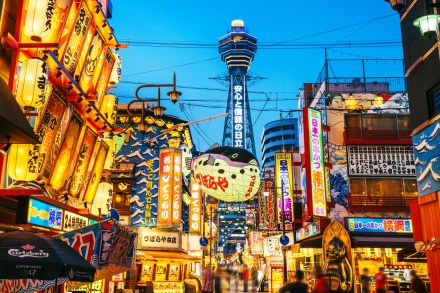
It gets somewhat forgotten, Osaka. On the bamboo-and-tatami trail of Japanese sites, this ancient port, fort and conurbation at the very heart of Japan commonly misses out on foreign visitors: as everyone rushes from Tokyo to Kyoto, from sacred Mount Fuji to ancient Nara to haunted Hiroshima. For most overseas tourists, Osaka is just a fleeting stop on the Shinkansen high-speed trains – a glimpse of another sprawling Japanese city with bland, utilitarian housing. The edgiest place in Osaka is about as dangerous as the Cotswolds The Japanese themselves know otherwise. They flock to the city because they revere its pivotal history – Osaka was Japan’s archaic imperial capital, back in the 4th to 7th centuries – and they celebrate its epochal sites.

Alexandra Shulman, Sean Thomas, Matthew Parris, Adrian Dannatt and Philip Hensher

From our UK edition

34 min listen

On this week’s Spectator Out Loud: Alexandra Shulman reads her fashion notebook (1:13); Sean Thomas asks if a demilitarised zone in Ukraine is inevitable (6:02); Matthew Parris argues against proportional representation (13:47); Adrian Dannatt explains his new exhibition Fresh Window: the art of display and display of art (21:46); and Philip Hensher declares he has met the man of his dreams: his Turkish barber (28:17).  Produced and presented by Patrick Gibbons.

London is getting worse

From our UK edition

A famously elitist members’ club, a 900-year-old meat market, and a traditional old barbershop may not feel like they have much in common. In fact, they didn’t – not until the last week or two, when they all simultaneously closed in their disparate parts of London. The first closure, that of the Groucho Club, has been widely covered in these pages, generally with an overtone of chortling. After all, it is hard to feel sorry for a place that is notoriously exclusive, boasts a world-class art collection, and charges members £1,500 a year for the privilege of eating near a Damien Hirst – or indeed eating near Damien Hirst.

Is Ukraine heading towards a Korean-style demilitarised zone?

From our UK edition

It is the strangest place, the demilitarised zone (DMZ) that separates South Korea from North Korea. It is simultaneously a historic battlefield, a sombre graveyard, a tourist honeypot full of coach parties from Seoul, and a Cold War frontier, hotly defended on either side. One minute you are looking at a kiddies’ funfair, or a shop that sells ‘souvenir North Korean money’, the next you are staring at endless barbed wire and monuments to failed North Korean defectors, shot dead as they attempted to cross the two-and-a-half-mile strip of landmines. Which itself has turned into an Edenic eco-haven, full of deer and eagles, as the humans have vanished.

Are you ready for agentic AI?

From our UK edition

It’s an interesting and unusual word, agentic. For a start, some language enthusiasts dislike it as a mulish crossbreed of Latin and Greek. Also, its etymology is obscure. It appears to derive from 20th-century psychology: one of its first usages can be found in a study of the infamous 1960s Milgram experiments at Yale University, when volunteers were persuaded to electrocute, with increasing and horrible severity, innocent ‘learners’ (actually actors). The experiment revealed that most of us would administer a lethal shock of electricity to an innocent human being, if only told to do so by a man in a white coat with a clipboard.

How debauchery turns to tragedy in towns like Vang Vieng

From our UK edition

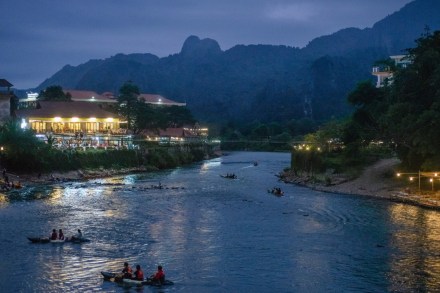
I still remember the first time I saw Vang Vieng, in Laos. It was many years ago, before the Chinese began pouring money in (such is the scale of Chinese investment, Laos now has high-speed rail). I was driving one of the very few rentable 4x4s in the country, picked up in the sleepy capital of Vientiane. I was on the main road connecting south and north Laos. When I say main road, I mean a road that sometimes narrowed to a single track, and that single track was commonly blocked by hens, dogs, playing children, and soldiers sleeping on the roofs of their cars under posters carrying the hammer and sickle (Laos was, and still is, theoretically communist).

Why Britain needs Shinto

From our UK edition

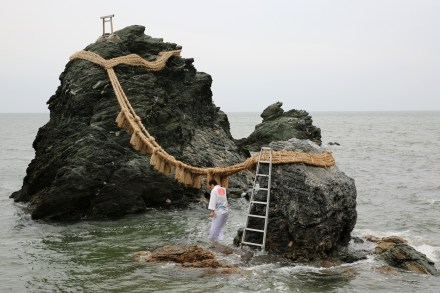
Ise, Japan They say of Japan that if you come here for a week, you want to write a novel about Japan. After a year, maybe a few essays. After a decade, a page. It is one of those countries which seems to get simultaneously more fascinating and opaque. Possessing an ancient monarchy is like having a Gothic cathedral in your back garden So it is for me, on this, my first trip to Japan in 30 years (I lived in Kyoto in the mid-1990s). This time around I have been doing prep by reading the early history of Shinto, the ‘state religion’ of Japan, an animist creed which sees the divine in everything – trees, rocks, lakes, rugby balls (really) – all in the form of kami – which can be spirits of place, mood or idea.

Paul Wood, Sean Thomas, Imogen Yates, Books of the Year II, and Alan Steadman

From our UK edition

30 min listen

On this week’s Spectator Out Loud: Paul Wood analyses what a Trump victory could mean for the Middle East (1:16); Sean Thomas gets a glimpse of a childless future while travelling in South Korea (8:39); in search of herself, Imogen Yates takes part in ‘ecstatic dance’ (15:11); a second selection of our books of the year from Peter Parker, Daniel Swift, Andrea Wulf, Claire Lowdon, and Sara Wheeler (20:30); and notes on the speaking clock from the voice himself, Alan Steadman (25:26).  Produced and presented by Patrick Gibbons.

My glimpse into a childless world

From our UK edition

If you are looking for a pointer for the future of the world, the free-diving fisherwomen on the matriarchal, shamanistic South Korean island of Jeju are not an obvious example of where we’re heading. Because the haenyeo are famously unique. And famously hardy. But what is happening to them should concern us all. In simple wetsuits they spend hours in the cold, clear waters, seeking out sea slugs, oysters, conches and abalone. They are fiercely independent – they spearheaded resistance to the Japanese in the 1930s and 1940s. But here’s the thing, as Nari (age 70) tells me in the haenyeo’s coastal mud-room: ‘We are probably the last. We have been diving since the men went to war in the 18th century, but maybe no one will do this in 20 years’ time.

Are you ready for the baby wars?

From our UK edition

Such an awful lot of stuff is happening right now, even the keenest observer of social trends could be forgiven for missing a statistical milestone passed earlier this month. So here it is: at the beginning of October, it was revealed that, for the first time since the 1970s baby bust, deaths outnumbered births in the UK – meaning, in effect, that all of our population growth (about 680,000 for this year) came from immigration. The reason why is obvious. The boomers – i.e. people born during the great baby boom of 1945-1965 – are dying out, and they are not being properly replaced, thanks to a low total fertility rate (TFR, which equals ‘births per woman’). In England and Wales, TFR fell to just 1.49, far below the accepted replacement rate of 2.1.

The end of the car is now

From our UK edition

I love driving. When I say ‘driving’, I obviously don’t mean crawling along the North Circular at 2.7 miles per hour, in a state of zombified inertia, mutinously wondering why Keir Starmer’s voice is so weirdly soul-sapping. And when I say I love driving, I don’t want to claim I’m any kind of petrolhead. I have no idea what a carburettor is, and the same goes for crankshaft, torque, drift, and understeer. In fact, I’m not totally sure what a petrolhead is. I wonder if we are overlooking a much smarter solution, which can be found in Phnom Penh No, when I say I love driving, I mean what I am doing now: speeding across majestic British Columbia in a massive great motor, eating up the North American miles on a proper North American road trip.

What horror does to us

From our UK edition

Tonight, the BBC will be broadcasting what is – to my mind – the scariest film ever made. Indeed, I would go further than that, I would say this movie is the scariest human artwork in any form – and that includes novels, plays, stories, the lot. This film beats them all, and by a distance. What is it? Of course, I’m not going to tell you that straight off, that would break all the rules of scary suspense writing. First, I want to examine the underlying questions: why do we like being artificially scared? And what makes a particular ghost story or Dracula remake genuinely frightening? The questions sound simple; they are not.

Has AI just killed the podcast bro?

From our UK edition

It’s a well-known psychological phenomenon: that time seems to slow down if you experience lots of new and unusual events. For example, if you are travelling across Asia, a week can seem like a month, and a month like a year, as you encounter so many different landscapes, peoples, climates, languages, cities, and that deep-fried algae you ate in Laos. All the events packed together somehow dilate the sense of time’s passing. The more you think about this technology, the more mind-spinning it becomes The same goes for technology, especially rapidly advancing tech, like AI.

Montenegro’s lost interior

From our UK edition

How many Spectator readers are aware that tiny Montenegro, that silver sixpence of south-east Europe, so long lost in the jumbled purse of geopolitics, has some of the deepest canyons in the world? Not many, I’d bet – we know the luscious Montenegrin Mediterranean coast, if we know anything. And I’d wager even fewer know that one such abyss, the Tara River Canyon, is one of the fastest watercourses on the continent. I’d imagine no one at all, including me until five seconds ago, knows that the longest stretch of rapids on this giddying torrent is called Borovi. It’s like Utah hooked up with Iceland, somewhere in Sicily, and brought a friend from Dartmoor I only know this because I’ve just fallen in.

Cambodia’s return to joy

From our UK edition

In Cambodia, everybody is looking forward to Bon Om Touk. If your Khmer is a bit rusty, this means the mid-autumn New Moon Water Festival, celebrated in late October. This fervent, noisy, firework-banging festival has multiple, colourful meanings. For a start, it marks the end of the endless summer rain – which turns everyone’s laundry mouldy and gets a tad annoying. It also marks the moment when the fertile Tonle Sap river, which rolls through the sprawling, youthful, trafficky, heat-struck, palm-shaded, jacaranda-adorned, busy-yet-languid, skyscraper-sprouting city, does a handbrake turn.

Keir Starmer and the evil of banality

From our UK edition

First, a little story. About three years ago I was given an eccentric but fun assignment between Covid lockdowns – I had to eat my way around the coast of East Anglia. On my gluttonous travels I met an extremely senior retired judge – whose wife now owns a posh boutique hotel in Suffolk. As we ate asparagus and hollandaise in his lovely, sun-dappled garden the amiable ex-beak told me that of all the lawyers who’d ever come before him, Keir Starmer was ‘the cleverest’.