Sam Leith

Sam Leith

Sam Leith is literary editor of The Spectator.

Beating his demons | 11 September 2010

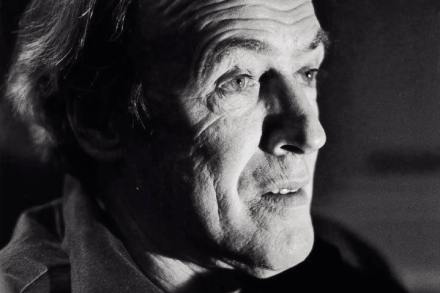
Some of us are still startled that Wallace Stevens was 44 when he published Harmonium. So what to make of the fact that Roald Dahl was past the midpoint of his forties when he wrote his first children’s book in 1961, James and the Giant Peach? At the time, he was known as a dark little adult fabulist; macabre like Saki, twisty like O. Henry. A hint as to his view of children’s writing thereto is found in a letter anticipating the birth of his first child: ‘Parenthood is a great strain. I can see it all. Nursery books for Knopf. Once upon a time there was a dear little bunny . . .’ He did indeed end up writing nursery books for Knopf, but dear little bunnies were thin on the ground.
The dying of the light | 7 August 2010

The phrasing of the subtitle is exact: a memoir in blindness, not of blind- ness. Like a portrait in oils — blindness being not just the subject, but the stuff of which this painfully stumbling, uncertainly reaching book is made. And not of, because it’s not something looked back on, like the memoir of a childhood: the blindness is still there waiting. ‘In’ acknowledges that, the way those even decades in recovery say ‘I am an alcoholic.’ And that, of course, heartbreakingly, is there too. In 2006 the novelist Candia McWilliam started to lose her sight, and to lose it in an unusual and tormenting way. She suffers from something called blepharospasm, a disease where the muscles that hold her eyelids open malfunction.

Learning to live with the bomb

The call consisted of three short blows of breath. A minute later, the phone rang again. Once more: three short blows of breath. Mr Cowell, under diplomatic cover, was the MI6 handler for Colonel Oleg Penkovsky, the West’s single most important asset in the Kremlin — and the calls he took were the prearranged code that Penkovsky was to use to tell him that a Soviet nuclear attack on the West was imminent. I’d have shat a brick. Wouldn’t you? But Cowell kept his cool. He didn’t call London and get the counterstrike underway. He didn’t put his head between his knees and wait for oblivion. The sky could have been black with Russian nukes, but he didn’t, in fact, do a damn thing.

The inconstant gardener

In the autumn of 1826, Prince Hermann Ludwig Heinrich von Pückler-Muskau came ashore in London after a long and gruelling voyage from Rotterdam. In the autumn of 1826, Prince Hermann Ludwig Heinrich von Pückler-Muskau came ashore in London after a long and gruelling voyage from Rotterdam. A whiskery Prussian princeling with a heavily indebted estate and a passion for landscape gardening, Pückler had come to England determined to find a wife. This was not a romantic project, however. English women were celebrated on the continent not only for their beauty — the perpetual damp was said to do wonders for their skin — but for their prosperity.

Genetics, God and antlers

‘Two things fill the mind with ever new and increasing admiration and awe, the oftener and more steadily we reflect on them: the starry heavens above and the moral law within.’ Oren Harman uses this quote from Immanuel Kant to open one of the chapters of The Price of Altruism, and it’s an observation that — after the steady reflection on moral law that Harman’s book invites and encourages — only seems more true by the end. ‘Two things fill the mind with ever new and increasing admiration and awe, the oftener and more steadily we reflect on them: the starry heavens above and the moral law within.

Scourge of the ancien régime

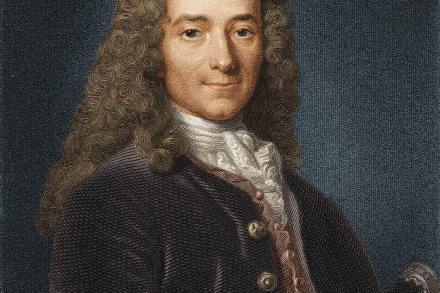
Voltaire’s was a long and amazing life. Voltaire’s was a long and amazing life. He was tragedian, satirist, mathematician, courtier, exile, jailbird, swindler, gardener, plutocrat, watchmaking entrepreneur, penal reform campaigner, celebrity, provocateur, useless loan-shark, serial feuder, coward, astronaut, niece-shagger, spy . . . Except ‘astronaut’, obviously. I made that up to check you were still paying attention. But he did shack up with his niece, the filthy old goat. It seems a shame, then, that for most of us nowadays that long and amazing life is compressed into a couple of quotes from Candide and a few apocryphal stories about his table talk. Ian Davidson’s biography is the corrective: here’s the great man in the round.

A cosmic comedy

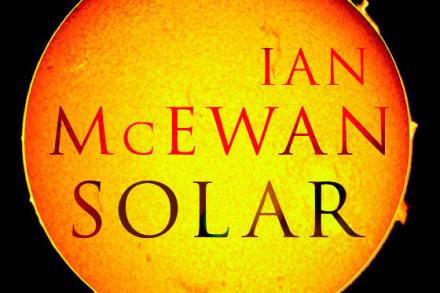
Not long ago I had an email from a friend, wondering if I’d yet read the new Ian McEwan. Not long ago I had an email from a friend, wondering if I’d yet read the new Ian McEwan. ‘Talk about a bolt from the blue,’ she said. ‘McEwan does slapstick. I never saw that coming.’ She added (unfairly, I thought) that you might class On Chesil Beach as slapstick of an unintentional sort, but her point holds. Here, in a book around a scientific theme of considerable seriousness — global warming and renewable energy — McEwan has written the closest thing he’s ever done to a farce. Told in three chunks, spaced at intervals between 2000 and 2009, Solar is the story of a Nobel-prize-winning physicist on a slow slide to disaster.

Not ‘a boy-crazed trollop’

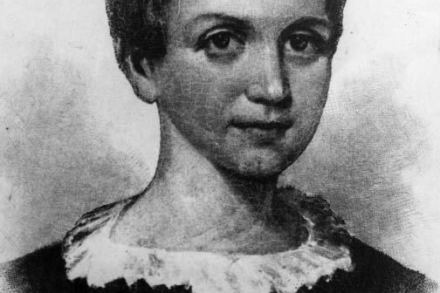
For someone who barely left the house, Emily Dickinson didn’t half cause a lot of trouble. For someone who barely left the house, Emily Dickinson didn’t half cause a lot of trouble. Lives Like Loaded Guns — which combines biographical material, critical readings, and an assessment of the history of her reputation — tells a completely hair-raising story. The Dickinsons were one of the first families of respectable Amherst. Emily and her sister Lavinia — ‘Vinnie’ — lived in one house, Homestead, right next door to her brother Austin, the head of the family, and his wife Sue. Susan Dickinson was a highly intelligent and sensitive woman, bosom friend to Emily. The poet called her ‘Sister’.

Celebration of old times

Towards the end of 1979, Antonia Fraser gave an interview to the Washington Post in connection with her book Charles II (renamed ‘Royal Charles’ so as not to confuse a sequel-bombarded American public). She records her final exchange with the interviewer in the tersely effective style of the diaries from which this book is adapted: Man, hopefully, at the end: ‘Just one more question, what is Harold Pinter like about the house, all those pauses and enigmatic statements, I’ve always wondered?’ Me, briskly: ‘Keep wondering.’ ‘Keep wondering.’ Excellent phrase: curt, witty, and just abrupt enough to see off a line of inquiry without giving offence.

Debt and addiction

I knew that I was onto a good thing with this book before the page numbers were even out of roman numerals. Describing the wealth of new material that has come to light in the three decades or so since the last biography of Thomas De Quincey, Robert Morrison men- tions the areas in which it has enriched our understanding: . . . his enduring sorrow over the loss of his sister Elizabeth, his masochistic desire for humiliation; his association with prostitutes; his pursuit of, and subsequent alienation from, Wordsworth and Coleridge; his struggle with drugs and alcohol . . . his horrendous battles with debt; his imprisonment in Edinburgh gaols . . . This was a lively life, and this is a lively Life.

Impossible to dislike

In 1968, when he was still a student at Oxford, Gyles Brandreth was interviewed in the Sun. The headline was a quote from him: ‘I’d like to be a sort of Danny Kaye and then Home Secretary.’ It’s about bang on. He achieved the first, rather than the second, and the fact that it never occurred to him that he couldn’t do both is what’s great about him. He’s a very clever fellow and a colossal show-off. He is all over Isis, and the Oxford Union and the Oxford University Dramatic Society within weeks of starting university, not to mention selling fabricated diary stories about himself and arranging to be followed around by TV crews wherever he goes.

Concealing and revealing

In 1837 The Quarterly Review’s anonymous critic — actually, one Abraham Hayward — turned his attention to Charles Dickens, then in the first flaring of his popularity as the author of Sketches by Boz, The Pickwick Papers and Oliver Twist. In 1837 The Quarterly Review’s anonymous critic — actually, one Abraham Hayward — turned his attention to Charles Dickens, then in the first flaring of his popularity as the author of Sketches by Boz, The Pickwick Papers and Oliver Twist. ‘It requires no gift of prophecy to foretell his fate,’ wrote Hayward. ‘He has risen like a rocket, and he will come down like the stick.

Let me not be Mad

I am not I: thou art not he or she: they are not they.’ Few epigraphs to fiction have been so widely disregarded as the disclaimer with which Evelyn Waugh presaged Brideshead Revisited. Immediately it was published, as Waugh’s great friend Nancy Mitford wrote to him, the general view was simply: ‘It is the Lygon family. Too much Catholic stuff.’ And it is easy to see why people were tempted to see Madresfield Court, seat of the Earl of Beauchamp, as the original of Brideshead. Just as in Brideshead, here is a stiff older son and a younger son losing the golden beauty of his youth to alcoholism. Here were clever sisters, a starchy and religious materfamilias, and a father in exile following a scandal.

Irate men

‘No English monarch until Victoria — that is, long after monarchy had become the “dignified”, rather than the “efficient” part of the constitution — remained free from challenge, and three lost their thrones to rebellions.’ David Horspool’s new book is a detailed survey of the English men, women and mobs who have been prepared to risk life and property to rise up against power. It starts in the time of the Norman yoke and ends with the Poll Tax riots in the time of the Norman Tebbit. It is, to adapt Carlyle, a ‘history of irate men’. There’s an awful lot of ground to cover and Horspool goes over it at a hell of a scamper.

Telling tales

Ox-Tales: Earth, Air, Fire, Water, Oxfam, £5 each Buy short stories and help the wretched of the earth! I don’t mean short-story writers, on this occasion, though that injunction usually holds too. No: I mean, if you buy one or, preferably, all four of these pretty, pocket-sized paperbacks you’ll be donating to Oxfam. Cooked up between the Hay Festival’s impresario Peter Florence and Mark Ellingham of Profile Books, Ox-Tales is a sort of literary equivalent of the War Child album: a gallimaufry of short fiction donated by various authors — about two thirds original stories, about a third novel-extracts.

Intimations of mortality

Pendulum, eh? Well, there’s certainly something swing- ing back and forth here. Pendulum, eh? Well, there’s certainly something swing- ing back and forth here. Two years ago, lest we forget, Cultural Amnesia came out — all 900-odd pages of it. Now here’s Clive with another fat wedge of ‘essays’, some of which are essays, and some of which are more recognisable as old book reviews and feature pieces for newspapers. In the section marked ‘Handbills’ he reproduces pieces he’s written to promote his stage shows; in ‘Absent Friends’, addenda to obituaries.

Exit the hero

It was in The Spectator, in 1954, that the Movement was christened, and its members’ stereotyped image was soon set: white, male (except for Elizabeth Jennings), non-posh poets who rhymed and scanned, hated Abroad, thought T. S. Eliot was arse, Didn’t Come From London, and disconcerted the students at the redbrick universities where they taught by wearing flat caps and scarves in lectures.

All in good faith

The Wikipedia Revolution: How a Bunch of Nobodies Created the World’s Greatest Encyclopedia, by Andrew Lih Who would have known that mixed into the aggregate at the foundations of what by now must be the most consulted encyclopedia in the history of the world would be Ayn Rand, options-pricing theory, Kropotkin, table napkins, soft porn and a Hawaiian airport shuttle-bus? This being the internet, you might have guessed at soft porn — a sometime minor business interest of its founder Jimmy ‘Jimbo’ Wales. But the rest? These are interesting times for the culture of knowledge, and the story of the evolution of Wikipedia, with its utopian belief in collective good faith, its roots in hacker culture and its history of ingenious bricolage, is at the centre of them.

For better, for worse

Love Stories, edited by Diana Secker Tesdell In Bed With: Unashamedly Sexy Stories by Your Favourite Women Novelists, edited by Imogen Edwards-Jones, Jessica Adams, Kathy Lette and Maggie Alderson When Kurt Vonnegut was interviewed by the Paris Review in 1977, he was asked: ‘Let’s talk about the women in your books.’ ‘There aren’t any,’ he replied. ‘No women, no love.’ He described this as ‘a mechanical problem’: I try to keep deep love out of my stories because, once that particular subject comes up, it is almost impossible to talk about anything else. Readers don’t want to hear about anything else. They go gaga about love.

Not so fantastic

The Natural History of Unicorns, by Chris Lavers ‘A long time ago, when the earth was green,/ There were more kinds of animals than you’ve ever seen./ They’d run around free while the earth was being born,/ But the loveliest of all was the unicorn.’ So Shel Silverstein’s saccharine ditty informed generations of kiddies. As Chris Lavers’ whimsical, scholarly and continually absorbing book tells us, there’s a lot more to unicorns than that. The first mention of a unicorn in literature appears four centuries before the birth of Christ, in a ‘mess of a book’ called Indica by the Greek orientalist Ctesias of Cnidus.