Sam Leith

Sam Leith

Sam Leith is literary editor of The Spectator.

Books Podcast: Machiavelli’s lifelong quest for freedom

From our UK edition

In this week’s Books Podcast I talk to Erica Benner about her new Life of Machiavelli, Be Like The Fox. Professor Benner, a Yale expert in political science, offers a new and intriguing reading of the great theorist of statecraft — arguing that in the violent and unstable Florence of his time, he learned to conceal his real meanings in layers of irony and satire. We ask, in essence, just how Machiavellian Machiavelli really was…. You can listen to our conversation here: And if you enjoyed that, please subscribe on iTunes for a new episode every Thursday.

Books Podcast: Michael Morpurgo

From our UK edition

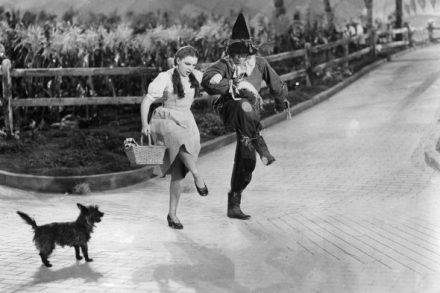
In this week's books podcast we have an interview with the former Children's Laureate Michael Morpurgo in which he talks for the first time about his new project. Michael, in town for the London Book Fair, announces that he's rewriting The Wonderful Wizard of Oz from the point of view of Toto. He also talks about why children's books need to be more adult, the wartime childhood that fuels his work, and why the movies ruined Robin Hood. We're not in Kansas anymore... You can listen to our conversation here: And if you enjoyed that, do subscribe on iTunes for a new episode every Thursday.

Books podcast: Resisting the self-improvement craze

From our UK edition

Think positive. Listen to your inner voice. Strive to become the best version of yourself. The only way out is through. Don't look back. That sort of go-getting mantra underpins a multi-million-pound industry in life-coaching and self-help. And it's all horse-manure, says the Danish psychologist Svend Brinkmann. His bracing new book Stand Firm: Resisting The Self-Improvement Craze asks us to think negative, sack our life-coaches, ignore our inner voices and learn to say, politely but firmly: no. I spoke to him this week about the joys of self-non-improvement... You can listen to our conversation here: And if you enjoyed that, please subscribe on iTunes for a new episode every Thursday.

Books podcast: The story of pain

From our UK edition

My guest in this week's books podcast is the scholar Joanna Bourke, who's talking about her new book on something we all have in common: suffering. In The Story of Pain: From Prayer to Painkillers she turns much of what we think we know about pain on its head. Here's an experience that's common to all of us, but apparently completely subjective. It is twined into the very roots of our culture -- and yet the stories we tell about it have changed massively over the centuries. What was life like before anaesthesia? Why did we not use painkillers until long after we had them? How is it that until less than 100 years ago people believed that children didn't feel pain at all? And is pain, as Freddy Mercury claimed, really close to pleasure?

Books podcast: Daniel Dennett and the evolution of minds

From our UK edition

In this week's podcast I'm talking to the philosopher Daniel Dennett -- whose new book takes on one of the biggest and most intriguing problems of all: consciousness itself. In From Bacteria to Bach and Back, Prof Dennett makes the case that consciousness itself is a sort of illusion -- and that the same evolutionary mechanisms that gave us opposable thumbs can account for our ability to do maths, compose music, wonder what would have happened had Germany won the Second World War, and think about the idea of thinking. This superbly lucid explicator tells us, too, about how "post-truth" is not just a political fad, but a threat to the basis of civilisation itself. You can listen to our conversation here: And if you enjoyed that, do subscribe on iTunes for a new episode every Thursday.

Books podcast: Louise Doughty on Apple Tree Yard, Sherlock and Lionel Shriver

From our UK edition

This week in the books podcast, I’m talking to Louise Doughty — the author of the novel behind the hit BBC thriller Apple Tree Yard. Louise talks about the slightly dizzying experience of seeing her work adapted for the screen, about being swarmed by crazed Sherlock fans, about why writers are like dancing badgers — and, in rather forthright terms — why she thinks Lionel Shriver has it all wrong about “cultural appropriation”. Listen here: And if you enjoyed that episode, please subscribe on iTunes for a fresh podcast every Thursday.

The game of life

From our UK edition

In the introduction to his new book Steven Johnson starts out by describing the ninth-century Book of Ingenious Devices and its successor, the 13th-century Book of the Knowledge of Ingenious Mechanisms by the Arab engineer al-Jazari. Here were books of extraordinarily advanced technology. The latter contained sketches of float valves that prefigure the design of modern toilets, flow regulators that would eventually be used in hydroelectric dams and internal combustion engines, water clocks more accurate than anything Europe would see for 400 years… But in both books, Johnson says, ‘the overwhelming majority of the mechanisms […] are objects of amusement and mimicry’: they are toys. A point to conjure with.

Books podcast: Rory Stewart’s The Marches

From our UK edition

In this week’s podcast, I sit down with the Conservative MP, sometime diplomat and writer Rory Stewart to talk about his remarkable new book The Marches. Rory's first book The Places In Between described a huge journey he took on foot across Afghanistan in the early noughties. His latest work sees him lace on his hiking boots again. This is at once an account of the meandering journey he made along the Anglo-Scottish border around the time of the Scottish independence referendum (Rory is MP for Penrith and the Borders), and a tender account of his relationship with his father Brian.

Émile Zola: The Upper Norwood Years

From our UK edition

Imagine if Dostoyevsky had spent a year or two knocking around Penge. Or if Balzac had sojourned in Stoke Poges. If those great European novelists seem out of place in a provincial English setting, you’ll get a flavour of the comedy and poignancy of Émile Zola: The Upper Norwood Years, as Michael Rosen’s new book could have been called but wasn’t.

Books podcast: Michael Rosen on The Disappearance of Émile Zola

From our UK edition

Imagine if Dostoyevsky had spent a year or two knocking around Penge. Or if Balzac had sojourned in Stoke Poges. If those great European novelists seem out of place in a provincial English setting, you’ll get a flavour of the comedy and poignancy of Émile Zola: The Upper Norwood Years, as Michael Rosen’s new book could have been called bit wasn’t.

Did Darwin get it wrong?

From our UK edition

This week in the books podcast, we’re taking on some big issues. John Hands, the author of Cosmosapiens: Human Evolution From The Origin of the Universe, is in the grand tradition of ambitious gentleman amateurs. His book attempts to answer the fundamental human questions – who are we, why are we here, and where are we going? In doing so he considers everything from the origins of the universe to evolutionary theory. The answers he arrives at fly in the face both of Darwinian orthodoxy and the Standard Model of theoretical physics. Yet he argues that, as an outsider, he’s better placed to weigh the arguments than those labouring in narrow disciplinary trenches.

Books podcast: Cosmosapiens

From our UK edition

This week in the books podcast, we’re taking on some big issues. John Hands, the author of Cosmosapiens: Human Evolution From The Origin of the Universe, is in the grand tradition of ambitious gentleman amateurs. His book attempts to answer the fundamental human questions – who are we, why are we here, and where are we going? In doing so he considers everything from the origins of the universe to evolutionary theory. The answers he arrives at fly in the face both of Darwinian orthodoxy and the Standard Model of theoretical physics. Yet he argues that, as an outsider, he’s better placed to weigh the arguments than those labouring in narrow disciplinary trenches.

Exploring Israel and Jewishness with Harold Pinter

From our UK edition

In this week’s Books Podcast, I talk to Lady Antonia Fraser about her new book. Our Israeli Diary, 1978 is a little time capsule: a day-by-day diary she compiled of a fortnight spent with her late husband Harold Pinter visiting Israel nearly four decades ago, and had thought lost until it more or less tumbled out of a cupboard at her home. It was a pivotal time. In 1978 Harold and Antonia had left their own marriages but had not yet been able to marry each-other — so they were, as Harold declared at passport control, officially “lovers”. And it was the first visit either she or Harold had ever made to Israel, and reflection jostles in it with broad comedy.

Books podcast: Antonia Fraser’s Israeli diary

From our UK edition

In this week’s Books Podcast, I talk to Lady Antonia Fraser about her new book. Our Israeli Diary, 1978 is a little time capsule: a day-by-day diary she compiled of a fortnight spent with her late husband Harold Pinter visiting Israel nearly four decades ago, and had thought lost until it more or less tumbled out of a cupboard at her home. It was a pivotal time. In 1978 Harold and Antonia had left their own marriages but had not yet been able to marry each-other — so they were, as Harold declared at passport control, officially “lovers”. And it was the first visit either she or Harold had ever made to Israel, and reflection jostles in it with broad comedy.

Is there a war on the old?

From our UK edition

What’s it like being old? Rotten, says Professor John Sutherland in his latest book The War On The Old — and it’s made worse by what he sees as a systematic and malevolent conspiracy to airbrush the elderly and their problems out of public life. He’s not just complaining about the NHS’s niggardly rationing of Viagra. While millennial pundits moan smugly about the triple-lock pension and free TV licenses, he argues, their grandparents are waiting years for routine operations, being ignored by the political classes and dying of neglect in privatised old folks’ homes. The picture he paints is of something close to a programme of extermination. In this week’s Books podcast I ask him: come on, old boy, can this really be what’s going on?

Why do people hate poetry?

From our UK edition

Why do so many people think poetry is important, and so few of them read it? And why does what might pass unnoticed as a minority activity, like — say — tiddliwinks or sniffing bicycle seats, arouse such strong views in the public at large? The award-winning American writer Ben Lerner has a theory. In this week's Spectator books podcast I talk to him about his new collected poems, his monograph The Hatred of Poetry, and how he drew inspiration from the gigantic Wal-Mart in his hometown of Topeka, Kansas. You can listen to our conversation here: And if you enjoyed that, please subscribe to the podcast on iTunes for a new episode every Monday!

The great Roald Dahl debate

From our UK edition

In the year of Roald Dahl’s centenary, the Spectator Books Podcast decided to debate this sacred cow. Lucy Mangan, author of Inside Charlie’s Chocolate Factory, drapes garlands of flowers; while the critic James McConnachie readies the captive bolt gun… Who will you agree with? Find out by listening here: And if you enjoyed this week's episode please subscribe on iTunes!

Books podcast: Michael Lewis and The Undoing Project

From our UK edition

The latest books podcast sees us sitting down with Michael Lewis – the author of Liar’s Poker, The Big Short, Flashboys and Moneyball — to ask how his latest book, The Undoing Project, comes to tell the story of the "intellectual bromance" between Amos Tversky and Daniel Kahneman; a friendship that completely reshaped the disciplines both of psychology and economics. It’s a fascinating and moving tale — and one that Lewis is uniquely well positioned to write. You can listen to the podcast here: And if you enjoy this episode, please take a moment to subscribe on iTunes.

Books podcast: Treasure palaces

From our UK edition

In this week’s books podcast I talk about Treasure Palaces with its editor Maggie Fergusson. This is a remarkable collection of essays by writers on revisiting museums that have meant something special to them. The book has a stellar cast-list — Alice Oswald, Julian Barnes, Andrew Motion, Margaret Drabble, Roddy Doyle, William Boyd and Ali Smith among them — and the essays bring something personal and unexpected out of each. Maggie talks about how she snagged the big names —and what their choices had to say. You can listen to the episode here: And if you enjoyed that, please subscribe on iTunes for a new podcast every Monday (though we're off for Christmas now, so will see you in the New Year).

Books podcast: The Dahl debate

From our UK edition

In the year of Roald Dahl’s centenary, this week’s Spectator Books Podcast considers a sacred cow. Lucy Mangan, author of Inside Charlie’s Chocolate Factory, drapes garlands of flowers; while the critic James McConnachie readies the captive bolt gun… You can listen here: And if you enjoyed this week's episode please subscribe on iTunes!