Sam Leith

Sam Leith

Sam Leith is literary editor of The Spectator.

Schama, Uglow and Applebaum among the longlisted authors for the Baillie Gifford

From our UK edition

The Baillie Gifford longlist – consisting of contenders for the country’s most prestigious nonfiction prize – is out today. A very good list it is, too. For readers’ ease, I’m affixing some links here to the Spectator’s reviews of the longlisted titles. We missed Souad Mekhennet (sorry); and a couple of them – Applebaum, Schama and Uglow – are forthcoming so will be reviewed in the next few weeks. Expect a review of Allan Jenkins’s allotment memoir when we consider gardening books at Christmas.

Books podcast: A N Wilson

From our UK edition

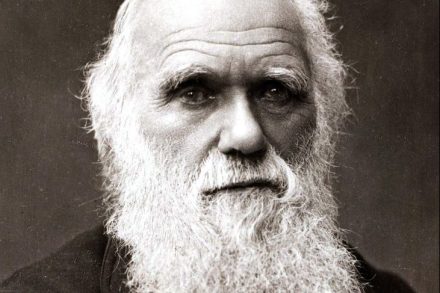
A N Wilson’s new biography of Darwin was acclaimed in these pages by Robert Douglas-Fairhurst for having a 'scientist’s forensic skill and a novelist’s imaginative touch'; but, he warned, it was likely to 'put the felis catus among the columbidae' with its portrait of the great man as a publicity-hungry plagiarist who got the science wrong. It certainly has done that.    In this week’s podcast I talk to Andrew Wilson about Darwin’s feet of clay — and the way in which, as Wilson sees it, the theory of evolution was used to license everything from the cruellest excesses of Victorian capitalism to the eugenics programmes of the mid-20th century.

Books Podcast: World Book Club’s 15th birthday

From our UK edition

This week, in the books podcast, I talk to Harriett Gilbert - who has a good claim to be the voice of books on radio. With the 15th anniversary of the BBC World Service's World Book Club (nine Nobel and 17 Booker winners have been guests to date), which she's presented from its first episode and in which world-class writers discuss their best known books. I ask her about her life and career, the changing literary landscape, and why she doesn't write novels herself any more. You can listen to our conversation here: And if you enjoyed that, do subscribe on iTunes for a new episode every Thursday. A special 15th Anniversary edition of World Book Club goes out on Sunday, featuring Sebastian Barry talking about The Secret Scripture.

Books Podcast: Clive James

From our UK edition

In this week's Books podcast I speak to Clive James. Since he was diagnosed with leukaemia, Clive has been as it were on borrowed time. But what use he has made of that time: the last couple of years have seen a great late outpouring of poetry, most recently the wittily and wanly titled collection Injury Time.  I travelled to his home in Cambridge to talk to him about poetry, fame, late style, discovering Browning, being silly and serious, watching box sets, facing the end, and why he wants to be buried back home in Australia. You can listen to our conversation here: And if you enjoyed that, do subscribe on iTunes for a new episode every Thursday.

The dice men

From our UK edition

‘I have a slight bone to pick with you,’ I tell Ian Livingstone as he makes me a cup of coffee in his airy open-plan kitchen. ‘This is a bone I have been waiting to pick for, oh, 35 years. That bloody maze!’ Livingstone chuckles. ‘That was Steve’s. He’s the sadist.’ That maze, in a way, is the reason we are meeting. The near-unnavigable labyrinth featured near the end of The Warlock of Firetop Mountain — the choose-your-own-adventure novel which launched the phenomenally successful Fighting Fantasy series. Here was an adventure ‘in which you are the hero’. Some 400 numbered paragraphs, connected in a web of decisions: ‘If you head west, turn to 125; if you choose to stay and fight the monster, turn to 74.

Books Podcast: Robert Lowell’s centenary

From our UK edition

For this week’s podcast, in celebration of Robert Lowell’s centenary year, I’m joined by the critic and writer Jonathan Raban — who not only knew this titan among American poets of the last century, but lived in his basement, and found himself contributing to literary history when Lowell took to consulting him, on the hoof, as to how to revise his sonnets. Jonathan talks about the rise and fall of Lowell’s reputation, how his madness affected his art, how Lowell caused him a year of non-speakers with Ian Hamilton, and the enduring greatness of the verse. Plus, how it all started with a manic lunch in an Italian restaurant… And if you enjoyed that, please do subscribe on iTunes for a new podcast every Thursday.

Books Podcast: The art of the sequel

From our UK edition

We live in an age when sequels to, and re-imaginings of, the classics, seem to be a larger part of the literary landscape than ever before. We're seeing a steady stream of new Ian Fleming, new Agatha Christie, new Robert Ludlum, new Jane Austen, even new PG Wodehouse. What's the attraction of these books? And what does it feel like, as a writer, to step into the shoes of the greats? In this week's podcast I ask Bonnie MacBird, who's now on her second Sherlock Holmes novel, Unquiet Spirits, and Anthony O'Neill, who in Dr Jekyll and Mr Seek takes on the mantle of Stevenson, about the lure of the sequel.... You can listen to our conversation here: And if you enjoyed that, do subscribe on iTunes for a new podcast every Thursday.

How I write

From our UK edition

How do they do it? Among writers, the earnest audience member at a literary festival who asks, ‘Do you write by hand or on a computer?’ is a sort of running joke; an occasion for the rolling of eyes. And yet, let’s enter a note in defence of that audience member: how novelists and the authors of literary nonfiction go about their work is interesting. If, as Kingsley Amis argued, most of a writer’s work is the application of the seat of one’s trousers to the seat of the chair, it’s legitimate to ask: what trousers, what chair, sexuality where and when? In my experience the answers are wildly different from writer to writer; an experience borne out by our sampling — 400 words a day, or 15,000? A bath for inspiration, or exercise?

Books Podcast: Harry Potter’s 20th anniversary

From our UK edition

This summer saw 20 years since the publication of the first Harry Potter novel. Love them or hate them, the adventures of JK Rowling's boy wizard are now a huge part of the literary landscape. In the wake of a Harry Potter conference organised by the Spectator's own Nick Hilton, I'm joined for this week's podcast by Nick and our children's book reviewer Melanie McDonagh to ask: how good were the books; what, in literary terms, defines their special sort of magic; and what has been their effect on children's writing in general? You can listen to our conversation here: And if you enjoyed that, do subscribe on iTunes for a new episode every Thursday.

Books Podcast: Is monogamy dead?

From our UK edition

This week’s Books Podcast is all about love. Can we have too much of it? How long does it last? And is the hot new thing, polyamory, the solution to al our problems? I’m joined by the writer and comedian Rosie Wilby — author of the new book Is Monogamy Dead? — to discuss the future of relationships, the advantages and disadvantages of gay marriage, and how she got over her ex-girlfriend… You can listen to our conversation here: And do subscribe on iTunes for a new podcast every Thursday.

Our thoughts on the Man Booker’s longlist

From our UK edition

This year’s Man Booker longlist is a good one, I think. Lots of variety; big names and small ones; and an impressive geographical spread. Leans towards the experimental – and no harm in that. I’m pleased/relieved to say that The Spectator reviewed all but three of these books when they came out (Kamila Shamsie is forthcoming) – so I’m posting links here where appropriate. We liked almost all we reviewed, though a minority report was posted on Sebastian Barry and our Caroline Moore was cooler on Arundhati Roy than others have been. Apologies to Mozley, Fridlund and McCormack.

Books Podcast: Summer reads

From our UK edition

This week, with the holidays approaching, I’m joined by the critic Alex Clark and Damian Barr — memoirist and host of the Savoy’s Literary Salon — to talk about summer reading. What do you take? What do you regret taking? Kindle, dead-tree or — 19th-century-style — cabin trunk full of books sent on ahead? Our discussion yielded a host of recommendations — from the brand new to the reliable old friends — that we hope will help you plan your own travelling library. For those who like the sound of some of these, we’ve picked them out and listed them below for your convenience….

Books Podcast: Naomi Klein

From our UK edition

In this week’s Spectator Books podcast I’m joined by Naomi Klein, the activist journalist who gave articulate voice to the anti-globalisation movement in books such as No Logo and The Shock Doctrine. In her latest work, No Is Not Enough: Defeating The New Shock Politics, she gives an urgent account of how — as she sees it — Trumpism came to be and what moderates and progressives need to do about it. We talk about why talking about Trump only makes it worse, how WWE (World Wrestling Entertainment) is the key to understanding the modern White House, why nobody knows what’s going on in British politics any more; and I ask her — cheerily — whether it really is too late to ensure the survival of life on planet earth.

The first celebrity

From our UK edition

It’s quite a scene to imagine. A maniacal self-publicist with absurd facial hair takes off in what’s thought to be the biggest hot-air balloon the world has ever seen. Adoring crowds gather to watch the launch. He rises rapidly and sails off towards the clouds — but in due course the whole thing goes arse-up and he comes clattering to earth, narrowly escaping with his and his crew’s life. Never mind: the catastrophe is reported around the world and has made him even more famous than he was before. It was a ‘semi-unsuccess’. And within weeks he’s back planning another ascent in another giant balloon.

Books Podcast: The wisdom of the zombie apocalypse

From our UK edition

In this week’s books podcast, we’re talking about the lumbering hordes of the living dead. Yup: it’s Zombie Apocalypse time, as I sit down with Greg Garrett, author of the erudite and absorbing Living With The Living Dead: The Wisdom of the Zombie Apocalypse. More than just a survival guide, this book considers the literary, cinematic and theological history of the zombie — the vast popularity of the genre, and the extraordinary range of meanings and anxieties that zombies have incarnated over the years. From the undead Spider Man in Marvel Zombie comics, through the White Walkers in Game of Thrones… by way of T S Eliot and the Book of Revelations.

Diary – 29 June 2017

From our UK edition

To Fortnum & Mason last week on the hottest evening of the year to present the Desmond Elliott Prize for this year’s best first novel, which I helped judge. I had to acknowledge the weather in my speech: I was perspiring, ahem, liberally. Sweating like a… what? The traditional comparator is now definitely verboten. Like Keith Vaz before a select committee? Like Boris in an Eddie Mair interview? Too niche. I went for ‘like a British Brexit negotiator’ and got a gratifying laugh. They won’t be laughing two years from now. We had two superb runners-up in Rowan Hisayo Buchanan’s Harmless Like You and Kit de Waal’s My Name Is Leon.

Books Podcast: Jonathan Meades

From our UK edition

In this week's Books Podcast I'm joined by the great Jonathan Meades. A man of many hats -- food critic, architectural critic, memoirist, polemicist, cultural historian, novelist etc -- and one distinctive pair of sunglasses, Meades is this week talking about stealing food. His The Plagiarist In The Kitchen, new in paperback, is a sort of anti-recipe book; a collection of cookable recipes (well, except the one), an erudite disquisition on the history and theory of cookery, and a slant discussion of the whole idea of plagiarism. Also, it's packed with good jokes.

Books Podcast: The secret lives of Julian Assange, Craig Wright and Ronald Pinn

From our UK edition

In this week's podcast I'm talking to the novelist and journalist Andrew O'Hagan about lies, paranoia, and the way that nothing, online, is quite as it seems. His new book The Secret Life (Faber) tells, in the words of its subtitle, "three true stories": one about Andrew's utterly bizarre time as the prospective ghostwriter for Julian Assange; another about his association with the man who claimed to have invented the digital currency Bitcoin; and the third -- still darker and stranger -- about Andrew's own experiment in stealing a dead man's identity to become someone else online. They add up  to a funny, alarming and disturbing picture of what happens when digital fantasy meets analogue reality.

Books Podcast: The art of the first novel

From our UK edition

In this week’s Books Podcast, we’re turning our eye on an area of literary endeavour that is too often neglected: the first novel. Dozens are published every month; few are ever noticed. The late literary agent Desmond Elliott founded a prize to ensure that more of them were — and that the best would be publicly celebrated.