Sam Leith

Sam Leith

Sam Leith is literary editor of The Spectator.

Books Podcast: music, doomed love, and Nazis with Paul Kildea

From our UK edition

It’s a first for the Spectator Books podcast this week: music! We’ve temporarily dispensed with our usual intro jingle to allow this week’s guest, Paul Kildea, to play us in. Paul’s new book Chopin’s Piano: A Journey Into Romanticism is a fascinating and unusual piece of non-fiction that sheds light on Chopin’s life and music, and on their afterlife, as its author pursues an Ahab-like pursuit of the piano on which he composed his Preludes in Majorca. I spoke to Paul at the Royal Overseas League in London, so that with the help of their instrument, he could punctuate our conversation with some musical illustrations of his points. Bitter musical disputes, doomed love, George Sand and Nazis: this one, I think, has it all.

Fakirs and fakers

From our UK edition

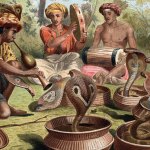
The Paul Daniels Magic Show, on a Saturday afternoon in the early 1980s, was a straightforward enough proposition. A wand, a waistcoat and a wig; pick a card, any card....Here was Western conjuring as entertainment, in the music hall and variety tradition. Not much to connect it to gods and spirits; little in the way of holy terror in the sequins of the lovely Debbie McGee. But, as John Zubrzycki’s new book shows, with Indian magic it has always been considerably more complicated than that. India was mythologised as a land of supernatural marvels for as long as written history goes back. It was there that Herodotus located his giant gold-digging ants.

Spectator Books: Carl Hiaasen’s Assume the Worst

From our UK edition

In this week’s Spectator Books, I’m talking to the journalist and comic novelist Carl Hiaasen about his latest book, a splenetic broadside against feelgood commencement speeches called Assume The Worst that serves as a joyous corrective to “you can be anything you want to be” boosterism. Our conversation ranges to his take on the state of journalism and politics, the time Donald Trump chatted up his wife, and (for fans) the possibility of a return of Skink... Listen to more episodes of Spectator Books and subscribe to the podcast on iTunes.

Spectator Books: Behold, America

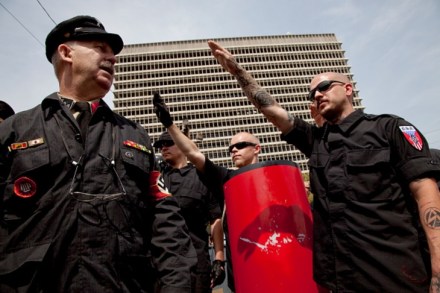
Is the "American Dream", as Donald Trump claims, dead? Is “America First” a policy of national pride or a dogwhistle to white supremacists? In this week’s books podcast we take the long view. My guest, Sarah Churchwell, excavates the long histories and surprisingly variable meanings of these two phrases in her new book Behold, America: A History of America First and the American Dream — and shows how central they have been to the United States’s long argument with itself about the meaning of the nation, and how they continue to be so today. Listen to more episodes of Spectator Books and subscribe to the podcast on iTunes.

Olga Tokarczuk’s ‘Flights’ wins the Man Booker International Prize

From our UK edition

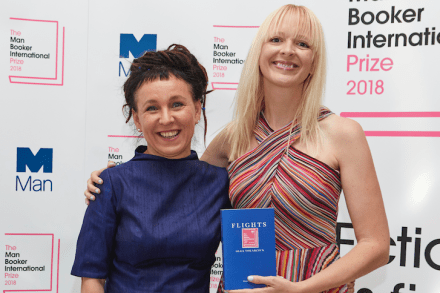
The Polish novelist Olga Tokarczuk and her translator Jennifer Croft last night won the £50,000 Man Booker International Prize for the novel Flights (published here by the excellent and discriminating small press Fitzcarraldo Editions). The judging panel was chaired by Lisa Appignanesi and consisted of Michael Hofmann, Hari Kunzru, Tim Martin and Helen Oyeyemi. Ms Appignanesi said of the result: ‘Our deliberations were hardly easy, since our shortlist was such a strong one. But I’m very pleased to say that we decided on the great Polish writer Olga Tokarczuk as our winner: Tokarczuk is a writer of wonderful wit, imagination and literary panache.

Spectator Books: Arnhem

From our UK edition

In this week’s Spectator Books, I talk to the military historian Antony Beevor about his latest book, Arnhem: The Battle for the Bridges, 1944. Beevor’s special brilliance as a writer is the way that — as General Sir Mike Jackson writes in this week’s magazine — he captures the "human factor” in armed conflict. This book about Operation Market Garden — the disastrous attempt by airborne troops to capture the bridges over the Ruhr — shows that quality in spades. He brings us not only the high command version of the operation’s failure, but gets us closer than ever to the bravery and terror and wild humour of the men on the ground, and the Dutch civilians whom they encountered.

Is the comic novel dead?

From our UK edition

'Not funny. Try Punch.' This, unkindly, used to be the boilerplate rejection letter from Private Eye to those who submitted jokes to the magazine. And the UK’s only prize for comic fiction, the Bollinger Everyman Wodehouse Prize, has just doled out the equivalent of five dozen such notes – its judges having decided that not one of this year’s 62 submissions was funny enough to deserve the prize, and that it would therefore not be awarded this year. In an odd way, I find this cheering. One reason for that is personal. My own first novel The Coincidence Engine was shortlisted in 2011, so I deduce from that that it must have been funnier than every novel published this year.

Spectator Books: The Birth of the RAF

From our UK edition

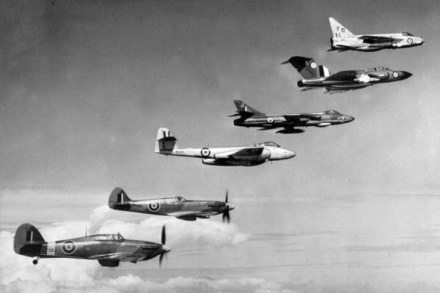
In this week’s Spectator Books, I’m joined by the historian Richard Overy to talk about his new book The Birth of the RAF, 1918. 100 years ago this spring, the Royal Air Force took to the skies for the first time. Now, it’s one of the most important planks of our military power in the world, and we look back on its history through — if such a thing can be pictured — Battle-of-Britain-shaped spectacles. Yet, as Richard argues, it was far from inevitable that a separate air-force would come into being, that having done so it would continue to exist beyond the end of the First World War, or even that the Royal Air Force would be Royal.

The acid test

When Peregrine Worsthorne was on Desert Island Discs in 1992, he chose as his luxury item a lifetime supply of LSD. He may, according to the American journalist Michael Pollan’s fiercely interesting new book, have been on to something. Acid has a bad name these days: either a threat to the sanity of your children, or a naff 1960s throwback favoured by the sort of people who sell you healing crystals at markets in Totnes. Yet in LSD-25, psilocybin, DMT, mescaline and others we have a family of molecules with startlingly powerful effects on the human mind. They are not addictive, carry little or no physiological risk, and their association with the desire to jump out of windows has been distinctly exaggerated. They might even be good for us.

Spectator Books: The Order of Time

From our UK edition

In this week’s Spectator Books, I’m talking to the brilliant Carlo Rovelli — who with the publication of his million-selling Seven Brief Lessons on Physics in 2014— took his place with Stephen Hawking and Richard Feynman as one of the great popularisers of modern theoretical physics. We’re talking today about one of the most difficult fundamental questions in the universe: the nature of time. Do we have free will? Can you understand physics without maths? Just what is Roger Penrose on about? We tackle all these questions and more. Admittedly, it’s an unequal match. I supply the David Bowie quote: Carlo supplies the profound insights.

Spectator Books: How Britain Really Works

From our UK edition

In this week's Books Podcast I'm joined by Stig Abell -- editor of the Times Literary Supplement, sometime LBC talk radio host, former managing editor of the Sun and (once) the youngest ever director of the Press Complaints Commission -- to talk about his new book How Britain Really Works: Understanding the Ideas and Institutions of a Nation. Stig talks about Britain's magnificently chaotic hodgepodge of institutions, his own unusual career, how the press is doomed, being a "centrist dad", the joys of PG Wodehouse -- and his first and only encounter with Richard Desmond.

The sinister power of Enoch Powell’s speech

From our UK edition

The BBC’s decision to re-broadcast Enoch Powell’s so-called “Rivers of Blood” speech in its entirety this week has excited just the shouting match that was to be expected. On the one hand, there has been liberal fury at the honour supposedly paid to a speech that endorsed and encouraged racial hatred. On the other, the standard defence of Powell’s line of argument: that he was not encouraging a race war, but predicting one and seeking to head it off.  What’s striking on revisiting the speech is that, for better or for worse, Powell predicted and encompassed both those points of view in the speech.

How dumb is this list of ‘Top Twenty Books By Women That Changed The World’?

From our UK edition

It always seems to be the way that when attempts are made to promote the life of the mind, they end up being particularly dumb. An instance, today, comes with the publication of a clickbaity list of the 'Top Twenty Books By Women That Changed The World', a promotional stunt ahead of Academic Book Week next week. We’re all encouraged to pile on the hashtag #acbookswomen and cast our votes – though the website as far as I can see doesn’t contain a mechanism to vote and the visitor has to guess at the books on the shortlist by squinting at a series of thumbnails of the covers. Anyway I got a press release so I have a head start.

Spectator Books: the pleasures and perils of translation

From our UK edition

In this week’s books podcast, we’re using the occasion of the Man Booker International Prize shortlist to talk about the pleasures and perils of literature in translation. I’m joined by Boyd Tonkin, a former chair of the International Booker and author of the forthcoming The 100 Best Novels In Translation, and Frank Wynne, whose translation of Virginie Despentes’s Vernon Subutex 1 appears on this year’s shortlist. They tell me how to really annoy Milan Kundera, about why the best author to translate is a dead author, how the UK fell into “the parochialism of large nations”, and how a translator saved Italo Calvino from himself. Do give it a listen.

Spectator Books: Ultima

From our UK edition

In this week’s Books Podcast, I’m talking to the historian Lisa Hilton about the latest in her series of what she calls “filthy books” — the raunchy art-world thrillers she writes as L.S. Hilton. The third in the trilogy that began with Maestra (described as “like Lee Child, but with sex instead of punching”), Ultima is out this week and concludes the story of Judith Rashleigh’s corpse-strewn progress across the international scene. Lisa tells me about why murderers might slide down bannisters, why she hates her American editors, how she came to love her sociopathic heroine, and what she learnt from Joseph Roth, Patricia Highsmith and Shirley Conran.

Books Podcast: Waiting for the Last Bus

From our UK edition

In this week’s Books Podcast, I’m talking to Richard Holloway about his new book Waiting For The Last Bus. Richard is famous for having, as some would think rather inconveniently, “lost his faith” while serving as Bishop of Edinburgh. He talks to me about how it’s all a bit more complicated than that, and about how being half in and half out of Christianity has given him a special perspective on old age, death and dying. Does he look to an afterlife? Not since a particularly momentous walk in the Pentlands. And how is it that he maintains Philip Larkin — who wrote of religion as a “vast moth-eaten musical brocade” — had “the soul of a priest”? Listen in and find out.

The simulation game

From our UK edition

Digital art is a crowded field. It’s also now older than I am. Yet despite a 50-year courtship, art galleries have been reluctant to allow it more than a toehold in their collections. Things are changing. Take MoMA’s visit to Paris last year. Alongside the Picassos and Pollocks was a very popular final room, made up of a single, beautiful computer-generated animation, in which a huddle of humans tramp across a constantly disintegrating landscape. ‘Emissaries’ (2015–17) is the work of the 33-year-old artist Ian Cheng, who two weeks ago opened his first show in the UK at the Serpentine Gallery. Cheng’s first inspirations were video games like The Sims, and working in special effects on Pirates of the Caribbean.

Books Podcast: Gimson’s Prime Ministers

From our UK edition

In this week’s Books Podcast, I’m joined by the Telegraph’s former parliamentary sketch writer Andrew Gimson, and the Guardian cartoonist Martin Rowson, to discuss their latest superhero-style team-up: Gimson’s Prime Ministers. The book is a complete set of brief lives of every occupant of Number Ten from Walpole to May — illustrated by Martin’s distinctive caricatures. What makes a good PM? Why will the UK never get a Trump? Why did one of them not even merit a biography? And which one predeceased a parrot? Learn all this and more… And if you enjoyed that, do subscribe on iTunes.

Books Podcast: St Paul, the biography

From our UK edition

In this week’s Books Podcast, I’m talking to N. T. Wright, one of the world’s foremost scholars of the theology of St Paul, about a new book — Paul: A Biography — in which he takes an approach to the man. He tells me what Paul was really like, how our understanding of him is distorted both by medieval theology and modern secularism, why you should spell “pneuma” with a lowercase P, and how we’ve got it all wrong about the Road to Damascus…. You can listen to our conversation here: And if you enjoyed that, do subscribe on iTunes.

Poet of the century

From our UK edition

The first book that Tomas Venclova read in English was Nineteen Eighty-Four. Not a bad start in the language, given his future career. Venclova is less well-known in the West than his late friends Joseph Brodsky and Czesław Miłosz, but he’s something like their Baltic equivalent: a dissident poet of international standing, who spent many of the years of his home country’s Soviet occupation in exile in the US. He describes Nineteen Eighty-Four as ‘a very important book in my life, and the one that taught me the most about the Soviet system’. A passage he says made ‘a very strong impression on me’ comes in an exchange between Winston Smith and his interrogator O’Brien. Winston asks O’Brien: ‘Does Big Brother exist?