Sam Leith

Sam Leith

Sam Leith is literary editor of The Spectator.

A death-haunted world

From our UK edition

‘A is for Amy who fell down the stairs/ B is for Basil, assaulted by bears...’ The Gashlycrumb Tinies, an alphabet in dactylic couplets of the surreal fates visited on a succession of blameless tots, is probably Edward Gorey’s best-known work — and that work forms a pretty coherent whole. Dozens and dozens of tiny booklets, almost all intricately hand-crosshatched in black pen, darkly spoofing established genres, set in a Victorian-Edwardian world of sighing flappers, funerary urns and decaying stately homes. They are filled with surreal menace and random violence or moral horror — much of it offstage — and always played for laughs. The dreamlike, associative drift of Gorey’s work — is that an umbrella or a bat?

Books Podcast: presidential lessons from Lincoln to Trump, with Doris Kearns Goodwin

From our UK edition

In this week's books podcast, I'm speaking to the Pulitzer-prizewinning historian Doris Kearns Goodwin about her new book Leadership: Lessons from the Presidents for Turbulent Times -- in which she describes what Lincoln, two Roosevelts and LBJ had in common, and didn't. Obviously, we talk a bit about that nice Mr Trump -- as well as hearing how Doris had perhaps history's classiest pyjama party at the White House with Hillary Clinton, and how as a young woman she worried at one point that she was going to be #metooed by Lyndon Johnson. Tune in, kids. Doris is remarkable.

Diary – 29 November 2018

From our UK edition

I got the sack the other day from the London Evening Standard, where I’ve been a weekly columnist for about a decade. ‘Belt-tightening’, I was told: Osbornean austerity claims another victim. As Fleet Street sinks giggling into the sea, a mini-tradition is emerging for long-serving hacks to grumble in the Spectator diary about losing regular work. Here, in recent months, have been Rachel Johnson (heave-ho from the Mail on Sunday) and Lynn Barber (heave-ho from the Sunday Times), so it was nice of the editor to offer me the opportunity now it’s my turn. Distinguished company, and the ritual serves everyone. As Kingsley Amis wrote: Life is mostly grief and labour Two things get you through. Chortling when it hits a neighbour Whingeing when it’s you.

On the side of Goliath

From our UK edition

According to which bit of hype you read, there’s a copy of one of Lee Child’s Jack Reacher thrillers sold somewhere in the world every four seconds, or every seven, or every nine. It’s a cute statistic and (as Child wryly notes), there’s an element of Barnum & Bailey hucksterism to it. But suffice to say he sells a lot of books —around about the 100 million mark to date, in 42 languages. Reacher fans tend to binge-read the lot, and nobody (including Child) can remember the titles. The novels tell the story of a former military policeman called Jack Reacher who hitchhikes around the United States with nothing but a folding toothbrush, a bank card and the clothes he stands up in. Reacher doesn’t look for trouble, but it seems to find him.

Books Podcast: Lee Child on Reacher, revenge, and writing without a plan

From our UK edition

“I wondered what would happen if you made Goliath the hero…” In this week’s books podcast I’m talking to the thriller writer Lee Child about the latest in his phenomenally successful Jack Reacher series, Past Tense. Lee tells me why you can’t have a knight-errant in Europe any more, about writing without knowing what happens next, Reacher’s trouble with women, why he can never remember his own titles -- and why liberals love reading about bad guys getting punched in the face. Plus: how he rumbled Robert Galbraith as woman.

The Books Podcast: geopolitics, the new Silk Roads, and the falcon-shaped airport in Turkmenistan

From our UK edition

In this week's books podcast I'm talking to Oxford's Professor of Global History Peter Frankopan about his follow-up to his bestselling history The Silk Roads. In The New Silk Roads, Peter brings his story up to date, and argues that with our Trump and Brexit obsessions, and a divided and fissiparous West still obsessed with itself, we are missing the bigger picture of what's going on in the world today. Once again, the Silk Roads -- those lines of connection between East and West running through what he calls the "heart of the world" -- are where the action is.

Books Podcast: reconciling guilt and patriotism in post-war Germany

From our UK edition

In this week’s books podcast I’m talking to Nora Krug about her remarkable graphic work Heimat - in which this German born writer and artist discusses how it has felt to grow up in Germany and later the US with the shadow of her homeland’s war guilt, how that has issued in art, literature and humour, and about her risky attempt to discover her own family’s wartime past.

Books Podcast: Geoff Dyer’s love for Where Eagles Dare

From our UK edition

In this week’s books podcast I’m talking to Geoff Dyer, one of our most wayward and wittiest writers, about his new book Broadsword Calling Danny Boy, a frame-by-frame discussion of the classic war movie Where Eagles Dare. Learn from Geoff about the importance of squinting in Clint Eastwood’s thespian toolbox, about the joy of snow-patrol Action Man, about why he shied away from plans for "Alistair MacLean: A Critical Reappraisal", and about why on earth Geoff would follow a learned book about Tarkovsky’s Stalker with a discussion of a piece of late-60s schlock. Plus: what happens when you get on the wrong side of Julian Barnes.

Books Podcast: a fresh look at Jeeves and Wooster with Ben Schott

From our UK edition

In this week's books podcast I'm talking to Ben Schott. The author of Schott's Miscellany, Ben's literary productions have taken an unexpected turn with the publication this week of his first novel. Jeeves and the King of Clubs is a tribute or companion piece to P G Wodehouse's Jeeves and Wooster novels, published with the authorisation of the Wodehouse estate. What the hell was he thinking? Ben tells me -- and also talks about the joys of nerdiness, the difficulty of living up to Plum, and the Spectator's role in the whole story.

Books Podcast: how genes can predict your life

From our UK edition

In this week’s Books Podcast I’m talking to the behavioural geneticist Robert Plomin about his new book Blueprint: How DNA Makes Us Who We Are, in which he argues that it’s not only height and weight and skin colour that are heritable, but intelligence, TV-watching habits and likelihood of getting divorced. I asked him about the risks he takes publishing this book, the political third rail of race and eugenics, and what his discoveries mean for the future of our data and for medical care. You can read Kathryn Paige Harden’s review of Blueprint, meanwhile, in this week’s magazine.

Books Podcast: detective work with Sara Paretsky

From our UK edition

In this week’s Books Podcast I’m talking to the incomparable Sara Paretsky about her latest V. I. Warshawski novel Shell Game — which pits the original feminist gumshoe against art thieves, Russian mobsters and her fink of an ex-husband. I talk to Sara about keeping Vic young (skincare doesn’t come into it), chiming with MeToo and immigration anxieties in Trump’s America, whether she feels rivalrous with other female crime writers, spotting her own writerly tics, and making friends with Obama.

Books Podcast: Andrew Roberts on Churchill

From our UK edition

In this week’s books podcast I’m talking — this time in front of a live audience at Daunt Books — to Andrew Roberts about his new biography of Winston Churchill. Could even as deft a historian as Andrew find anything new to say about this most written-about of politicians? He says yes. We discuss whether Churchill was a man of principle or an opportunist, talk about the tricky question of whether he was a racist, about whether he was, as widely thought, an alcoholic and a depressive, and of course about his magnificent wartime oratory and his remarkable mix of character traits.

Books Podcast: when did politics become so emotional?

From our UK edition

In this week’s books podcast, I’m joined by the political scientist William Davies to talk about his new book Nervous States: How Feeling Took Over The World. Here’s a deep dive into the parlous condition of our public discourse, drawing the line from Descartes and Hobbes to Trump and Generation Snowflake. Can speech be a form of violence?

Books Podcast: Paddy Leigh-Fermor’s adventures

From our UK edition

In this week's books podcast I'm talking to Adam Sisman about More Dashing -- his new selection from the remarkable correspondence of one of the 20th-century's most celebrated adventurers, spongers and men of letters, Paddy Leigh-Fermor. What did Paddy really feel about his most famous act of derring-do, when he kidnapped a Nazi general in occupied Crete? What really went on in his unconventional marriage? And were -- as Adam Sisman contends -- his letters really at the heart rather than the periphery of his literary achievement?

Books Podcast: icons and god(s) with Neil MacGregor

From our UK edition

In this week’s books podcast, I talk to the former head honcho of the National Gallery and British Museum, Neil MacGregor, about his new book Living With The Gods: On Beliefs and Peoples. Neil tells the story of the world’s religions through objects — beginning with a 40,000-year-old carving that might be the first human representation of an entirely imaginary object. What do religions have in common? How do you represent icon-averse creeds through physical objects? Why should there be an evolutionary advantage in engaging with the intangible or imaginary? And what does the history of religion tell us about the common threads of humanity?

Books Podcast: life and death in the Falklands – and what happens after

From our UK edition

In this week’s books podcast I'm talking to Helen Parr about her remarkable new book Our Boys: The Story of A Paratrooper, which blends memoir, social history and military history to tell the story of the paratroopers who fought in the Falklands War and what happened when they came home — or, as in the case of Parr’s 19-year-old uncle, didn’t. Helen talks about what civilians can and can’t know of the experience of men who kill and risk death in combat, about the history of the paratroop regiment, and the sea-change in Britain’s relationship with its serving soldiers and its veterans that took place from the 1980s onwards.

Books Podcast: Sebastian Faulks’s ghosts in Paris

From our UK edition

In this week’s books podcast, I’m talking to Sebastian Faulks about his brilliant new novel Paris Echo, which describes the twined stories of a Moroccan teenager and an American academic in the French capital – and the way that the ghosts of the past, from the Occupation to the decolonisation of North Africa, still play out in the present.

Books Podcast: Ian Kershaw

From our UK edition

In this week’s books podcast, I talk to Sir Ian Kershaw about his new book Rollercoaster: Europe 1950-2017. Here from one of our most distinguished historians, is a history of Europe that goes from the postwar period right up to the present. Is he aiming at a moving target? How can you meaningfully speak about “Europe” as one thing when for much of the period under discussion half of it was behind the iron curtain? Were the machinations of powerful individuals, or sheer chance, the great drivers of our history? And how was the raising of the Berlin Wall — from some perspectives — a good thing?

Books Podcast: How the 2008 crash changed the world

From our UK edition

In this week’s Books Podcast, I’m joined by the economic historian Adam Tooze, author of the new book Crashed: How A Decade of Financial Crises Changed The World. How are the subprime collapse in the US and the Eurozone crisis that came after linked? Why did a cartel of mega-wealthy businessmen do a good job at rescuing the US from disaster, and a group of well-intentioned political technocrats make such a hash of it in Europe? And how is the Balance of Financial Terror between the US and China holding up these days?

Books Podcast: can graphic novels be considered literature?

From our UK edition

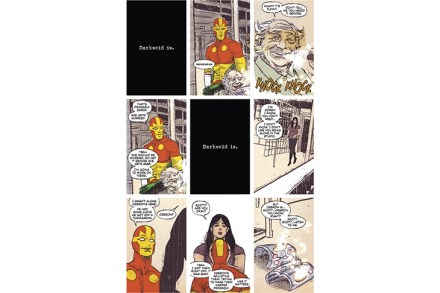
Among the biggest surprises of this year’s Man Booker Prize longlist was the inclusion, for the first time in the prize’s 50-year history, of a “graphic novel”. Nick Drnaso’s Sabrina — a chillingly claustrophobic account of the aftermath of a murder in post-truth America — is undoubtedly a brilliant example of its form. But does a comic belong in contention for a fiction prize? I didn’t think so (and wrote as much in the FT). In this week’s Books Podcast the Man Booker Prize’s Literary Director, Gaby Wood, argues otherwise — and raises in the process the possibility that, one day, the Man Booker prize could be won by a book that doesn’t contain any words at all.